wayground logo

Free Printable Worksheets

Font size

S
M
L
XL
Worksheets

Bio spring final

Total questions: 181

Worksheet time: 3hrs 55mins

Name
Class
Date
1.

What are the parts of a cell membrane?

a)

phospholipid bilayer

b)

channel proteins

c)

glycolipids

d)

all of the above

2.
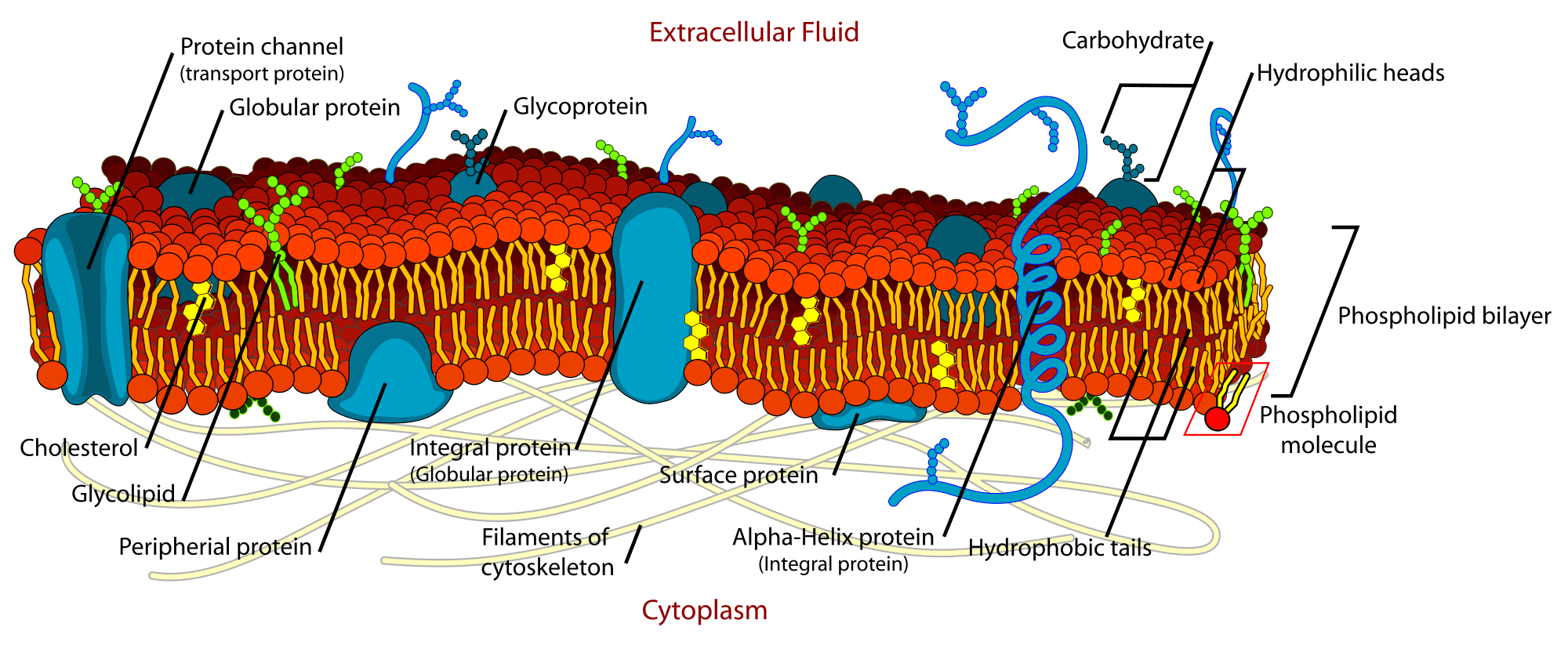
What is this image?
a)
cell membrane
b)
proteins
c)
carbohydrates
d)
lipids
3.
What is NOT TRUE about the cell membrane
a)
It controls what enters and leaves the cell
b)
Semipermeable
c)
Phospholipid bilayer
d)
Contains digestive enzymes
4.

The cell membrane is selectively permeable, which means...

a)

All materials can enter and leave the cell

b)

Certain things can enter while others cannot

c)

The cell manually sorts through all materials

5.
Controlling what goes into or out of the cell without energy is called
a)
active transport
b)
endocytosis
c)
passive transport
d)
exocytosis
6.
Two examples of passive transport are
a)
Earth and Sun
b)
Diffusion and Osmosis
c)
Energy and Wind
d)
None of the above
7.

Against the concentration gradient

low to high uses energy/ATP

a)

facilitated diffusion

b)

osmosis

c)

active transport

d)

simple diffusion

8.
The diffusion of WATER across a semi-permeable membrane is
a)
osmosis
b)
diffusion
c)
endocytosis
d)
exocytosis
9.

Passive Transport is the movement of particles across the membrane from an area of [ ___ ] to an area of [ ___ ]

a)

high to low

b)

low to high

c)

low to low

d)

high to high

10.
Diffusion is the movement of molecules from an area of _____ concentration to an ______ concentration
a)
High, low
b)
Low, high
c)
Low, low,
d)
High, high
11.
An ISOTONIC solution has a(n) ______________ concentration of solute (dissolved stuff) than inside the cell.
a)
lower
b)
equal
c)
higher
12.
What type of solution is this cell in?
a)
Isotonic
b)
Hypertonic
c)
Hypotonic
d)
diffused
13.
If a cell is placed in a HYPOTONIC solution, water will move _________ of the cell, causing it to ___________.
a)
into, swell
b)
out of, shrivel
c)
in and out of the cell, stay the same
14.
What type of solution is this cell in?
a)
Isotonic
b)
Hypertonic
c)
Hypotonic
d)
diffused
15.
Active transport...
a)
... includes diffusion
b)
... requires energy
c)
... is limited to only things leaving the cell
d)
... is limited to only things entering the cell
16.

Molecules that move with the concentration gradient from HIGH to LOW concentrations is an example of

a)

Passive Transport

b)

Active Transport

17.

Molecules that move against the concentration gradient from LOW to HIGH concentrations is an example of

a)

Passive Transport

b)

Active Transport

18.

What are three types of passive transport

a)

Transport proteins, Endocytosis, Exocytosis

b)

None of the ones listed

c)

Osmosis, Diffusion, Facilitated diffusion

d)

Protein pump, osmosis, diffusion

19.
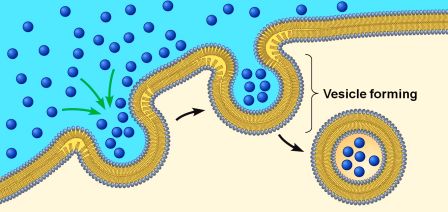
Which form of active transport is being shown?
a)
Facilitated Diffusion
b)
Exocytosis
c)
Endocytosis
d)
Protein Pumps
20.
What are 3 types of active transport?
a)
Riding a bike, Running through the mountains, walking on the beach
b)
Osmosis, Diffusion, Facilitated Diffusion
c)
Sodium/potassium Pump, Endocytosis, Exocytosis
d)
Throwing a ball, Playing tennis, driving a car
21.
What is the difference between DNA and RNA in terms of bases?
a)
RNA contains uracil in place of thymine
b)
RNA contains uracil in place of adenine
c)
RNA contains uracil in place of guanine
d)
RNA contains uracil in place of  cytosine
22.
RNA has how many strands?
a)
one
b)
two
23.

Identify.

a)

DNA

b)

mRNA

c)

rRNA

d)

tRNA

24.

Where does transcription occur?

a)

Cytoplasm

b)

Mitochondria

c)

Nucleus

d)

ER

25.
In messenger RNA, each codon specifies a particular
a)
nucleotide
b)
enzyme
c)
amino acid
d)
promoter
26.

Carries the amino acid used to make a protein

a)

mRNA

b)

rRNA

c)

tRNA

27.

Factory for making a protein

a)

mRNA

b)

rRNA

c)

tRNA

28.
What is the product of transcription?
a)
DNA
b)
mRNA
c)
tRNA
d)
proteins
29.
Which type of RNA takes the instructions from the nucleus to the cytoplasm?
a)
mRNA
b)
tRNA
c)
rRNA
d)
RNA polymerase
30.

What type of RNA is shown in this image?

a)

rRNA

b)

mRNA

c)

tRNA

31.

This image shows a picture of a ribosome - what type of RNA is this?

a)

rRNA

b)

mRNA

c)

tRNA

32.

Three consecutive nucleotides on a mRNA molecule

a)

Translation

b)

Transcription

c)

anticodon

d)

codon

33.
What is the difference between the sugars found in DNA and RNA?
a)
RNA contains glucose
b)
RNA contains sucrose
c)
RNA contains deoxyribose
d)
RNA contains Ribose
34.

RNA carries a copy of the DNA blueprint (instructions) from the nucleus to the ___

a)

nucleus

b)

cell membrane

c)

vacuole

d)

ribosome

35.

How many types of amino acids are there?

a)

15

b)

21

c)

22

d)

20

36.

Where is RNA found?

a)

In the nucleus

b)

In the ER

c)

In the chloroplast

d)

In the cytoplasm

37.

How many nucleotides make up a codon?

a)

1

b)

3

c)

5

d)

15

38.
the sequence of 3 nucleotides that code for amino acids.
a)
codon 
b)
anti-codon
39.

The sudden change in the nucleotide sequence (genetic material) is called

a)

codon

b)

mutation

c)

hydrophobic

d)

allele

40.

What does replication make?

a)

DNA

b)

RNA

c)

protein

41.

Where does replication take place?

a)

nucleus

b)

ribosomes

42.

What does transcription make?

a)

DNA

b)

RNA

c)

protein

43.

Where does transcription take place?

a)

nucleus

b)

ribosomes

44.

What is made during translation?

a)

DNA

b)

RNA

c)

protein

45.

Where does translation take place?

a)

nucleus

b)

ribosomes

46.

What is the pair of sex chromosomes in Males?

a)

Y

b)

X

c)

XY

d)

XX

47.

What is the pair of sex chromosomes in females?

a)

Y

b)

X

c)

XY

d)

XX

48.

A cell that has a full set of chromosomes is called a______ cell.

a)

haploid

b)

diploid

c)

triploid

d)

hetrolpoid

49.

A cell that has a half set of chromosomes is called a______ cell.

a)

haploid

b)

diploid

c)

triploid

d)

hetrolpoid

50.

which of the following is NOT a somatic cell?

a)

nerve cell

b)

muscle cell

c)

white blood cell

d)

sperm cell

51.

A gamete is also known as________ cell?

a)

body

b)

somatic

c)

nomadic

d)

sex

52.

Body cells are also known as ____________?

a)

gametes

b)

sex cells

c)

somatic cells

d)

nomadic cells

53.
Body cells have diploid or haploid number of chromosomes?
a)
Haploid
b)
Diploid
54.
Gametes have haploid or diploid number of chromosomes?
a)
Haploid
b)
Diploid
55.

the molecule in the figure is?

a)

chromoatin

b)

chromatid

c)

chromosome

d)

sister chromatid

56.

Two sets of chromosomes is known as

a)

haploid

b)

diploid

57.

One set of chromosomes is

a)

haploid

b)

diploid

58.

What is the abbreviation for a diploid cell

a)

n

b)

2n

59.
What happens in the first part of Interphase?
a)
Mitosis
b)
Cell Growth
c)
DNA Replication
d)
Anaphase
60.

During what phase of Mitosis do the chromosomes line up in the Middle

a)

Metaphase

b)

Prophase

c)

Telophase

d)

Anaphase

61.

Which of the following is the correct order of the Cell Cycle?

a)

Interphase, Mitosis, Cytokinesis

b)

Mitosis, Cytokinesis, Mitosis, Interphase

c)

Prophase, Metaphase, Anaphase, Telophase

d)

Interphase, Prohase, Cytokinesis

62.

In which phase of Mitosis do the Chromosomes pull Apart

a)

Metaphase

b)

Prophase

c)

Anaphase

d)

Telophase

63.

What is the purpose of Mitosis?

a)

Growth of an organism and Repair of damaged tissue

b)

To help the body get rid of extra cells

c)

To increase the amount of classwork you have to do

d)

To get rid of the nucleus

64.
The cytoplasm is divided between the cells splitting the cell into two. Name that Stage!
a)
Cytokinesis
b)
Interphase
c)
Prophase
d)
Metaphase
65.
What phase of mitosis is occuring in the picture?
a)
Prophase
b)
Metaphase
c)
Cytokinesis
d)
Telophase
66.
a)
Cytokinesis
b)
Anaphase
c)
Telophase
d)
Prophase
67.
Chromosomes condense from long stands into rod like structures. 
a)
Prophase
b)
Interphase
68.
Structure (b) is a ____.
a)
chromosome
b)
chromatid
c)
centromere
69.

Structure (c) is a ____. Hint: It is one half of the X shape.

a)

chromosome

b)

chromatid

c)

centromere

70.
The process by which the nuclear material is divided equally between two new cells
a)
mitosis
b)
cancer
c)
spindle
d)
centromere
71.

Meiosis is the _____.

a)

division of sex cells

b)

division of body cells

72.

Which of the following is a sex cell?

a)

sperm

b)

bone

c)

heart

d)

muscle

73.

What is the primary cause of genetic variation during meiosis?

a)

chromosomes lining up

b)

"crossing over" of chromosomes

c)

separation of chromosomes

d)

chromosomes pulling apart

74.
Crossing over is important because....
a)
It prevents mutations from entering the gametes. 
b)
It allows for even distribution of chromosomes in the gametes.
c)
It allows for more genetic diversity of gametes.
d)
It allows for genetic uniformity of gametes. 
75.

This law describes how each homologous pair separates independently of any other pairs during Anaphase I of meiosis

a)

Law of Segregation

b)

Law of Independent Assortment

c)

Law of Gravity

d)

Law of Mathematical Order

76.

When an ovum is first fertilized it is known as

a)

a nucleus

b)

an embryo

c)

a zygote

d)

a fetus

77.

Which of the following describes meiosis?

a)

Cell division--creates new somatic cells

b)

Cell division--creates gametes

78.

Which of the following describes mitosis?

a)

Cell division--creates new somatic cells

b)

Cell division--creates gametes

79.

During which process does the cell divide only once?

a)

Mitosis

b)

Meiosis

80.

During which process does the cell divide two times?

a)

Mitosis

b)

Meiosis

81.

Which process produces 2 cells?

a)

Mitosis

b)

Meiosis

82.

Which process produces 4 cells?

a)

Mitosis

b)

Meiosis

83.

Which process produces cells that are identical?

a)

Mitosis

b)

Meiosis

84.

Which process produces cells that are unique / different from each other?

a)

Mitosis

b)

Meiosis

85.

Which process produces haploid cells?

a)

Mitosis

b)

Meiosis

86.
The physical appearance of a trait is known as the-
a)
genotype
b)
phenotype
c)
characteristics
d)
intelligence
87.

The different forms of a gene are called

a)

traits

b)

pollinators

c)

alleles

d)

hybrids

88.

What is a short segment of DNA that contains instructions for a single trait?

a)

allele

b)

gene

89.

This law describes how each member of a homologous pair is pulled randomly to one side or another in anaphase I

a)

Law of Segregation

b)

Law of Independent Assortment

c)

Law of Gravity

d)

Law of Mathematical Order

90.

The law that says alternate forms of a gene separate during the formation of gametes; they do not mix to form a new trait

a)

Law of segregation

b)

law of independent assortment

c)

law of inertia

d)

law of acceleration

91.

A law that explains how traits are inherited independently or other traits (blue eyes are NOT inherited with blond hair)

a)

law of independent assortment

b)

law of segregation

c)

law of gravity

d)

law of inertia

92.
Which of the following is heterozygous
a)
FF
b)
tt
c)
Gg
d)
RR
93.
What does the prefix hetero- in heterozygous mean?
a)
same
b)
different
c)
dating
d)
human
94.
What does the prefix homo- in homozygous mean?
a)
same
b)
different
c)
dating
d)
humans
95.
What does the prefix hetero- in heterozygous mean?
a)
same
b)
different
c)
dating
d)
human
96.

What type of Genotype is this: Rr?

a)

Homozygous

b)

Heterozygous

97.

An organism with two different alleles for a trait is called

a)

Heterozygous

b)

Homozygous

98.

An organism with two of the same alleles for a trait is called

a)

Heterozygous

b)

Homozygous

99.
The two-letter code that describes the genetic traits of an organism is called a-
a)
Phenotype
b)
Genotype
c)
Physical Appearance
d)
Intelligence
100.
Chromosome pairs 1-22 are referred to as
a)
sex chromosomes
b)
sister chromatids
c)
a karyotype
d)
autsomes
101.

Chromosomes other than sex chromosomes are known as _____.

a)

autosomes

b)

alleles

c)

genes

d)

proteins

102.
The first cell that results from fertilization (fertilized egg)
a)
Zygote
b)
Gamete
c)
Germ Cell
d)
Haploid Cell
103.
Chromosomes that have genes that determine the sex of an individual
a)
Autosomes
b)
Sex Chromosomes
c)
Homologous Chromosomes
d)
Fertilization Chromosomes
104.
A person who has one recessive allele for a trait, but does not have the trait.
a)
carrier
b)
homozygous dominant
c)
homozygous recessive
d)
codominant
105.

What is the correct order of the levels of cell organization from simplest (smallest) to most complex (biggest)?

a)

Cell, Organ, Tissue, Organ System, Organism

b)

Organism, Tissue, Cell, Organ system, Organ

c)

Cell, Tissue, Organ, Organ System, Organism

d)

Tissue, Cell, Organ, Organ System, Organism

106.

What is the smallest unit of an organism or living thing?

a)

Organ

b)

Organ System

c)

Cell

d)

Tissue

107.
Which of the following tissues is made up of cells that contract when stimulated?
a)
Epithelial
b)
Connective
c)
Muscle 
d)
Nervous
108.
Which of the following tissues is made up of cells that conduct impulses?
a)
Epithelial
b)
Connective
c)
Muscle 
d)
Nervous
109.
This type of tissue lines the internal organs and covers the outside of the body as  skin
a)
epithelial
b)
connective
c)
muscular
d)
nervous
110.
This type of tissue includes ligaments, tendons, and cartilage
a)
epithelial
b)
connective
c)
muscular
d)
nervous
111.
What is also known as a nerve cell?
a)
neuron
b)
sensory nerves
c)
dendrites
d)
toes
112.
Which of the following types of tissue is responsible for body movement
a)
epithelial
b)
connective
c)
muscular
d)
nervous
113.

This type of tissue relays messages

a)

epithelial

b)

connective

c)

muscular

d)

nervous

114.
The maintenance of an organism’s internal environment is called:
a)
compensating
b)
homeostasis
c)
balancing
d)
routine
115.
chemical made by glands that tell cells to make something or respond in some way.
a)
acid
b)
enzyme
c)
perspiration
d)
hormone
116.
organ of the endocrine system that secretes hormones.
a)
heart
b)
gland
c)
brain
d)
skin
117.
Negative Feedback Loops:
a)
amplify processes
b)
prevent small changes from getting larger
c)
are initiated during childbirth
d)
are found only in plants
118.
What does homeostasis mean?
a)
Temperature
b)
Water
c)
Cells
d)
Steady state
119.
Positive feedback is when the change caused by the stimulus is
a)
decreased
b)
non existant
c)
increased
d)
changes constantly
120.
When you get cut, your skin cells release hormones that signal platelets to come and stop the bleeding. Platelets then release more hormones that signal even more platelets to help stop bleeding. The hormone signals continue until the cut is closed.
a)
Positive Feedback Response
b)
Negative Feedback Loop 
121.
When you are cold, you shiver and your blood vessels contract, which warms you up. When you are hot, you sweat and your blood vessels expand, which cools you down.  
a)
Positive Feedback Response
b)
Negative Feedback Loop 
122.

What is the point of a feedback loop?

a)

To provide the body with more energy.

b)

To provide the body with more food.

c)

To make sure the conditions in the body are always changing.

d)

To make sure the conditions in the body remain stable.

123.

Which of the following cavities holds the heart AND lungs?

a)

pleural

b)

pericardial

c)

thoracic

d)

abdominal

124.
The brain is located in the 
a)
vertebral canal
b)
cranial cavity
c)
mediastinum
d)
umbilical region
125.

The cavity surrounded by a box is?

a)

Abdominal Cavity

b)

Pelvic Cavity

c)

Pleural Cavity

d)

Cranial Cavity

126.
a)

Cranial Cavity

b)

Pleural Cavity

c)

Pericardial Cavity

d)

Vertebral Canal

127.

The stomach is located in which cavity?

a)

pelvic cavity

b)

thoracic cavity

c)

abdominal cavity

d)

dorsal cavity

128.

Where is your rectum found?

a)

Cranial cavity

b)

Thoracic cavity

c)

Abdominal cavity

d)

Pelvic cavity

129.
Carry blood away from heart; mostly oxygen-rich
a)
Arteries
b)
Veins
c)
Capillaries
130.
Carry blood toward heart; mostly oxygen-poor
a)
Arteries
b)
Veins
c)
Capillaries
131.

The ____________ carries blood throughout the body;

the ____________ carries blood only to and from the

lungs.

a)

systemic circuit; pulmonary circuit

b)

pulmonary circuit; systemic circuit

c)

venous circulation; arterial circulation

d)

arterial circulation; venous circulation

132.

Pulmonary circulation describes the flow of blood from the heart to the _____.

a)

lungs

b)

body

133.
Blood has how many parts?
a)
1
b)
2
c)
3
d)
4
134.
These blood cells are the protectors and help fight off disease.
a)
Red blood cells
b)
White blood cells
c)
Plasma
d)
Platelets 
135.
This part of blood helps it clot, when you get cut.
a)
Red blood cells
b)
Plasma
c)
Platelets
d)
White blood cells
136.
These blood cells deliver oxygen to the parts of the body.
a)
Red
b)
White
c)
Patelets
d)
Plasma
137.
What part of blood is responsible for carrying oxygen and carbon dioxide to or from body cells?
a)
Red Blood Cells
b)
White Blood Cells
c)
Platelets
d)
Plasma
138.
liquid portion of the blood
a)
leukocytes
b)
erthryocytes
c)
plasma
d)
thrombin
139.
What does blood consist of?
a)
plasma, red blood cells, white blood cells, platelets
b)
hormones, oxygen, nutrients, water
c)
red blood cells
d)
carbon dioxide and minerals
140.

Chewing food is an example of _____________.

a)

chemical digestion

b)

mechanical digestion

141.

Changes the size, shape, or color of food:

a)

Mechanical digestion

b)

Chemical Digestion

142.

Acids and enzymes are used in

a)

Mechanical digestion

b)

chemical digestion

143.
What is the main function of the excretory system?
a)
to collect and remove wastes from the body
b)
to strengthen skeletal muscles
c)
to protect the nervous system
d)
to bring oxygen to body cells
144.
Which excretory organ eliminates water and some chemical wastes in perspiration?
a)
lungs
b)
skin
c)
liver
d)
kidneys
145.
The process of removal of the body’s wastes is called
a)
gas exchange.
b)
respiration.
c)
excretion.
d)
filtration.
146.

The liquid waste our body eliminates through the skin is called...

a)

tears

b)

urine

c)

sweat

d)

poo

147.

Which organ(s) remove waste gases?

a)

Bladder and kidneys

b)

Lungs

c)

Large intestine

148.
What function do the kidneys perform?
a)
eliminate carbon dioxide
b)
supply oxygen to body cells
c)
remove urea and excess water
d)
play a role in gas exchange
149.

A nerve cell is called a:

a)

neutron

b)

nerve

c)

neuron

d)

synapse

150.
a signal molecule that transmits nerve impulses across synapses
a)
neuron
b)
neurotransmitter
c)
nerve
d)
action potential
151.
part of a neuron that receives information from other neurons
a)
axon
b)
dendrites
c)
myelin sheath
d)
synapse
152.
This part of the nervous system regulates involuntary actions such as heart function, blood pressure, breathing, digestion.
a)
Autonomic Nervous System
b)
Sensory Nervous System
c)
Motor Nervous System
d)
Peripheral Nervous System
153.

Which of the following divisions of the nervous system controls voluntary behaviors?

a)

Sympathetic

b)

Parasympathetic

c)

Autonomic

d)

Somatic

e)

Afferent

154.

voluntary nervous system

a)

somatic

b)

autonomic

155.

involuntary nervous system

a)

somatic

b)

autonomic

156.

A receptor that detects light and darkness it's called a _______________.

a)

photoreceptor

b)

mechanoreceptor

c)

chemoreceptor

d)

thermoreceptor

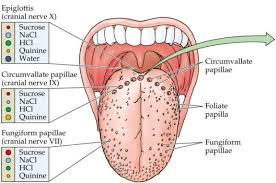
157.

Taste receptors are _______________ because they detect chemicals.

a)

chemoreceptors

b)

mechanoreceptors

c)

electroreceptors

d)

photoreceptors

158.

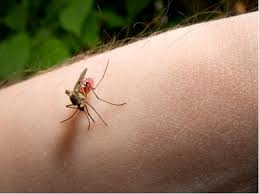
You feel a mosquito biting your arm. This is because you have _______________ in your skin.

a)

chemoreceptors

b)

photoreceptors

c)

mechanoreceptors

d)

thermoreceptors

159.

These type of sensory neurons measure temperature

a)

Nocireceptors

b)

Pain receptors

c)

Thermoreceptors

d)

None of the above

160.

A type of sensory receptor that detects chemicals are....

a)

Chemoreceptors

b)

Mechanoreceptors

c)

Thermoreceptors

d)

Nocireceptors

161.
The nervous system sends electrical messages.  What type of message does the endocrine  system send?  
a)
electrical
b)
fluid
c)
chemical
d)
repetitive signal
162.

Which hormone is involved in regulating blood glucose levels?

a)

Thyroxine

b)

Oestrogen

c)

Testosterone

d)

Insulin

163.

A hormone is

a)

a chemical substance produced by a gland and carried by the lymph.

b)

an enzyme produced by a gland and carried by the blood.

c)

a chemical substance produced by an organ and carried by the blood.

d)

a chemical substance produced by a gland and carried by the blood.

164.

Organ that secretes the hormones

a)

glands

b)

hormones

165.
Which of the following statements about pathogens is true?
a)
A pathogen describes anything that causes illness or disease
b)
Pathogens are all microscopic
c)
All pathogens are transmitted through the air from host to host
d)
All pathogens cause cells to swell and burst
166.
Vaccines work by...
a)
killing pathogens that are already infecting a host
b)
helping antibodies build immunity against a specific pathogen
c)
causing the body to expel pathogens faster than normal
d)
preventing a specific pathogen from entering the body
167.
What are Lymphocytes?
a)
A type of red blood cell
b)
A nucleus 
c)
A type of white blood cell
d)
Bone Marrow
168.
What is phagocytosis?
a)
WBCs
b)
When cells eat other cells
c)
When a cell collapses
d)
When a cell releases nutrients
169.
B-lymphocytes, T-lymphocytes and Natural killer(NK) cells are all examples of which type of white blood cells?
a)
Lymphocytes
b)
Basophils
c)
Neutrophils
d)
Monocytes
170.

What is the "big cell" that surrounds the pathogen and tells the t-cell what the antigens are?

a)

Macrophage

b)

Lymphocyte

c)

Memory T and B cells

d)

Antibodies

171.

These are important because they remember the pathogen for the future.

a)

Macrophage

b)

Lymphocyte

c)

Memory T and B cells

d)

Antibodies

172.

What attaches to antigens and tags the pathogen for destruction?

a)

Pathogen

b)

Antibodies

c)

B-cells

d)

Lymphocyte

173.

What makes and releases antibodies?

a)

Pathogen

b)

B-cells

c)

Lymphocyte

d)

Antigen

174.

What micro-organism is responsible for causing disease?

a)

Pathogen

b)

Antibodies

c)

B-cells

d)

Lymphocyte

175.

Name 3 parts of the body that keep pathogens out ("The First Line of Defense").

a)

White blood cells, tears, T-cells

b)

Saliva, inflammation, Lymphocytes

c)

Skin, tears, saliva

d)

Mucous membranes, fever, B-cells

176.

What is the immune system’s first line of defense?

a)

Helper T cells

b)

Skin and mucous membranes

c)

Heart and lungs

177.

What is the immune system’s second line of defense?

a)

Inflammatory Response

b)

Immune Response

c)

Bottom of feet

178.

What is the function of macrophages?

a)

Consume Pathogens

b)

Replicate pathogens

c)

Release pathogens

179.

Which cell has a similar function to a natural killer cell?

a)

Helper T cell

b)

Cytotoxic T cell

c)

Plasma cell

d)

Macrophages

180.

Which cells allow your body to respond to future infections of a pathogen that you encountered previously?

a)

Helper T cells

b)

Plasma cells

c)

Cytotoxic T cells

d)

Memory cells

181.

Which cells produce antibodies?

a)

Helper T cells

b)

Cytotoxic T cells

c)

Memory cells

d)

Plasma cells