wayground logo

Free Printable Worksheets

Font size

S
M
L
XL
Worksheets

Benchmark review

Total questions: 185

Worksheet time: 4hrs 58mins

Name
Class
Date
1.
What part of a virus is the protein capsule that houses the genetic material (DNA/RNA)?
a)
tail
b)
nucleus
c)
capsid
d)
glycoprotein
2.
Which viral life cycle allows viral genetic material to lay dormant while the host cell reproduces?
a)
lytic
b)
mitosis
c)
lysogenic
d)
S phase
3.
Is a virus considered living or non-living?
a)
Living
b)
Non-Living
c)
Neither
4.
What is the first step of the virus reproduction cycle?
a)
The viruses genetic material (DNA) starts to take over the functions of the cell
b)
The host cell bursts open, releasing the new viruses
c)
The virus injects its genetic material into the cell
d)
A virus attaches to the surface of a host cell
5.
What is a way to become immune to a disease without first having the disease?
a)
antibiotics
b)
Anti-retroviral drugs
c)
Vaccinations
d)
Exposure Therapies
6.
Which can be treated with antibiotics?
a)
Virus
b)
Bacteria
c)
Mutagen
d)
Parasite
7.
What do viruses have in common with living cells? They both...
a)
store genetic information
b)
have chloroplasts
c)
use glucose for cellular respiration
d)
have endoplasmic reticulum
8.
True or False
The flu is caused by a virus.
a)
true
b)
false
9.
Antibiotics kill viruses
a)
True
b)
False
10.
What do viruses need to reproduce?
a)
they need genetic material
b)
They need a host cell
c)
They need  bacteria
d)
They need insulin
11.
Viruses are cells. 
a)
True 
b)
False
12.
What part of the virus is number 1?
a)
Capsid
b)
DNA
c)
Surface Markers
d)
Envelope
13.
What part of the virus is number 2?
a)
Capsid
b)
DNA
c)
Surface Markers
d)
Envelope
14.
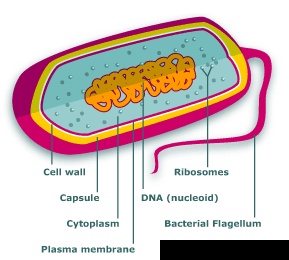
The whiplike tail on some bacteria that help them move
a)
Nucleoid
b)
Pili
c)
Flagella
d)
Cilia
15.
Which statement about bacteria is true?
a)
All bacteria are prokaryotes
b)
All bacteria are eukaryotes
c)
All bacteria are autotrophs
d)
All bacteria are heterotrophs
16.
Bacteria come in all of the following shapes EXCEPT which?
a)
spiral
b)
rod-like
c)
rectangular
d)
spherical
17.
Which statement about bacteria is true?
a)
Bacteria help you breath
b)
Bacteria help you digest your food
c)
Bacteria help add carbon dioxide to the atmosphere
d)
All bacteria need sunlight to make food
18.
Bacteria cells share which of the following organelles in common with plant and animal cells?
a)
cell membrane, RER
b)
cell wall, mitochondria
c)
nucleus, ribosomes
d)
ribosomes, cytoplasm
19.
How does pasteurization make food safe to eat?
a)
It changes dangerous chemicals in the food into safer chemicals
b)
It encourages the growth of important gut-bacteria
c)
It heats the food enough to kill all bacteria
d)
It causes milk to sour and turn into butter
20.
Bacteria have a cell membrane
a)
True
b)
False
c)
Some do, some don't
d)
Only in certain temperature conditions
21.
Which of the following IS found in a bacteria cell?
a)
Nucleus
b)
Nucleoid
c)
Mitochondria
d)
RER
22.
Bacteria reproduce by...
a)
sexual reproduction only
b)
asexual reproduction only
c)
usually asexual, sometimes sexual reproduction
d)
a unique type of reproduction called endosporosis
23.
There are more bacteria in your mouth than there are...
a)
stars in the sky
b)
people on the earth
c)
birds in the sky
d)
fish in the sea
24.
Bacteria cells have all of the following EXCEPT which?
a)
mitochondria
b)
genetic material
c)
cell membrane
d)
ribosomes
25.
True or False:Bacteria cells have more organelles than plant and animal cells
a)
True
b)
False
c)
Trick question- it depends on the type of bacteria
26.

What is a hypothesis?

a)

the thing changed on purpose in the experiment

b)

an explanation about what you observed

c)

using your 5 senses to gather data

d)

an educated guess about the outcome of an experiment

27.

What variable comes after the word IF

a)

independent variable

b)

dependent variable

28.

What variable comes after the word then?

a)

independent variable

b)

dependent variable

29.

When is a hypothesis written?

a)

before you decide on a question

b)

after the experiment

c)

before the experiment

d)

after the conclusion

30.

Choose the correctly written hypothesis for "What is the effect of putting Pam Cooking Spray on the bottom of a sled?"

a)

I think the sled will slide faster.

b)

If I put Pam Cooking Spray on the bottom of my sled, then I will win the race."

c)

If I put Pam Cooking Spray on the bottom of my sled, then I will slide faster.

31.

The independent variable is

a)

the part the scientist measures

b)

the part the scientist changes or is testing

c)

a letter

32.

The dependent variable is the part

a)

the letter in the equation

b)

the part being changed

c)

the part being measured

33.

Which hypothesis is correctly written?

a)

I think I will do well on my test today, because I ate a good breakfast.

b)

If I eat a good breakfast, then I will do well on my test today.

c)

If I eat a good breakfast, then I will earn a passing grade on my test today.

d)

If I do well on my test today, I get to out to eat for breakfast.

34.

A hypothesis is never wrong.

a)

True

b)

False

35.

When we write a conclusion, we state

a)

that our hypothesis was correct or incorrect.

b)

that our hypothesis was proven or disproven.

c)

that out hypothesis was a good guess or a poor guess.

36.

Which step in the scientific method comes after writing the hypothesis?

a)

Test hypothesis

b)

Ask Questions

c)

Draw Conclusions

d)

Share Results

37.
Rigid, outermost layer of the plant cell
a)
nucleus
b)
cell membrane
c)
cell wall
d)
cytoplasm
38.
Rigid, outermost layer of the plant cell
a)
nucleus
b)
cell membrane
c)
cell wall
d)
cytoplasm
39.
Functions in energy production, known as the energy factory of the cell
a)
mitochondria
b)
chloroplast
c)
vacuole
d)
cytoplasm
40.
The control center that controls all the functions of the cell
a)
cytoplasm
b)
cell wall
c)
cell membrane
d)
nucleus
41.
Contains chlorophyll and is where photosynthesis takes place. Found in plant cells only.
a)
mitochondria
b)
chloroplast
c)
vacuole
d)
cytoplasm
42.
Semi-permeable layer around the cell that encloses the contents of the cell
a)
nucleus
b)
cell membrane
c)
cell wall
d)
chloroplast
43.
jelly-like substance that is located between the cell membrane and the nucleus
a)
mitochondria
b)
chloroplast
c)
vacuole
d)
cytoplasm
44.
I am found in plant cells. I am rigid, strong & stiff. I give support to the plant cell.  I give the cell it's box shape
a)
cell membrane
b)
cell wall
c)
chlorophyll
d)
mitochondria
45.
I am a gel like substance that supports the other organelles
a)
cell membrane
b)
CO2
c)
cytoplasm
d)
chlorine
46.
I am the "power house" of the cell. I make most of the energy!
a)
mitochondria
b)
vacuole
c)
lysosome
d)
nuceus
47.
I am the "brain" of the cell. I control all cell activities
a)
nucleus
b)
lysosome
c)
cytoplatelets
d)
vacuole
48.
I am located in the nucleus – I’m the genetic material of a cell
a)
cytoplasm
b)
membrane
c)
chromosomes/DNA
d)
vacuole
49.
   I provide the cell with protection and controls what comes in and out of the cell.
a)
nucleus
b)
cell wall
c)
cell membrane
d)
mitochondria
50.
I am the outer most layer of an animal cell. What am I?
a)
cell wall
b)
nucleus
c)
cell membrane 
d)
cell skin
51.
Which organelle uses energy from sunlight to make sugar?
a)
mitochondria
b)
nucleus
c)
chloroplasts
d)
vacuoles
52.
Gives the cell a rigid, box-like shape; outside of the cell membrane; in plants.
a)
cytoplasm
b)
chromatin
c)
cell wall
d)
cell membrane
53.
All living things are made of...
a)
atoms 
b)
cells 
c)
bacteria 
d)
plants 
54.
What type of cell has a nucleus? 
a)
eukaryotic
b)
prokaryotic 
55.
What type of cell does not have a nucleus?
a)
eukaryotic 
b)
prokaryotic 
56.
Prokaryotic cells include bacteria.
a)
True
b)
False
57.
Which type of cell?
a)
Prokaryote
b)
Eukaryote
58.
Both prokaryotes and eukaryotes have a nucleus.
a)
True
b)
False
59.
Animal, fungi, plant, and protista cells are all examples of which type of cell?
a)
Eukaryotic
b)
Prokaryotic
c)
Both prokaryotic and eukaryotic
60.
Bacteria is what kind of cell?
a)
Eukaryotic
b)
Prokaryotic
61.
The main difference between prokaryotic and eukaryotic cells? 
a)
Prokaryotic cells have a cell membrane but eukaryotic cells do not.
b)
Eukaryotic cells contain DNA in a nucleus while prokaryotic cells do not.
c)
Eukaryotic cells have flagella but prokaryotic cells do not.
d)
Prokaryotic cells contain membrane-bound ribosomes while eukaryotic cells do not. 
62.
What structures distinguish a plant cell from an animal cell?
a)
Plant cells have cell walls and ribosomes.
b)
Plant cells have cell walls and chloroplasts.
c)
Plant cells have chloroplasts and ribosomes.
d)
Plant cells have chloroplasts and mitochondria.
63.

A cell has a cell wall and chloroplasts. What kind of cell is this?

a)

Prokaryotic

b)

Eukaryotic

c)

Plant

d)

Animal

64.

gives the cell ENERGY

a)

mitochondria

b)

vacuole

c)

cytoplasm

d)

ribosomes

65.

turns SUNLIGHT into food for PLANTS

a)

cell wall

b)

chloroplasts

c)

lysosome

d)

endoplasmic reticulum

66.

FLUID in the cell

a)

lysosome

b)

vacuole

c)

cytoplasm

d)

golgi bodies

67.

allows nutrients/waste IN and OUT of cell

a)

endoplasmic reticulum

b)

cell membrane

c)

nucleus

d)

cell wall

68.

CONTROLS all the functions of the cell

a)

nucleus

b)

mitochondria

c)

cytoplasm

d)

golgi bodies

69.

STORAGE of food, water, and waste

a)

lysosome

b)

ribosome

c)

cell wall

d)

vacuole

70.

cell DIGESTION and WASTE removal

a)

endoplasmic reticulum

b)

lysosome

c)

cell membrane

d)

nucleus

71.

makes PROTEINS

a)

ribosomes

b)

endoplasmic reticulum

c)

cytoplasm

d)

mitochondria

72.

gives STRUCTURE and PROTECTION in PLANT cell

a)

cell membrane

b)

cell wall

c)

chloroplasts

d)

cytoplasm

73.

processes and PACKAGES PROTEINS

a)

golgi bodies

b)

mitochondria

c)

ribosomes

d)

vacuole

74.

What is the function of the cell membrane?

a)

To control what comes in and out of the cell

b)

To break down food inside the cell

c)

to serve as a barrier

d)

to eat the cells food

75.

What are the function and fun way of remembering what the cell wall does

a)

Rigid outer layer of a plant cell

b)

"Im a brick wall"

c)

Rigid outer layer of an animal cell

d)

" Im a clay wall"

76.

The cytoplasm can be remembered by saying " Sail through my (a)   "

77.

Which organelle is found inside the nucleus and produces ribosomes

a)

Nucleolus

b)

Cell Membrane

c)

Lysosome

d)

Golgi Bodies

78.

What is a fun way to remember what the Endoplasmic Reticulum does?

a)

transportER

b)

I am a mighty powerhouse

c)

Im the control center

79.

What do all animals have in common?

a)

They all have legs.

b)

The all are made of animal cells.

c)

They all have no nucleus.

80.

What makes a cell eukaryotic?

a)

Has no organelles

b)

Has a nucleus

c)

Has a membrane

81.

A cell is like a ______________

a)

House

b)

School

c)

City

d)

Road

82.

What does the cell membrane monitor?

a)

What comes in and out of the cell.

b)

What leaves the cell.

c)

What is inside the cell.

d)

What is outside the cell.

83.

What is cytoplasm made up of (mostly)?

a)

Nothing

b)

Cytoskeleton

c)

Just water

d)

Water & Nutrients

84.

What is the job of the endoplasmic reticulum (ER)?

a)

It splits between the rough ER and smooth ER.

b)

It lets things in and out of the cell.

c)

It carries stuff around.

85.

Where are the ribosomes attached in a cell?

a)

Smooth ER

b)

Cell Membrane

c)

Mitochondria

d)

Rough ER

86.

What is the job of the ribosome?

a)

They have no job

b)

They are the power house of the cell.

c)

To make amino acids into polypeptides

87.

What is the job of the golgi bodies?

a)

Protein processing & packaging

b)

Packaging

c)

It's the post office of the cell

88.

What is the job of the lysosome?

a)

It is the power house of the cell

b)

It turns cell waste into building material

c)

It stores the cell's DNA

89.

What two jobs does the nucleus have?

a)

Breaks down proteins

b)

Makes cell laws

c)

Animal cells don't have a nucleus

d)

Stores the cell's DNA

90.

How many chromosomes do humans have?

a)

9

b)

90

c)

46

d)

72

91.

What is the cellular process that takes place within the mitochondria?

a)

Respiration

b)

Cell waste

c)

rRNA

d)

mRNA

92.

What is the product of cellular respiration? Energy in the form of __________?

a)

ATP

b)

USD

c)

LPS

93.

Surrounds the plant cell and maintains the cell shape and structure.

a)

Cell wall

b)

Cell membrane

c)

Nucleus

d)

Ribosome

94.

Makes food for the plant cell.

a)

Ribosome

b)

nucleus

c)

chloroplast

d)

cytoplasm

95.

The "garbage can" of the cell; digestion and waste removal.

a)

cell wall

b)

cell membrane

c)

lysosome

d)

nucleus

96.

Controls what goes in and out of the cell.

a)

cell membrane

b)

cell wall

c)

organelle

d)

cell

97.

The control center for the cell.

a)

ribosome

b)

cytoplasm

c)

nucleus

d)

cell membrane

98.

Place where materials are processed and moved around inside the cell.

a)

endoplasmic reticulum (e.r.)

b)

mitochondria

c)

cytoplasm

d)

chloroplast

99.

Makes protein for the cell.

a)

ribosome

b)

mitochondria

c)

endoplasmic reticulum

d)

cell membrane

100.

Storage space for water, wastes, food, and other cellular material

a)

mitochondria

b)

cell membrane

c)

cell wall

d)

vacuoles

101.

Makes protein for the cell.

a)

ribosome

b)

mitochondria

c)

endoplasmic reticulum

d)

cell membrane

102.

The "powerhouse" of the cell; breaks down food to make energy for the cell.

a)

organelles

b)

cell

c)

mitochondria

d)

cytoplasm

103.

Surrounds the plant cell and maintains the cell shape and structure.

a)

Cell wall

b)

Cell membrane

c)

Nucleus

d)

Ribosome

104.
All living things want to remain in...
a)
chaos
b)
homeostasis
c)
limbo
d)
plasmolysis
105.
Humans shiver when they are cold to maintain
a)
cytolysis
b)
turgor pressure
c)
limbo
d)
homeostasis
106.
This is a ____.
a)
Golgi body
b)
plasma membrane
c)
lysosome
d)
cell wall
107.
Why will a plant die if you water it with a salt water?
a)
hypotonic solution
b)
hypertonic solution
c)
isotonic solution
d)
silly solution
108.
Water has diffused ___________ of this cell.
a)
into 
b)
in and out of
c)
out of
109.
If the sodium concentration inside a cell is greater than outside the cell, how can a cell take in more sodium?
a)
osmosis
b)
diffusion
c)
active transport
d)
passive transport
110.
Which is an example of how humans maintain homeostasis in bad environmental conditions?
a)
sweating in the heat
b)
shivering in the heat
c)
digesting amino acids
d)
regulating glucose levels
111.
Which process involves the movement of molecules from high concentration to low concentration?
a)
Endocytosis
b)
Active transport
c)
osmosis
d)
phagocytosis
112.
if you put a plant in salt water it will ...
a)
swell because water diffuses into the cells
b)
swell because water diffuses out of the cell
c)
shrivel because water diffuses out of the cell
113.
Two different solutions are separated by a membrane permeable only to water. How will molecules move?
a)
solutes will move by dissolving
b)
water will move by active transport
c)
solutes will move by osmosis
d)
water will move by osmosis
114.
Your gums are swollen. How will rinsing with warm salt water help the swelling?
a)
swollen gums will absorb the salt
b)
salt lowers the temp
c)
salt goes against the concentration gradient
d)
water in the gums has diffused out of the cells
115.

The movement of particles from an area of high to low concentration is known as--

a)

Passive Transport

b)

Active Transport

116.

What is it called when large molecules move across the cell membrane from an area of high concentration to an area of low concentration through a protein channel?

a)

Diffusion

b)

Osmosis

c)

Active Transport

d)

Facilitated Diffusion

117.

How does a cell maintain homeostasis?

a)

By controlling what enters and leaves the cell

b)

Flexibility

c)

Protective barrier

d)

Structure and support

118.

Cell membrane transport that occurs without energy is called--

a)

active transport

b)

endocytosis

c)

passive transport

d)

exocytosis

119.

What is the name of the process in which small molecules move from an area of high concentration to an area of low concentration across the cell membrane

a)

Diffusion

b)

Osmosis

c)

Active Transport

d)

Facilitated Diffusion

120.

When there is an equal number of molecules on the inside and outside of the cell, that is called-

a)

difference

b)

transportation

c)

homeostasis

d)

solution

121.

What is homeostasis?

a)

How the body releases oxygen

b)

Passive transportation

c)

Balance in the body

d)

Active transport

122.
What is the difference between active and passive transport?
a)
Active does not need energy and passive uses ATP (energy)
b)
Active uses ATP (energy) and passive does not need energy
c)
Active stores transport proteins and passive releases 
d)
Active uses hormones and passive does not 
123.

The movement of molecules from low to high is known as

a)

simple diffusion

b)

facilitated diffusion

c)

active transport

d)

osmosis

124.
ALL living cells have this in common
a)
Nucleus
b)
Cell Membrane
c)
Cell Wall
d)
Mitochondria
125.
Movement of particles from high to low concentration. 
a)
Passive Transport
b)
Active Transport
126.
Osmosis is the movement of _____ across a membrane.
a)
food
b)
energy
c)
oxygen
d)
water
127.
Which is true about active transport?
a)
It requires energy
b)
It does not require energy
c)
It moves substances down the concentration gradient
d)
it moves material from high to low concentration
128.
The concentration of water is higher in the soil than in plant root cells. Water moves into root cells of a plant by...
a)
Facilitated Diffusion
b)
Simple Diffusion
c)
Active Transport
d)
Osmosis
129.
This cell structure helps organisms maintain homeostasis by controlling what substances may enter or leave cells.
a)
vacuole
b)
nucleus
c)
cell membrane
d)
cell wall
130.
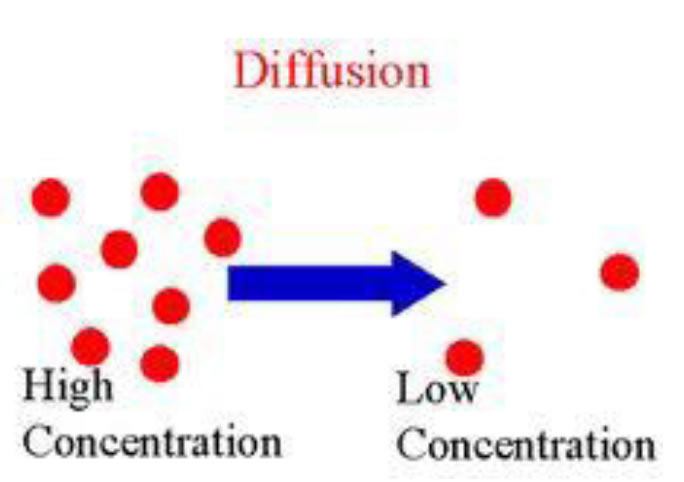
What type of transport is illustrated?
a)
facilitated diffusion
b)
active transport
c)
diffusion
d)
osmosis
131.
What type of transport is illustrated?
a)
facilitated diffusion
b)
active transport
c)
diffusion
d)
osmosis
132.
The picture is an example of...
a)
active tranport
b)
passive transport
c)
diffusion
d)
osmosis
133.
The picture is an example of...
a)
active tranport
b)
passive transport
c)
diffusion
d)
osmosis
134.
The cell membrane is made mostly of
a)
phospholipid monolayer and proteins
b)
phospholipid bilayer and proteins
c)
proteins and carbohydrates bilayer
d)
triglycerides and carbohydrates
135.

What is diffusion

a)

The movement of small particles from an area of high concentration to an area of low concentration

b)

The movement of large particles from an area of high concentration to an area of low concentration

c)

The movement of small particles from an area of low concentration to an area of high concentration

d)

The movement of large particles from an area of low concentration to an area of high concentration

136.

Under anaerobic conditions yeast release

a)

oxygen

b)

carbon monoxide

c)

lactic acid

d)

ethyl alcohol

137.

Lactic acid is produced by

a)

yeast during cellular respiration

b)

yeast during anaerobic respiration

c)

human muscles cells during aerobic respiration exercise

d)

muscle cells when they receive sufficient oxygen to power physical activity

e)

none of thee

138.

The term aerobic means

a)

wine-making

b)

with carbon dioxide

c)

without carbon dioxide

d)

with oxygen

e)

without oxygen

139.

Respiration ____ and cellular respiration ____.

a)

produces ATP, is gas exchange

b)

is gas exchange, produces ATP

c)

produces glucose, produces glucose

d)

uses glucose, produces glucose

140.

Humans use calories they obtain from ____ as their energy source.

a)

food

b)

water

c)

sunlight

d)

minerals

141.

During redox reactions

a)

the loss of electrons from one substance is called oxidation

b)

a substance that gains electrons is said to be reduced

c)

electrons are lost from one substance and added to another substance

d)

protons lost from one molecule replace the electrons lost from another molecule

142.

During cellular respiration, NADH

a)

is converted by NAD+ by enzyme called dehydrogenase

b)

is converted directly to ATP

c)

is reduced from NAD+

d)

is involved in an exergonic reaction when it gives up electrons to other molecules

143.

Oxidation is the ____ and reduction is the _____.

a)

gain of electrons...loss of electrons

b)

loss of electrons.... gain of electrons

c)

loss of oxygen...gain of oxygen

d)

gain of oxygen...loss of oxygen

144.

The functioning of an electron transport chain can be analogized with

a)

a slinky going downstairs

b)

going over a waterfall

c)

climbing a flight of stairs one step at a time

d)

jumping from the top to the bottom of a flight of stairs

145.

which of the following is the result of glycolysis?

a)

reduction of FAD to FADH2

b)

production of carbon dioxide

c)

conversion of glucose to 2 three carbon compounds

d)

conversion of NADH to NAD+

146.

Glycolysis

a)

does not occur in plant cells

b)

does not occur in animal cells

c)

does not occur in bacterial cells

d)

takes place in virtually all cells

147.

The end products of the KREBS cycle include all of the following except

a)

carbon dioxide

b)

pyruvic acid

c)

ATP

d)

NADH

148.

In the electron transport chain, electrons are passed from one electron transport molecule to another and are finally accepted by

a)

an oxygen molecule

b)

a molecule of carbon dioxide

c)

a molecule of water

d)

ADP

149.

Which of the following processes is most efficient (produces most ATP per molecule if glucose oxidized)

a)

aerobic respiration

b)

anaerobic respiration

c)

alcoholic fermentation

d)

lactic acid fermentation

150.

Bacteria that are unable to survive in the presence of oxygen are called

a)

strict anaerobes

b)

aerobes

c)

facultative anaerobes

d)

chemosynthetic bacteria

151.

In yeast cells,

a)

lactic acid is produced during anaerobic respiration

b)

lactic acid is produced by glycolysis

c)

alcohol is produced during KREBS cycle

d)

alcohol is produced after glycolysis

152.

In yeast cells,

a)

lactic acid is produced during anaerobic respiration

b)

lactic acid is produced by glycolysis

c)

alcohol is produced during KREBS cycle

d)

alcohol is produced after glycolysis

153.
What is a substance called if it speeds up a chemical reaction?
a)
reusable
b)
catalyst
c)
specific
d)
fragile
154.
With what 3 letters do enzymes typically end?
a)
-ose
b)
-ase
c)
-ese
d)
-tic
155.
With what 3 letters do enzymes typically end?
a)
-ose
b)
-ase
c)
-ese
d)
-tic
156.
Any substance that is acted upon by an enzyme is called a(n)?
a)
Coenzyme
b)
Substrate
c)
Vitamin
d)
Polypeptide
157.
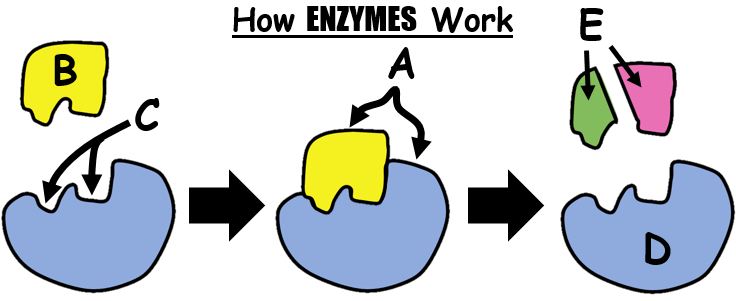
In the diagram, what is letter A? 
a)
product
b)
substrate
c)
enzyme-substrate complex
d)
active site
158.
Enzymes are...
a)
nucleic acids
b)
proteins
c)
lipids
d)
carbohydrates
159.
An enzyme speeds up a chemical reaction in the cell but can only be used once.  True or False? 
a)
true
b)
false
160.
An enzyme speeds up a chemical reaction in the cell but can only be used once.  True or False? 
a)
true
b)
false
161.
Where do substrates bind on an enzyme?
a)
voltage-gated channels
b)
surface receptor
c)
calcium channels
d)
active site
162.

Which 2 factors can affect the rate of enzyme activity?

a)

Light intensity

b)

Temperature

c)

pH

d)

Oxygen concentration

163.
What is structure E, F, G?
a)
Substrate
b)
Active site
c)
Enzyme
d)
Products
164.

What happens when enzymes are heated to a high temperature?

a)

The enzymes die

b)

The shape of the enzyme changes as it denatures

c)

The enzymes become more active

d)

The enzymes remain the same

165.

Which of the following denatures an enzyme?

a)

High Temperatures

b)

Incorrect pH

c)

Both

166.
Each enzyme only has 1 substrate that will fit its active site.  What is this called?
a)
reusable
b)
catalyst
c)
specificity 
d)
fragile
167.
A new organism is produced from one parent organism.
a)
Sexual Reproduction
b)
Asexual Reproduction
168.
Mitosis is a type of ________________ reproduction.
a)
Sexual
b)
Asexual
169.
Results of cell division or mitosis include all of the following EXCEPT?
a)
growth
b)
repair damaged cells
c)
replace damaged cells
d)
dead cells
170.
How many chromosomes does a human cell have?
a)
42
b)
46
c)
24
d)
64
171.
How many daughter cells are produced in mitosis?
a)
1
b)
2
c)
4
d)
6
172.
Where does an off spring get its traits in asexual reproduction?
a)
From both parents
b)
From only one parent
c)
From neither parent
d)
There are no traits handed down
173.
Sexual reproduction requires _____ parents and asexual reproduction requires ___ parents
a)
1,1
b)
2,2
c)
2,1
d)
1,2 
174.

California blackworms, also known as mudworms, are able to break apart. Each body section that broke apart is able to become an identical new worm. What type of reproduction does this example represent?

a)

Sexual reproduction

b)

Asexual reproduction

175.

Reproducing asexually will produce offspring ...

a)

genetically different from each other

b)

genetically identical to the parent

176.
What is a disadvantage of asexual reproduction?
a)
New species of organisms cannot come into being.
b)
The offspring does not multiply rapidly.
c)
The offspring does not live for long.
d)
All of these
177.
Passes genetic information
onto future generations
a)
sexual reproduction
b)
asexual reproduction
c)
both
178.
What percentage of chromosomes are handed down by a sperm cell?
a)
75%
b)
25%
c)
50%
d)
100%
179.
Is budding an example of asexual or sexual reproduction?
a)
sexual
b)
both
c)
asexual
d)
neither
180.

Which of these are part of the Cell Cycle?

a)

Mitosis

b)

Interphase

c)

Prophase

d)

Metaphase

e)

Cytokines

181.

Which of these are part of Mitosis?

a)

Metaphase

b)

Prophase

c)

Anaphase

d)

Telophase

e)

Cytokines

182.

What are the "X" shaped things in the drawing.

a)

PMATs

b)

Chromosomes

c)

Ribosomes

d)

Telophase

183.

During what phase of Mitosis do the chromosomes line up in the Middle

a)

Metaphase

b)

Prophase

c)

Telophase

d)

Anaphase

184.

PMAT helps us remember the correct order of the phases of Mitosis. Which of the following has the phases of Mitosis in the correct Order

a)

Interphase, Mitosis, Cytokinesis

b)

Prophase, Metaphase, Anaphase, Prophase

c)

Anaphase, Telophase, Prophase, Telophase

d)

Prophase, Metaphase, Anaphase, Telophase

185.

How many chromosomes to do most human cells have?

a)

2

b)

46

c)

92

d)

Identical to your age