Wayground logo

Free Printable Worksheets

Font size

S
M
L
XL
Worksheets

2021 Science 2nd Semester Exam

Total questions: 67

Worksheet time: 1hrs 19mins

Name
Class
Date
1.
A cell is...
a)
the basic unit of structure and function in living organism
b)
an organism
c)
a basic part of everything that we see
d)
found only in animals, not plants
2.
Which of the following are NOT found in animal cells
a)
chloroplasts and cytoplasm
b)
chloroplasts and cell wall
c)
cell wall and cell membrane
d)
mitochondria and nucleus
3.
The nucleus is like the ____________ of the cell.
a)
foot
b)
hand
c)
stomach
d)
brain
4.

Which of the following converts food into energy for the cell?

a)

vacuole

b)

mitochondria

c)

cytoplasm

d)

cell membrane

5.
What do vacuoles do? 
a)
They actually do not have an important role
b)
They protect the cell
c)
They are the brain of the cell
d)
storage area for cells; water storage in plants 
6.

Which organelle takes in "sun showers" and helps plants with the process or photosynthesis?

a)

Vacuole

b)

Mitochondria

c)

Cytoplasm

d)

Chloroplast

7.
Which cell structure is found in plant and animals cells and controls what can come into or leave a cell?
a)
cell membrane
b)
cytoplasm
c)
nucleus
d)
vacuole
8.
This is the most basic unit of life
a)
atom
b)
cell
c)
nucleus
d)
DNA
9.
Which of the following is the correct order of organization in living things from most basic (simple) to most complex?
a)
a.  Organism, cell, tissue, organ, organ system
b)
a.  Organ system, organ, tissue, cell, organism
c)
a.  Cell, tissue, organ, organ system, organism
d)
a.  Cell, organ, tissue, organ, organism, organ system
10.
Which is an example of an organism?
a)
a beetle
b)
a lake
c)
a rock
d)
a shell
11.
Physical changes size and shape of something?
a)
False
b)
True
12.
When something new is created or a substance is broken down into diffrent chemicals, you have a chemical change.
a)
True
b)
False
13.
Is hammering wood together to build a house a chemical or physical change?
a)
chemical
b)
physical
14.
Is burning wood a chemical or physical change?
a)
chemical
b)
physical
15.
Digesting your food is an example of 
a)
chemical change
b)
physical change
16.
A trait or behavior that helps organisms survive and reproduce 
a)
Instinct
b)
revolt
c)
adaptation 
d)
habitat
17.
What is it called when an organism changes color to blend in with their environment?
a)
Camoflauge
b)
Blending
c)
Fashion
d)
Adaptation
18.
How do adaptations help animals?
a)
To escape animals
b)
to hunt for food
c)
to survive in their habitats
d)
All of these are correct
19.

___________ is when animals go into a deep sleep causing their bodies to slow down.

a)

Mimicry

b)

Migration

c)

Dormancy

d)

Hibernation

20.

___________ is a term used to describe animals that blend into their habitats.

a)

Mimicry

b)

Camouflage

c)

Adaptations

d)

Instincts

21.

___________ is when some animals travel long distances from one place to another, usually during seasonal changes.

a)

Hibernation

b)

Migration

c)

Dormancy

d)

Mimicry

22.

What would happen to the bird if the green fish died out?

a)

the bird population would grow

b)

the bird population would die out

c)

the smaller fish will die out

23.

What is the bottom layer of the an energy pyramid?

a)

producer

b)

tertiary consumer

c)

Secondary consumer

d)

primary consumer

24.

What does an energy pyramid show?

a)

Energy flow in a community

b)

Longest lifespans

c)

The stronger animal the higher it is on the pyramid

25.

What would happen if their were no producers?

a)

Every population would grow larger

b)

Everything would die out

c)

The animals would make their own food

26.
The snake is a predator to what prey in this food chain?
a)
frog
b)
grass
c)
grasshopper
d)
hawk
27.
The frog is a prey to what predator in this food chain?
a)
snake
b)
grass
c)
grasshopper
d)
hawk
28.
Why is a deer classified as a herbivore?
a)
A deer makes its own food.
b)
A deer eats only plants.
c)
A deer eats only animals.
d)
A deer eats plants and animals.
29.
Why is a racoon classified as an omnivore?
a)
A racoon eats only animals.
b)
A racoon eats only plants.
c)
A racoon makes its own food.
d)
A racoon eats plants and animals.
30.
What are organisms that use other organisms for food in order to gain energy?
a)
decomposers
b)
producers
c)
herbivores
d)
consumers
31.
The ____________ is the most photosynthetic part of a plant.
a)
leaf
b)
flower
c)
roots
d)
stem
32.
____________________ provides the energy necessary for photosynthesis.
a)
water
b)
sunlight
c)
glucose
d)
soil
33.
the products of photosynthesis are...
a)
glucose and sunlight
b)
carbon dioxide and water
c)
glucose and chlorophyll
d)
oxygen and glucose
34.
This is ...
a)
mitochondria
b)
chloroplast
c)
cell
d)
phloem
35.

How do you "win" at natural selection?

a)

survive

b)

go extinct

c)

survive & reproduce

36.

What word describes a trait that helps an organism survive in its environment?

a)

natural selection

b)

mutation

c)

camouflage

d)

adaptation

37.
Which organisms are most likely to survive?
a)
the best adapted
b)
the fastest
c)
the strongest
d)
the most domesticated (tamed)
38.
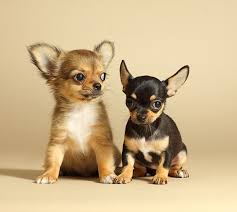
Dogs such as Chihuahuas are examples of....
a)
Artificial Selection 
b)
Natural Selection 
c)
Mutations 
39.

Natural Selection is driven by a change in the environment and survival of the

a)

Earth

b)

Fastest

c)

Fittest

d)

Biggest

40.
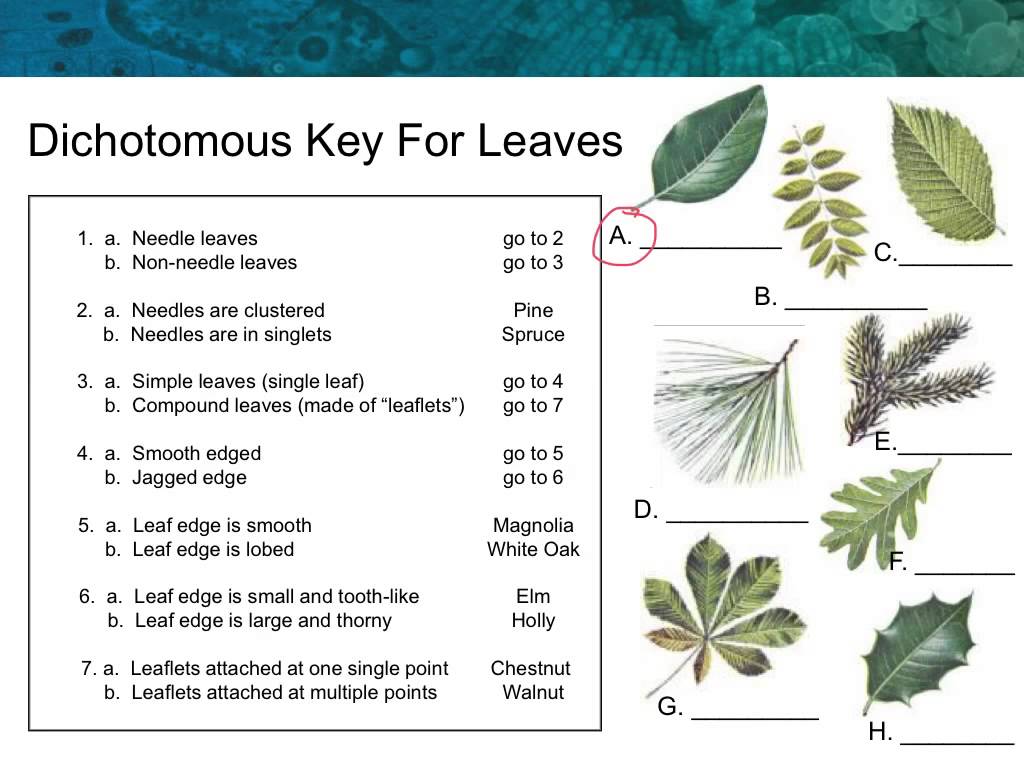
A dichotomous key for trees is provided. Hikers found a tree that has large brown cones and single sharp needles. What species of tree have the hikers found?
a)
Juniper
b)
Pine
c)
Spruce
d)
Fir
41.
A dichotomous key for insects is given. To what order does an insect with two pairs of scaly wings belong?
a)
Coleoptera
b)
Heteroptera
c)
Diptera
d)
Lepidoptera
42.
What step do we always start with when using dichotomous keys?
a)
1
b)
2
c)
3
d)
4
43.
When using a dichotomous key to identify organisms, what do we look at?
a)
physical features
b)
weather patterns
c)
environment
d)
diet
44.
What is a dichotomous key used for in science?
a)
To organize biomes
b)
Classify organisms
c)
Identify bacteria only
d)
None of these
45.
Where does the energy that travels through an ecosystem originally come from?
a)
Earth's Core
b)
Water
c)
Plants
d)
The Sun
46.

Which of the following organisms is a herbivore?

a)

grass

b)

rabbit

c)

fox

d)

snake

47.
Food of almost any kind can be traced back to what?
a)
the sun
b)
animals
c)
plants
d)
soil
48.
This diagram is a model of which of these?
a)
food web
b)
food pyramid
c)
food chain
d)
life cycle
49.
Where do zebras fit into the food web?
a)
middle
b)
bottom
c)
top
d)
side
50.

Arrows in a food web represent...

a)

eating

b)

sunlight

c)

energy

d)

matter

51.

The energy transformation for photosynthesis

a)

chemical to water

b)

light to radiant

c)

thermal to chemical

d)

radiant to chemical

52.

How do biodiversity and stability work together?

a)

The lower the biodiversity the greater the stability of an ecosystem.

b)

The higher the biodiversity, the less stable the ecosystem

c)

The higher the biodiversity, the greater the stability of the ecosystem.

d)

Biodiversity has nothing to do with ecosystem stability.

53.
High biodiversity is 
a)
having a lot of the same organism.
b)
having a few of the same organism.
c)
having a lot of variety of different organisms.
d)
only having one of each organism. 
54.

Which ecosystem is more likely to survive a change in the environment?

a)

One with High biodiversity

b)

One with Low biodiversity

55.
The habitat of a moth species included trees with both light and dark colored bark.Therefore the moth species included both light and dark colored variants.Then the light-colored trees were wiped out by a disease, and within a few years nearly all the moths in this forest were dark colored. Which of the following choices BEST explains what happened?
a)
The light moths that survived all had dark offspring in order to adapt to the change.
b)
The dark moths were less visible to predators, so mostly light moths were eaten.
c)
The few light moths that survived did not mate, and therefore they had no offspring.
d)
The light moths changed their wing pigments to darker colors to avoid being eaten.
56.

Temperature, light, air, water, and soil are all _____ parts of the environment

a)

alive

b)

biotic

c)

abiotic

d)

living

57.

What is an example of a biotic factor?

a)

skunk

b)

rocks

c)

soil

d)

water

58.
Organisms that make up the living part of an ecosystem.
a)
abiotic
b)
biotic factors
c)
ecology
d)
ecosystems
59.
Nonliving things found in an ecosystem.
a)
factories
b)
factor trees
c)
biotic factors
d)
abiotic factors
60.
A habitat is a specific place that an animal lives.
a)
True
b)
False
61.
A place where plants and animals live and grow is called a ____________. It provides, food, water, shelter, and air.
a)
shelter
b)
tree
c)
habitat
d)
organism
62.
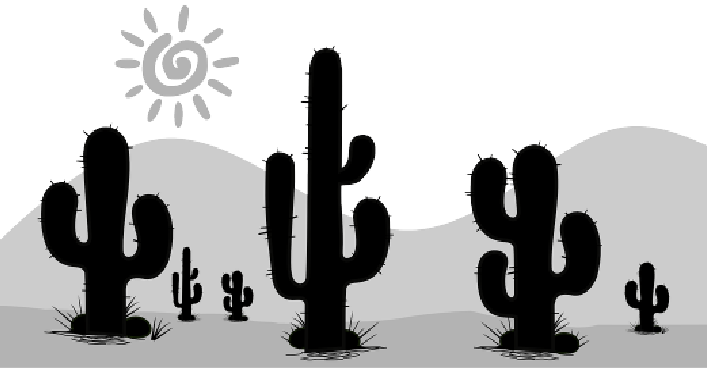
Which biome covers most of the land mass near the Earth's equator?
a)
tundra
b)
desert
c)
grassland
d)
tropical rainforest
63.
Areas defined by their geographical location and ecological similarity are called?
a)
ecozones
b)
biotopes
c)
biomes
d)
biodomes
64.
The underside of a rotting log is an example of a:
a)
Taiga
b)
Microhabitat
c)
Savanna
d)
Biome
65.
An example of an organism that might live in a microhabitat is...
a)
spider
b)
fox
c)
deer
d)
raccoon
66.

Tree Stump

a)

Habitat

b)

Microhabitat

67.

Beneath a rock

a)

Habitat

b)

Microhabitat