
 Worksheets
SCIENCE FORM 3: RESPIRATION
Total questions: 40
Worksheet time: 40mins

NUMBER 6 is
Lungs
Trachea
Mouth
Alveoli

NUMBER 3 is
Pharynx
Trachea
Bronchi
Alveoli
Which are the main organs in the respiratory system?
Heart
Stomach
Lungs
Nose
What is the function of the respiratory system?
Take in oxygen only
Remove carbon dioxide only
Take in oxygen and remove carbon dioxide
Make sugar
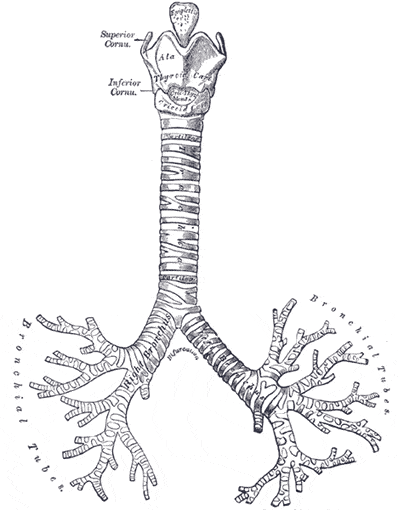
This tube is also known as wind pipe. What is the name of the tube?
Oesophagus
Bronchi
Trachea
Alveoli
Which of these organs is not a part of the respiratory system?
Trachea
Lungs
Heart
Pharynx
Trachea, bronchi, lungs, and alveoli belong to this system. name the system.
Digestive system
Circulatory system
Respiratory system
Endocrine system
This muscle helps the lungs to expand and contract during breathing. Name this muscle.
Intercostal muscle
Nasal cavity
Diaphragm
Rib cage
Given the following structures:
P - lungs
Q - nasal cavity
R - bronchi
S - trachea
T - pharynx
Which of the following is the correct order that air would flow during inhalation.
P,Q,T,R,S
Q,T,S,R,P
Q,P,R,S,T
S,T,Q,R,P
Which sequence correctly indicates the branching pattern of the human respiratory system?
trachea -> bronchi -> bronchioles -> alveoli
trachea -> bronchioles -> bronchi -> alveoli
alveoli -> trachea -> bronchioles -> bronchi
alveoli -> bronchioles -> trachea -> bronchi

Which structure shown in the diagram below contracts, causing a pressure change in the chest cavity during breathing?
A
B
C
D
When we inhale, Our diaphragm
curved upwards
contracts
flatterns
relax
What is the respiratory system ?
The respiratory system is the system that helps circulate our blood .
The respiratory system is the system that helps to breath in oxygen and breath out carbon dioxide.
The respiratory system is a system that is similar to the circulatory system.
The respiratory system is a system that holds the heart as an internal organ.

Identify the pathway of air during inhalation.
nasal cavity, throat, bronchioles, bronchi, alveoli
mouth, nasal cavity, bronchi, bronchioles, alveoli
mouth, nasal cavity, trachea, bronchi, bronchioles, alveoli
nostril, nasal cavity, trachea, bronchi, bronchioles, alveoli
Gaseous exchange occurs when...
oxygen diffuses from the alveoli to the capillary
carbon dioxide diffuses from the alveoli to the capillary
oxygen diffuses from the capillary to the alveoli
carbon dioxide diffuses from the capillary to the alveoli
Complete the word equation below.
Oxygen + haemoglobin = ?
oxygenated haemoglobin
oxygenhaemoglobin
oxyhaemoglobin
oxygenglobin
Name the process occurs during the gaseous exchange.
Diffusion
Osmosis
Respiration
Transpiration
Blood that flows in the capillary from the heart to the body cells has ...
Higher concentration of carbon dioxide and a lower concentration of oxygen
Higher concentration of oxygen and a lower concentration of carbon dioxide
Exhaled air contains more _____________ gas than inhaled air.
oxygen
nitrogen
carbon dioxide
carbon monoxide
Blood rich in _____________ flows to the body cells. Blood rich in __________ back to the heart.
oxygen, carbon dioxide
oxygen, carbon monoxide
carbon dioxide, oxygen
carbon monoxide, oxygen

Which one is not features to ensure an efficient gaseous exchange with the surroundings?
Moist surface of respiratory structures
Thin respiratory structures such as the walls of blood capillaries
Dry outer skin causes the respiratory gases to dissolve and diffuse easily
Large surface area of respiratory structures

When we exercise, rate of respiration
increases. Higher rate of transportation of
.................... to body cells and higher rate of
elimination of ....................... from body
cells result in healthier body cells.
oxygen , carbon monoxide
oxyhaemoglobin , carbon monoxide
carbon dioxide , oxygen
oxygen , carbon dioxide

Name A
Trachea
Lung
Alveolus
Blood capillary
Name B
Trachea
Lung
Alveolus
Blood capillary
Based on the diagram, carbon dioxide diffuses from
A to B
B to A
Base on the diagram, oxygen diffuses in from...
A to B
B to A
Which of the following are the features of the ALVEOLI that can increase the rate of gaseous exchange?
I. Large surface area
II. Thin walls
III. Dry surfaces
I & II ONLY
I ONLY
II AND III
I, II AND III
Blood that flow from the body cells to the heart has...
lower concentration of oxygen and higher concentration of carbon dioxide
higher concentration of oxygen and lower concentration of carbon dioxide
same concentration of oxygen and carbon dioxide
Inhaled air contains higher _____________ gas than exhaled air.
oxygen
nitrogen
carbon dioxide
carbon monoxide
Which of the following is the effect of smoking?
Lung cancer
Emphysema
Bronchitis
All above
Lung cancer is caused by cancer causing chemicals known as...
cancer substances
cancernogens
carcinogens
carcases
Name two respiratory structures of frog.
gills and trachea
trachea and lungs
lungs and moist skin
trachea and moist skin
Which of the following is NOT TRUE about the respiratory system of a fish?
the respiratory structure namely gills can increase the exchange of gaseous in water
made up of two rows of fine filaments that have many lamellae
Gills are connected to trachea system that made up of tubes
gills are surrounded by water to let respiratory gases to dissolve and diffuse easily
Gaseous exchange in plants CANNOT occur through their....
leaves
stems
roots
fruits

Diagram shows a structure of open stoma. Name part labeled K.
Stoma
Plant cells
Guard cells
Which of the following is true about stoma?
open when it gets dark
become turgid and curve at night
become flaccid and straight during day
close during hot days to reduce the loses of water

Base on the diagram, which of the following best explain about osmosis?
process of movement of water molecules from a region of high concentration of water molecules to a region of low
concentration of water molecules
process of movement of solute molecules from a region of high concentration of water molecules to a region of low
concentration of water molecules
process of movement of solute molecules from a region of high concentration of solute molecules to a region of low
concentration of solute molecules
Which of the following are the effects of haze and dust on the survival of plants?
kill the plants cell
reduce agricultural products
prevent sunlight reaching the plant
prevent gaseous exchange between plants and surroundings

