
 Worksheets
Enzymes1
Total questions: 43
Worksheet time: 19mins
The substance that binds to an enzyme is called a?
Polypeptide
Co-enzyme
Vitamin
Substrate
Which of the following best explains why enzymes are necessary for reactions in our cells?
The reactions are too slow to meet the needs of the cell if enzymes are missing.
Enzymes supply the oxygen necessary for the reactions.
Enzymes change reactants from solid to liquid during the reactions.
The reactions take up too much space in the cell if enzymes are missing.
Changes in pH and temperature can ___________________ an enzyme which causes it to lose its shape and affects its function.
puncture
denature
double
delete
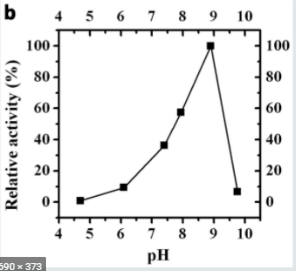
What is the optimal pH for this enzyme?
6
10
9
7
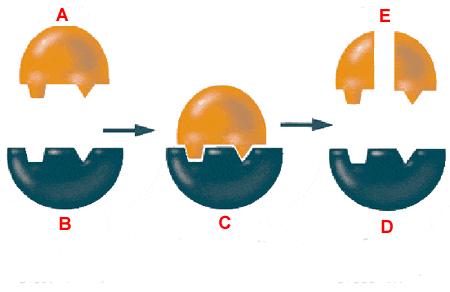
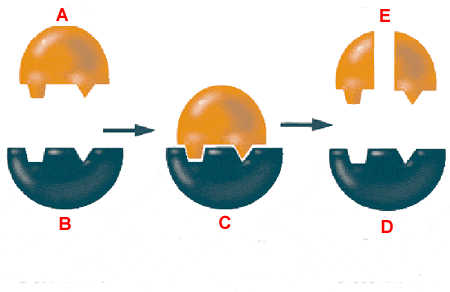
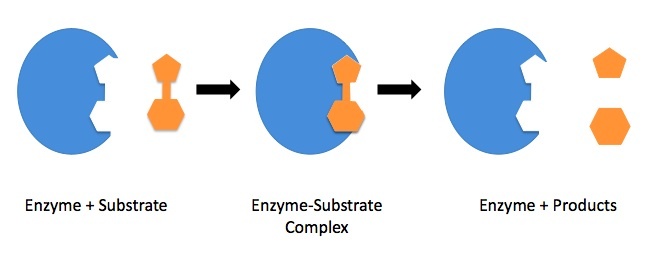
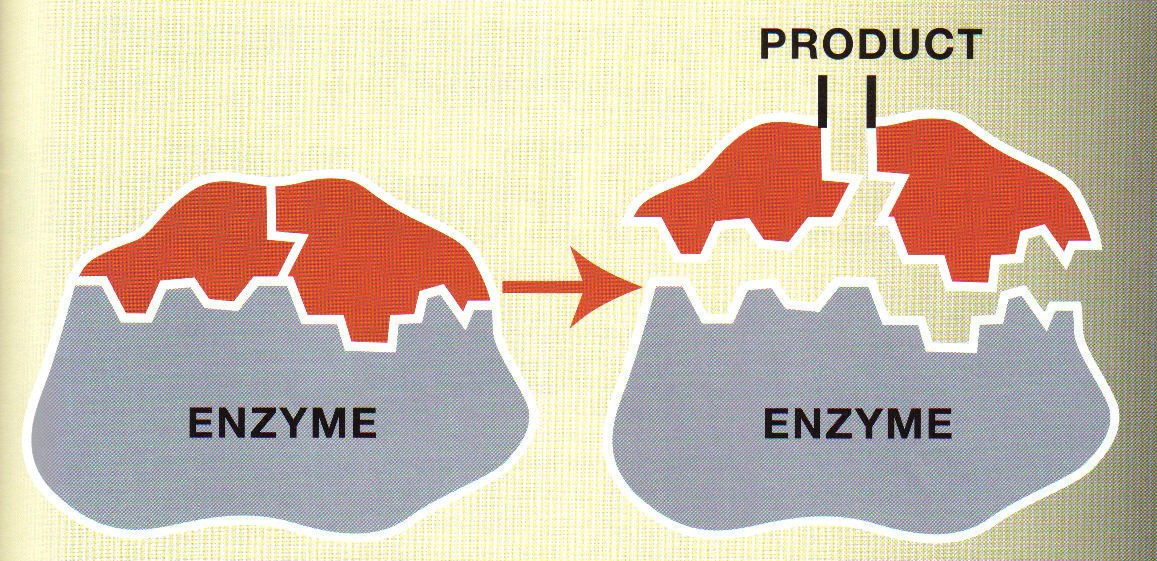
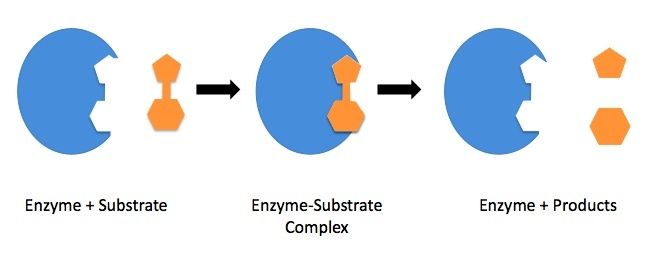
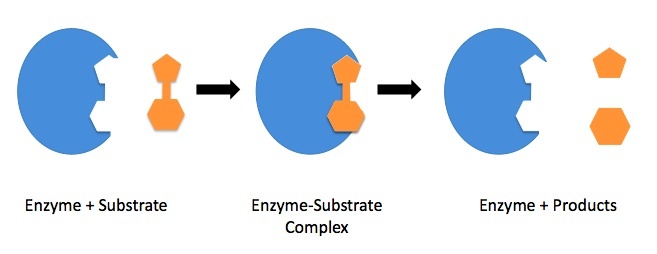
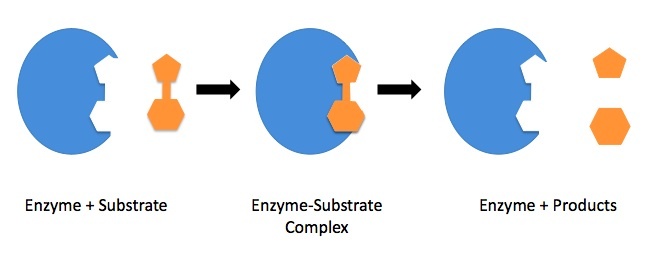
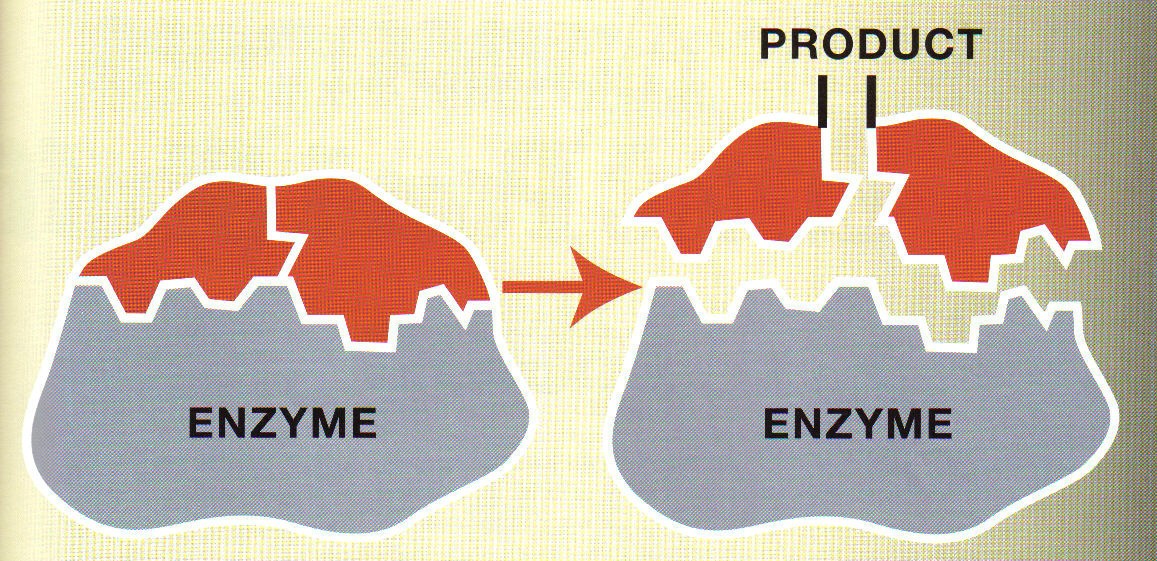
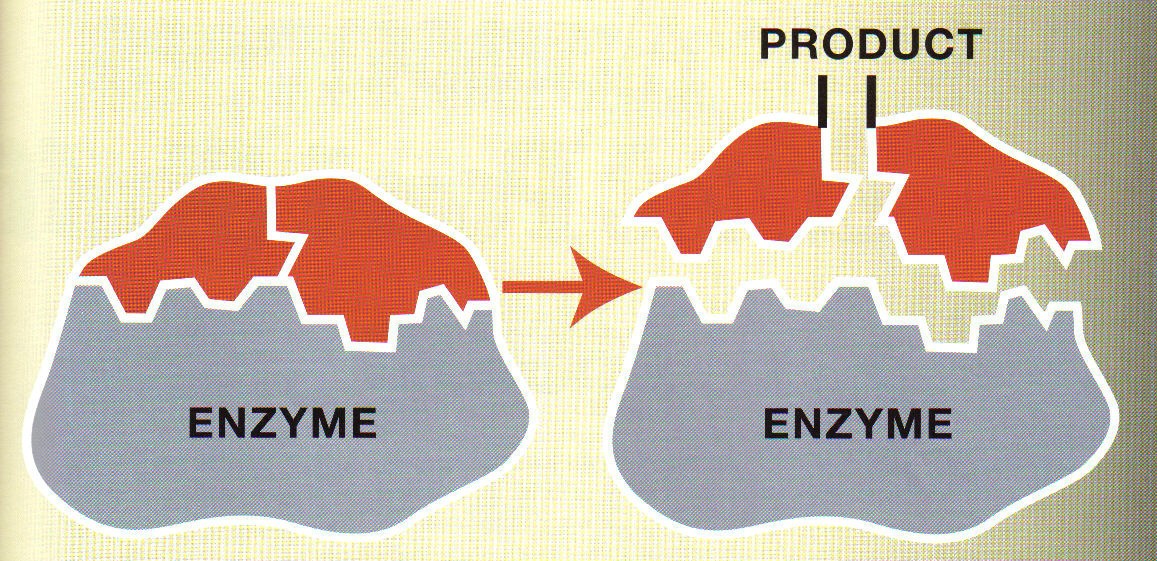
The ____________________ mechanism describes how each substrate must fit into the enzyme.
lock and key
hammer and nail
jigsaw puzzle
seesaw
The _____________________ mechanism describes how an enzyme changes shape once the substrate is bonded.
hammer and nail
induced fit
jigsaw puzzle
lock and key
What is the purpose of an enzyme?
control how many reactions occur
raise activation energy
give permission for the reaction
speed up chemical reactions
Where do substrates bind to an enzyme?
calcium channels
active site
receptor molecules
voltage-gated channels
Once a new product leaves an enzyme, the enzyme is unchanged and ready for the next substrate. What is this called?
fragile
reusable
specific
catalyst
All of the following affect the functioning of an enzyme EXCEPT:
pH
temperature
metabolism
enzyme concentration, substrate concentration, inhibitor molecules
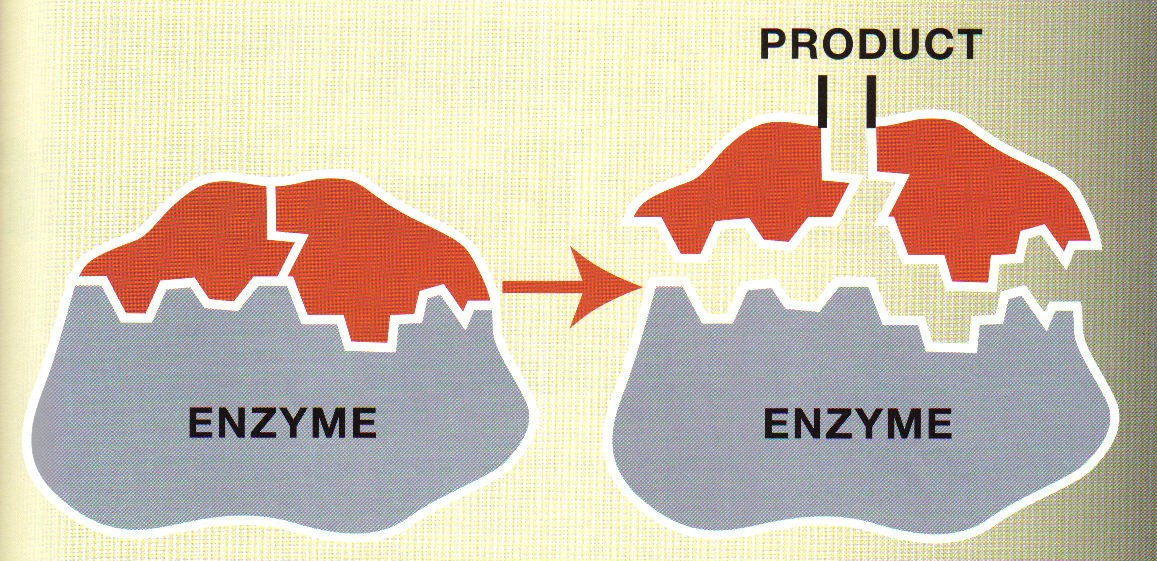
After the enzyme and substrate bind together and perform the reaction, what does the substrate become?
a substrate
an active site
an enzyme
a product
Enzymes are _______________ that _____________________ chemical reactions by ____________ the amount of activation energy required to start the reaction.
carbohydrates, slow down, lowering
proteins, speed up, increasing
lipids, speed up, lowering
proteins, speed up, lowering
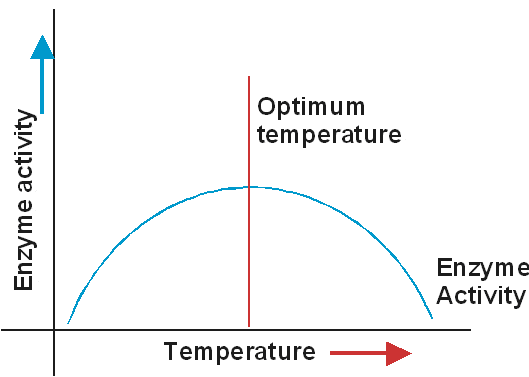
Enzymes in your body probably work best at which of the following temperatures>
25oC
98oC
37oC
210oC
What is cofactor?
A non-protein portion that is required for proper functioning of an enzyme.
A protein that is required for proper functioning of an enzyme.
A non-protein portion that decreases the rate of reaction of the enzyme.
A protein that decreases the rate of reaction of the enzyme.
Most coenzymes may be included in classes of foodstuffs known as:
Minerals
Fats
Vitamins
Metallic ions
A metal ion activator is differentiated from the broader class of cofactors because it is _____.
organic
inorganic
neutral
toxic
What impedes enzymatic reactions by binding to the enzyme and causes conformational changes of the active site?
non-competitive inhibitor
competitive inhibitor
coenzymes
cofactors
Most synthetic reactions in which carbon dioxide is used require the vitamin biotin.
The biotin becomes covalently bound to a lysine molecule that is part of an enzyme, and the biotin can then attach to and carry the carbon dioxide molecule.
Biotin is best referred to as (a)

What is Y ?
apoenzyme
holoenzyme
The enzyme carbonic anhydrase found in the blood has a prosthetic group containing
Cl-
Cl2-
Zn2+
Zn2-
Vitamin precursor of FAD and NAD are
Thiamine and Niacin
Niacin and pantothenic acid
Ascorbic acid and Folic acid
Riboflavin and Niacin
Coenzyme A in involved in
Proton transfer
oxidation-reduction reaction
Acylation reaction (acetyl group transfer)
all of the above
coenzyme of carbonic anhydrase is..
Mg
Zn
Mn
Se
Transamination reactions involve
TPP
PLP
FAD
NAD
Vitamin precursor of Coenzyme A is..
Nicotinic acid
Pantothenic acid
ascorbic acid
Pyruvic acid
Which if the Vitamin can be synthesized in body by tryptophan?
Riboflavin
Niacin
Thiamine
Pantothenic acid
These reactions occur when smaller molecules are bound together to create larger ones
activation energy
peptide bond
anabolic reaction
catabolic reaction
NAD+ is the example of
metal ions
coenzyme
prosthetic group

