wayground logo

Free Printable Worksheets

NEW

Font size

S
M
L
XL
Worksheets

Chapter 2: Organelles

Total questions: 40

Worksheet time: 53mins

Name
Class
Date
1.

Which organelle contains DNA and controls the cell?

a)

Cell membrane

b)

nucleus

c)

nucleolus

d)

lysosme

2.

Which organelle controls what goes in and out of the cell?

a)

nucleus

b)

nucleolus

c)

cell membrane

d)

nuclear membrane

3.

This organelle digests dead cell parts and contains enzymes

a)

lysosome

b)

golgi body

c)

smooth ER

d)

Rough ER

4.

This pigment is found in chloroplasts.

a)

rhodopsin

b)

chlorophyll

c)

thylakoid

d)

stroma

5.

Proteins are produced at this organelle.

a)

golgi body

b)

ribosome

c)

cytoskeleton

d)

cilia

6.

this organelle makes ATP.

a)

chloroplast

b)

mitochondria

c)

ribosome

d)

nucleolus

7.

This organelle produces the spindle fiber used during mitosis.

a)

lysosome

b)

centriole

c)

cytoplasm

d)

ribosome

8.

Yhis organelle packages and processes proteins

a)

Smooth ER

b)

Rough ER

c)

Golgi body

d)

vacuole

9.
The Golgi apparatus _____.
a)
packages cell products for export
b)
eliminates waste
c)
stores DNA
d)
makes energy
10.
Provides support and protection for the cell while also controlling the movement of materials in and out of the cell.
a)
Cellular Membrane
b)
Nucleus
c)
Ribosomes
d)
Vacuole
11.
The part of the cell that is used for storage.
a)
Nucleus
b)
Cell Membrane
c)
Mitochondria
d)
Vacuole
12.
Why is the nucleus important? 
a)
It give the cell its energy
b)
It stores genetic information
c)
It uses sunlight for food
d)
It makes the proteins
13.
What does the chloroplast do in cells? 
a)
Allows things in and out of cell
b)
Controls the whole cell
c)
Uses sunlight for photosynthesis
d)
Makes energy for the cell
14.
If a cell had the following organelles: nucleus, mitochondria, ribosome, and cell membrane. And DID NOT have a chloroplast and cell wall, what kind of organism is the cell found in? 
a)
Animals only
b)
Plants only
c)
Both plants and animals
d)
Bacteria
15.
If an organism had the following organelles: mitochondria, chloroplast, ribosome, nucleus, cell wall, and cell membrane, what type of organism is the cell found in? 
a)
Only plants
b)
Only animals
c)
Plants and Animals
d)
Animals & Fungi
16.

Liver cells are specialized cells that carry out a multitude of tasks, including the synthesis of cholesterol and the breakdown of protein metabolites. These cells would be expected to contain a large proportion of which organelle relative to all others?

a)

smooth ER

b)

rough ER

c)

golgi

d)

nucleolus

17.
After a protein is constructed at the ribosome, it can be transported to the Golgi complex for modification. What cellular structure is used in this transport?
a)
Lysosome
b)
Mitochondrion
c)
Nuclear pore
d)
Endoplasmic reticulum
18.

Processes and packages proteins

a)

Golgi apparatus

b)

Rough Endoplasmic reticulum

c)

ribosomes

d)

Smooth endoplasmic reticulum

19.

A white blood cell has a greater proportion of a certain organelle to aid in their digestion of foreign bodies.

a)

lysosome

b)

golgi apparatus

c)

smooth er

d)

rough er

20.

vesicles that bud from the Golgi and contain digestive enzymes to break down large molecules

a)

peroxisomes

b)

nucleolus

c)

lysosomes

d)

vacuole

21.
__________ is a stack of thylakoids
a)
Granum
b)
Stomata
c)
Stroma
d)
Chloroplast
22.
The fluid like substance found inside the chloroplast is called
a)
Cytoplasm
b)
Stroma
c)
Thykloids
d)
Cell Wall
23.

Why are cristae important for the function of the mitochondria?

a)

Cristae increase the surface area for energy production.

b)

Cristae are critical for the structure of the mitochondria, because they support its shape.

c)

Cristae denature enzymes that could be harmful to the mitochondria.

d)

Cristae increase the surface area for photosynthesis to occur.

24.

In sperm, the shaft of the flagellum has what type of pattern?

a)

9 + 2

b)

9 + 0

c)

6 + 2

d)

6 + 0

25.

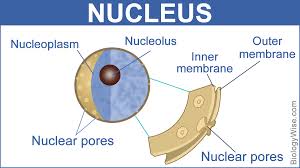
Tiny holes in the nuclear membrane that allow different cellular materials to come in and go out of the cell.

a)

nucleus

b)

nucleoplasm

c)

nucleolus

d)

nuclear pores

26.

Site of protein synthesis.

a)

Golgi apparatus

b)

ribosomes

c)

mitochondria

d)

nucleolus

27.
Semi-permeable layer around the cell that encloses the contents of the cell
a)
nucleus
b)
cell membrane
c)
cell wall
d)
chloroplast
28.
I store water in both plant and animal cells. What am I?
a)
cytoplasm
b)
ribosomes
c)
vacuole
d)
lysosomes
29.
I am the outer most layer of an animal cell. What am I?
a)
cell wall
b)
nucleus
c)
cell membrane 
d)
cell skin
30.
Which organelle uses energy from sunlight to make sugar?
a)
mitochondria
b)
nucleus
c)
chloroplasts
d)
vacuoles
31.
Which of the following is directly involved in the transportation of materials inside/within the cell?
a)
Endoplasmic Reticulum
b)
Vacuole
c)
Lysosome
d)
Mitochondria
32.
You might think of me as the trash collector, but recycler is maybe more accurate. What am I?
a)
mitochondria
b)
lysosome
c)
vacuole
d)
ribosome
33.
What is found in both plant and animal cells but is much larger in plant cells?
a)
Nucleus
b)
Mitochondria
c)
Chloroplast
d)
Vacuole
34.
The site of photosynthesis
a)
ribosome
b)
mitochondria
c)
chloroplast
d)
nucleus
35.

Which of the following describes the function of the nucleolus?

a)

Command Center for the Cell

b)

Produce initial parts of ribosomes

c)

To hold chromosomes

d)

To make DNA

36.

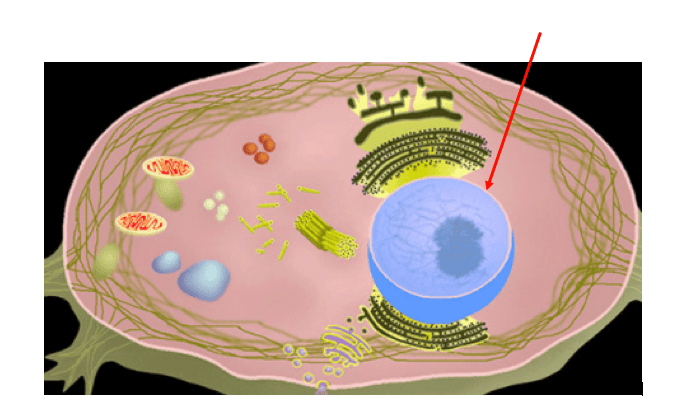
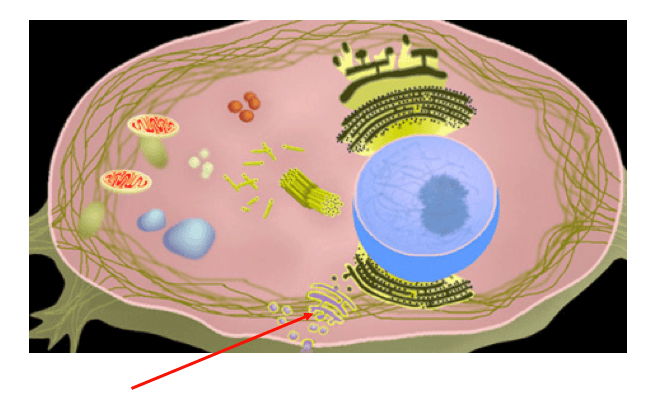
Identify the structure at the end of the arrow.

a)

Mitochondria

b)

Nucleus

c)

Ribosome

d)

Endoplasmic Reticulum

37.

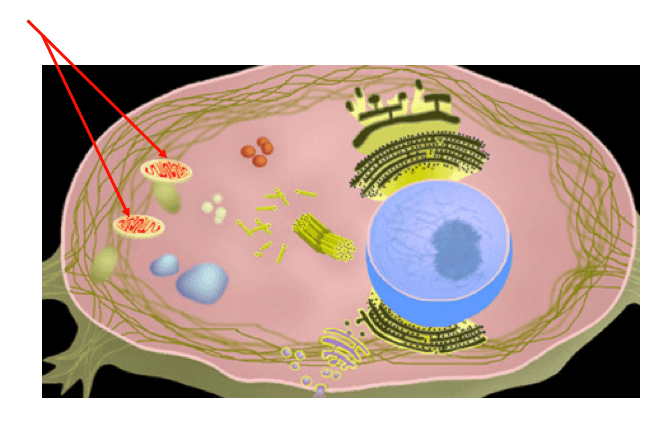
Identify the structures at the bottom of the arrows.

a)

Ribosomes

b)

Golgi Bodies

c)

Mitochondria

d)

Chloroplasts

38.

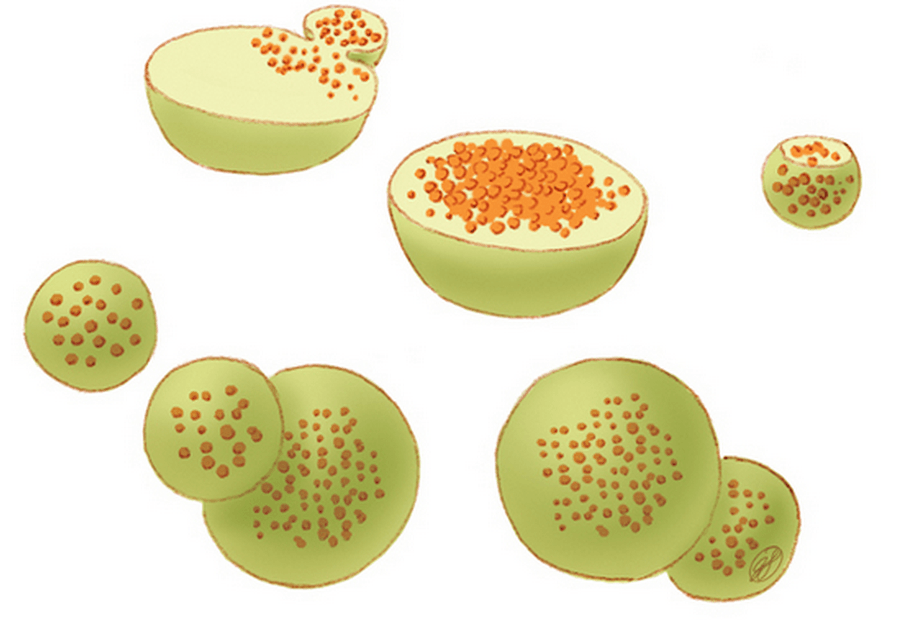
Identify the structure that the arrow is pointing to.

a)

Endoplasmic Reticulum

b)

Golgi Body

c)

Ribosome

d)

Mitochondria

39.
Which of the following are found in all living cells?
a)
ribosomes
b)
cytoplasm
c)
cell membrane
d)
all of the above
40.
What is number 5 pointing to?
a)
nucleus
b)
cell membrane
c)
gogli apparatus
d)
lysosome