wayground logo

Free Printable Worksheets

NEW

Font size

S
M
L
XL
Worksheets

Human & Social Biology End of Year Exam

Total questions: 40

Worksheet time: 22mins

Name
Class
Date
1.

Animal cells can be distinguished from plant cells easily because of which of the following?

a)

Animal cells have mitochondria and plant cells do not.

b)

Plant cells have lysosomes and animal cells do not.

c)

Only plant cells have centrioles around their nucleus.

d)

Only plant cells have large central vacuoles and cell walls.

2.

Jared observes a cell in biology lab with the light microscope. The cell has the following structures: nucleus, cell wall, and chloroplast. Identify the type of cell that Jared is observing.

a)

animal

b)

plant

c)

fungus

d)

bacteria

3.

Hair and nails are mostly filled with the protein keratin. Keratin is produced by keratinocytes. The cells must contain several of which of the following organelles?

a)

mitochondria

b)

endoplasmic reticulum

c)

ribosomes

d)

lysosomes

4.

Identify this type of cell.

a)

animal

b)

plant

c)

protist

d)

bacteria

5.

Carrie observes an electron micrograph of a cell during biology lab. The cell has a flagellum, ribosomes, cell wall, and no apparent nucleus. Which of the following is likely true of the cell that Carrie is observing?

a)

The cell also contains mitochondria.

b)

The presence of the organelles proves that the cell is eukaryotic.

c)

The cell is a plant because of the cell wall.

d)

The cell is prokaryotic.

6.

Look at the cell organelles. Which of these organelles transports organic molecules that are responsible for providing structure and controlling cellular processes?

a)

endoplasmic reticulum

b)

mitochondria

c)

ribosomes

d)

Golgi apparatus

7.
The basic unit of life is called a (n)
a)
atom
b)
compound
c)
cell
d)
energy
8.
A worm turns away from light is an example of a worm
a)
reproducing
b)
doing cellular respiration
c)
having cells
d)
responding to its environment
9.
Which of the following characteristics of living things best explain a cat having a litter of kittens?
a)
living things respond to their environment
b)
living things maintain homeostasis
c)
living things reproduce
d)
living things are based on a genetic code
10.

Which characteristic is shown in the image?

a)

Organisms reproduce

b)

Organisms react to stimuli

c)

Organisms can adapt

d)

Organisms use and obtain energy

e)

Organisms are made up of cells

11.

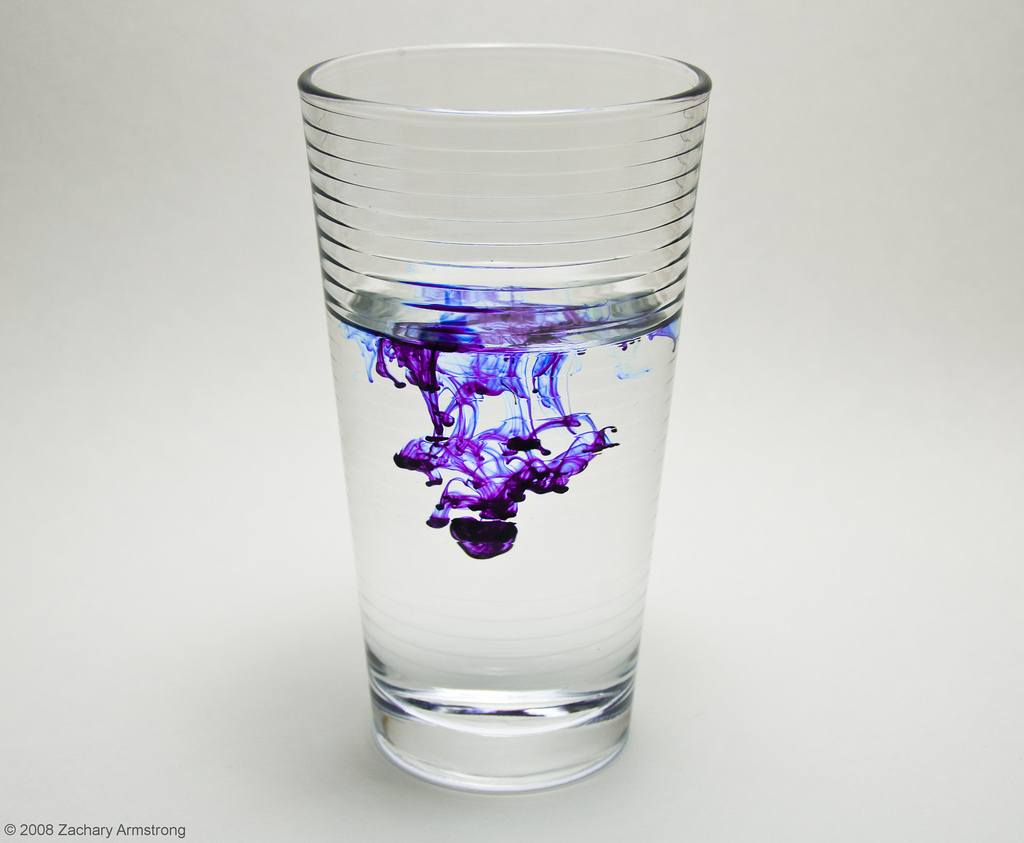
Where is there a low concentration of dye?

a)

at the bottom of cup

b)

in the dye

c)

at the top of cup

d)

at the sides of the cup

12.

Which of the following statements about diffusion is true?

a)

substances move from high to low concentration

b)

diffusion only happens across a partially permeable membrane

c)

water moves from high to low water potential

d)

substances move from low to high concentration

13.

What happens during osmosis?

a)

water molecules moves from high to low concentration without the use of energy

b)

water molecules moves from high to low concentration with the use of energy

c)

water molecules moves from high to low water potential without the use of energy

d)

water molecules move from high to low water potential with the use of energy

14.

Which way would the purple molecules move through the semi permeable membrane?

a)

From the A side to the B side

b)

From the B side to the A side

c)

None of the purple molecules would move.

15.

What is the direction of osmosis?

a)

From left side to right side.

b)

From right side to left side.

16.
What is the definition of  Selective Permeability?
a)
The movement of materials across the cell membrane that requires NO ENERGY from the cell.
b)
The movement of materials through (or across) the cell membrane
c)
The ability of the cell membrane to allow some things to pass through while preventing other things from passing through.
d)
The movement of molecules from an area of high concentration to a area of low concentration 
17.

Osmosis

a)

diffusion of water molecules through a semi-permeable mebrane from an area of low concentration to an area of high concentration

b)

the diffusion of particles from an area of high concentration to an area of low concentration

c)

diffusion of water molecules through a semi-permeable membrane from an area of high concentration to an area of low concentration

d)

the diffusion of particles from an area of low concentration to an area of high concentration

18.
The leaf has a shiny, waxy cuticle around it to
a)
increase the rate of photosynthesis
b)
attract more light
c)
control water loss
d)
stop carbon dioxide and oxygen gases escaping
19.
The direction of the flow of energy in a food web is represented by ___.
a)
Light bulbs
b)
Dotted Lines
c)
Arrows
d)
Bubbles
20.
Which of these is an example of an autotroph?
a)
Sunflower
b)
Krill
c)
Leopard
d)
Hummingbird
21.
Consumer that eats plants
a)
heterotroph
b)
herbivore
c)
producer
d)
community
22.
Which of the following is NOT a consumer
a)
grass
b)
dog
c)
shark
d)
fish
23.
A connection of food chains with many food energy paths in an ecosystem is a ____________
a)
ecosystem
b)
food web
c)
environment
24.
A frog eats a fly. The frog and fly are demonstrating ________.
a)
mutualism
b)
competition
c)
predator/prey
d)
parasitism
25.
The purpose of carbohydrates is:
a)
to provide a layer of insulation for protection.
b)
to boost the immune system and fight off infection.
c)
to provide the body with energy.
d)
to help us get a good night's rest.
26.

Which do you want the most of in your diet?

a)

Protein

b)

Sugar

c)

Trans Fat

d)

Saturated Fat

27.

Which of the following assist in digestion by keeping movement and bulk in the stool?

a)

Monosaccharides

b)

Fiber

c)

Lipids

d)

Amino Acids

28.

This nutrient helps keep your bones and teeth strong

a)

vitamins

b)

carbohydrates

c)

Minerals

d)

Fats

29.
Which nutrient carries nutrients to cells and waste from the body?
a)
carbohydrates
b)
proteins
c)
fats
d)
water
30.
Organic compounds that control several body functions. e.g. A, C, K
a)
Carbohydrates
b)
Metabolism
c)
Vitamins
d)
Digestion
31.
The process of breaking down food into a form the body can use.
a)
Diet
b)
Metabolism
c)
Calories
d)
Digestion
32.
Ashley is getting ready for her soccer game.  Which nutrient will give her body the main fuel for her game? 
a)
Fat
b)
Water
c)
Multi-vitamin
d)
Carbohydrates
33.
How many baby teeth does a typical human child have?
a)
32
b)
10
c)
20
d)
16
34.
How many adult teeth does a typical human adult have?
a)
30
b)
32
c)
20
d)
36
35.
What is the hard outer covering of the tooth called?
a)
pulp
b)
cementum
c)
dentine
d)
enamel
36.
The second hardest tooth tissue that lies underneath the outer layer of the tooth.
a)
pulp
b)
cementum
c)
dentine
d)
enamel
37.
What are the two teeth just lateral to the four front middle teeth called?
a)
incisors
b)
premolars
c)
molars
d)
canines
38.
What are the four front middle teeth called?
a)
incisors
b)
premolars
c)
molars
d)
canines
39.
Which teeth are identified in this picture?
a)
incisors
b)
premolars
c)
molars
d)
canines
40.
Which teeth are identified in this picture?
a)
incisors
b)
premolars
c)
molars
d)
canines