Wayground logo

Free Printable Worksheets

Font size

S
M
L
XL
Worksheets

4th form summer booster quiz

Total questions: 83

Worksheet time: 42mins

Name
Class
Date
1.
What characteristic do all renewable resources share?
a)
Produced by waste products
b)
Form underground from dead organisms.
c)
Replaced in a short period of time
d)
Allow energy to pass through them easily
2.
Which of the following is a fossil fuel?
a)
Wind
b)
Coal
c)
Solar
d)
Biomass
3.
Petroleum and natural gas form from...
a)
strong winds
b)
cooled magma
c)
radioactive materials
d)
remains of plants and animals 
4.
Hydroelectric power produces electricity using.....
a)
Wind
b)
Sunlight
c)
Moving water
d)
Dung
5.
The careful use of a resource is....
a)
recycling
b)
pollution
c)
depositing
d)
conservation
6.
 Energy from the sun is known as......... 
a)
hydroelectric energy
b)
geothermal energy
c)
solar energy
d)
wind energy
7.
The energy resource that is most affected by change in weather is_____________?
a)
geothermal 
b)
wind
c)
nuclear
d)
natural gas
8.
The cleanest burning fossil fuel is ______.
a)
coal
b)
oil
c)
wind
d)
natural gas
9.
Water is renewable because it.......
a)
can be frozen
b)
important to all life
c)
can be replaced constantly
d)
can evaporate
10.
Fossil fuels are classified as nonrenewable because they.......
a)
require expensive equipment
b)
take millions of years to replace
c)
can be found all over 
d)
provide all the energy we use
11.
What is biomass? 
a)
energy from the sun
b)
energy from water
c)
energy from wind
d)
energy from plant and animal waste
12.
What are two advantages of geothermal energy?
a)
cheap and a lot pollution
b)
expensive and a lot of pollution
c)
cheap and little pollution
d)
expensive and little pollution
13.
What is a testable hypothesis?
a)
can be tested
b)
not an opinion
c)
makes logical sense
d)
all of the above
14.
What is a disadvantage to Hydroelectricity?
a)
lots and lots of pollution
b)
Kills wild bird population
c)
Radioactive waste
d)
Increases potential for flooding 
15.
How can I test that the air conditioner has the greatest impact on our electric bill?
a)
Set a constant temperature for a month
b)
record daily temperature outside
c)
record the daily amount of kWh used
d)
all of the above
16.
If a business is considered to be "green", how could you add to the electrical power system? 
a)
use hydroelectricity
b)
add solar panels to roof
c)
use nuclear power
d)
use a coal powered generator
17.
What type of fossil fuel is mined from the ground?
a)
wind
b)
coal
c)
biomass
d)
air
18.
The type of energy that cattle create is ________? 
a)
biomass
b)
solar
c)
natural gas
d)
nuclear
19.
If a river is located in a deep canyon, and has  changing amounts of water , how can this be developed as an energy source?
a)
A dam could be built to store water
b)
A well could be dug to hold the water
c)
Wind turbines could be built on the banks.
d)
You could fish in the river.
20.

What is a system?

a)

A series of actions

b)

Energy transfer

c)

An object or group of objects

d)

Repeated actions

21.

What is energy transfer?

a)

Movement of energy from one store to another

b)

Loosing energy

c)

Useful energy

d)

Heat

22.
Kinetic store of energy
a)
Energy stored in a moving objet
b)
Energy stored in an object due to chemcial reactions
c)
Energy stored in an object due to it’s positon in a gravitational field
d)
Energy stored in a hot object
23.
Chemical store of energy
a)
Energy stored in a moving objet
b)
Energy stored in an object due to chemcial reactions
c)
Energy stored in an object due to it’s positon in a gravitational field
d)
Energy stored in a hot object
24.

Gravitational potential store of energy

a)

Energy stored in a moving objet

b)

Energy stored in an object due to chemcial reactions

c)

Energy stored in an object due to it’s positon in a gravitational field

d)

Energy stored in a hot object

25.
Thermal store of energy
a)
Energy stored in a moving objet
b)
Energy stored in an object due to chemcial reactions
c)
Energy stored in an object due to it’s positon in a gravitational field
d)
Energy stored in a hot object
26.

A stretched spring has what type of energy store?

a)

Kinetic energy store

b)

Gravitatioanl potential energy store

c)

Elastic potential energy store

d)

Thermal energy store

27.
What is electrical work?
a)
Energy transferred by electromagnetic radiation
b)
Energy transfer when a charge moves
c)
Energy transfer when a force moves an object
d)
Energy transfer when an object is heated
28.
What is mechanical work?
a)
Energy transferred by electromagnetic radiation
b)
Energy transfer when a charge moves
c)
Energy transfer when a force moves an object
d)
Energy transfer when an object is heated
29.
What is radiation transfer?
a)
Energy transferred by electromagnetic radiation
b)
Energy transfer when a charge moves
c)
Energy transfer when a force moves an object
d)
Energy transfer when an object is heated
30.
What is heat transfer?
a)
Energy transferred by electromagnetic radiation
b)
Energy transfer when a charge moves
c)
Energy transfer when a force moves an object
d)
Energy transfer when an object is heated
31.
Conservation of energy
a)
Energy can not be created or destroyed
b)
The energy stays in the same energy stores
c)
When energy is kept
d)
When an object stays moving at a constant speed
32.
Electrostatic store of energy
a)
Energy stored between 2 charged objects
b)
Energy stored between 2 magnets
c)
A store of energy in the nuclei of the atoms
d)
Enery stored when an elastic object has been deformed
33.
Magnetic store of energy
a)
Energy stored between 2 charged objects
b)
Energy stored between 2 magnets
c)
A store of energy in the nuclei of the atoms
d)
Enery stored when an elastic object has been deformed
34.
Nuclear store of energy
a)
Energy stored between 2 charged objects
b)
Energy stored between 2 magnets
c)
A store of energy in the nuclei of the atoms
d)
Enery stored when an elastic object has been deformed
35.
Elastic potential store of energy
a)
Energy stored between 2 charged objects
b)
Energy stored between 2 magnets
c)
A store of energy in the nuclei of the atoms
d)
Enery stored when an elastic object has been deformed
36.

When a bungee jumper is about to jump, where is the energy stored?

a)

Kinetic energy store

b)

Gravitatioanl potential energy store

c)

Elastic potential energy store

d)

Disipated to the enviroment

37.

At the bottom of the bungee jumper's first bounce, where is the energy stored?

a)

Kinetic energy store

b)

Gravitatioanl potential energy store

c)

Elastic potential energy store

d)

Disipated to the enviroment

38.

When the bungee jumper finishes bouncing where is the energy stored

a)

Kinetic energy store

b)

Gravitatioanl potential energy store

c)

Elastic potential energy store

d)

Disipated to the enviroment

39.
Joules (J)
a)
The unit of power
b)
The unit of current
c)
The unit of energy.
d)
The unit of mass
40.
Metres Per Second (m/s)
a)
The unit of speed and velocity.
b)
The unit of acceleration
c)
The unit of energy.
d)
The unit of distance
41.
Mass
a)
How much something weighs
b)
How much matter ('stuff') there is in an object
c)
How heavy something is
d)
How big something is
42.
Gravitational Field Strength
a)
How much gravity an object produces
b)
How heavy an object is
c)
The weight of an object
d)
The force of gravity upon an object per unit mass
43.
The unit of temperature and temperature change.
a)
Degrees Farenheit (°F)
b)
Degrees Celsius (°C)
c)
Volts
d)
Joules
44.
Specific Heat Capacity
a)
The energy needed to melt 1kg of a substance
b)
The energy needed by 1 kg of a substance to increase its temperature by 1 ˚C.
c)
The energy needed by 1kg of a substance to increase its temperature by 10 ˚C
d)
The energy needed to evaporate 1kg of a substance
45.
Power
a)
The rate of movement
b)
The rate of energy disipation
c)
The rate of energy transfer.
d)
The rate of heating
46.
Watt (W)
a)
Unit of power.
b)
Unit of energy
c)
Unit of potential difference
d)
Unit of wattage
47.
Kilowatt (kW)
a)
Another unit of power. 1000 kW = 1 W.
b)
Another unit of power. 1 kW = 1000 W.
c)
Another unit of power. 1 kW = 0.0001 W.
48.
Conduction
a)
The transfer of energy by movement of charge
b)
The transfer of energy though movement of a flud
c)
The transfer of energy by emiting light
d)
The transfer of energy by heating through a solid.
49.
Thermal Insulation
a)
Material which is used to reduce the amount of energy transferred by heating from an object.
b)
Material which is used to increase the amount of energy transferred by heating from an object.
c)
Materials that stay warm
d)
Materials that trap the energ
50.
Output Energy
a)
Energy transferred into unwanted energy stores.
b)
Energy put into a system or device.
c)
Energy transferred from a system or device.
d)
Energy transferred into the store in which it is wanted.
51.
Input Energy
a)
Energy transferred into unwanted energy stores.
b)
Energy put into a system or device.
c)
Energy transferred from a system or device.
d)
Energy transferred into the store in which it is wanted.
52.
Efficiency
a)
It is a measure of how expensive it is to run an appliance
b)
It is a measure of how good a device is at transferring energy usefully.
c)
It is a measure of how much energy is wasted
d)
It is a measure of energy transferred
53.
Useful Energy
a)
Energy transferred into unwanted energy stores.
b)
Energy put into a system or device.
c)
Energy transferred from a system or device.
d)
Energy transferred into the store in which it is wanted.
54.
Wasted Energy
a)
Energy transferred into unwanted energy stores.
b)
Energy put into a system or device.
c)
Energy transferred from a system or device.
d)
Energy transferred into the store in which it is wanted.
55.
Dissipated
a)
Energy that is wasted
b)
Energy is spread out to the surroundings
c)
Heating
d)
Energy disapears
56.
What is direct current (DC)?
a)
A current the swaps directions
b)
A current that always flows in one direction.
57.
What is alternating current (AC)?
a)
A current the swaps directions
b)
A current that always flows in one direction.
58.
What the frequency of the AC domestic electricity supply in the UK?
a)
100Hz
b)
240Hz
c)
50Hz
59.
What is the potential difference of the domestic electricity supply in the UK?
a)
60V
b)
230V
c)
110V
60.
What are the three different wires in a three-core cable?
a)
Live, Neutral, Earth
b)
Active, Inactive, Spare
c)
In, Out, The other one
61.
What colour is the live wire?
a)
Brown
b)
Blue
c)
Green and yellow stripped
d)
Black
62.
What colour is the neutral wire?
a)
Brown
b)
Blue
c)
Green and yellow stripped
d)
Black
63.
What colour is the Earth wire?
a)
Brown
b)
Blue
c)
Green and yellow stripped
d)
Black
64.
What does the live wire do?
a)
Carries the electricity away from the circuit
b)
Completes the circuit
c)
Safety wire
d)
Carries the alternating potential difference from the power supply
65.
What does the neutral wire do?
a)
Carries the electricity away from the circuit
b)
Completes the circuit
c)
Safety wire
d)
Carries the alternating potential difference from the power supply
66.
What does the earth wire do?
a)
Carries the electricity away from the circuit
b)
Completes the circuit
c)
Safety wire
d)
Carries the alternating potential difference from the power supply
67.
How does a fuse work?
a)
If too little current flows it won't work
b)
Only works if the current flows the correct way
c)
If too much current flows it melts and breaks the circuit
68.
What is the word equation that links current, power and potential difference
a)
power = potential difference x current
b)
power= potential difference/current
c)
power = current/potential difference
69.
What is the symbol equation that links current, power and potential difference
a)
P=V/I
b)
P = IV
c)
P=I/V
70.
Write the word equation that links current, power and resistance
a)
power = current x resistance²
b)
power = current² x resistance
c)
power = current²/resistance
71.
What is the symbol equation that links current, power and resistance
a)
P=I²/ R
b)
P=R² I
c)
P=I² R
72.
What is the National Grid?
a)
A system of cables and transformers linking power stations to consumers
b)
A computer game
73.
What is a transformer?
a)
The cables carrying electricity from the power station
b)
A device which alters the potential difference and current of electricity in the cables.
c)
A device in the power station that generates electricity
74.
Electrical energy leaves the power station at approximately...
a)
25,000 V
b)
132 kV
c)
230 V
75.
Electrical energy passes through the overhead cables at approximately...
a)
25,000 V
b)
132 kV
c)
230 V
76.
When electricity is in high demand, the national grid has to...
a)
get energy from renewable power stations  such as Dinorwig 
b)
buy electricity from neighbouring countries such as france
c)
both
77.

In a fuel power station, the turbine converts the heat from the steam into...

a)

thermal energy store

b)

kinetic energy store

c)

electrical work done

78.

In a fuel power station, the generator converts kinetic energy from the turbine into...

a)

thermal energy store

b)

kinetic energy store

c)

electrical work done

79.
The type of current where charges flow in one direction
a)
Direct Current
b)
Alternating Current
c)
Electron Flow
d)
Voltage
80.
A(n) ______________ is a reusable safety switch that breaks the circuit when the current gets too high.
a)
Fuse
b)
Grounded wire
c)
Fuse box
d)
Circuit breaker
81.
A device that contains a thin strip of metal that melts easily if the current in the circuit is too high
a)
Fuses
b)
Circuit
c)
Series circuit
d)
Circuit breaker
82.
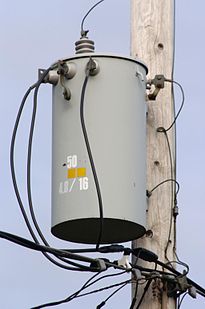
The device that lowers our AC voltage so we can use it in our homes
a)
Transformer
b)
Rectifier
c)
Splicer
d)
Voltmeter
83.

In a fuel power station, the generator converts kinetic energy from the turbine into...

a)

thermal energy store

b)

kinetic energy store

c)

electrical work done