
 Worksheets
Chemistry Chemical Bonding
Total questions: 100
Worksheet time: 2hrs 33mins
Bond that forms due to electron TRANSFER (atoms gaining/losing electrons)
covalent bond
hydrogen bond
metallic bond
ionic bond
Bond that forms due to electron SHARING.
covalent bond
hydrogen bond
metallic bond
ionic bond
Bond that forms when electrons delocalize forming the "electron sea."
covalent bond
hydrogen bond
metallic bond
ionic bond
This type of bond typically forms between a metal and a non-metal.
covalent
hydrogen
metallic
ionic
Heitler and London introduced which theory?
VSEPR Theory
Valence Bond Theory
Molecular Orbital Theory
Covalent Theory
Energy released during bond formation is called
Bond Creation Energy
Disassociation Energy
Binding Energy of Molecules
Bond Enthalpy
Greater the overlap of the orbitals, _________________________
lesser the bond strength
greater the bond strength
bond strength remains the same
no bond formation
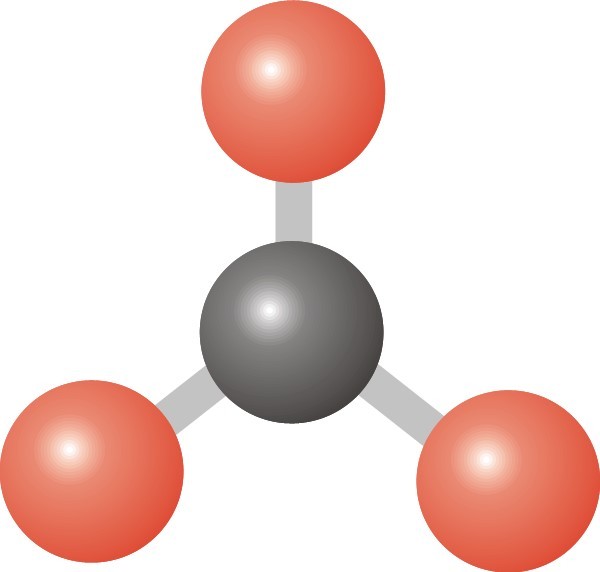
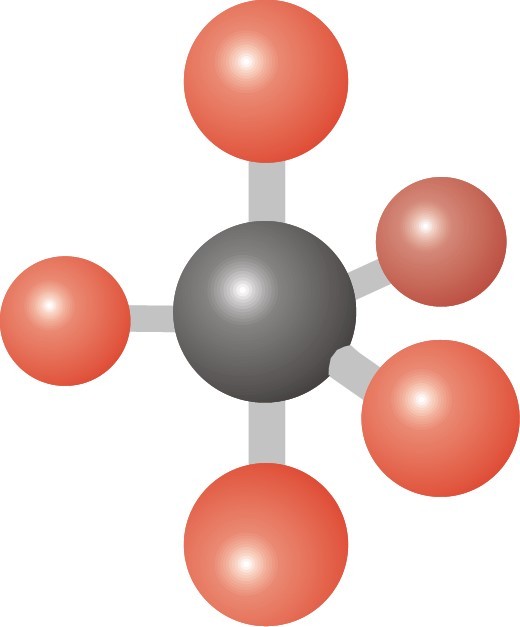

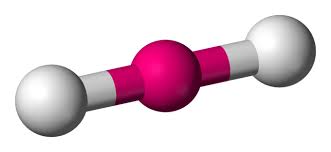
What is the hybridization of a linear molecule?
sp
sp2
sp3
sp3d
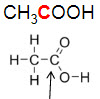
What is the hybridization of the Carbon atom indicated by the arrow?
sp hybridization
sp2 hybridization
sp3 hybridization
dsp3 hybridization
Draw the Lewis Dot structure for ICl2- and determine its predicted molecular geometry.
see-saw
trigonal bipyramidal
linear
bent

Atoms that are sp2 hybridized form ____ pi bond(s).
0
1
2
3
4
A π (pi) bond is the result of the
overlap of two s orbitals
overlap of an s orbital and a p orbital
overlap of two p orbitals along their axes
sidewise overlap of two parallel p orbitals
sidewise overlap of two s orbitals

What is the hybridization of the carbon (C) atoms in this molecule?
sp3
sp2
sp
unhybridized

What is the bond angle for the CH4 molecule?
120°
107°
109.5°
90°
BMO is formed due to
Constructive Interference
Destructive Interference
Different sign of wave function
Both 2 & 3
NBMO is formed due to
Constructive Interference
Destructive Interference
Non matching symmetry
Both 1 & 2
Sigma bond is formed when overlapping takes place along (if z-axis is inter nuclear axis)
x-axis
y-axis
z-axis
All axis
Which sub shell has more stability????
3d
4p
5s
4d
Which orbital has nodal plane????
BMO
ABMO
NBMO
All of these
Which is pie bond combination????
2s-2s
2s-2px
2px-2px
None of these
If 3 AOS take part in bonding, they results in
1 BMO , 2 ABM0
3 NBMO
1 BMO, 1 ABMO
1 BMO, 1 ABMO, 1 NBMO
Which Quantum Number is used to describe Sub shell????
n
l
m
s
What is value of SUBSIDIARY Quantum Number for 3d subshell
0
1
2
3
What do you understand from the term 'Molecular Orbital' from the perspective of coordination chemistry?
Mixing of atomic orbitals to form new set of orbitals
Overlapping between orbitals of ligands to form new orbitals
Overlapping between orbitals of ligands and orbitals of metal to form new orbitals
Electrostatic attraction between metal and ligands
For octahedral complexes with sigma overlapping, what is the total number of electrons in the molecular orbitals?
8 electron from ligands + electrons in d orbital of metal
12 electron from ligands + all electrons of the metal
12 electron from ligands + electrons in d orbital of metal
18 electron from ligands + electrons in d orbital of metal
Which of the following are the pi-acceptor ligands?
CN-
CO
Cl
NO2-
What is total number of electrons in molecular orbitals of tetrahedral complex?
12 electrons from ligands + all electrons from metal
12 electrons from ligands + electrons in d orbital of metal
8 electrons from ligands + all electrons from metal
8 electrons from ligands + electrons in d orbital of metal
Which statement is false? A sigma molecular orbital
may result from overlap of p atomic orbitals perpendicular to the molecular axis (side-on)
may result from overlap of p atomic orbitals along the molecular axis (head-on)
may result from overlap of two s atomic orbitals
may result from overlap of one s and one p atomic orbitals
Significance of bond order
To indicate bond strength
To indicate bond length
To indicate the existence of a molecule
All of the mentioned
According to Molecular Orbital Theory, the shape and size of a molecular orbital depends upon _________
Shape and size of the combining atomic orbitals
Numbers of the combining atomic orbitals
Orientation of the combining atomic orbitals
All of the mentioned
Choose the incorrect statement from the following options.
In bonding molecular orbital, electron density is low in the region between the nuclei of bonded atoms
The energy of antibonding molecular orbital is higher than that of atomic orbitals from which it is formed
Every electron in bonding molecular orbital contributes toward stability of the molecule
Antibonding takes place when lobes of atomic orbitals have different signs
The filling of molecular orbital takes place according to __________
The Aufbau Principle
Pauli Exclusion Principle
Hund’s rule of maximum multiplicity
All of the mentioned
Antibonding molecular orbitals are produced by
constructive interaction of atomic orbitals.
destructive interaction of atomic orbitals.
the overlap of the atomic orbitals of two negative ions
none of these

Give the orbital designation.
σ2p
π2p
σ*2p
π*2p

Give the orbital designation.
π2p
π*2p
σ2p
σ*2p
Draw the Lewis Dot structure for ICl2- and determine its predicted molecular geometry.
see-saw
trigonal bipyramidal
linear
bent

Which of the following is octahedral?
SCl6
XeI4
NBr5
CH4
Two carbon atoms form a linear shaped ethene, C2H4, molecule when bonded with four other hydrogen atoms. Prior to bonding, the carbon atom
does not hybridise
undergoes sp hybridisation
undergoes sp2 hybridisation
undergoes sp3 hybridisation
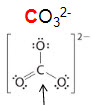
Which of the following hybrid orbitals is used by the central atom for bonding in CO32-?
sp2
sp3
sp3d
sp3d2
The molecule that uses sp3d hybrid orbital on the central atom is
BCl3
NCl3
ICl3
PCl3
Molecule CO2
undergoes sp2 hybridisation
has 2 σ bond and 2 π bond
undergoes sp3d hybridisation
is trigonal planar molecule
What is the hybridization of PF5?
sp3
sp3d
sp3d2
sp2

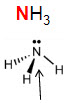
Which of the following does not determine the shape of a molecule?
electron pairs around the central atom
lone pair of electrons on other attached atoms
lone pair of electrons around the central atom
number of attached atoms

What name is given to the shape shown in the picture?
bent
trigonal planar
triangular
trigonal pyramidal

What is the bond angle in the shape shown here?
109.5o
120o
107o
104.5o
What is the approximate bond angle in nitrogen fluoride, NF3?
90o
120o
107o
60o

The 109.5o bond angle around each carbon atom in ethane is mainly due to?
the lone pair of electrons on each carbon atom
the sigma bonds around each carbon atom
the four electron regions around each carbon atom
the sp3 hybridised orbitals on each carbon atom
Which species has a shape that is influenced by the presence of one or more lone pairs of electrons around the central atom?
AlCl3
ClF3
IF6+
PCl6–
Which species has one or more bond angle(s) of 90°?
CH4
NH4+
ClF4−
AlCl4−
Which is the most likely bond angle around the oxygen atom in ethanol?
104.5°
109.5°
120°
180°
Which of these species is not planar?
HCHO
CH3+
CH3OH
C2H4
Which of these species has a trigonal planar structure?
PH3
BCl3
H3O+
CH3−
In which one of the following species is the shape influenced by the presence of one or more lone pairs of electrons?
NH2-
NH4+
[CH3NH3]+
[Co(NH3)6]2+
Which one of the following molecules is not planar?
BF3
NCl3
C2H4
HCHO

Which one of the following is the most likely value for the bond angle α shown in the diagram of SF4?
118°
101°
90°
88°
Which one of the following molecules or ions is pyramidal in shape?
BF3
CH3+
CH3-
SF3-
The acronym VSEPR stand for
very strong electron pair repulsion.
varied symmetry electrostatic proton reaction.
venomous snakes enjoy pink ribbons.
valence shell electron pair repulsion.
VSEPR theory is used to predict
the number of unshared pairs of electrons in a Lewis structure.
the number of multiple bonds in a Lewis structure.
the three-dimensional geometry of a molecule.
the three-dimensional crystal lattice structure of ionic compounds.
Any molecule with only two atoms must be linear. Three-atom molecules such as BeCl2 can also be linear. For linear molecules, the bond angle is
360°
180°
120°
90°
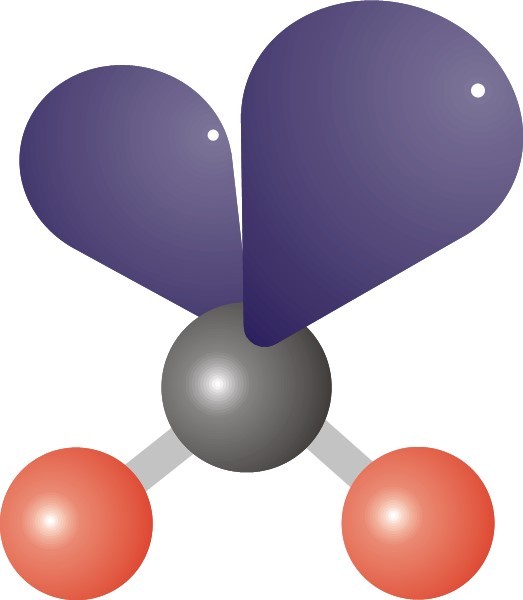

What shape would this have?
Trigonal planar
Pyramidal
Tetrahedral
Bent


What is the molecular geometry/shape of HCN?
linear
trigonal planar
bent
tetrahedral
What is the molecular geometry/shape of a molecule with 4 shared pairs and 0 unshared pairs?
Linear
Bent
Trigonal Pyramidal
Tetrahedral
Which molecule has non-linear shape?
BeCl2
HCN
CO2
PF5
Application of VSEPR theory leads to the prediction that the shape of the IF3 is
T-shaped
Trigonal planar
Bent
Tetrahedral
The bond angle of Cl-O-Cl in Cl2O molecule is approximately
109o
107o
104o
180o
The pair that has the same geometry is
NH2- and BeH2
NH2- and H2O
H2O and BeH2
NH2- , H2O and BeH2
According to the VSEPR theory, which of the following molecules should be trigonal bipyramidal?
PCl3
XeF3
SF6
PF5
Based on valence shell electron pair repulsion (VSEPR), the shape of ClF3 molecule is
T-shaped
Trigonal planar
Bent
Tetrahedral
According to MOT the number of Molecular orbitals formed is equal to
Multiple of the overlapping atomic orbitals
Half of the overlapping atomic orbitals
Same number of the overlapping atomic orbitals
No matter of formation of molecular orbitals
The maximum number of electrons can be accommodated in a molecular orbital are-----------
4
2
6
8
According to VBT, the formation of a stable bond requires
The electrons should have opposite spins
The two atoms should be close to each other
The greater overlapping of the electron clouds
All of the mentioned
The energy of Bonding molecular orbitals -----------in correspondent with overlapping atomic orbitals.
Greater
Lesser
Same
Not applicable
The number of electrons for n= 4 quantum number
2
6
16
18
Which of the following has a full valence shell?
Oxygen
Neon
Barium
Carbon
----------------orbitals that have the same energy
Bonding MO
Degenerate Orbitals
Anti-Bonding MO
Atomic Orbitals
-----------------molecular orbital located outside of the region between two nuclei
Degenerate Orbitals
Bonding Molecular
Antibonding Orbital

What are the bond angles in this molecule?
all are exactly 90o
all are slightly more than 90o
all are slightly less than 90o
more information is needed
some of the bonds are 90o, others are 120o


Heitler and London introduced which theory?
VSEPR Theory
Valence Bond Theory
Molecular Orbital Theory
Covalent Theory
States that “the repulsion between electron pairs causes molecular shapes to adjust so that the valence-electron pairs stay as far apart as possible”.
VSEPR theory
Dalton theory
Particle theory
A molecular orbital that can be occupied by two electrons of a covalent bond is called a bonding orbital.
True
False

