Worksheets
BIOLOGY FORM4 - 1
Total questions: 88
Worksheet time: 44mins
What is the study of life?
Anatomy
Biology
Psychology
The study of biology includes things that are living.
True
False
An amoeba and a bacteria are unicellular.
True
False
Based on the method by which they get food, organisms are classified as autotrophs or heterotrophs. Which organism listed below is correctly paired?
Tiger - autotroph
Human - heterotroph
Grass - heterotroph
Fish - autotroph
Biotic means ______________.
Living organisms.
Non living factors.
Living and non living factors.
Plants and rocks
An unicellular organism is one that...
Can make its own food.
Cannot make its own food.
Has only one cell.
Has many cells.
Some organisms are capable to reproduce by budding or splitting. The mode of reproduction of these organisms is...
Heterotrophic reproduction
Asexual reproduction
Sexual reproduction
Autotrophic reproduction
What is a biosphere?
basic unit of life
everything that lives on Earth
species
chemicals
What is a species?
particular type of living things that can breed and reproduce
characteristic of life
study of life
step in scientific method
What is metabolism?
single stage of offspring
group of related parts that work together
fully grown
chemical processes that happen in an organism

What is the function of plasma membrane ?
To control cell activity
To produce ATP
To control nucleus
To control movement of solutes in and out
Which organelle is functioning for ATP synthesis ?


What organelles is found in high density in the tissue below?
Rough Endoplasmic Reticulum
Smooth Endoplasmic Reticulum
Mitochondria
Nucleolus
What organelles is found in high density in the tissue below?
Rough Endoplasmic Reticulum
Smooth Endoplasmic Reticulum
Mitochondria
Nucleolus

What is the function which labelled as Number 6 ?
Modification ,packaging & transporting proteins and lipids
Synthesis of lipids
Synthesis of proteins
Synthesis of ATP

Which statement below is true on B ?
It is semi-permeable.
It is fully waterproof.
Synthesis of food.
It is permeable.

A process known as P a section of the plasma membrane of the macrophage invaginates (folds in) and Q a R .
P = eat , Q = gamates , R = foods
P = phagocytosis , Q = eat , R = pathogen
P = phagocytosis , Q = engulfs, R = pathogen
P = photosynthesis, Q = chloroplasts , R = foods

What is structure C ?
Cell wall
Pseudopodium
Plasma membrane
Golgi apparatus
Jelly-like material that makes up most of the cell
Cytoplasm
Cell wall
Nucleus
Rough Endoplasmic Reticulum
This organelle is stores food, water and waste.
Ribosome
Lysosome
Cytoplasm
Vacuole
Lysosomes takes part in ...
I Breakdown/digest macromolecules (carbohydrates, lipids, proteins, and nucleic acids).
II Repairing cell membranes.
III Respond against foreign substances such as bacteria, viruses and other antigens.
IV Synthesis of lipids.
I & II only
I , II & III only
I, II & IV only
All above.
THE FUNCTION OF PLASMA MEMBRANE IN A CELL IS
TO PROTECT THE CELL NUCLEUS
TO CONTROL THE IN AND OUT MOVEMENT OF SOLUTES
TO PRODUCE ENERGY IN THE CELL
TO CONTROL CELL ACTIVITY
WHICH OF THE FOLLOWING ORGANS HAVE CELLS WITH THE HIGHEST DENSITY OF ROUGH ENDOPLASMIC RETICULUM?
LIVER
TESTES
HEART
STOMACH
WHICH ORGANELLE I THE SITE FOR THE SYNTHESIS OF PROTEINS?
VESICLE
RIBOSOME
GOLGI APPARATUS
ROUGH ENDOPLASMIC RETICULUM

WHICH ORGANELLE IS RESPONSIBLE FOR ATP SYNTHESIS?
1
2
3
10

WHAT IS THE STRUCTURE LABELLED X?
A SECRETORY VESICLE
A GLYCOPROTEIN
A PHOSPHOLIPID
A CHANNEL PROTEIN

WHICH ORGANELLE IS FOUND IN HIGH DENSITY IN THE TISSUE?
MITOCHONDRIA
ROUGH ENDOPLASMIC RETICULUM
SMOOTH ENDOPLASMIC RETICULUM
CHLOROPLAST

WHAT IS THE FUNCTION OF P?
SITE OF PROTEIN SYNTHESIS
SITE OF LIPID SYNTHESIS
SITE OF PROTEIN MODIFICATION
SITE OF ATP SYNTHESIS

WHICH ORGANELLE IS FOUND IN HIGH DENSITY OF THE CELL?
GOLGI APPARATUS
SMOOTH ENDOPLASMIC RETICULUM
MITOCHONDRIA
CHLOROPLAST

WHICH ONE IS TRUE ABOUT Q?
CELL WALL-SEMI PERMEABLE
CELL WALL-PERMEABLE
PLASMA MEMBRANE-SEMI PERMEABLE
PLASMA MEMBRANE-PERMEABLE

X IS INVOLVED IN
FEEDING AND LOCOMOTION
FEEDING AND EXCRETION
RESPIRATION AND REPRODUCTION
LOCOMOTION AND OSMOREGULATION
X IS INVOLVED IN
FEEDING AND LOCOMOTION
FEEDING AND EXCRETION
RESPIRATION AND REPRODUCTION
LOCOMOTION AND OSMOREGULATION

WHAT IS STRUCTURE X?
CELL WALL
CYTOPLASM
VESICLES
PSEUDOPODIUM

WHAT IS THE PROCESS?
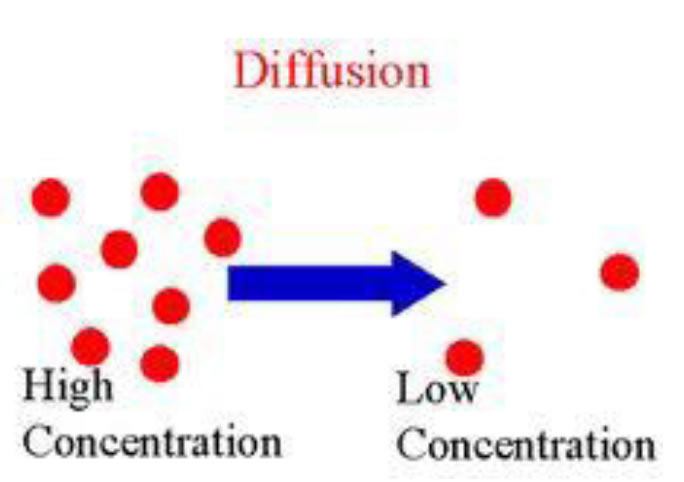
DIFUSION
PHAGOCYTOSIS
CONJUGATION
OSMOREGULATION
WHICH OF THE FOLLOWING LEVEL OF ORGANIZATION IS TRUE?
SYSTEM-ORGAN-TISSUE-CELL-ORGANISM
ORGANISM-SYSTEM-ORGAN-TISSUE-CELL
CELL-TISSUE-ORGAN-SYSTEM-ORGANISM
CELL-ORGAN-SYSTEM-TISSUE-ORGANISM
WHICH TISSUE PROVIDES SUPPORT FOR HERBACEOUS PLANTS
PARENCHYMA TISSUE
COLLENCHYMA TISSUE
SCLERENCHYMA TISSUE
MERISTEMATIC TISSUE
WHICH ORGAN IS INVOLVED IN REGULATING INTERNAL ENVIRONMENT?
KIDNEY
STOMACH
SMALL INTESTINE
LEG
PANCREAS IS A PART OF
I-ENDOCRINE SYSTEM
II-LYMPHATIC SYSTEM
III-DIGESTIVE SYSTEM
IV-EXCRETORY SYSTEM
III
I AND III
II AND III
II AND IV
WHICH ARE WRONG? CHOOSE TWO STATEMENT
DIGESTIVE SYSTEM-REGULATE BODY TEMPERATURE
SKELETAL SYSTEM-PROTECT INTERNAL ORGANS
EXCRETORY SYSTEM-REMOVE WASTE PRODUCT
MUSCULAR SYSTEM-PROVIDES SUPPORT FOR BODY
WHICH STRUCTURES INVOLVED IN TEMPERATURE REGULATION? CHOOSE MORE THAN ONE ANSWER
ADIPOSE LAYER
HAIR ERECTOR MUSCLE
NERVE ENDING
PAIN RECEPTOR
WHICH ONE IS EXAMPLE OF ORGAN?
TENDON
LYMPH
EPITHELIUM
STOMACH
The following features are found only in the plant cell
Lysosome
Cell wall
Chloroplast
Central vacuole
The following is found inside the nucleus
Cytoplasm
DNA
Mitochondria
Nucleolus
The nucleus is the
Power house of the cell
Waste collector in the cell
Control center of the cell
protein factory in the cell
The main function of rough ER is
Fat production
Protein production
Breaking down alcohol and drugs
Delivering proteins to Golgi Body
It is mainly membrane-enclosed spaces stacked on top of each other
Rough ER
Mitochondria
Smooth ER
Golgi Apparatus
It provides the cell with energy
Vesicle
Nucleus
mitochondria
Vacuole
It is the waste collector and recycler in the animal cell
Ribosome
Vesicle
Central vacuole
Lysosome


Which of the chambers has the highest pressure?
Right verticle
Left atrium
Left verticle
Which blood vessel carries the deoxygenated blood to the right atrium?
Vena cava
Pulmonary vein
Pulmonary artery
All of them
Which blood vessels carries oxygenated blood from the heart to the whole body?
Vena cava
Aorta
Pulmonary vein
What happen when the ventricles of the heart contract?
The semilunar valve close
The semilunar valve open
The atrioventricular valve open
What happen when the ventricles of the heart contract?
The semilunar valve close
The semilunar valve open
The atrioventricular valve open
Which valve action results from an increase in pressure in the atrial of the heart?
The opening of the semilunar valve
The closing of the atrioventricular valve
The opening of the atrioventricular valve
Where does the sino-atrial node, which generates the electrical impulses that coordinate heart-muscle contracted is located in?
Left atrium
Right atrium
Septum
Right atrium and ventricle are separated from the left atrium and ventricle by______________
AV node
SA node
Septum
Where do aorta pump oxygenated blood?
Lungs
Whole body
Brain
What is the function of SA node?
Spread impulse to both atrium
Generate electrical impulse
Spread impulse to AV node
State two types of nucleic acids
deoxyribonucleic acid
sulfuric acid
nitric acid
ribonucleic acid
State the two types of pentose sugars
ribose
deoxyribose
guanine
cytosine
DNA consists how many polynucleotide chains?
1
2
3
4
RNA consists how many polynucleotide chains?
1
2
3
4
The following features are found only in the plant cell
Lysosome
Cell wall
Chloroplast
Central vacuole
The animal that is hunted and killed for food.
Decomposer
Predator
Scavenger
Prey