wayground logo

Free Printable Worksheets

Font size

S
M
L
XL
Worksheets

Unit 4, AOS 2 - Changes in species over time

Total questions: 43

Worksheet time: 1hrs 26mins

Name
Class
Date
1.
This gas was in high concentrations in the early atmosphere, and later condensed to form Earth's oceans. 
a)
oxygen
b)
carbon dioxide
c)
sulfur oxides
d)
water vapor
2.
According to scientists, both Earth and moon are...
a)
About 1.6 Billion Years Old
b)
About 4.6 Billion Years Old
c)
About 9.6 Billion Years Old
d)
About 14 Billion Years Old
3.

How long ago were there only prokaryotic microbes on earth?

a)

3000 million years ago

b)

460 million years ago

c)

110 million years ago

d)

60,000 years ago

4.

How long ago were there only small primitive terrestrial plants and aquatic invertebrates?

a)

3000 million years ago

b)

460 million years ago

c)

110 million years ago

d)

60,000 years ago

5.

How long ago was the dominant plant life mainly ferns and dinosaurs as the main animal life.

a)

3000 million years ago

b)

460 million years ago

c)

110 million years ago

d)

60,000 years ago

6.

How long ago was the time of megafauna (large animals)?

a)

3000 million years ago

b)

460 million years ago

c)

110 million years ago

d)

60,000 years ago

7.

The Darwin-Wallace theory of evolution by natural self action has been identified as a way for evolution to occur, based on:

(a)  

8.
What do paleontologists study?
a)
space
b)
fossils
c)
atmosphere
d)
weather
9.
Most fossils are formed by
a)
being preserved in amber
b)
being frozen
c)
drying out
d)
being buried in sediment
10.
A trilobite, which lived during only one era, is a good example of a(n)
a)
trace fossil
b)
complex organism
c)
intrusion
d)
index fossil
11.
The geologic time scale is a record of
a)
how quickly fossils form
b)
how dinosaurs evolved
c)
the life forms and events of Earth's history
d)
the thickness of rock layers
12.
Which layer is the oldest?
a)
b
b)
c
c)
d
d)
e
13.
We live in which era?
a)
paleozoic
b)
mesozoic
c)
cenozoic
d)
proterozoic
14.
a)
True Form Fossil
b)
Mold and Cast Fossil
c)
Carbon Film Fossil
d)
Trace Fossil
15.

What is permineralisation?

a)

Minerals carried by ground water replace the organic material of the animal, leaving a rock replica of the original bone

b)

The rock rises to the surface, and is worn away as erosion takes place

c)

Small particles of rock (sediment) cover the hard tissue of animals, which is then compressed to form rock

16.

Which type of fossil show the organism in 3D form, sticking out from the rock?

a)

Cast Fossil

b)

Mold Fossil

c)

Trace Fossil

d)

True Form Fossil

17.

Which type of fossils can be created when an animal walked in mud long ago and then the mud hardened intro rock?

a)

Cast Fossil

b)

Mold Fossil

c)

Trace Fossil

d)

True Form Fossil

18.

Which type of fossil shows an impression of the organism in rock?

a)

Cast Fossil

b)

Mold Fossil

c)

Trace Fossil

d)

True Form Fossil

19.
This type of fossil forms when minerals soak into the buried remains, replacing the remains, and changing them into rock.
a)
mold
b)
cast
c)
petrified
d)
preserved
20.
Where are prehistoric animals preserved as whole animals?
a)
 In Sedimentary Rock
b)
In amber
c)
In limestone
d)
In oceans
21.
This fossil is an example of________
a)
trace fossil
b)
carbonized fossil
c)
frozen remains
d)
tar pit fossil
22.
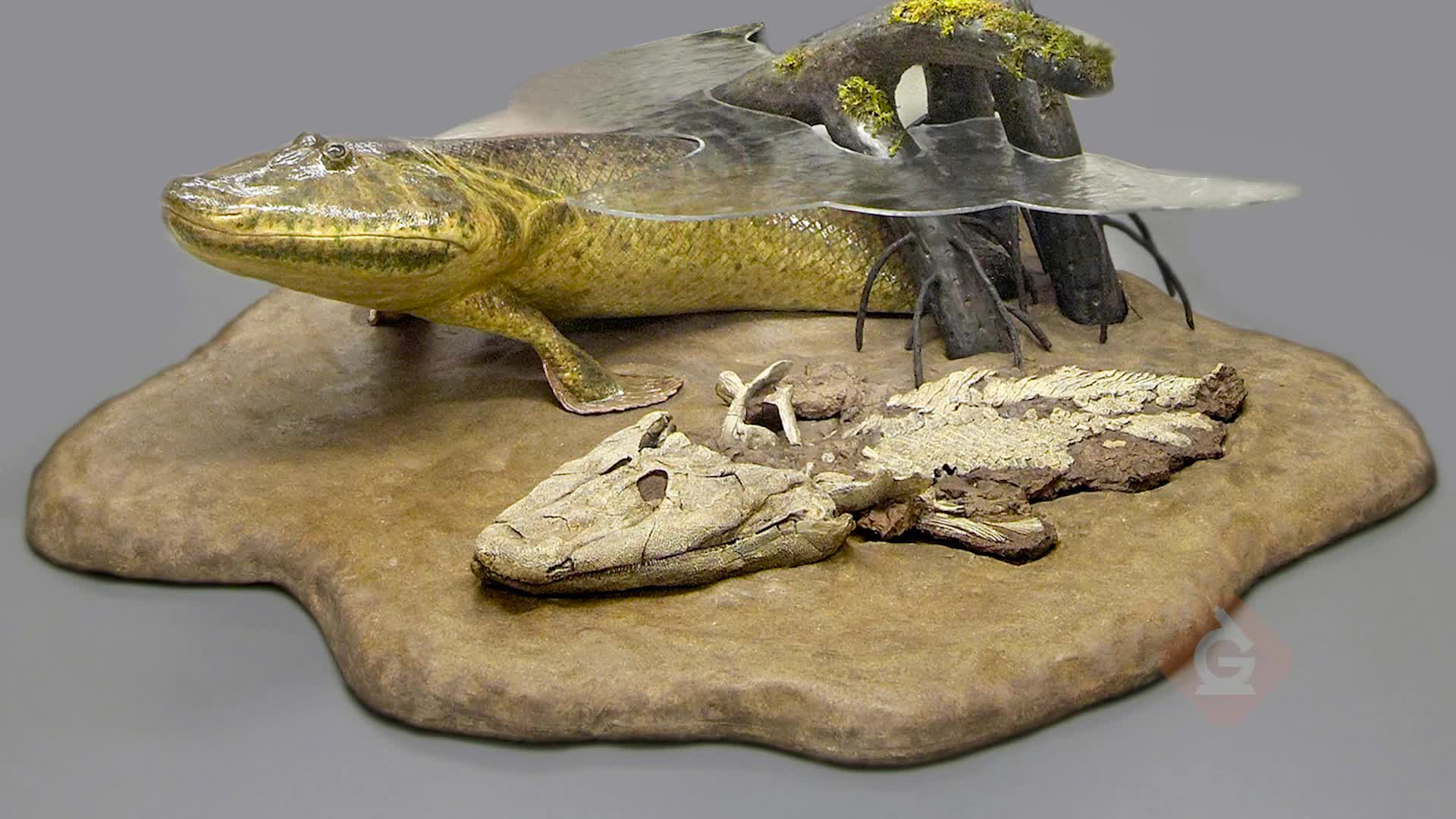
Tikaalik is a famous example of a _________ fossil.
a)
cast
b)
transitional
c)
mold
d)
imprint
23.
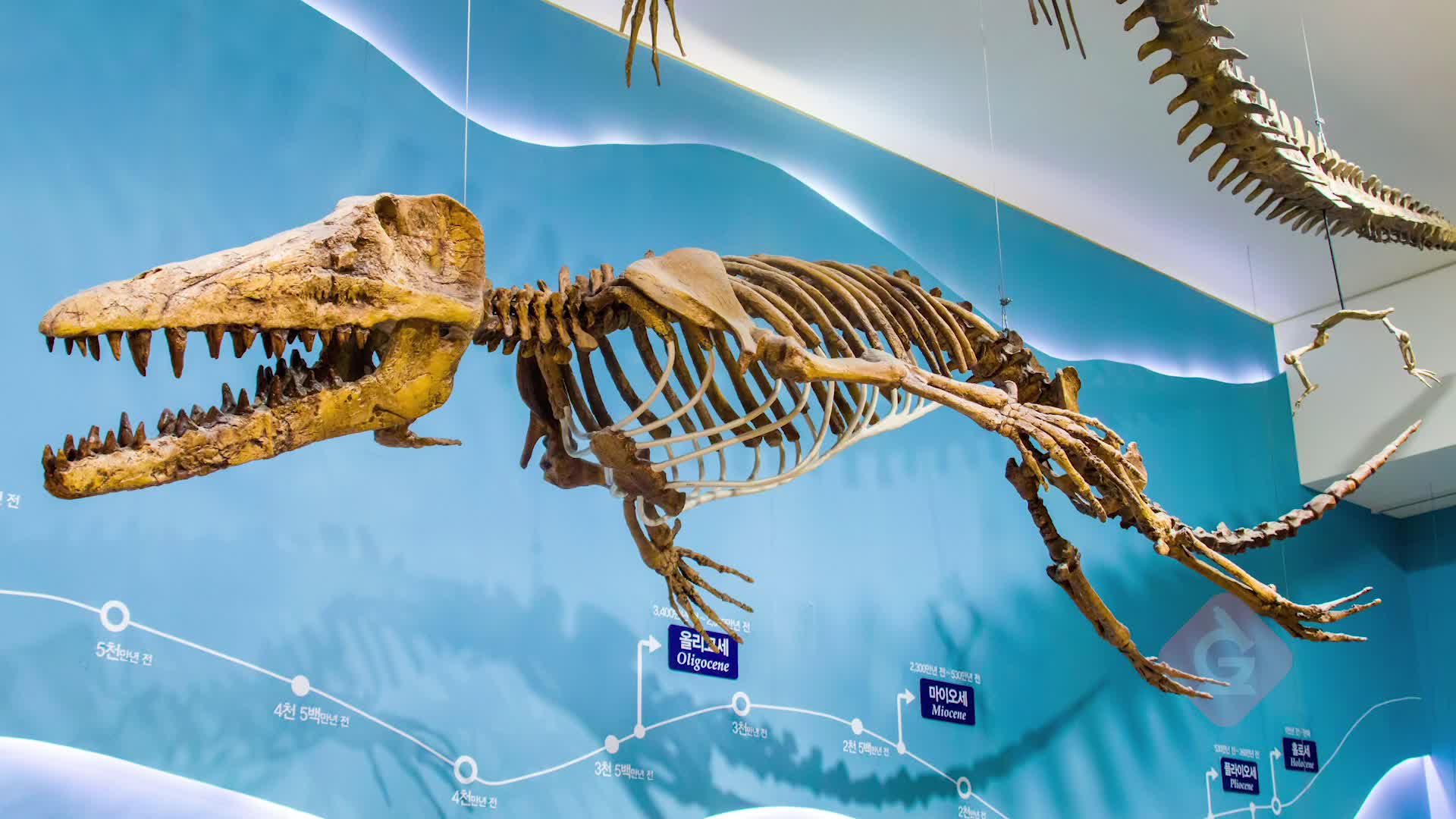
________ were believed to have once walked on land.
a)
Fish
b)
Whales
c)
Mammals
d)
Bacteria
24.

What was Pangaea?

a)

An extinct species of fish

b)

A super-continent (all the continents connected)

c)

A large desert that covered all of Africa at one point

d)

A layer of rock in the rock record from 3.4 million years ago

25.
States that younger rocks lie above older rocks if the layers have not been disturbed
a)
Law of crosscutting
b)
Law of superposition
c)
Relative Dating
d)
Unconformity
26.
The best index fossils have which two traits?
a)
widespread geographically, long lifespan
b)
widespread geographically, short lifespan
c)
specific place, long lifespan
d)
specific place, short lifespan
27.
The length of time required for half of the radioactive atoms in a sample to decay is its...
a)
era
b)
age
c)
half-life
d)
eon
28.
How does absolute age differ from relative age?
a)
only absolute dating indicates which rock is older than another
b)
only absolute dating finds the age in years
c)
only relative dating finds the age in years
29.
Radiometric dating is possible because the rates of decay of radioactive isotopes _____.
a)
change over time
b)
change from place to place
c)
are constant
d)
vary widely
30.
If the half-life of a radioactive group of atoms is 100 years, then how old is the rock if there have been two half-lives?
a)
25 years
b)
200 years
c)
400 years
d)
800 years
31.
The original element that undergoes radioactive decay is known as the...
a)
daughter element
b)
half-life
c)
parent element
d)
carbon-14
32.

What is the half life of Carbon-14?

a)

5730 yrs

b)

1.2 billion years

c)

713 million years

d)

1.3 billion years

33.
A type of rock that forms from the cooling of molten rock at or below the surface of the earth
a)
Igneous Rock
b)
Metamorphic Rock
c)
Sedimentary Rock
d)
chemical Rock
34.

The half-life of potassium-40 is 1.3 billion years. An igneous rock is found with 25% of potassium-40. What is the absolute age of this rock?

a)

1.3 billion years

b)

2.6 billion years

c)

3.9 billion years

d)

5.2 billion years

35.

According to most scientists, what is the ultimate cause of most mass extinctions?

a)

overhunting

b)

evolution of new species to replace old ones

c)

major change in environment

d)

asteroid impact

36.
Which of these describes a species that has become extinct?
a)
fewer members of the species are dying than being born
b)
more members of the species are dying than being born
c)
very few members of a species are alive
d)
all members of a species have died
37.
A flash flood carried a raft of Amazon ants away from their original population. There is enough distance between the two groups, that they will never meet in nature again. What type of reproductive barrier is this?
a)
behavioral isolation
b)
temporal isolation 
c)
gametic isolation
d)
geographic isolation 
38.
The term for the formation of new and distinct species over the course of evolution is...
a)
speciation
b)
biological species concept
c)
reproductive barrier
d)
natural selection
39.
What is a species? 
a)
A group of organisms that can mate with each other and produce fertile offspring. 
b)
A group of organisms that can mate and produce offspring even if those offspring are infertile.
c)
A group of organisms that genetically are very different from each other. 
d)
Indivual organisms that live in the same environment. 
40.

A new river forms and splits two populations, causing ______________ speciation

a)

Sympatric

b)

Allopatric

c)

Extreme

d)

Convergent

41.

Orcas occur in the same habitat but some are avoiding each other and do not interbreed. They have different diets, vocal behavior, and social structures. What type of speciation is this?

a)

Allopatric

b)

Sympatric

c)

Complex

d)

Covergent

42.

when the organism develops different courtship rituals which do not attract main population this is a part of ____________ speciation.

a)

Allopatric

b)

Sympatric

c)

Simple

d)

Temporal

43.

The emergence of new rivers or streams is a type of ____________ isolation.

a)

Temporal

b)

Mechanical

c)

Behavioral

d)

Geographic