
 Worksheets
Genetics
Total questions: 46
Worksheet time: 46mins
DNA contains four nitrogenous bases: adenine, cytosine, guanine, thymine. A strand of DNA has the sequence ATTACG. What is the complementary strand?
ATTACG
TAATGC
CGGCAT
GCCGTA
Which statement about DNA is true?
DNA contains the chemical codes that control the cell processes in an organism.
DNA replication only occurs in plants.
DNA replication only occurs in animals.
The characteristics of an organism are determined by identical DNA segments.
Mitosis involves the replication of DNA. What is the advantage of DNA replicating exactly in multicellular organisms?
Sex cells can be formed.
A tumour may occur.
A mutation will occur and change the number of chromosomes.
The cells are able to bring about growth and repair of the body.
What is the name given to the alteration of a base sequence in DNA?
Evolution
Mutation
Respiration
DNA replication
In humans, sperm must travel from the testes to an egg (ovum) before fertilisation can result in a new individual. Where does fertilisation of an ovum by a sperm usually take place?
Sperm duct
Urethra
Vagina
Fallopian tube
Gregor Mendel was an Austrian monk who did experiments with pea plants and published a description of inheritance. Mendel wrote that features are passed from parent to offspring through "factors", which we now call "genes". Which of the following best describes genes?
Genes are only found in pea plants.
Genes are part of chromosomes in the nuclei of cells.
Genes are found only in the testes and ovaries.
Genes contain chromosomes and are part of DNA.
Why must DNA replication occur exactly?
So that sufficient oxygen is obtained for respiration to occur.
So that the two strands in the DNA double helix can unwind.
So that the new cells can carry out new and different instructions.
So that the cell processes in the new cells will occur normally.
In which organ does the production of sperm occur?
Testosterone
Ovaries
Testes
Uterus
What is a gene?
A disease-causing organism.
A segment of DNA that controls a particular characteristic in an organism.
A type of mutation in the DNA of a multicellular organism.
An item of clothing worn by living organisms.
Human sex cells have half the number of chromosomes found in other body cells. Why is this important?
The offspring organism will have the same number of chromosomes in its body cells as in the parents' body cells.
The offspring organism will have a different number of chromosomes in its body cells as in the parents' body cells.
The offspring organism can repair damaged or worn out cells.
The offspring organism will not suffer from the same diseases as its parents.
A characteristic of an individual is called a:
trait.
gene.
quality.
protein.
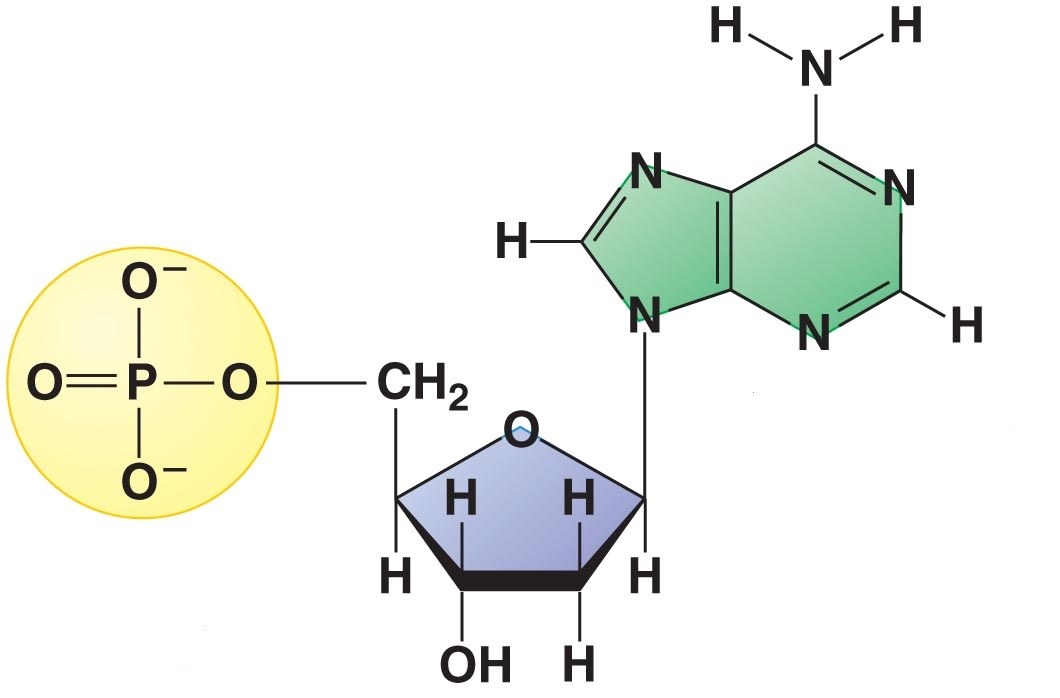
DNA is made up of:
sugar and a helix.
phosphate and nitrogenous bases.
sugar, phosphate and 4 nitrogenous bases.
sugar, phosphate and 2 nitrogenous bases.
Fertilisation of an ovum usually occurs in the:
ovary.
fallopian tube.
uterus.
vagina.
Most cells in a human have:
23 chromosomes.
46 chromosomes.
23 proteins.
46 proteins.
Which of the following cells is NOT produced by mitosis?
skin cells
neurons (nerve cells)
muscle cells
sperm cells
In DNA, adenine pairs with:
adenine.
thymine.
cytosine.
guanine.
The backbone of DNA is made up of:
sugar.
phosphate.
sugar and phosphate.
nitrogenous bases.
A sequence of DNA is ATCTCG. The complementary strand for this sequence would be:
ATCTCG
TAGAGC
AUCUCG
UAGAGC
A sequence of DNA is ATCTCG. The mRNA strand formed would be:
ATCTCG
TAGAGC
AUCUCG
UAGAGC
Which of the following identifies the base-pairing rule of nitrogenous bases in DNA?
A-T, C-G
A-C, T-G
A-U, C-G
A-C, U-G
The base-pairing rule for DNA explains:
how DNA makes an exact copy of itself.
how proteins are produced.
why siblings look similar.
why two individuals look different.
A mutation is a change in DNA. Mutations can be caused by:
ionising radiation.
non-ionising radiation.
visible light.
radiowaves.
A mutation is a change in DNA. Mutations can be caused by:
ionising radiation.
non-ionising radiation.
visible light.
radiowaves.
Mutations in DNA affect how a cell functions. This is because a mutation can:
change the proteins formed, and hence cell activity.
change cell activity directly.
cause a cell to become excited.
give a cell additional energy.
Adenine bonds with:
Guanine
Thymine
Cytosine
Adenine
Guanine bonds with:
Adenine
Guanine
Cytosine
Thymine
What are the 4 nitrogen bases?
adenine, thymine, cytoplasm, and guanine
adenine, thymine, cytosine, and guanine
adenine, thymine, cytosine, and gylcerol
adenine, thymine, cytosine, and glucose
ATG TGA CAG
In eukaryotes, which organelle is DNA usually found in?
cell membrane
vacuole
chloroplast
nucleus


ATG TGA CAG
CAT TCA CTG
A fertilised egg implants into the wall of the:
uterus.
ovary.
cervix.
vagina.
In males, the tube that carries both sperm and urine is called the:
urethra.
penis.
testes.
bladder.

