
 Worksheets
Periodic table and properties
Total questions: 100
Worksheet time: 1hrs 3mins
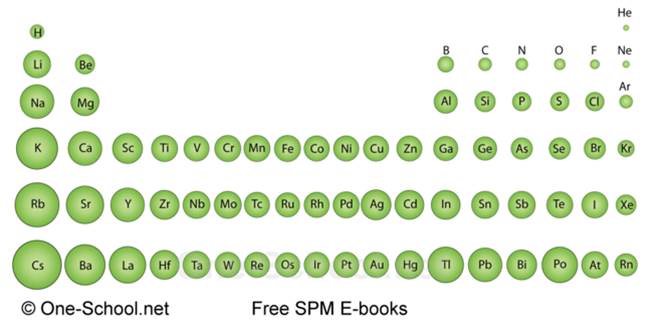
As you move across a row (period) on the periodic table, the atomic radius ______________________
Increases
Decreases
Stays the same
Explodes
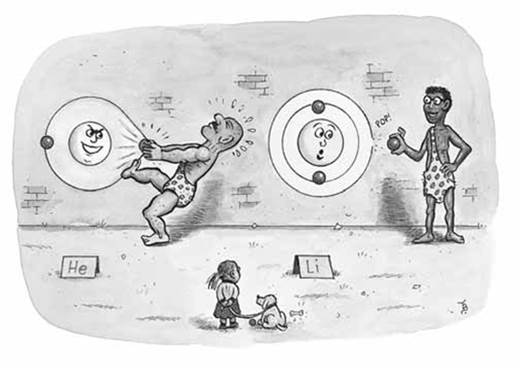
Ionization energy is the energy needed to _________ an electron.
Fission
Explode
Remove
Add
As you move across a row on the periodic table, ionization energy ______________________
Decreases
Increases
Stays the same
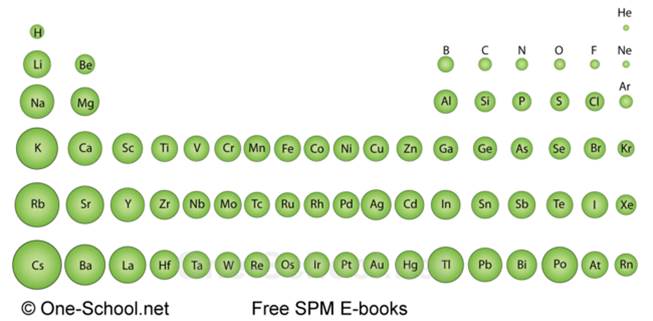
Which group of elements has the lowest ionization energy?
Group 1
Group 2
Group 3
Group 4
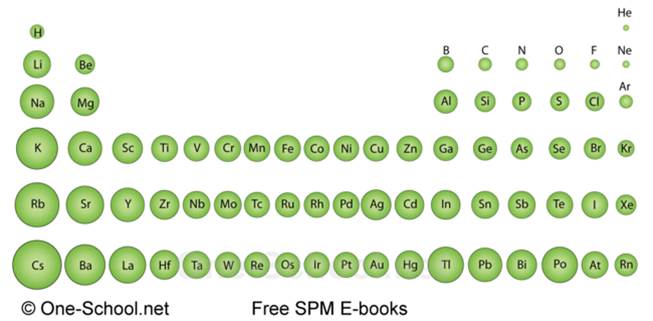
Group VIII A elements are called ________________
Alkali metals
Transition metals
Halogen
Noble gases
Group I A elements (not including hydrogen) are called ________________
Alkali metals
Transition metals
Halogen
Noble gases
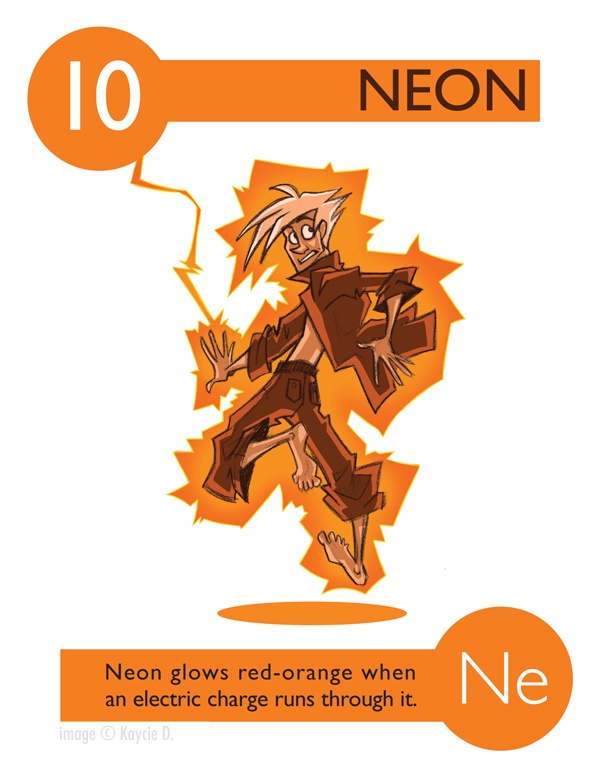
Which of the following elements would have the smallest atomic radius?
Li
Be
C
Ne
Which statement about subatomic particles is true?
Protons, neutrons, and electrons all have about the same mass.
Unlike protons or neutrons, electrons have no mass.
Neutrons have no charge and no mass.
An electron has far less mass than either a proton or neutron.
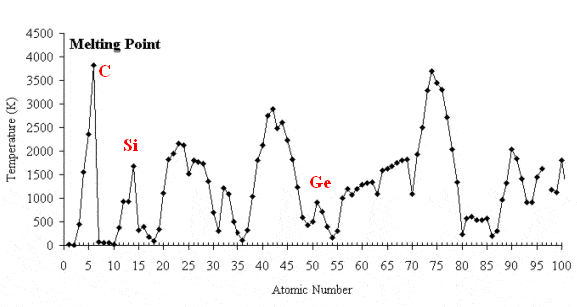
Which element in Period 3 has the highest melting point?
Silicon (Si)
Germanium (Ge)
Carbon (C)
Argon (Ar)
The number of protons in one atom of an element is that element’s
mass number.
balanced charge
atomic number
isotope
To find the number of neutrons in an atom, you would subtract
mass number from atomic number
atomic number from mass number
atomic number from electron number
isotope number from atomic number
Which statement is true concerning the periodic table?
rows go up and down and groups go across the table
groups go up and down and rows go across the table
rows go up and down and groups go up and down the table
rows go across the table and groups go across the table
Which list of elements contains only metals?
carbon, iodine, tin
tin, copper, cesium
helium, iron, copper
iodine, carbon, argon
Which statement is true about the metalloid silicon?
Silicon is a better conductor of electric current than silver is.
Silicon does not conduct electric current under any conditions.
Silicon's ability to conduct electric current does not vary with temperature.
Silicon is a better conductor of electric current than sulfur is.
Group VII A of the periodic table contains the
most reactive metals.
most reactive nonmetals.
least reactive nonmetals.
least reactive metals.


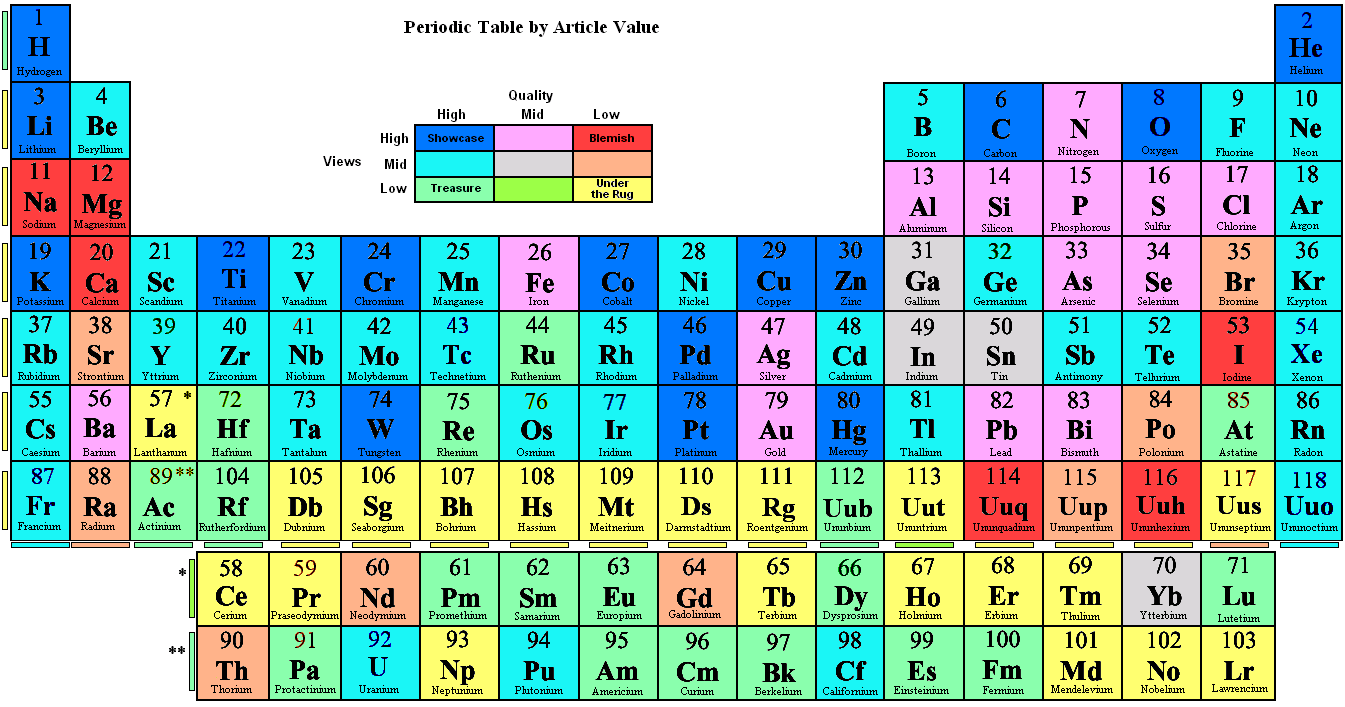
A subatomic particle that has a positive charge and that is found in the nucleus of an atom
Proton
elecrtron
groups
neutrons
An atom of element X has 4 shells containing electrons. When element X reacts with chlorine, a compound with formula XCl is formed. Which of the following is the element X?
Calcium
Potassium
Sodium
Silicone

Table shows the arrangement of electrons of elements in Period 3 of the Periodic Table. Which one of the following shows the correct descending order of their atomic radii?
M,L,N,P,K
L,M,N,K,P
P,K,N,M,L
K,L,M,N,P
The following are the uses of inert gases except
used in advertising lights
used to fill a weather balloons
used in lasers for eye treament
used as a catalyst in Haber process
Sodium and rubidium are both elements in Group 1 of the Periodic Table. Which of the following statements is correct?
Both metals form acidic oxides
Rubidium has a lower melting point than sodium
Rubidium reacts less quickly with water than sodium
Rubidium has less electrons compared to sodium

The different reactivity of Group 1 elements of the Periodic Table is due to the
I,II,III only
I,II,IV only
I,III,IV only
II,III,IV only
Which one of the following statements best accounts for the inert properties of Group 18 elements?
All of them have 18 elements in an atom
All of them have 8 valence electrons in each atom
All of them are rare gases and very difficult to find
Their valence shell are completely filled by electrons
Fluorine is the first element in Group 17 of the Periodic Table. Which statement about fluorine is not correct?
It forms ionic compound with sodium
It is gas at room temperature and pressure
Its molecules are diatomic at room temperature
Its molecules are monoatomic at room temperature
An atom has 10 protons, 15 neutrons and 10 electrons what is its mass number.
20
10
35
25
In the modern periodic table, the period indicates the value of:
Atomic number
Atomic mass
Principal quantum number
Azimuthal quantum number.
The elements which occupy the middle block (d) in the periodic table are called ................ elements.
transition
alkali
alkaline earth
noble
In the periodic table, the elements which are similar in their Chemical & physical properties are located in the same ................
period
group
nucleus
energy level
Choose which of the following position is correct for Neon (z = 10)
Period : 2
Group : 17
p-block
Period : 2
Group : 18
s-block
Period : 2
Group : 18
p-block
Choose the correct position for element Krypton (Z= 36)
Group : 18
Period : 4
p-block
Group 8
Period : 4
p-block
Group: 18
Period 3
p-block
Bromine has the valence electronic configuration of 4s2 3d10 4p5. Choose the correct position of Br element in Periodic Table.
Group: 15
Period : 4
d-block
Group: 17
Period: 4
d-block
Group : 17
Period : 4
p-block
In the modern periodic table the block d is
Noble gases
Transitional elements
Metals
Non-metals
Surrounding the nucleus is a cloud-like region of moving _________________________.
protons
neutrons
electrons
A group of two or more atoms held together by chemical bonds:
atom
element
molecule
Which atom has the largest atomic radius?
potassium
rubidium
francium
cesium
What is the atomic radius?
The distance from the nucleus to the outer boundary of an atom
The distance from one side of an atom to the other side
The distance around the atom
The distance between atoms in the gas phase
The distance between atoms in the solid phase
Which of the following elements would be smaller: indium or gallium?
indium
gallium
both atoms are the same size
cannot be determined
the sizes can vary
Which of the following elements would be larger: potassium or cesium?
potassium
cesium
both atoms are the same size
cannot be determined
the sizes can vary
Which of the following elements would be larger: potassium or cesium?
potassium
cesium
both atoms are the same size
cannot be determined
the sizes can vary
Which of the following elements would be the largest: copper, zinc, silver or cadmium?
copper
zinc
silver
cadmium
cannot be determined
Why is iodine larger than bromine?
iodine has a greater number of electrons than bromine
iodine has a greater number of protons than bromine
iodine has more occupied energy levels and greater shielding than bromine
iodine has more neutrons than bromine
iodine has more valence electrons than bromine

The definition for Ionization Energy is:
The energy required to remove an electron from the outer energy level of an element in the gaseous state.
A measure of the tendency of an atom to take up electrons in order to form a negative ion.
The amount of energy released when an electron is added to an atom in the ground state.

Why do Group 18 elements have such high Ionization Energies?
They have full outer energy levels and therefore do not want to lose electrons from their outer energy level.
They are non metals.
They are metals
Why do Group 1 elements have such low Ionization Energies?
They have full outer energy levels and therefore do not want to lose electrons from their outer energy level.
They are non metals and therefore require more electrons to complete their outer energy level.
They are metals and its easier to give away the electrons in their outer energy level.
The definition for Electron Affinity is:
The energy required to remove an electron from the outer energy level of an element in the gaseous state.
A measure of the tendency of an atom to take up electrons in order to form a negative ion.
The amount of energy released when an electron is added to an atom in the ground state.

Why is the Electron Affinity in Group 1 elements so low?
They want to accept electrons
They have opposite charges which repel.
They do not want to accept electrons.
Why is the Electron Affinity in Group 17 elements so high?
They want to accept electrons
They have opposite charges which repel.
They do not want to accept electrons.
The definition for Electronegativity is:
The energy required to remove an electron from the outer energy level of an element in the gaseous state.
A measure of the tendency of an atom to take up electrons in order to form a negative ion.
The amount of energy released when an electron is added to an atom in the ground state.
The distance between nucleus and outermost shell occupied electron
Atomic Radii
Ionization Energy
Electronegativity
Electron Afinity
Oxidation Number
The degree of oxidation (loss of electrons) of an atom in a chemical compound
Atomic Radii
Ionization Energy
Electronegativity
Electron Afinity
Oxidation Number
Atomic radii trends is . . . .
generally decrease along each period of the table, from the alkali metals to the noble gases; and increase down each group.
generally increase along each period of the table, from the alkali metals to the noble gases; and increase down each group.
generally increase along each period of the table, from the alkali metals to the noble gases; and decrease down each group.
generally decrease along each period of the table, from the alkali metals to the noble gases; and decrease down each group.
Ionization energy trends is . . . .
becomes greater up and to the right of the periodic table.
becomes greater down and to the right of the periodic table.
becomes greater up and to the left of the periodic table.
becomes greater down and to the left of the periodic table.
Electronegativity trends is . . . .
increases on passing from left to right along a period, and decreases on descending a group.
increases on passing from left to right along a period, and increases on descending a group.
decreases on passing from left to right along a period, and decreases on descending a group.
decreases on passing from left to right along a period, and increases on descending a group.
Electron affinity trends is . . . .
generally increases across a period, and a trend of decreasing electron affinity going down groups would be expected.
generally decreases across a period, and a trend of decreasing electron affinity going down groups would be expected.
generally increases across a period, and a trend of increasing electron affinity going down groups would be expected.
generally decreases across a period, and a trend of increasing electron affinity going down groups would be expected.
Metallic character trends is . . . .
decrease going across a period and tends to increase going down a group.
increase going across a period and tends to increase going down a group.
decrease going across a period and tends to decrease going down a group.
increase going across a period and tends to decrease going down a group.
Which element has bigger atomic radii?
Beryllium is bigger than Fluorine
Oxygen is bigger than Sulphur
Litihium is bigger than Sodium
Phosphorus is bigger than Bromine
Which element has smaller atomic radii?
Beryllium is smaller than Fluorine
Sulphur is smaller than Oxygen
Litihium is smaller than Sodium
Potassium is smaller than Bromine
Which element has higher ionization energy?
Chlorine is higher than Sodium
Phosphorus is higher than Nitrogen
Silicon is higher than Carbon
Magnesium is higher than Aluminium
Which element has lower ionization energy?
Chlorine is lower than Sodium
Phosphorus is lower than Nitrogen
Carbon is lower than Silicon
Aluminium is lower than Magnesium
Which element has higher electronegativity?
Fluorine is higher than Oxygen
Potassium is higher than Sodium
Aluminium is higher than Boron
Phosphorus is higher than Chlorine
Which element has lower electronegativity?
Fluorine is lower than Oxygen
Potassium is lower than Sodium
Boron is lower than Aluminium
Chlorine is lower than Phosphorus
Which element has higher electron affinity?
Bromine is higher than Calsium
Chlorine is higher than Fluorine
Magnesium is higher than Beryllium
Sodium is higher than Aluminium
Which element has lower electron affinity?
Bromine is lower than Calsium
Chlorine is lower than Fluorine
Berylliumis lower than Magnesium
Aluminium is lower than Sodium
Which element is more metallic?
Sodium is more metallic than Aluminium
Fluorine is more metallic than Beryllium
Potassium is more metallic than Lithium
Chlorine is more metallic than Silicon
For which of the following transformations does the reactive carbon undergo a change in hybridization?
methane to chloromethane
methanol to methanal
methanal to methanoic acid
chloromethane to methanol
Which molecule does not act as a nucleophile in a reaction with a halogenoalkane?
Water
Ethanol
Hydroxide ion
Ammonium ion
Which compounds reacts fastest with water?
(CH3)3CBr
(CH3)3CCl
CH3CH2CH2CH2Br
CH3CH2CH2CH2Cl
The reaction between 2-chloro-2-methylpropane, (CH3)3CCl, and aqueous sodium hydroxide is an example of
Unimolecular nucleophilic addition
Bimolecular nucleophilic addition
Unimolecular nucleophilic substitution
Bimolecular nucleophilic substitution
Which statement about the reactions of halogenoalkanes with aqueous sodium hydroxide is correct?
Primary halogenoalkanes react mainly by SN1 mechanism.
Chloroalkanes react faster than iodoalkanes.
Tertiary halogenoalkanes react faster than primary halogenoalkanes.
The rate of an SN1 reaction depends on the concentration of aqueous hydroxide.
Which of the chloroalkanes below will hydrolyse most rapidly?
CH3CH2CH2CH2Cl
CH3CH(CH3)CH2Cl
CH3CH2CHClCH3
(CH3)2CClCH2Cl
Which substance(s) is(are) most likely to react with hydroxide ions by means of a SN2 mechanism?
I. C6H5Cl
II. (CH3)3CCl
III. (CH3)2CHCH2Cl
IV. CH3CH2CH2CH2Cl
I and III
I and IV
III and IV
I, III and IV
Which statement is incorrect regarding the reaction of ammonia with alkyl halides?
This is a Lewis acid base reaction
Ammonia acts as a nucleophile and forms dative bond with the carbon
The product of the reaction is an amine
The hybridisation of the carbon atom that receives the ammonia molecule changes from sp3 to sp2


Give the name of reaction in the preparation of alkene from alcohol compounds.
Dehydrohalogenation
Hydration
Halogenation
Dehydration

What is the type of reaction in chemical reactions where dehydration occurs?
Addition
Substitution
Rearrangement
Elimination

What type of reaction is shown
Addition
Elimination
Substitution
Replacement
Why is zinc not considered a transition metal?
Zinc is not a transition metal because it gains two 4s electrons to give a 2+ion with full d subshell levels.
Zinc is not a transition metal because it loses four 4s electrons to give a 4+ion with full d subshell levels.
Zinc is not a transition metal because it loses two 4s electrons to give a 2+ion with full d subshell levels.
Zinc is not a transition metal because it gains two 4d electrons to give a 2+ion with full d subshell levels.
The transition elements form a ________ of about 30 Metals in the________ of the Periodic Table.
Block & catalysts
Block & Middle
Catalysts & Coloured
High & Middle

