
 Worksheets
Ohlsen Chapter 1
Total questions: 55
Worksheet time: 28mins
the study of structure and the relationships among structures (the parts)
anatomy
physiology
cytology
histology
the study of functions of the body parts
anatomy
physiology
histology
zoology
Description of any region of the body, such as directions or planes, assumes that the body is in _________ position
anatomical
prone
supine
Fowler's
maintenance of a stable internal environment
homeostasis
metabolism
responsiveness
maintenance of boundaries
all chemical reactions occurring in the body
homeostasis
metabolism
digestion
reproduction
the ability to react to stimuli
digestion
growth
responsiveness
excretion
Which of the following directional terms have the same meaning in humans?
inferior and cranial
dorsal and posterior
posterior and caudal
superior and dorsal
bathes the body’s cells and is in constant motion throughout the body
extracellular fluid (ECF)
intracellular fluid (ICF)
cytoplasm
cerebrospinal fluid
several related organs that have common functions
cells
tissues
system
organism
plane that divides the body into anterior and posterior portions
coronal
horizontal
sagittal
transverse
plane that divides the body into superior and inferior portions
coronal
frontal
horizontal
sagittal
plane that divides the body into right and left portions
coronal
frontal
sagittal
transverse
structures that composed of two or more different tissues, have specific functions, and usually have recognizable shapes
cells
tissues
organs
organ systems
groups of similar specialized cells; usually arise from a similar ancestor; perform certain special functions
chemicals
cells
tissues
organs
lowest level of organization
chemical
cellular
tissue
organ
highest level of organization
tissue
organ
organ system
organism
level of organization that defines life
chemical
cellular
tissue
organ
feedback loop where response enhances original stimulus
negative
positive
afferent
efferent
feedback loop where response reverses original stimulus
negative
positive
afferent
efferent
provides our bodies with fuel
nutrients
water
oxygen
pressure
required for the release of energy from foodstuffs
nutrients
water
oxygen
pressure
most common feedback loop
negative
positive
afferent
efferent
cavity where lungs found
cranial
abdominal
thoracic
pelvic
cavity where uterus found
thoracic
abdominal
pelvic
spinal
cavity where stomach found
cranial
thoracic
abdominal
pelvic
above
inferior
superior
anterior
posterior
below
anterior
posterior
superior
inferior
in front of
anterior
posterior
medial
lateral
behind
anterior
posterior
proximal
distal
toward the midline
proximal
distal
medial
lateral
toward the side
anterior
posterior
medial
lateral
closer to a joint
medial
lateral
proximal
distal
further from a joint
dorsal
ventral
proximal
distal
homeostatic imbalance
health
disease
symptom
sign
a headache would be considered a
symptom
sign
feedback loop
maintenance of boundaries
a fever would be considered a
symptom
sign
homeostatic mechanism
local disease
system that secretes hormones
endocrine
integumentary
nervous
digestive
system that delivers oxygen and nutrients to body
endocrine
cardiovascular
respiratory
digestive
system that conserves body water or excretes excess
digestive
cardiovascualr
lymphatic
urinary
system that removes carbon dioxide from blood
cardiovascular
digestive
respiratory
integumentary
system that processes sensory input and sends signals to the body
digestive
integumentary
nervous
respiratory
system that protects underlying organs from drying out and mechanical damage
endocrine
integumentary
nervous
repiratory
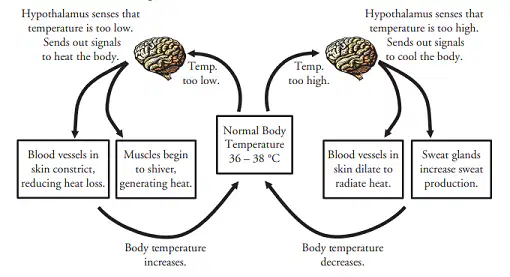
The following image illustrates ________ feedback loop.
inert
negative
positive
sensitive
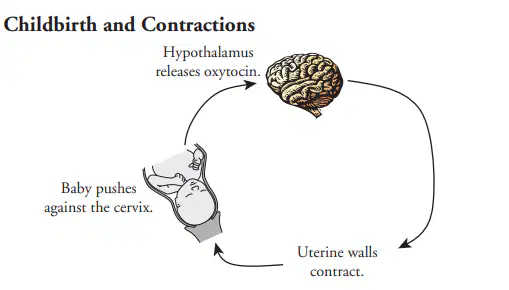
The following image illustrates ________ feedback loop.
inert
negative
positive
sensitive
Which of the following is NOT a requirement of all organisms?
heat
oxygen
pressure
skeleton
The and systems provide support and movement of body parts.
endocrine/nervous
integumentary/respiratory
reproductive/urinary
skeletal/ muscular
The _______ and ______ systems regulate homeostatic responses
circulatory/digestive
endocrine/nervous
reproductive/urinary
skeletal/muscular
Maintenance of homeostasis results in
death
disease
health
symptoms
Which of these regions are associated with parts of the arm?
antecubital, brachial, carpal
buccal, frontal, mental
axillary, plantar, crural
femoral, popliteal, tarsal
Which of these regions are associated with parts of the leg?
antecubital, brachial, carpal
axillary, pectoral, mammary
buccal, frontal, mental
femoral, popliteal, tarsal
Which of these regions are associated with parts of the head/face?
antecubital, brachial, carpal
axillary, pectoral, mammary
buccal, frontal, mental
femoral, popliteal, tarsal
Which of these regions are associated with parts of the trunk?
antecubital, brachial, carpal
axillary, pectoral, mammary
buccal, frontal, mental
femoral, popliteal, tarsal
Which would appear the darkest (blackest) on an x-ray?
air in a lung
bone
soft tissue
metal pin
The cardiovascular system responds to exercise with
a decrease in heart rate
an increase in heart rate
a decrease in cardiac output
an increase in hormone production
______ tend to have a higher resting heart rate than ______.
Adults; children
Females; males
Males; females
The elderly; babies

