wayground logo

Free Printable Worksheets

Font size

S
M
L
XL
Worksheets

Trial Year 9 Checkpoint KS3

Total questions: 80

Worksheet time: 4hrs 0mins

Name
Class
Date
1.

The process of breaking down food into nutrient rich molecules.

a)

absorption

b)

digestion

c)

peristalsis

d)

villi

2.

The process by which nutrient molecules pass through the wall of your digestive system into your blood.

a)

absorption

b)

digestion

c)

peristalsis

d)

villi

3.

the organ which absorbs water

a)

small intestine

b)

stomach

c)

villi

d)

large intestine

4.

Producers are:

a)

animals

b)

rocks

c)

plants

5.

A food chain is:

a)

an animal that eats only plants.

b)

a diagram that shows how energy moves from one organism to another. (Grass>Mouse>Owl)

c)

An animal that is hunted and eaten by another animal.

6.

A living thing that breaks down dead plants and animals - such as, fungi, worms, bacteria, is:

a)

decomposer

b)

food web

c)

omnivore

7.
All energy on Earth ultimately comes from what source?
a)
Water
b)
Sun
c)
Consumers
d)
Oxygen
8.

___________ make food by photosynthesis and pass it back to the stem.

a)

stems

b)

roots

c)

leaves

d)

buds

9.
Vascular tissue that transports water and minerals UPWARDS from a plant's roots is know as ______.
a)
Chlorophyll
b)
Phloem
c)
Stomata
d)
Xylem
10.
Plant absorbs water through the _________. 
a)
stem
b)
roots 
c)
leaves 
d)
all of the above
11.
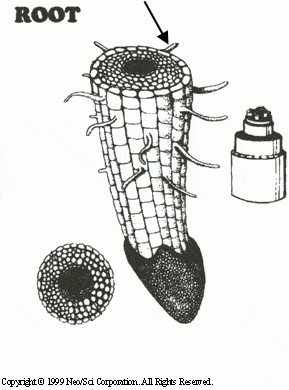
What is the name of the part of the root that allows water and minerals enter?
a)
root hairs
b)
epidermis
c)
phloem
d)
phyla
12.
what is the function of root hair?
a)
it is place to store the food
b)
it has large surface area to absorb more water
13.
This is the definition for which word:The movement of particles down a concentration gradient (from a high concentration to a low concentration)
a)
Osmosis
b)
Diffusion
c)
Active transport
d)
Transpiration
14.

Leaf S

a)

Eastern white pine

b)

balsam poplar

c)

sweet gum

d)

ginko

15.
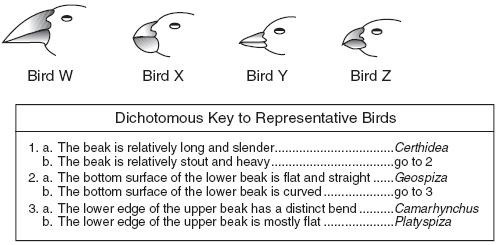
What is the name of bird W?
a)
Certhidea
b)
Geospiza
c)
Camarhynchus
d)
Platyspiza
16.
Which part may develop into a fruit?
a)
E
b)
D
c)
C
d)
A
17.
The tip of the style that has sticky hairs to trap pollen is the ___.
a)
stamen
b)
stigma
c)
ovary
d)
style
18.
The part of the stamen that produces pollen grains is the ___.
a)
anther
b)
pistil
c)
filament
d)
ovary
19.
The male reproductive structure of a flower is the ___.
a)
pistil
b)
ovary
c)
stamen
d)
ovule
20.
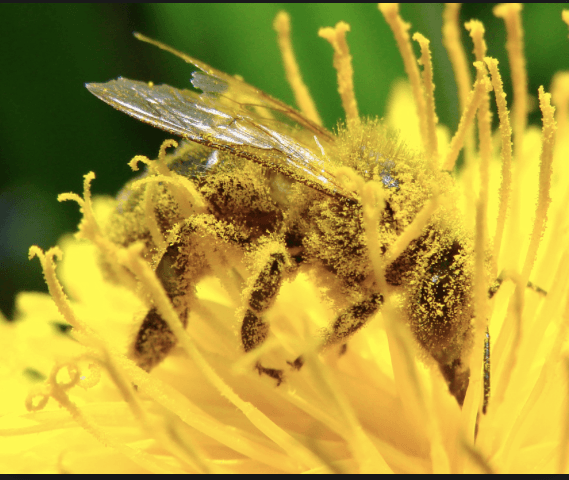
Pollination is the process by which pollen
a)
causes people to sneeze
b)
is formed inside a plant
c)
moves from stamen to stigma
d)
moves from stigma to stamen
21.
Which one of the following shows discontinuous variation?
a)
Eye colour
b)
Height
c)
Strength
d)
Weight
22.
Which one of the following shows continuous variation?
a)
Blood group
b)
Height
c)
Male or female
d)
Tongue rolling
23.

Selective breeding is...

a)

a process to create an organism with desired traits from parents with those desired traits

b)

natural method of producing offspring with desired traits

c)

creating a new species

d)

making organisms reproduce during times of stress

24.
Use the following table to answer the next question. A family visited a dog breeder and requested a puppy that had short fur and was friendly and lovable.  Which dogs should the breeder select to be the parents of the requested puppy?
a)
1 and 2
b)
2 and 3
c)
1 and 4
d)
2 and 4
25.

what is the purpose of circulation

a)

supply O2 and nutrients and remove waste

b)

break down the food

c)

get oxygen into the lungs

d)

remove solid waste

26.

The tubes that carry the blood around our body are called

a)

arteries

b)

veins

c)

arteries and veins

d)

arteries, veins and cappilaries

27.
Name this part.
a)
Right atrium
b)
Left ventricle
c)
Right ventricle
d)
Left atrium
28.
Name this part.
a)
Left ventricle
b)
Pulmonary artery
c)
Right atrium
d)
Pulmonary veins
29.
Name this part.
a)
Right ventricle
b)
Aorta
c)
Right atrium
d)
Atrium
30.
Which side of the heart pumps oxygen-rich blood to the rest of the body?
a)
Right
b)
Left
31.
Which number is the vena cava?
a)
1
b)
2
c)
3
d)
8
32.
Which valve is letter X?
a)
aortic
b)
bicuspid
c)
tricuspid
d)
pulmonary
33.
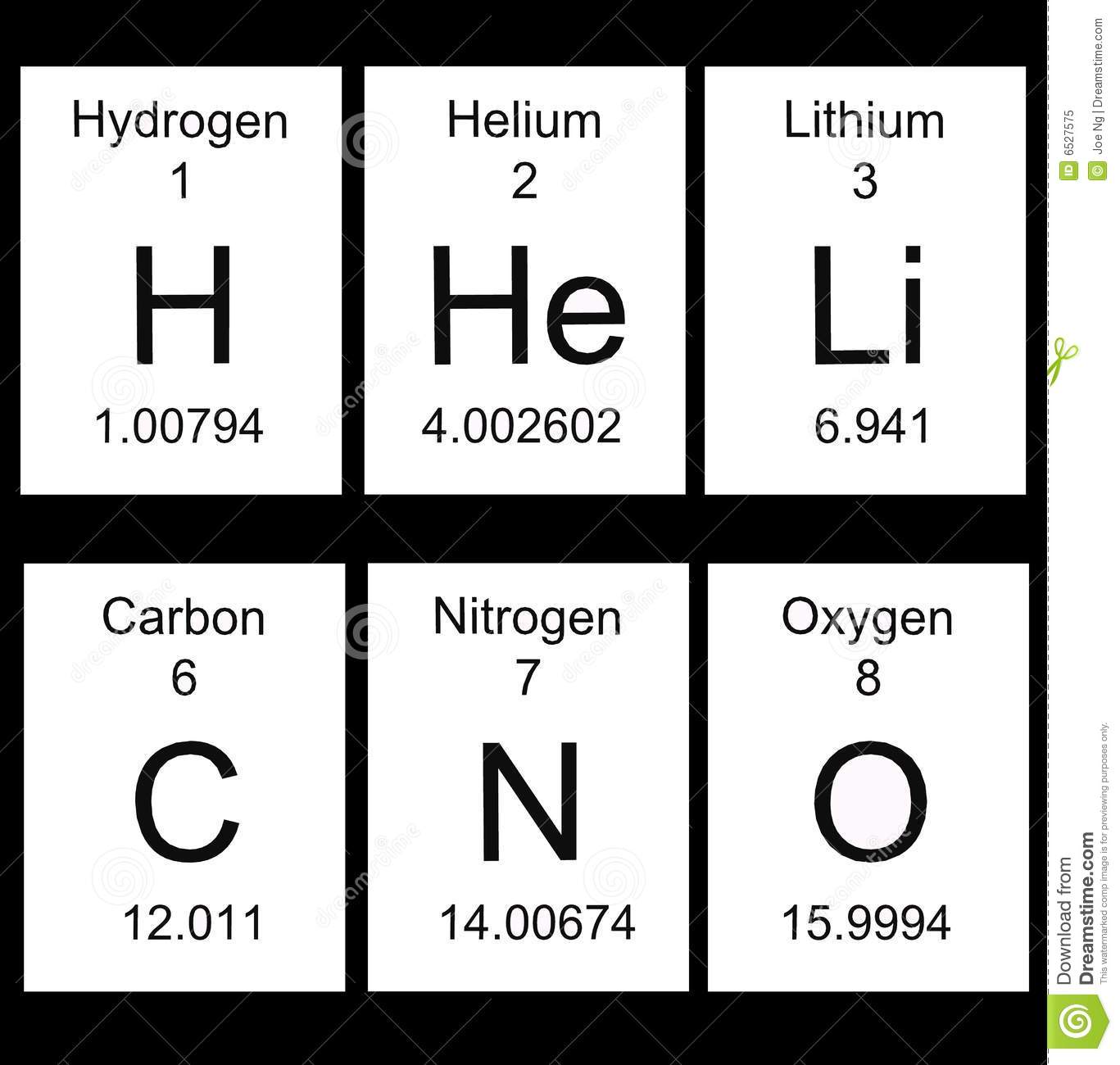
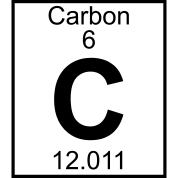
The number at the bottom of each square on the periodic table is the ...
a)
atomic number
b)
atomic mass
c)
chemical symbol
d)
element name
34.
What does 12.011 represent?
a)
atomic mass
b)
atomic number
c)
element name
d)
chemical symbol 
35.
What does the 6 represent?
a)
atomic mass
b)
atomic number
c)
element name
d)
chemical symbol 
36.

neutron

a)

A subatomic particle that has a positive charge and that is found in the nucleus of an atom

b)

not able to conduct heat or electricity, little to no metallic luster

c)

A subatomic particle that has a negative charge

d)

A small particle in the nucleus of the atom, with no electrical charge

37.

A subatomic particle that has a positive charge and that is found in the nucleus of an atom

a)

Proton

b)

elecrtron

c)

groups

d)

neutrons

38.

A subatomic particle that has a negative charge

a)

nobles gases

b)

protons

c)

electrons

d)

neutrons

39.

What is two or more substances that are together in the same place but their atoms are not chemically bonded.

a)

Mixture

b)

Solution

c)

Colloid

d)

Suspension

40.

___________________ is a measure of how much solute can dissolve in a given solvent at a given temperature.

a)

Solute

b)

Solvent

c)

Solubility

d)

Solution

41.

Which of the following reactions occurs at the highest rate?

a)

Photosynthesis

b)

Rusting of iron

c)

Combustion of hydrogen in oxygen

d)

Combustion of magnesium in oxygen

42.

Diagram 4 shows the graph of volume of carbon dioxide gas against time when 5 g of marble chips is added to

50 cm3 of 0.2 mol dm-3 hydrochloric acid.


At what time the rate of reaction the highest?

a)

t1

b)

t2

c)

t3

d)

t4

43.

Renewable or Nonrenewable: Coal

a)

Renewable

b)

Nonrenewable

44.

Renewable or Nonrenewable: Natural Gas

a)

nonrenewable

b)

renewable

45.

Renewable or Nonrenewable: Oil

a)

Nonrenewable

b)

Renewable

46.

Renewable or Nonrenewable: Wind

a)

Renewable

b)

Nonrenewable

47.

Fossil Fuels produce carbon dioxide that pollutes the atmosphere.

a)

Advantage

b)

Disadvantage

48.

Nuclear Power can generate high amounts of electrical energy in a single plant.

a)

Advantage

b)

Disadvantage

49.

Hydropower can have a negative impact on river wildlife.

a)

Advantage

b)

Disadvantage

50.

Match the description to the graph:

"The car is stopped."

a)
b)
c)
d)
51.

Match the description to the graph:

"The car is traveling at a constant speed."

a)
b)
c)
d)
52.

Match the description to the graph:

"The car is coming back."

a)
b)
c)
d)
53.

Match the description to the graph:

"The speed of the car is decreasing."

a)
b)
c)
d)
54.
What type of rock might contain fossils? 
a)
sedimentary
b)
igneous
c)
metamorphic
55.
What type of rock has wavy layers that may be bent? 
a)
sedimentary
b)
igneous
c)
metamorphic
56.
What type of rock might contain holes from gases of quickly cooled lava? 
a)
sedimentary
b)
igneous
c)
metamorphic
57.
The order of the planets is:
a)
Mars,Venus,Earth,
Mercury,Saturn
Jupiter, Uranus, Neptune
b)
Earth,Venus,Mars
Jupiter, Neptune,
Mercury,Saturn,
Uranus
c)
Mercury,Venus,Earth
Mars,Jupiter,
Saturn,Uranus
Neptune
d)
Mercury, Earth, Venus, Mars, Saturn, Jupiter, Neptune, Uranus
58.

I am located between Mars and Jupiter.

a)

Comet belt

b)

Asteroid belt

c)

Meteor belt

d)

Stars

59.

Why are asteroids not considered a planet?

a)

They are not spherical and are too small to be seen

b)

They evolved from earth

c)

They produce light

d)

Scientist did not like them

60.

Why were certain planets and the asteroid belts not seen before 1801?

a)

Modern telescope were created after 1801 where it showed more detail

b)

Telescopes was never created before 1801

c)

Only modern telescopes has better magnification to see even the smallest asteroids

d)

Astronomers did not exist before 1801

61.

How high or low a sound is

a)

pitch

b)

sound

c)

volume

d)

acoustics

62.

How loud or soft the sound is

a)

Pitch

b)

Wavelength

c)

Acoustics

d)

Volume

63.

Why can't we hear sound in space?

a)

Can't take our helmet off to hear

b)

Because it's dark

c)

Space has no mass/ no gas/ solids/ liquids

d)

Don't know, i've never been to space

64.
The accumulation of excess electric charge on an object is called
a)
Static electricity 
b)
Electric discharge
c)
Resistance
d)
Circuit 
65.
Electric charges that are alike _______ each other.
a)
Attract
b)
Repel
66.
Electric charges that are different _______ each other.
a)
Attract
b)
Repel
67.
Current is...
a)
moving protons
b)
moving electrons
c)
measured in volts
d)
measured in ohms
68.
current is measured in....
a)
volts
b)
amps
c)
watts
d)
mph
69.

In the diagram above, identify circuit component (part) C.

a)

Conductor

b)

Source

c)

Switch

d)

Transformer

70.

A __________ circuit has more than one path available for electrons to flow through the circuit so if one portion of the circuit is not functioning, the whole circuit does not shutdown.

a)

Open

b)

Parallel

c)

Series

d)

Closed

71.
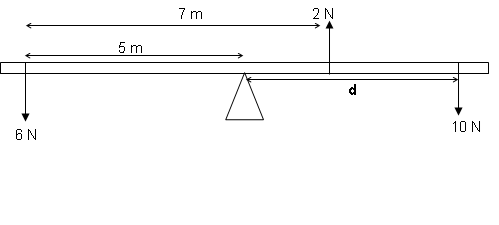
What is the moment acting on the seesaw?
a)
1.6Nm
b)
15Nm
c)
16N
d)
4Nm
72.

Assuming the system is in equilibrium, calculate the missing distance d

a)

3.4 m

b)

2.8 m

c)

4.4 m

d)

1.6 m

73.
What happens when light hits an object?
a)
Some of the light jumps in different directions
(bounces)
b)
Some of the light gets absorbed by the object.
c)
Some of the light bounces back to your eye
d)
ALL of them.
74.
_______ is when light hits and object and it BOUNCES off.
a)
Reflection
b)
Refraction
75.
___________ is when light BENDS or CHANGES direction.
a)
Reflection
b)
Refraction
76.

A __________ is a transparent object with refracting surfaces that separate white light into a spectrum of colors.

a)

rainbow

b)

prism

c)

cloud

77.

A rainbow is formed when white light goes through a prism, where the light is refracted and split into the colours. This phenomenon is known as ________________________ .

a)

refraction

b)

dispersion

c)

reflection

78.
What kind of heat transfer happens when the sun heats your body?
a)
Conduction
b)
Radiation
c)
Convection
d)
Density
79.
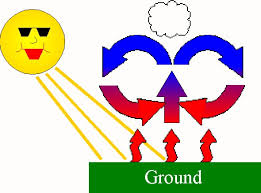
Warm air rises and the cool air sinks demonstrates this type of heat transfer. 
a)
conduction
b)
convection
c)
radiation
d)
Insolation 
80.
When you iron a shirt, the shirt gets warm.  This type of heat transfer is an example of
a)
condensation
b)
conduction
c)
convection
d)
radiation