Wayground logo

Free Printable Worksheets

Font size

S
M
L
XL
Worksheets

Atoms, Isotopes, Elements

Total questions: 50

Worksheet time: 42mins

Name
Class
Date
1.
The positive particles of an atom are 
a)
electrons 
b)
positrons 
c)
neutrons 
d)
protons 
2.
the central region of an atom where its neutrons and protons are is its 
a)
nucleus 
b)
electron cloud
c)
core 
d)
center 
3.
an atom with atomic number 6 would have how many protons 
a)
6
b)
12
c)
3
d)
cannot be determined 
4.
Particles in an atom that are neutral and have no charge are 
a)
negatrons 
b)
electrons 
c)
neutrons 
d)
protons 
5.
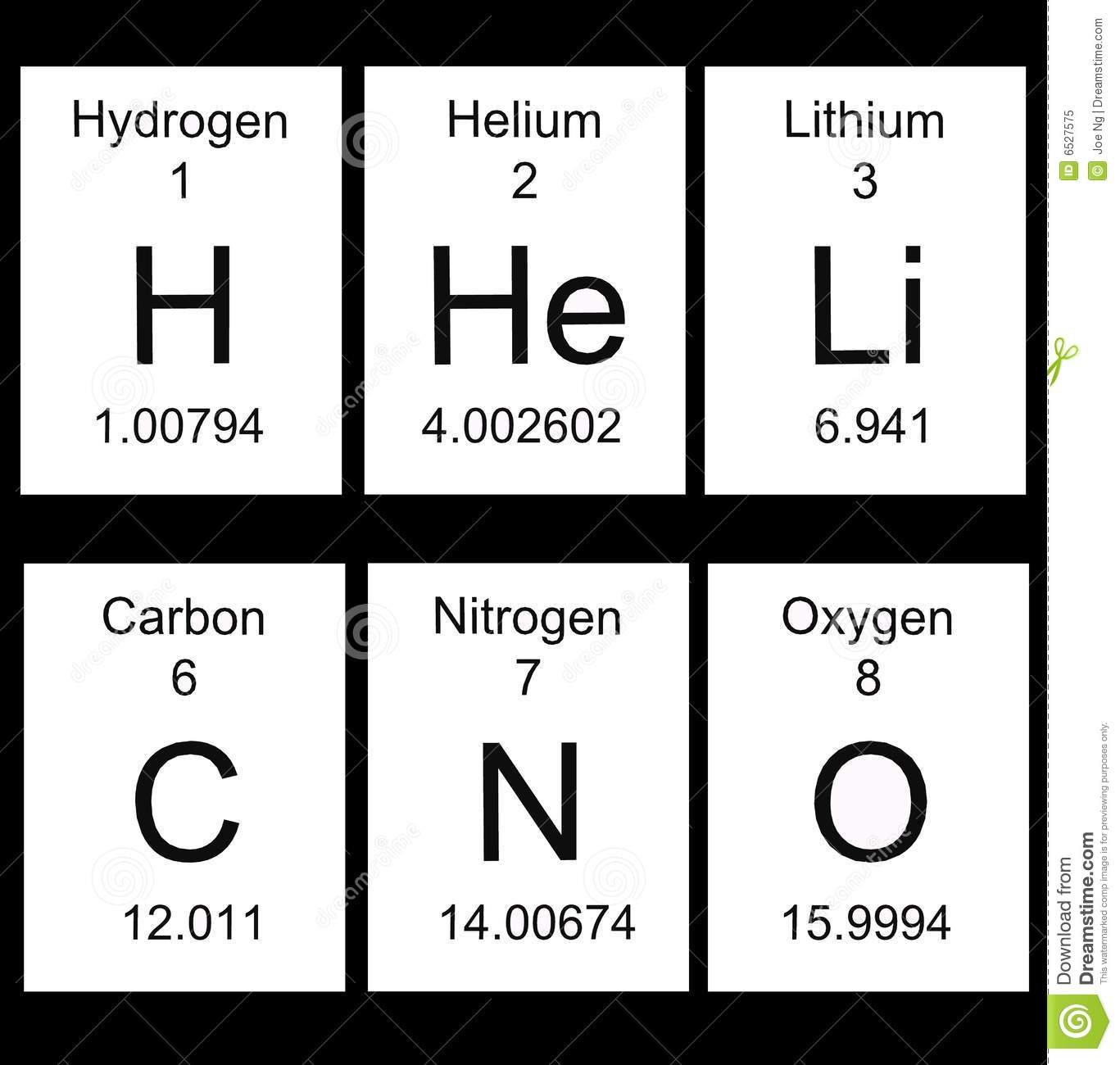
How many protons does this atom have?
a)
2.5
b)
6
c)
5
d)
10.811
6.
If the number of protons equal the number of _____, the atom will have no charge
a)
protons
b)
neutrons
c)
electrons
d)
nucleus
7.
An atom is made up mostly of
a)
protons
b)
gravity
c)
empty space
d)
electricity
8.
An element is made up of only one kind of _____.
a)
isotope
b)
plastic
c)
atom
d)
metal
9.
The atomic number tells you what?
a)
number of electrons
b)
number of protons
c)
number of neutrons
d)
both electrons and protons in an atom.
10.
Where is most of the mass of an atom located?
a)
In the nucleus
b)
Electron cloud
c)
In the electron
d)
Evenly spread throughout the atom
11.
Which two types of atomic particles carry an electrical charge?
a)
protons and electrons
b)
quarks and neutrons
c)
neutrons and electrons
d)
protons and neutrons
12.

Carbon

a)

CA

b)

C

c)

Ca

d)

Cn

13.

Sn

a)

tin

b)

sulfur

c)

iron

d)

sodium

14.

Zinc

a)

Z

b)

Zi

c)

ZN

d)

Zn

15.

Sulfur

a)

Sf

b)

Su

c)

Sr

d)

S

16.

Neon

a)

N

b)

No

c)

Ne

d)

Nn

17.

Calcium

a)

Cl

b)

Ca

c)

C

d)

Cm

18.

Copper

a)

CU

b)

Cp

c)

Cu

d)

Cr

19.

Helium

a)

He

b)

Hl

c)

HE

d)

Hm

20.

Gold

a)

Go

b)

Gl

c)

AU

d)

Au

21.
The number at the top of each square on the periodic table is the ...
a)
atomic number
b)
atomic mass
c)
Chemical Symbol
d)
Element Name
22.
What does the chemical symbol K stand for?
a)
Krypton
b)
Kryptonite
c)
Potassium
23.
What does the chemical symbol H stand for?
a)
Helium
b)
Hydrogen
24.

Mercury

a)

Hg

b)

Mg

c)

Cg

d)

Rg

25.
Ar represents the element ...
a)
Arsenic
b)
Aluminum
c)
Argon
d)
Oxygen
26.
Pb represents the element ...
a)
Gold
b)
Silver
c)
Potassium
d)
Lead
27.
C represents the element ...
a)
Calcium
b)
Carbon
c)
Chlorine
d)
Cesium
28.

What are the 3 subatomic particles of an atom?

a)

carbon atom, proton, electron

b)

quarks, neutrons, protons

c)

nucleus, protons, electrons

d)

protons, neutrons, electrons

29.
What is the atomic mass of "F"
a)
9
b)
18
c)
17
d)
19
30.
What subatomic particle(s) would be found orbiting the nucleus?
a)
Neutrons only
b)
Electrons only
c)
Protons and Neutrons
d)
Protons and Electrons
31.
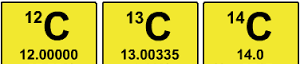
What do these isotopes of carbon all have in common?
a)
neutrons & mass number
b)
atomic number and neutrons
c)
atomic number and electrons
d)
protons, atomic number, and mass number
32.
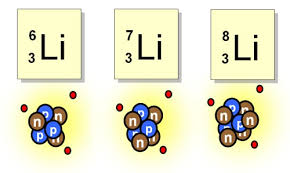
How many neutrons does the isotope of lithium have?
a)
8
b)
3
c)
4
d)
5
33.
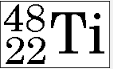
How many protons does this isotope of titanium have?
a)
48
b)
22
c)
26
d)
70
34.
In a correctly written symbol what would be located in the "A" position?
a)
number of neutrons
b)
atomic number
c)
number of electrons 
d)
mass number
35.
which atom has  4 neutrons?
a)
Li-6
b)
Li-7
c)
Li-8
d)
they have the same # of neutrons
36.
What quantities vary between isotopes of an element?
a)
protons, electrons, and atomic mass
b)
protons, electrons, and atomic number
c)
neutrons and electrons
d)
neutrons and atomic mass
37.
How many neutrons in C-14?
a)
6
b)
7
c)
14
d)
8
38.
Isotopes are atoms of the same element with different #’s of __________ & therefore different __________.
a)
n0 ;  atomic #’s
b)
p+ ; atomic #’s
c)
e- ; atomic masses
d)
n0 ; atomic masses
39.
Four isotopes of lead include lead-204, lead-206, lead-207, and lead-208.  The average atomic mass of lead is 207.2.  Which isotope of lead is likely to be the most abundant.
a)
204
b)
206
c)
207
d)
208
40.
Two isotopes of carbon are carbon-12 and carbon-14.  These isotopes differ from one another by two protons.
a)
true
b)
false
41.

True or False: The ground state is the highest energy state of an atom.

a)

True

b)

False

42.
For an electron to change from ground state to an excited stated it must...
a)
Absorb energy
b)
Release energy
43.

What is the light that you can see called?

a)

observatory light

b)

ultraviolet light

c)

visible light

d)

infrared light

44.
Line emission spectrum shown below happens when
a)
Electron transition from lower to higher energy level.
b)
Electron transition from higher to lower energy level.
c)
Electron exist in fixed energy states
d)
Electron transition between different energy levels.
45.
Emission of light from an atom occurs when an electron
a)
drops from a higher to a lower energy level.
b)
   jumps from a lower to a higher energy level.   
c)
   moves within its atomic orbital.
d)
falls into the nucleus.
46.
Why are line emission spectra of elements called "atomic fingerprints"?
a)
They are all the same
b)
They are all unique
c)
They are all similar
d)
They all contain colored light
47.
Light behaves like both a particle and a ______.
a)
Mass
b)
Wave
c)
Current
48.

Look carefully at the picture. It shows an electron in the excited state on the left, and the electron returning to its ground state on the right. When the electron return to the ground state it emits a_______________________.

a)

blast of cold air

b)

electrostatic charge

c)

proton

d)

photon (light)

49.

An atom that has gained energy beyond normal is said to be ...

a)

excited

b)

grounded

c)

naturalized

50.
When an atom has all of its electrons in the lowest energy orbitals available, the atom is  
a)
in ground state
b)
in excited state
c)
giving off light energy
d)
unstable