
 Worksheets
REVISION TEST CHAPTER 1-4
Total questions: 65
Worksheet time: 57mins

Biodiversity is best described as...
the amount of different species of organisms (plants and animals) living in the same area.
when only a few species inhabit an area.
when only one organism (plants and animals) is found living in one area.

A species that is likely to become extinct if protective measures are not taken immediately is known as
threatened species
endemic species
keystone species
endangered species

Based on the diagram, indicate the importance of biodiversity to human
Source of food
Balance in nature
Raw materials for industries
Education
Recreational places

Based on the diagram, indicate the importance of biodiversity to human
Medical
Balance in nature
Raw materials for industries
Recreational places
Activities that can destroy the biodiversity of the rainforest
Deforestation
Breeding program
Forest reserve
Illegal logging
What is an endemic species?
Species that can be found anywhere
Animals that became endangered
Organisms that can only be found in restricted habitat
Plants that can undergo photosynthesis
Biodiversity is a priceless treasure and a legacy of nature which should
be preserved. Choose two importance of biodiversity.
Recreational places
To maintain the water level in the atmosphere
Medical
To classify organisms
Tick the result of several destructive practices and their consequences
Pollution, climate change, hunting and capturing animals...
Pollution, climate change, creation of new species...
Over-exploiting resources, creation of new species, alteration of habitats...
The principal function of biosphere reserves is...
Protect the environment
Protect wildlife
Both
Life on Earth will disappear if we continue harming our natural...
Context
Environment
Earth

A student develops a model for grouping animals that she observes in a park.
What are MOST LIKELY the names of the animal groups?
fish and reptiles
reptiles and birds
fish and mammals
reptiles and amphibians

A student draws three animals.
Which characteristics can the student use to classify the animals?
no backbone, live in water, lay eggs
backbone, live on land, breathe with lungs
no backbone, scales on skin, breathe with gills
backbone, smooth skin, breathe with gills and lungs

A student sorts animals into groups. He draws the animals in one group.
Which animal should the student remove from this group?
fox
bear
hawk
mouse
How are reptiles and fish alike?
neither has scales
both breathe with gills
neither has a backbone
both have body temperatures that change with their surroundings
A student wants to research invertebrate animals. Which of these animals should she study? Select 3
frog
fish
clam
worm
spider
Which features can a scientist use to identify an amphibian? Select 3
has a backbone
has no backbone
has smooth, moist skin
has scales or plates on skin
breathes first with gills and then with lungs
Animal 1: backbone/feathers/warm-blooded
Animal 2: backbone/scales/gills/cold-blooded
Animal 3: cold-blooded
Animal 4: backbone/hair
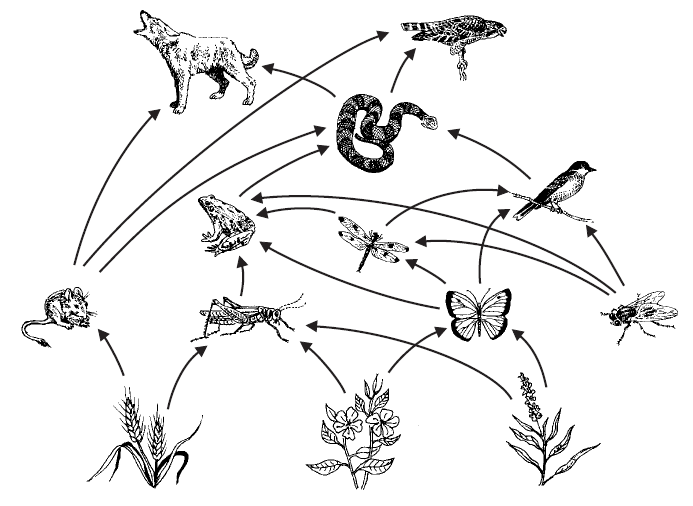
In this food web, which of the following organisms eats the largest variety of different producers?
Mouse
Grasshopper
Dragonfly
Butterfly
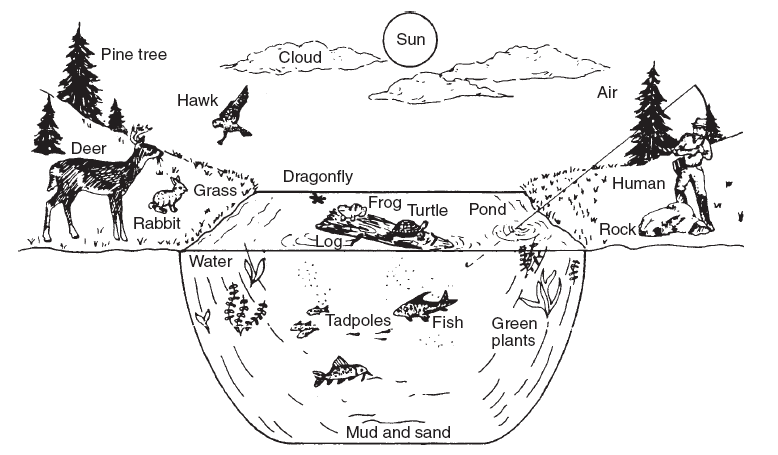
What is the primary source of energy for the ecosystem pictured above?
Grass and Green plants
Hawks and Deer
Tadpoles and Fish
Sun
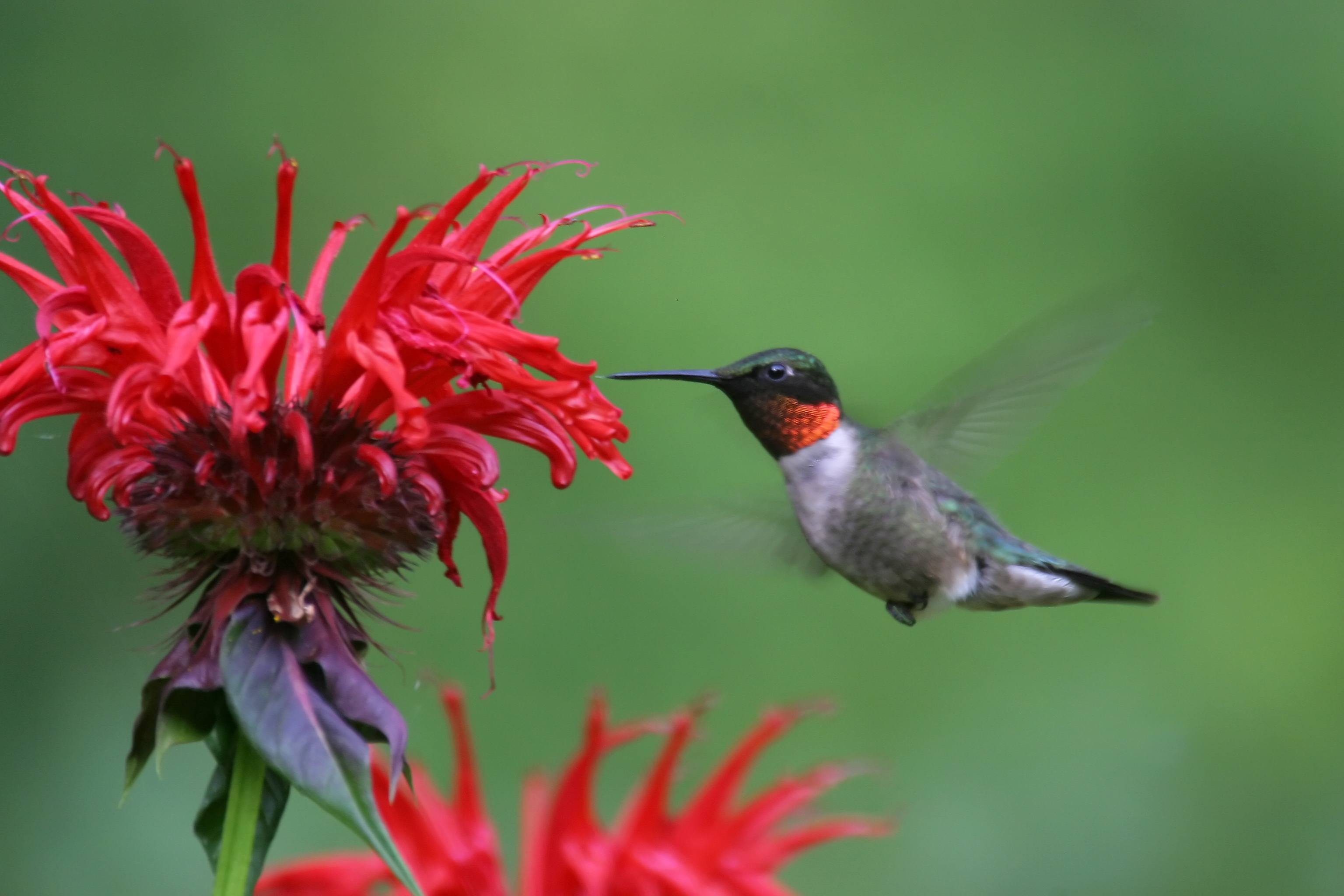

Name the type of this symbiosis?
Mutualism
Commensalism
Parasitism
Interspecies

Name the type of this symbiosis?
Mutualism
Commensalism
Parasitism
Interspecies

Name the type of this symbiosis?
Mutualism
Commensalism
Parasitism
Interspecies

The diagram shows the interaction of two animals.
Which of the following animals show the similar interaction as above?


Commensalism is a symbiotic relationship in which what occurs between the organisms?
both organisms are harmed
one benefits, the other is unaffected
one benefits, the other is harmed
one benefits by eating the other
A group of organisms that have common characteristics and can reproduce to breed offsprings is called.......
ecosystem
community
species
population
An ecosystem is a few communities that live together in one habitat and have mutual interaction with one another including all the non living components such as water, air and soil.
True
False
Which of the following is not the source (源) of carbohydrates?


Which class of food helps our body to fight against infections?
proteins
fats
carbohydrates
fibre

__________ helps to maintain a constant body temperature in our body.
Fibre
Vitamins
Energy giving food
Water

Rickets is caused by the deficiency (缺乏) of __________.
vitamin A
vitamin B
vitamin C
vitamin D

The diagram shows a food test that was carried out on a food sample.
Brick red precipitate is formed in the test tube.
Which of the following is the food sample tested?
Egg yolk
Olive oil
Honey
Peanut

The diagram shows the apparatus used in food test.
A red precipitate is formed when sample X is heated together with a few drops of Millon’s reagent.
What is the nutrient that can probably be found in solution X?
Oil
Protein
Glucose
Starch

What colour will starch turn brown iodine solution into?
blue-black
colourless
red
yellow

People who live in cold climate (气候) need MORE food to maintain body temperature as compared to people who live in hot climate.


Fat is completely digested (完全被消化) in the ________.
stomach
mouth
small intestine (小肠)
large intestine (大肠)
Which statement is NOT true about proteins?
Protein digestion begins in the mouth.
Proteins are used for cell growth and repair.
Proteins are broken down to amino acids.
Proteins are used to synthesize (制造) antibodies
What is the enzyme that break down fats?
Amylase
Maltose
Protease
Lipase

Water from the undigested food is absorbed (被吸收) mainly in the __________.
stomach
oesophagus
small intestine
large intestine

___________ is the end product of fat which used as heat insulator and to protect internal organs.
Glucose
Amino acid
Fatty acid and Glycerol
Food sample X is not digested in the mouth but is digested by the enzyme in the stomach.
What does X contain?
Starch
Protein
Fat
Maltose

Gary eats 250 g of rice, 200 g of fried egg and 100g of apple. Calculate the calorific value of the boy's breakfast.
2610kJ
5730kJ
5810kJ
5725kJ

Below are the enzymes produced by the pancreas except 除了) ?
Maltase
Amylase
Protease
Lipase

Which of the following should be included more in a balanced diet for a pregnant woman?
Iron
Fats
Calcium
Vitamin D

Which food is unsuitable (不适合) for a person who cannot produce (制造) enough bile?
butter
lean meat
spinach
rice
Here are the list of enzymes in small intestine and their functions (用处), which of these is true?
Amylase - Breakdown protein
Lipase - Breakdown carbohydrates
Protease - Breakdown protein
Anylase - Breakdown fat

The structure shown is a villus. How does the structure enables the digested food to be absorbed easily?
This structure has a one-cell thick wall.
This structure has a thick wall.
What is the meaning of disease
An illness that cause by toxic chemical expose by our body.
Abnormal condition on body and mind that cause discomfort.
Normal condition by body react to certain foreign substance
" The organisms that can cause disease' is called _______
bacteria
pathogen
probiotic
biosome
Disease that can be transmitted from one individual to other individual is called _____________
non-infectious disease
infectious disease
genetic disease
sporadic disease
Infectious disease are spread by (i)__________ , transmitted by infected person called (ii) ______________.
pathogens, vector
vector, pathogens
pathogen, host
host, medium

Based on the image, what is the true reason people need to wear that type of face mask.
wear by healthy person to protect from sick person.
to cover nose and mouth of sick person so that they cannot infect others
To filter small particle or smoke and dust from entering mouth
Sars-Cov2 virus that lead to Covid19 disease is example of (i)___________ disease that transmitted through (ii)_________ transmission.
(i) waterborne (ii) water
(i) touch (ii) parasite
(i) airborne (ii) droplet
Airborne disease can be prevented by practising the following, except
cover nose and mouth when sneezing or cough.
wash your hand with water only
avoid being in crowded places
avoid handshake
"Cholera, Typhoid, Amoebic dysentery"
is the common disease that transmitted through _____
air
touch
vector
water

The following skin disease can be prevented by...
Share and exchange cloth among friends
practice proper hygiene like showering.
eat and maintain proper and balance food.
Animal that transmit pathogen from one host to another is called __________
species
vector
predator
prey

This is the vector for...
zika virus
dengue virus
covid virus
hanta virus

