Wayground logo

Free Printable Worksheets

Font size

S
M
L
XL
Worksheets

atoms

Total questions: 56

Worksheet time: 8hrs 32mins

Name
Class
Date
1.

What do protons, electrons and neutrons make?

a)

element

b)

compound

c)

atom

2.

What is the smallest piece of matter that still has properties of that matter?

a)

element

b)

atom

c)

proton

3.

Negatively charged particle

a)

proton

b)

neutron

c)

electron

4.

Neutral charge particle

a)

proton

b)

neutron

c)

electron

5.

Positively charge particle

a)

proton

b)

neutron

c)

electron

6.

Atomic weight

a)

number of protons and neutrons inside the nucleus

b)

number or electrons or protons

c)

number of protons, neutrons and electrons

7.

Atomic number is

a)

Number of protons or electrons

b)

Number of protons and neutrons

c)

Your phone number

8.

What does the number 11 stand for in the Sodium block?

a)

atomic number

b)

atomic weight

c)

Stranger Things

9.
Research question: does the distance a person kicks a soccer ball effect how well they will do on their math test.  What is the dependent variable?
a)
How far they kick the soccer ball
b)
who the person is
c)
how well they do on the math test
d)
Type of soccer ball.
10.
When experimenting with the growth of a plant, a scientist uses three (of the same type of) plants, two different fertilizers, equal light, and equal water. What type of variable is the fertilizer?
a)
Dependent
b)
Independent
c)
Control
d)
Compound
11.
Which variable depends on what is done at the beginning of an experiment?
a)
Dependent
b)
Independent
c)
Control
d)
Following
12.
What would the INDEPENDENT variable be in an experiment testing which types of paper airplane goes furthest?
a)
the paper used
b)
the type of paper airplane
c)
the distance of each plane's flight
d)
how hard the plane is thrown
13.
Research Question: Does the type of gasoline put in a car effect how fast the car can drive. What is the independent variable?
a)
Type of gasoline
b)
which car the gas is put into
c)
how fast the car can drive
d)
how much gas is put into the car
14.
An experiment is performed on plants to see how different liquids affect plant growth. Each plant in the experiment is given a different liquid; water, apple juice, or milk. Each plant has the same amount of soil, sunlight, and listens to the same music. In this investigation, the independent variable is ...
a)
The type of plant
b)
The amount of sunlight
c)
The type of music
d)
The type of liquid
15.
An experiment is performed on plants to see how different liquids affect plant growth. Each plant in the experiment is given a different liquid; water, apple juice, or milk. Each plant has the same amount of soil, sunlight, and listens to the same music. In this investigation, what is the dependent variable?
a)
Type of plant
b)
Water, apple juice, milk
c)
Plant growth
d)
Color of the plant's leaves
16.
Ms. S set up an experiment to see how the mass of a ball affects the distance it rolls off a ramp. Identify the independent variable.
a)
Distance traveled by the ball
b)
Height of the ramp
c)
Mass of the ball
d)
Who set up the experiment (Ms. S, etc)
17.
When experimenting with the growth of a plant, a scientist uses three (of the same type of) plants, two different fertilizers, equal light, and equal water. What type of variable is the fertilizer?
a)
Dependent
b)
Independent
c)
Control
d)
Compound
18.
Research Question: Does the type of gasoline put in a car effect how fast the car can drive. What is the independent variable?
a)
Type of gasoline
b)
which car the gas is put into
c)
how fast the car can drive
d)
how much gas is put into the car
19.
Ms. S set up an experiment to see how the mass of a ball affects the distance it rolls off a ramp. Identify the independent variable.
a)
Distance traveled by the ball
b)
Height of the ramp
c)
Mass of the ball
d)
Who set up the experiment (Ms. S, etc)
20.
Sarah is bringing treats to her elementary school class on her birthday. The number of treats she brings in is based on the number of students in her class.
t = the number of treats
s = the number of students

Which of the variables is independent?
a)
s
b)
t
21.
Sarah is participating in a walkathon to raise money for local literacy programs. The amount of money Sarah will raise depends on the distance she walks.
m = the amount of money Sarah will raise
d = the distance Sarah walks

Which of the variables is dependent?
a)
m
b)
d
22.
Carey and Justin are raising money to purchase books for their school's library. The more money they raise, the more books they will be able to purchase for the library.
m = the amount of money Carey and Justin raise
b = the number of books Carey and Justin will be able to purchase

Which of the variables is dependent?
a)
m
b)
b
23.
In order to earn extra money on the weekends, Josie's string quartet performs at wedding receptions. The longer the reception, the more money they earn.
r = the length of the reception
m = the amount of money Josie's quartet earns

Which of the variables is independent?
a)
r
b)
m
24.
In the United States House of Representatives, the number of Representatives from a state is calculated based on its population.
r = the number of Representatives
p = the population of a state

Which of the variables is independent?
a)
r
b)
p
25.
A(n) _____________ variable depends on or is changed by another variable.
a)
dependent
b)
independent
26.

Sarah is bringing treats to her elementary school class on her birthday. The number of treats she brings in is based on the number of students in her class.


t = the number of treats

s = the number of students


Which of the variables is INDEPENDENT?

a)

s

b)

t

27.

Sophie earned $5 for every A she got on her report card.


m = money

A = A on report card


The dependent variable is:

a)

m = money

b)

A = A on report card

28.

Javier and his twin sister both have the same science exam. Javier sleeps for 9 hours the night before the exam and his sister sleeps for 6 hours. After they take the test, they both compare their test grades. What is the independent variable?

a)

The number of hours of sleep they had

b)

The type of test

c)

The test grades

29.

Group A decides to exercise for a month. Group B decides not to exercise during the same month. Afterwards, they measure the amount of weight that each group lost. what is the dependent variable?

a)

If a group exercises or not

b)

How much weight each group lost

c)

The type of exercise

30.
All matter is made of what 
a)
energy 
b)
atoms 
c)
electrons 
d)
compounds 
31.
What is at the center of every atom?
a)
an electron
b)
a compound
c)
a molecule
d)
a nucleus
32.
Particles in an atom that are neutral and have no charge are 
a)
negatrons 
b)
electrons 
c)
neutrons 
d)
protons 
33.
True or False? Neutrons have a negative charge
a)
True
b)
False
34.
Where are electrons of an atom found?
a)
Nucleus
b)
Electron Cloud
c)
Some are in the nucleus and some in the electron cloud.
d)
They are moving everywhere.
35.
Most of the mass in an atom is concentrated in the...
a)
electrons
b)
nucleus
c)
protons
d)
empty space
36.
Which of the following determines the type of element that an atom makes?
a)
size of the nucleus
b)
number of protons
c)
how much the atom weighs
d)
number of neutrons
37.

Flammable materials, like alcohol, should never be dispensed or used near

a)

an open door

b)

an open flame

c)

another student

d)

a sink

38.

In the laboratory, the following should not be worn

a)

loose clothing

b)

dangling jewelery

c)

sandals

d)

all of the above

39.
Injuries and accidents should be reported:
a)
immediately
b)
only if serious
c)
in a few minutes
d)
at the end of the block
40.
When you are in the lab, you should wear:
a)
bulky sweatshirts
b)
dangling jewelry
c)
open toe shoes
d)
closed toe shoes
41.

The correct way to move about the lab is to:

a)

run

b)

hurry

c)

walk

d)

Squirm on the floor like a snake

42.

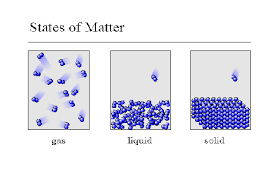
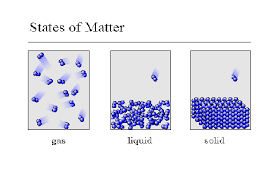
Which of the following are states of matter?

a)

Gas

b)

Solid

c)

Liquid

d)

Plasma

43.
Matter that has its own shape and takes up space.
a)
solid
b)
liquid
c)
gas
44.
Matter that always fills the shape in a container, such as air.
a)
solid
b)
liquid
c)
gas
45.
Milk takes the shape of its container because it is a:
a)
solid
b)
liquid
c)
gas
46.
Molecules are closest together in a 
a)
Solid
b)
Liquid
c)
Gas
d)
plasma
47.
What term describes a liquid changing to a solid?
a)
Deposition
b)
Sublimation
c)
Evaporation
d)
Freezing
48.
At higher temperatures
a)
particles in an object have less energy
b)
particles in an object move faster
c)
a gas contracts
49.
A gas
a)
has a definite shape but no definite volume
b)
has a definite volume but no definite shape
c)
has fast-moving particles
50.
Boiling
a)
liquid to gas
b)
gas to solid
c)
gas to liquid
d)
solid to liquid
51.

___________ is anything that has mass and takes up space.

a)

Molecules

b)

Matter

c)

Volume

52.

________ is the amount of space an object takes up.

a)

Mass

b)

Matter

c)

Volume

53.

Which state of matter does not have a definite shape but does have a definite volume?

a)

Solid

b)

Liquid

c)

Gas

54.

What is the process called when a gas turns into a liquid?

a)

Condensation

b)

Melting

c)

Freezing

d)

Evaporation

55.

What is the process called when a solid changes to a liquid?

a)

Freezing

b)

Evaporation

c)

Melting

d)

Condensation

56.

What is the process called when a liquid changes into a gas?

a)

Freezing

b)

Evaporation

c)

Melting

d)

Condensation