
 Worksheets
Lesson 2 Quiz Review
Total questions: 27
Worksheet time: 16mins
Constructive processes build surface features. Several forces have been in action to alter the landscape of Earth for billions of years. Some are _________processes like the deposition of soil and the gradual uplifting of blocks of land along fault zones.
slow
rapid
_______ processes quickly change the surface, such as earthquakes and volcanic eruptions.
slow
rapid
Nature’s change agents have been both _____________and _____________by building up and carving Earth’s surface for billions of years, creating slow and rapid changes to landforms that resulted in an amazing diversity of landscapes.
positive and negative
great and small
constructive and destructive
natural and manmade
River deltas, beaches, dunes, sandbars, floodplains, Glacial moraines, and Alluvial fans are all examples of soil deposition and
Constructive processes.
Destructive processes.
Can a process that alters the Earth’s surface be both destructive and constructive, such as earthquakes and volcanic eruptions?
True
False
________ breaks down land as it carries away weathered material.
Weathering
Erosion


When plants use their roots to get water from the ground, which 2 spheres are interacting? (choose 2)
Geosphere
Hydrosphere
Atmosphere
Biosphere

When a river deposits sediment, which 2 spheres are interacting? (choose 2)
Geosphere
Hydrosphere
Atmosphere
Biosphere

What is the biosphere?
all the air and gases on the planet
made up of living things
the non-living soil, rocks, and minerals of the Earth
the rivers, lakes, and oceans of the Earth
What is the first step in the scientific method?
Data
Conclusion
No Horse Play
Observe a problem
The study if the shapes and features of the Earth's surface
Photography
Topography
Geography
Lithography
Lines that show areas that have the same elevation
Aging Lines
Check Out Lines
Contour Lines
Waiting Lines
Maps that show 2 dimensional representations of 3 dimensional landforms
Treasure Map
Road Map
Star Map
Topographic Map
The height above sea level
Elevation
Miles
Feet
Inches
The difference between the highest elevation point and the lowest elevation point.
Belief
Relief
Leaf
Reef
The distance between contour lines, representing the difference in elevation between points
Contour Grace
Contour Lines
Contour Discipline
Contour Interval
Close contour lines indicate
steep slope
gradual slope

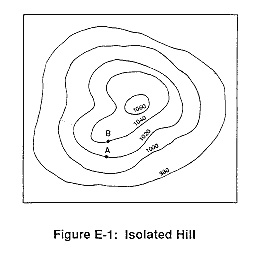
Which hill is steeper?
A
B

