
 Worksheets
Inspire Chemistry M2 L1-4 Honors
Total questions: 42
Worksheet time: 50mins
The state of matter that keeps its shape and volume when it is placed in a different container is called ______.
gas
liquid
solid
The state of matter that expands to fill its container is called ______.
gas
liquid
solid

The diagram shows arrangement of particles in a
Solid
Liquid
Gas
Define a liquid.
Matter that has fixed shape but no fixed volume
Matter that has fixed shape and fixed volume
Matter that has fixed volume, but no fixed shape
The change from a liquid to solid is called
condensing
boiling
sublimation
freezing
melting

Which of these three states represents a liquid?
A
B
C
Which of the following is NOT an element?
Si
NaCl
H2
K
Which of the following is not a compound?
HCl
NaCl
Cl
CO2
_____cannot be broken down into other substances?
Compounds
Solids
Mixtures
Elements
Two or more elements that are chemically combined are called _____.
an element
a compound
a mixture
an alloy
A combination of substances that are not chemically combined is called a(n)____________.
mixture
compound
element
metal

Which box(es) contain a mixture?
A
B
C
D
All of the following are evidence that a chemical change has happened except
Bending or Breaking
Change in temperature
Formation of a precipitate
Change in ordor
Release or adsorption of electrical energy
A student makes a garden salad by stirring lettuce, tomatoes, carrots, and croutons together in a bowl. Why is the garden salad a mixture?
the student cut the vegetables into equally sized pieces
the vegetables are combined but maintain their physical properties
the croutons cannot be taken out of the salad
the salad grew from a garden
Which mixture can be separated using a filter?
sand and iron filings
saltwater
sand and water
none of the above
Which of the following mixtures can be separated with a magnet?
sand and salt
sand and iron filings
sugar and water
saltwater

What is a change in which a new substance is NOT formed?
physical change
chemical change

What is a mixture in which all the parts are EVENLY mixed?
homogeneous
heterogeneous

Which is NOT an example of a physical change?
tearing paper
molding clay
burning wood
chopping wood
Type of mixture that DOESN'T HAVE the same composition in every part.
Homogeneous
Heterogeneous


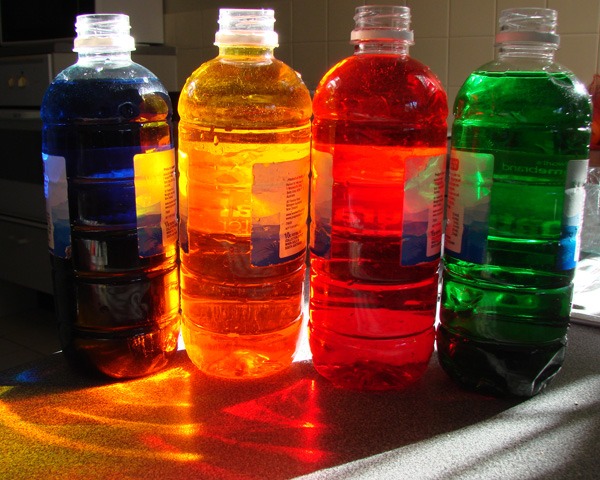
The separation technique that involves heating a solution until it reaches its boiling point, causing a liquid to change into a vapor which is cooled down and collected, is known as
distillation
screening

The law of conservation of mass says substances can neither be _______ nor ___________.
Built; torn down
Blended together; separated
Created; destroyed
Condensed; extracted
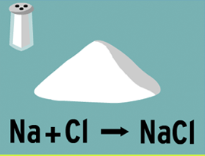
When sodium and chlorine combine to form sodium chloride,
2 Na + Cl2 ---> 2 NaCl
sodium chloride (NaCl) is the
Product
Reactant

Sodium and chlorine combine to form sodium chloride, or table salt. 2 Na + Cl2 ---> 2 NaCl
Sodium (Na) and chlorine (Cl2) are:
Reactants
Products
In a reaction A + B ----> C, reactant A has 5g and product C has 9g. How many grams does reactant B have?
4g
5g
9g
14g
12g of Carbon (C) react with 16g of Oxygen (O2), how much carbon monoxide (CO) is formed?
C + O2 ---> CO
28 g
4g
30g
12g
Which box(es) contain a pure substance?
A
B
C
D
Which box(es) contain element(s)?
A
B
C
D
Which box(es) contain compound(s)?
A
B
C
D
If you separate a mixture by pouring off a liquid from a solid, it is called
centrifuging
filtering
decanting
chromatography
If you separate a mixture by allowing it to travel across a stationary phase causing it to separate because of the different speeds of the components, it is called
centrifuging
filtering
decanting
chromatography
If you separate a mixture by spinning it really fast causing the heavier components to settle to the bottom, it is called
centrifuging
filtering
decanting
chromatography
If you separate a mixture by letting a solid form from a solution, it is called
centrifuging
sublimation
crystallization
chromatography
If you separate a mixture by pouring a mixture over a porous barrier allowing liquids to go through it but not the solids, it is called
centrifuging
sublimation
distilling
filtering

