
Font size
 Worksheets
Data Storage CD
Total questions: 75
Worksheet time: 48mins

Name the following data storage device.
Floppy disc
HDD
CD
Sandisk


Diagram shows a phenomenon occurs when the spotlight is directed onto a mirror surface. What is the principle of light shown in the situation?
Light travels in a straight line
Refraction of light
Reflection of light
Light travels in parallel
Binary data on Optical discs is represented using...
Magnetic charges
Physical pits and lands
Electrical current
Lasers

Digital data in a CD is read by
magnets
lasers
computers
pulses of electricity
In class we found that the red laser, blue laser, and green laser all
calculated completely different pit sizes in the CD
calculated pit sizes that were about the same in the CD
calculated a pit size similar to its wavelength

Which type of optical data storage can hold the most digital data in the smallest amount of space?
CD
DVD
HD DVD
Blu-ray

In optical disk storage then the "pits" represent the "___"
1
0
2
4

This image is representing what wave interaction?
Refraction
Diffraction
Reflection
Noise
Which picture best shows diffraction?


Which color below has the shortest wavelength (and highest frequency and most energy)?
Blue
Red
Green
Yellow
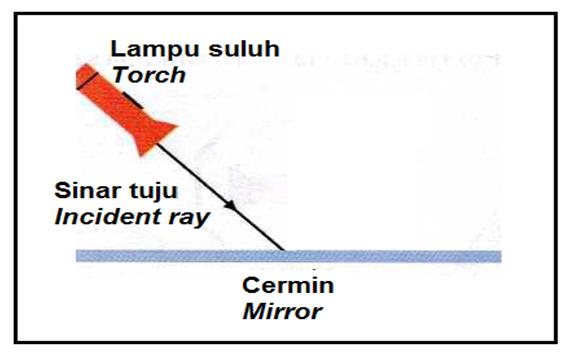
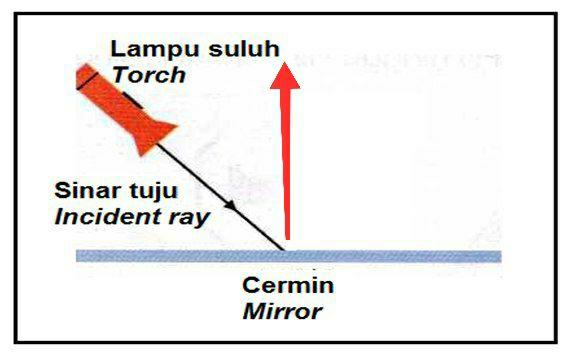
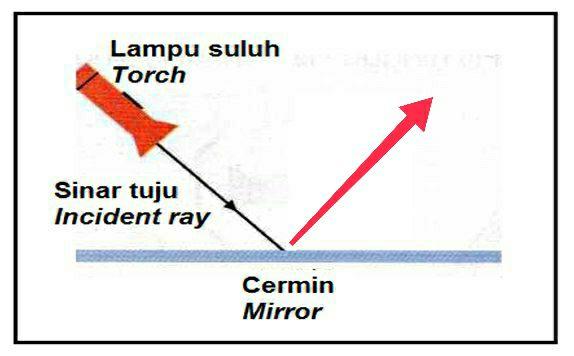
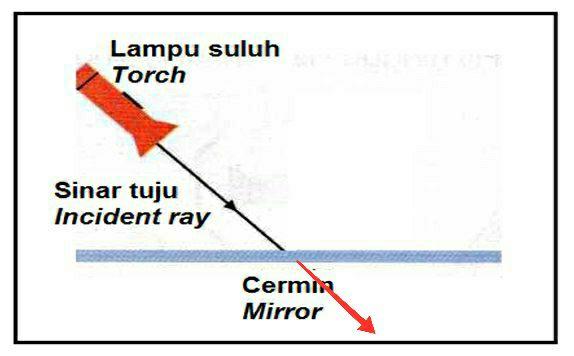
The following diagram shows the ray diagram when a torch light is torched towards a mirror. Which of the following is the correct reflected ray?

Why does blu-ray need a blue laser to read the binary code?
The distance between the 1 and 0's is smaller and needs a smaller wavelength
The distance between the 1 and 0's is larger and needs a smaller wavelength
The distance between the 1 and 0's is smaller and needs a longer wavelength
The distance between the 1 and 0's is larger and needs a larger wavelength
Bouncing of a light ray when it strikes a reflecting surface is called.........
Refraction
Dispersion
Reflection
Diffraction

As the wavelength becomes ___________frequency becomes ___________

When a CD is held at an angle, the reflected light contains many colors. What causes these colors?
Anti-theft encoding intending to prevent copying the CD.
The different colors correspond to different data bits.
Light reflected from the closely spaced grooves.
It is part of the decorative label on the CD.

How is this spectrum produced from white light?
reflection
overlaption
diffraction
refraction

A grating has slits. What wave properties are visible in this image.
photoelectric and reflection
diffraction and interference
reflection and refraction
diffraction and reflection

A spectrometer is used to identify the elements in a burning object. Two very strong emission lines emerged with a wave frequency of 5.26 x10^14 Hz. What color is it?
Interference of light is evidence that:
the speed of light is very large
light is a transverse wave
light is electromagnetic in character
light is a wave phenomenon
Constructive interference happens when two waves are:
out of phase.
zero amplitude.
in phase.
What principle is responsible for light spreading as it passes through a narrow slit?
refraction
polarization
diffraction
interference
Why can we measure to micrometers with lasers?
they have a frequency in nanometers
they have a energy in nanometers
they have a speed in nanometers
they have a wavelength in nanometers
Analog encoding sends or stores information using quantities that
can vary continuously.
can only have specific values.
are separated by consistent numbers.
store waves’ crest and trough sizes in small steps.
Digital encoding sends or stores information using quantities that
can vary continuously.
can only have specific values.
have no numeric gaps between one another.
create smooth curves inside a sound wave.
Binary digital signals differ from analog signals because
their amplitude values stay the same no matter the distance.
digital encoding smooths out radio waves from their original sound, improving sound quality.
their radio waves can only have two amplitude values—large and small.
All of the above
Why are digital signals less likely to be affected by noise than analog signals?
There are more sources of analog noise than digital noise.
Digital waves have higher amplitudes, and thus overpower noise
Non-binary noise can be easily filtered out by digital systems.
Analog radios add noise to the signals they receive to improve sound quality.
If a digital signal is too far away,
digital noise blends into the signal’s weak amplitude, so the device plays static.
the receiver cannot interpret between “1” and “0” amplitudes, so the device plays no music.
the receiver interprets radio wave noise closest to binary amplitudes as the signal.
the receiver cannot interpret between “1” and “0” waves, so the device plays static.
Binary code
is made up of only two values, such as 1s and 0s.
can be separately interpreted as text, sounds or images.
signals when electrical switches in digital devices should activate.
all of the above
How can different types of programs all use the same binary code to function?
One string of binary codes can simultaneously act as text, sound and image.
Text binary uses 1s and 0s, while other programs use a different pair of numbers.
Each program interprets the binary code differently, so the 1s and 0s can represent text, sound, or images.
Music and images use longer strings of binary code than plain text.
Why can’t analog radios typically tune into digital signals?
Digital signals are typically too weak for analog radios to pick up.
Digital signals can only be sent through fiber-optic cables, not radio waves.
Analog radios cannot decode the digital signals as sound.
If radios are tuned to the right frequency, digital signals can be heard.
Identify a disadvantage of an analog signal:
Requires low power
Doesn't get interference
When copied, quality goes down
Hardware is usually small
Which of the following is an example of an Digital signal storage?


All of these

The picture shows an example of what kind of signal?
Analog
Digital



An analog signal is sent in discrete pulses in two states, on= 1 or off= 0.
True
False


This blocky signal is:
digital
analog

This smooth signal is:
digital
analog
Can travel long distances
Analog
Digital
A more reliable way to store information
Analog
Digital
This type of signal is more affected by noise(interference) and greatly affects the quality of the signal
Analog
Digital
Easily degrades over time
Analog
Digital
Which are examples of analog tools?


Which are examples of digital tools?


Which is an example of a digital tool?


How do computer hard drives and USB drives store data?
binary code
pictures
symbols
words

Which type(s) of signal(s) can be easily corrected to remove noise?
analog
digital
both
neither

Numbers is an analog code can have _________ values.
any
only high
only low
only set

Numbers in a digital code can have __________ values.
any
only high
only low
only set

The string of 1s and 0s that control a computer is called _______ code.
binary
dichotomous
Morse
two-number

Is a video game coded as analog or digital data?
analog
digital

Is music playing from a record an analog or digital signal?
analog
digital
Label the following as either digital or analog.
Analog
DIgital

What kind a wave is pictured?
Analog wave
Digital wave
Radiowave
Microwave
An example of a cell phone wave looks like


Which Yoshi has more information?
A
B

Which Yoshi is a better quality?
A
B
Which of the following is an analog technology?


Which of the following graphs represents a digital wave?


Which wave has a lower amplitude?
A
B

