
 Worksheets
Digestion and absorption
Total questions: 27
Worksheet time: 15mins
In which organ does the majority of absorption of digested food molecules take place?
(a)
Absorption can be defined as the movement of digested food molecules through ______________ to _________?
the wall of the small intestine into the blood
The cell wall into the cytoplasm
The stomach into the liver
Intestines into the vili
The liver is said to be a digestive gland because it
converts stored glycogen into glucose
breaks down excess amino acids
produces bile
stores iron
Tiny finger-shaped structures in the small intestine in which absorption occurs
rectum
anus
bile
villi
Which of these is NOT a function of the digestive system?
breaks down food
absorbs nutrients
eliminates waste
takes oxygen to body cells
The process of breaking down food into nutrient rich molecules.
absorption
digestion
peristalsis
villi
Amylase in saliva changes starch into...
sugar
waste
stomach acid
chyme
What is the enzyme contained in the saliva?
Amylase
Pepsin
Hydrochloride acid
Lipase
What is the function of the villi?
To increase the absorption surface
To digest the last nutrients
To form feces
To comb the small intestine
Which of the following answers correctly sequences the pathway food takes from the beginning to end?
mouth, esophagus, stomach, small intestine, large intestine
mouth, esophagus, stomach, large intestine, small intestine
mouth, stomach, esophagus, small intestine, large intestine
mouth, stomach, esophagus, large intestine, small intestine
What organ is responsible for the absorption of water and movement of waste?
large intestine
small intestine
stomach
oral cavity
The pancreas, liver, and gallbladder are known as...
accessory organs
the digestive tract
acid makers
digestion helpers
Why do we eat?
To get the nutrients we need to survive.
So we can gain weight.
Because we enjoy it.
To get carbon dioxide and oxygen.

What part of the digestive system is highlighted? (the end)
Anus
Rectum
Colon
Appendix
Another word for the oesophagus
alimentary canal
gullet
trachea
larynx
Which of the following is/are absorbed into the network of blood capillaries of villi?
Glycerol
Glucose
Glycogen
Sucrose
Excess glucose absorbed will be converted into (choose all statements that apply)
starch stored in the large intestines
fat which is stored in adipose tissues under the skin.
fat which is stored in adipose tissues around internal organs.
protein which builds up the skeletal muscles.
Egestion refers to the
removal of undigested food
absorption of water in the large intestine
movement of food from the stomach to the large intestine
elimination of enzymes in the gut

How many faces does a cuboid have?
1
4
6
8
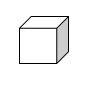
This is a 1cm cube. It's sides all measure 1cm.
What is the total surface area of this cube?
1
6
3
12

Area of front = 8cm2
Area of right = 28cm2
Area of top = 14cm2
What is the total surface area?
50cm2
100cm2
3136cm2
56cm2

Which is NOT a digestive enzyme?
hydrochloric acid
bile
amylase
alcohol
Undigested waste travels to the rectum where it is stored until leaving the body through the anus in a process called
ingestion
digestion
egestion
evaporation

