
 Worksheets
Conservation of Matter Review
Total questions: 41
Worksheet time: 21mins

A student observes this model and claims that the total mass of the reaction is conserved. Is the student's claim correct? Why or why not?
No, because the atoms are arranged differently in the reactants and products.
Yes, because the reactants and products are made of atoms of the same elements.
Yes, because the number of atoms of each element is the same on both sides.
No, because the total number of atoms in products is greater than the total number of atoms in reactants
2As + 6NaOH → 2Na3 AsO3 + 2H2
Does this equation follow the law of conservation of matter?
Yes, because the mass of the reactants is equal to the mass of the products.
No, because the reactants contain more oxygen (O) atoms than the products
No, because the reactants contain more hydrogen (H) atoms than the products.
Yes, because the reactants contain the same number of arsenic (As) atoms as the products.
In a chemical reaction, the total charge of the reactants must be:
the same as the total charge for the products.
less than the total charge of the products
greater than the total charge of the products.
the opposite of the total charge of the products.
Which experiment would best demonstrate the conservation of matter?
comparing the mass measurements of a plant over several years
comparing the volume measurements of a pond over several years
comparing the mass measurements of a block of wax before and after it melts
comparing the volume measurements of a brick of copper and a brick of ice

Students place six ice cubes into a beaker and find the mass. Then the ice cubes melted. They combined the mass of the beaker and the liquid water. What can the students expect to be true about the two masses?
The mass of the ice cubes and the water will be equal because their particles have the same amount of energy.
The mass of the ice cubes will be greater because they took up more space in the beaker
The mass of the ice cubes will be greater because solids are denser.
The mass of the ice cubes and the water will be equal because the same amount of matter is in the beaker
Two students are each given a sample of clay of the same mass. Each student uses all of her clay to make an object. Emily makes a ball, and Amber makes a long, skinny snake. What are the masses of the students' clay samples now?
One student's clay has a higher mass because it is round
Both pieces of clay have the exact same mass.
Both pieces of clay have gained mass from handling.
One student's clay has a higher mass because it is skinny.

How many H atoms must be present in the second product that is formed?
1
2
3
4
A student made a mixture of 125 grams of sugar, 250 grams of water, and 5 grams of food coloring. What is the mass of the mixture?
250 grams
375 grams
380 grams
400 grams
In a reaction of 12.99 g of sodium with 45.75 g of chloride, what mass of sodium chloride is formed?
32.76 g
58.74 g
71.73 g
43.62 g
A student puts 30 grams of chocolate, 30 grams of nuts, and 80 grams of pretzels into a bowl. He mixes the contents of the bowl and separates the mixture equally into two identical cups. He finds the mass of one cup and its contents to be 85 grams. What is the mass of one empty cup?
5 gr
10 gr
15 gr
20 gr
The formula shows a reaction involving sodium chloride, NaCl, hydrochloric acid, H2SO4, sodium bisulfate, NaHSO4, and hydrogen chloride gas, HCl. What are the products in the formula?
NaCl + H2 SO4 NaHSO4 + HCl
sodium chloride and sodium bisulfate
sodium chloride and hydrochloric acid
sodium bisulfate and hydrogen chloride gas
hydrochloric acid and hydrogen chloride gas
The formula shows a reaction involving sodium chloride, NaCl, hydrochloric acid, H2SO4, sodium bisulfate, NaHSO4, and hydrogen chloride gas, HCl. What are the reactants in the formula?
NaCl + H2 SO4 NaHSO4 + HCl
sodium chloride and sodium bisulfate
sodium chloride and hydrochloric acid
sodium bisulfate and hydrogen chloride gas
hydrochloric acid and hydrogen chloride gas

A student cuts the apple into four equal pieces and puts them all on the scale. What is the mass of the apple slices?
25
50
100
125
Which of the following experiments could be used to test the law of conservation of mass?
measuring the temperature of ice and water
timing a ball dropped from a height of 2.0 meters
measuring the speed of a toy car down an inclined ramp
measuring the mass of a whole object and then its parts
A student is comparing the masses of two apples. He takes two identical apples and places one on the scale. He cuts the other apple into four pieces. In order to balance the scale, how many pieces of the cut-up apple should he place on the pan?
1
2
3
4


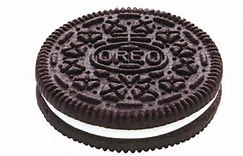
An oreo cookie has a mass of 20 grams. It gets crushed into crumbs for a recipe. What is the mass of the crumbs?
15 grams
25 grams
20 grams
If reaction starts with 20g of reactants, it will produce ---
a total of 40g of product
a total of 10g of product
a total of 80 g of product
a total of 20g of product
How many of each type of atom are in the formula NH3?
1 nitrogen, 3 hydrogen
3 nitrogen, 3 hydrogen
1 neon, 3 hydrogen
1 nitrogen, 3 helium
What will have more mass when a chemical change is complete: the reactants before the chemical reaction or the product after the reaction is complete?
They both will have the same mass
The product always has more mass than the reactant
The reactant will have more mass than the product
They both will lose mass after the reaction
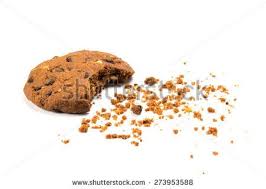
The Law of Conservation of Matter states that the total amount of matter _____ after it undergoes change.
disappears
stays the same
weighs less
explodes
2H2 + O2 --> 2H2O
What is the right part of a chemical equation called?
2H2 + O2 --> 2H2O
Reactants
Products
Yields
Chemical Equation
Which of the following is NOT part of the Law of Conservation of Matter?
Matter cannot be created or destroyed
Matter can be rearranged
Fire converts matter to heat
Matter can change phase; go from a solid to a liquid to a gas
In a chemical reaction, our reactants are the molecules and atoms that we start with.
True
False
Squirrel!
In a chemical reaction, our products are the molecules and atoms that we start with.
True
False
Squirrel!

There are 4 hydrogens in the products of the equation. How many hydrogens would you expect in the reactants?
1
3
4
5
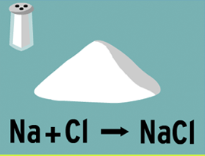
When sodium and chlorine combine to form sodium chloride, sodium chloride is the:
Originator
Reactant
Product
Produce
H2SO4
H2C3O4N5
The law that states the total amount of matter cannot be created nor destroyed?
law of electricity
law of destruction of mass
Law of conservation of matter
law of relative matter
These are the compounds you have at the beginning of the reaction
products
reactants
Indicates the total number of compounds/molecules present.
mass number
coefficient
subscript
symbol

