
Font size
 Worksheets
Unit 1 Test Review 7.12FDC & 7.4AB
Total questions: 60
Worksheet time: 19mins
If you are unsure about anything included in the investigation you are performing, you should always ask __________.
Your friend
A person in the next class
Your teacher
Which items of clothing are unsafe in a science lab?
Open-toe shoes
Closed-toe shoes
Long hair not tied up
Goggles
Lab apron
If you pour out too much of a chemical, what should you do with the excess?
Pour it back into the container.
Pour the extra down the sink.
Dispose of any extra chemical in the method listed in the instructions.
Pour it outside in the grass.
When trying to observe a smell in a lab investigation, you should...
Waft the air toward your nose.
Place your nose directly above the beaker or other container.
Inhale as much of the air above the beaker as possible.
Which of the following is NOT an acceptable method of observation in a science lab?
Seeing
Smelling
Tasting
Listening
Which of the following pictures represents extreme temperature warning?


What does this symbol mean?
Wear gloves
Corrosive chemical
High chance of spillage
Irritating chemical
List the steps of scientific inquiry.
Write an essay, take a nap, do some math, take a nap, and eat some grub. This has to be it!
Ask questions, hypothesize and predict, test the hypothesis, analyze results, draw conclusions, and finally communicate results.
You have been injured in the laboratory (cut, burned, etc.). What should you do first?
Visit the school nurse after class.
See a doctor after school.
Tell the teacher at once.
Apply first aid yourself.
A group of similar cells that perform a common function is called:
Cells
Tissues
Organs
Organ Systems
A living thing that carries out life processes independently is known as:
Cells
Organs
Tissues
Organisms
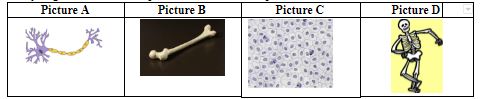
Which picture represents an organ?
A
B
C
D
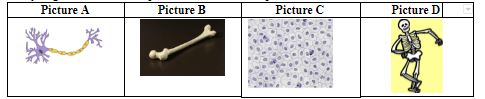
Which picture represents a group of organs that work together to perform a similar function?
A
B
C
D
Why are cells considered the basic unit of structure and function in all organisms?
Cells come from preexisting cells.
Cells can perform all life processes.
All living things are made of cells.
Cells are found in all living things.
The liver is a dark red structure in the human body that releases bile and hormones. At what level of organization is the liver?
Cell
Tissue
Organ
Organ System
How does an organ system differ from an organ?
An organ system is more complex and contains several organs.
An organ system is not made up of cells like an organ.
An organ system is only found in very large organisms.
An organ system is just one part of an organ.
Which sequence best describes the levels of organization from simplest to most complex?
Organism, Organ, Tissue, Cell, organelle
Organelles, Cell, Tissue, Organ, Organ System
Cell, Organ, Tissue, Organ System, Organelles
Organism, Cell, Organelles, Organ System, Organ
The cells in a multicellular organism are specialized to perform a particular function. A group of related cells that work together make up _____.
An organism/tree
An organ system/the shoot system
An organ/leaves
A tissue/dermal tissue
Justin has learned that the brain, spinal cord, and peripheral nerves work together. What do they collectively form?
A cell
A tissue
An organ
An organ system
What is a group of two or more organs that work together called?
Food chain
Organisms
Animals
Organ systems
What are cells?
A group of tissues that together carry out a specific function.
The structural and functional units of all living things.
Groups of organs that together carry out a specific function.
Only found in animals.
The human body is composed of organ systems. Which list represents systems from the least to most complex?
Heart --> cardiac muscle --> muscle tissue --> muscle cell
Muscle cell --> muscle tissue --> biceps muscle --> muscular system
Lung tissue --> trachea --> nostrils --> circulatory system
Integumentary system --> skin cell --> hair --> sweat glands
Which of the following best describes a tissue?
A group of cells working together to perform a specific function.
A group of organs that work together to perform a specific function.
The smallest functioning unit of a living organism.
A specialized unit within a cell that has a specific function.
Which type of cell forms overlapping layers to protect the body?
Muscle cell
Nerve cell
Red blood cell
Skin cell
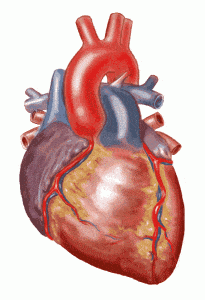
This is an example of ........
cell
organ system
organ
tissue
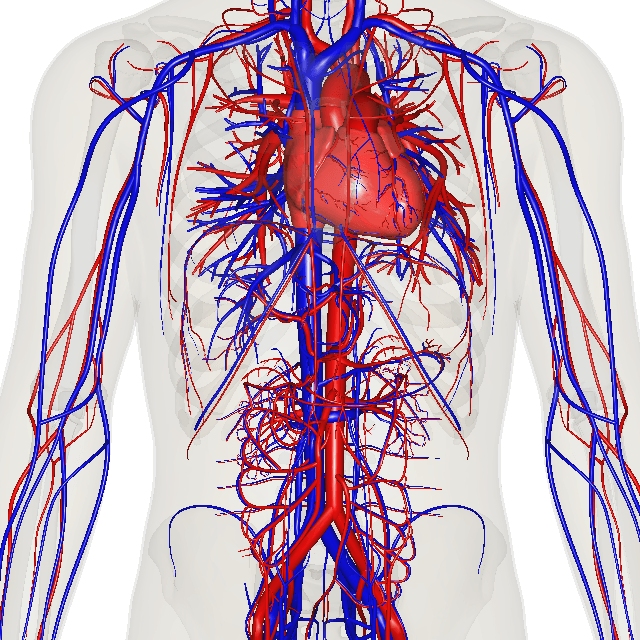
This is an example of ........
organ
organ system
tissue
cell
Robert Hooke named the small compartments that made up the cork __________ after the rooms monks lived in.
organelles
membranes
microscopes
cells
A plant and an animal are both living things. According to the Cell Theory, what can you conclude about these two very different organisms?
Plants have cells but animals do not.
They are both made of one or more cells.
They both come from the same kind of cell.
They both come from a non-living organism.
Which instrument is credited for helping scientists develop cell theory?


What is the basic structural and functional unit of all living things?
atom
cell
bacteria
animalcules

What are the three parts of the Cell Theory?
All living things are composed of cells.
Cells are the basic units of structure and function in living things.
All cells are produced from other cells.
All living things are composed of cells.
Cells are the basic units of dance and vibes in living things.
All cells are destroyed by other aliens.
All living things are composed of Jell-O.
Cells are the basic units of structure and function in living things.
All cells are produced from factories in Canada.
All living things are composed of cells.
Cells do karate and practice eating whole pies in their free time.
All cells are produced from other cells.
What type of cell is a bacterial cell?
Prokaryotic
Eukaryotic
What type of cell is an animal cell?
Prokaryotic
Eukaryotic

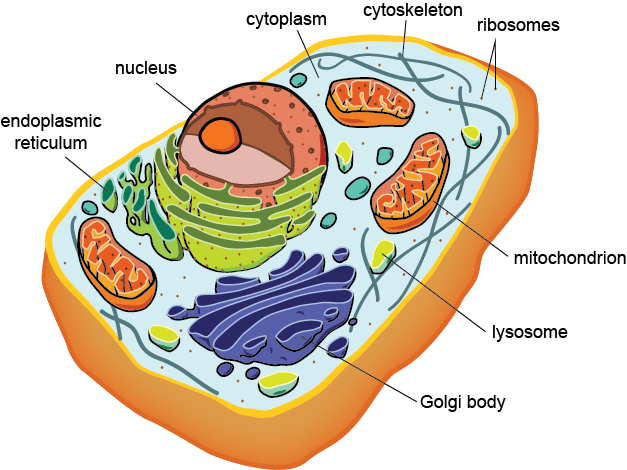
Directs all cell activities through the DNA located there.
Lysosomes
Nucleus/nuclei
Ribosomes
Mitochondria
Which of the following is NOT a statement included in the cell theory?
All living things are made up of cells.
Cells are the basic unit of life.
Cells can only come from other cells.
Eukaryotic cells evolved from prokaryotic cells.
Cell theory was first proposed in 1838. Evidence obtained through additional scientific investigations resulted in the current cell theory. Which statement describes a component of the original cell theory that was removed because of new scientific knowledge?
Cells are the basic structural and functional units of life.
Cells form through spontaneous generation.
All cells come from other pre-existing cells.
All living things are made of cells.
Which organelle is involved in protein synthesis?
Golgi body
Mitochondrion
Nucleus
Ribosomes
I am a gel-like substance that supports the other organelles
cell membrane
CO2
cytoplasm
chlorine
What is the difference between mitochondria and chloroplast?
Mitochondria produce energy and chloroplasts break down energy.
There is no difference. They are the same.
Mitochondria break down energy from food and chloroplasts produce energy from sunlight.
Mitochondria contain DNA and chloroplasts are green.
The outermost layer of a plant cell and an animal cell is...
Plant cell - cell membrane, animal cell - cell wall
Plant cell - cell wall; animal cell - cell membrane
Plant and animal cell - cell wall
Plant and animal cell - cell membrane
The cell membrane...
acts like a wall that blocks everything from entering the cell
controls what can enter or exit a cell
is hard and rigid, providing the cell with its shape, similar to an exoskeleton
In plant cells, what is the rigid outer layer that supports and protects the cell?
Cell membrane
Cell wall
Chloroplast
Nucleus

What does the mitochondria do for the cell?
Provides the cell's energy
Acts as the cell's control center
Fills and supports the cell

Which structure represents the mitochondria?
A
B
C
D
E
Which of the following is a plant cell?


What is the purpose of a nucleus/nuclei?
It is the command center, contains DNA, and is responsible for cell division
It protects the cell
It stores energy for the cell
It gets rid of waste in the cell
The "Post office" of the cell that packages proteins and fats is:
ER
Golgi Body
Nucleus
Cytoplasm
The "envelope" of the cell, used for transporting materials like a highway for ribosomes, is:
Rough ER
Golgi Body
Mitochondria
Chloroplast
Which of the following best describes how the central vacuole supports the structure of a plant cell?
The central vacuole uses a network of protein fibers to support the shape of the plant cell.
When the central vacuole is empty, it expands to fill space and maintain the cell’s structure.
The central vacuole uses a large, rigid membrane to support the shape of the plant cell.
When the central vacuole is full of water, it applies pressure to the cell wall and maintains the shape of the cell.
Eukaryotic cells contain an intricate endomembrane system that includes the nucleus, endoplasmic reticulum (ER), and Golgi complex. The Golgi complex and rough ER are often near each other, which is essential for their roles in the endomembrane system.
Which of the following most accurately explains why the Golgi complex is often near the rough ER?
The Golgi complex modifies lipids that have been produced by the rough ER.
The Golgi complex modifies and packages proteins that are produced in the rough ER.
The Golgi complex uses enzymes to digest misfolded proteins that are produced in the rough ER.
The Golgi complex translates proteins using instructions provided by the rough ER.

This organelle functions like a recycling center for the cell, breaking down old materials. It is akin to a vacuum cleaner that cleans up the waste in cells.
Ribosomes
Lysosomes
Mitochondria
Chloroplasts

Nucleus
B
C
E
F
I
Mitochondria
B
C
E
F
I

Chloroplast
A
B
D
K
I
Which organelles are found ONLY in PLANT CELLS?
Chloroplast
Cell Membrane
Cell Wall
Mitochondria
Central Vacuole
Which type of graph is usually just a comparison of numbers?
line graph
bar graph
circle graph

What question could this table answer?
How much do pets cost?
Why do students think dogs are the best pets?
What kind of pets do our classmates have?
Do you like having a pet at home?

The data table shows the results of an experiment where a model car was modified and rolled down a track.
Which two trials would you compare to show how changing the Wheel Base Width affected the time? (Choose 2)
1
2
3
4

The data table displayed shows the results of an experiment that was done to determine how fast sugar dissolves in 400 mL of water.
Which two trials should be compared to show the effect of Temperature on the Time to Dissolve? (Choose 2)
1
2
3
4

