
 Worksheets
Student Made Assessment - Energy
Total questions: 58
Worksheet time: 30mins
What is energy?
The ability to make things stop
The ability to transform energy
The ability to do work
The ability to hear things
Kinetic energy is...
The movement of molecules and heat
Energy of mass in motion
The capacity for doing work in physics
Kinetic energy depends on
(Choose two)
Mass
Height
Speed
Weight
Potential energy is...
Stored in an object
Active energy
energy with a lot of mass
Partially active energy
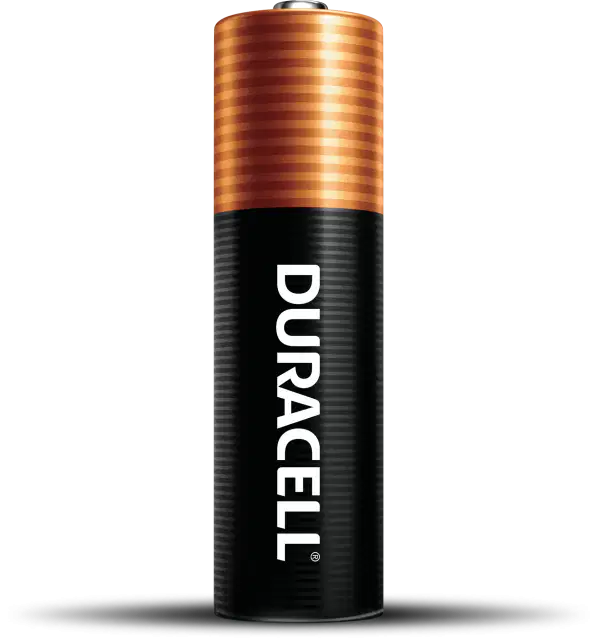
This has what type of energy
Elastic
Chemical
Heat
Sound
Energy produced by vibrations is...
light
heat
sound
magnetic
Energy that warms objects is..
light
sound
heat
electric
A ball on the top of a hill is what energy?
Kinetic
Potential
Elemental
Sound
For an object to have kinetic energy it must have...
equilibrium
force applied
motion
potential energy
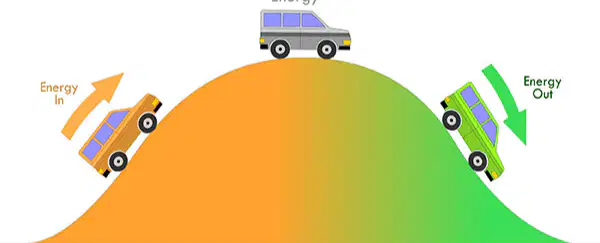
What car has the most energy?
Orange
Gray
Green
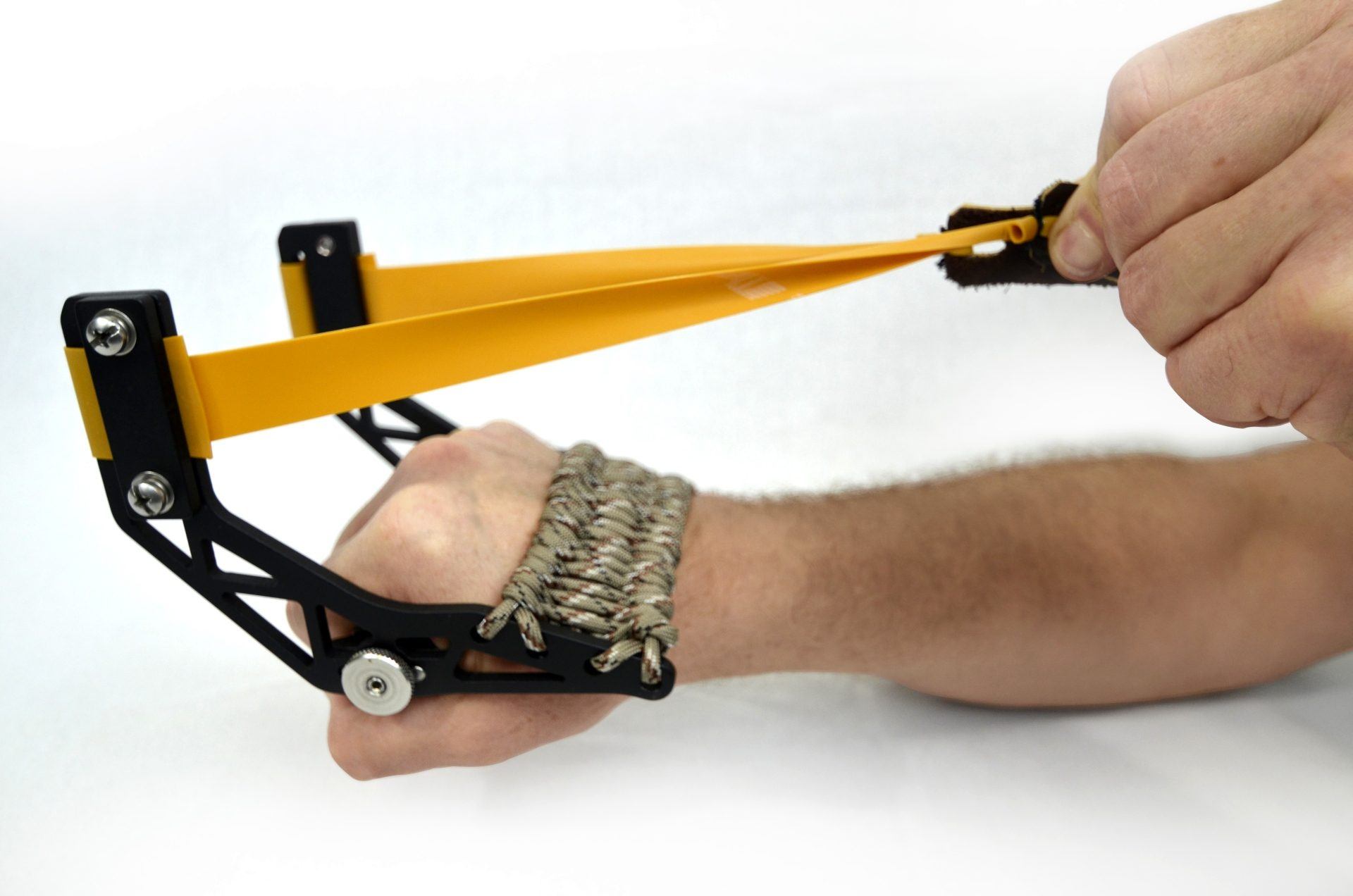
Energy stored in a rubber band is what?
Mechanical
Energy
Heat
Elastic
"Energy can be transformed from one form into another or transformed from one region or another, but energy cannot be created or destroyed." Which law is this?
Law of conservation of mass
Newton's second law
Law of conservation of energy
Newton's third law
Which energy transformation occurs in a toaster?
Chemical to electric
Kinetic to chemical
Electric to thermal
Thermal to potential
What is energy?
Something that takes up space.
The ability to make something move or change.
Anything that has mass.
What is energy?
Something that takes up space.
The ability to make something move or change.
Anything that has mass.

Kinetic and potential energy are the two types of energy that relate to:
Change
Friction
Density
Motion
What is kinetic energy?
The energy an object has due to its motion.
The energy an object has due its chemical composition.
The energy an object has due to its atomic structure.
When is kinetic energy transferred from object to object?
When those objects pass one another
When the first object outweighs the second object
When the first object has more potential energy than the second object
When those objects collide
Energy that is stored in a system or object
Potential Energy
Kinetic Energy
Mechanical Energy


A skier on top of a mountain is an example of
Kinetic
Potential
Thermal
Sound

How can we increase the gravitational potential energy of the car?
Strap a boulder to the car so that it weighs more.
Keep the length of the hill at 50 m but only 5 m tall.
Take the interior out of the car so that the car has less mass.
Keep the hill at 10 m tall but increase the length of the hill so that the car has farther to roll.
When does an object have NO kinetic energy?
When it's at rest.
When it's moving very slowly.
When it has no electrical charge.
Select all of the objects that have kinetic energy. (You may click more than one object!)


Which of these has the most potential energy?


Which of the following has the most kinetic energy?
A car traveling at 80 kph.
A tractor-trailer traveling at 80 kph.
A cheetah running at 80 kph.
A motorcycle traveling at 80 kph.
The amount of kinetic energy an object has depends on its:
Mass and volume
volume and friction
mass and speed
speed and density

Which passenger has the most potential energy?
A
B
C
D
Kinetic and potential energy are the two types of energy that relate to:
Change
Friction
Density
Motion

What kind of energy is being shown in the picture?
Light
Gravitational
Potential
Kinetic

As the ball is dropped, the potential energy decreases while the kinetic energy increases however the amount of energy stays the same.
True
False

The rock has kinetic energy.
True
False
Which is the best example of kinetic energy?
A car sitting on top of a hill
A skateboard on the sidewalk
A wagon rolling down a hill
A powerwheel parked in the yard
What is changed to increase the potential energy of an object being dropped?
Temperature
Gravity
Height
Volume

Which two points have the same potential energy?
U & V
S & T
T & X
S & X

What happens as the ball on the pendulum goes from center to the right in the diagram?
Kinetic energy increases while potential energy decreases
Potential energy increases as kinetic energy decreases
Potential energy increases as kinetic energy increases
Potential and Kinetic energy is lost

How does energy change?
The cart has more kinetic energy at the top than when it is going down the hill.
The cart has potential energy at the top while kinetic energy increases going down.
The cart has potential energy that is lost going down the hill.
The cart has kinetic energy at the top of the hill and no potential energy.

How does energy transfer as the ball is bouncing?
Kinetic, Potential, Potential, Kinetic
Potential, Potential, Kinetic, Kinetic
Kinetic, Kinetic, Potential, Potential
Potential, Kinetic, Kinetic, Potential

Before fruit falls from a tree, how does energy flow?
Potential - Kinetic - Sound
Light - Kinetic - Heat
Potential - Sound - Heat
Solar - Kinetic - Heat

The ball's potential energy is equal to it's mechanical energy.
True
False
A student places an orange on the table then the orange rolls across the table. Which below statement is true?
The orange has potential energy but no kinetic energy at all.
The orange has kinetic energy but no potential energy at all.
The orange has kinetic and potential energy.
The orange has no energy at all.

A toy car is traveling up a ramp. What happens to the energy as it goes up the ramp?
Kinetic energy increases while potential decreases.
Potential energy increases while kinetic decreases.
Both potential and kinetic energy increases.
Both potential and kinetic energy decreases.

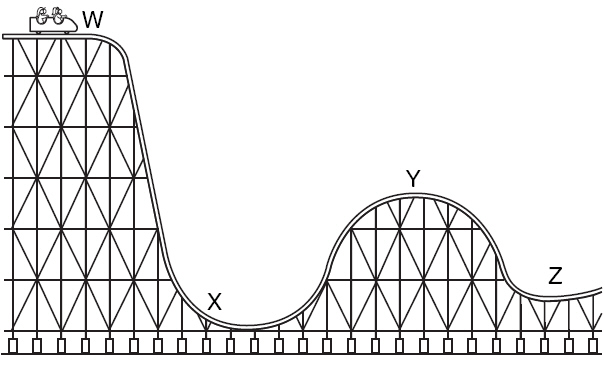
Which two types of energy are seen in a roller coaster?
Kinetic & Potential
Potential & Light
Kinetic & Thermal
Kinetic & Chemical

Which position has the most kinetic energy?
1
2
3
4

Which type of energy is showing the greatest at the jumper's position?
Mechanical
Kinetic
Potential
Applied

Which position has the highest potential energy?
1
2
4
6

Where does kinetic energy transfer to potential energy?
1 to 2
2 to 3
4 to 5
none

Which position has the most potential energy?
1
2
3
4

Which position has the greatest amount of kinetic energy?
1
2
3
4

