
 Worksheets
SCIENCE REVISION
Total questions: 121
Worksheet time: 1hrs 4mins
We eat roots of _______
Mustard
Rajma
Chilli
Radish
We eat____________of cabbage.
stem
fruits
leaves
seeds
Materials required to prepare a food item are called _________
Nutrients
Ingredients
Nourishments
Minerals
Food
Germinating seeds are known as
Sapling
Sprouts
Vegetation
None of the above

Where do French fries come from?
rice
wheat
maple sap
potatoes
Which of the following is not a milk product?
cheese
butter
honey
yogurt
Curd

What are not the ingredients of preparing chicken curry?
Chicken
Spice
Oil
Pumpkin

Which of the following gives eggs?
Duck
Cow
Goat
Donkey
Kidney beans, grams, urad dal are rich in?
Spices
Ingredients
Nourishments
Proteins
Edible part in lettuce and spinach is
Stem
Roots
Leaves
Seeds

What is rice?
A grain
A fruit
A vegetable
A tuber

This food is reach in ...
Carbs
Proteins.
Potatoes.
Which one of the following nutrients gives us energy to do work?
Proteins
Carbohydrates
Vitamins
Minerals
Which one of the following is not true about balanced diet?
A balanced diet does not contain roughage
A balanced diet does not contain fats
A balanced diet does not contain proteins
All of these
Which one of the following is a deficiency disease?
Beri-beri
Scurvy
Rickets
All of these
Name the disease which occur due to deficiency of vitamin A.
Night blindness
Marasmus
Scurvy
None of these
Name the mineral whose deficiency causes goitre.
Calcium
Phosphorus
Iron
Iodine
Which one of the following food substances is the rich source of carbohydrates?
Oil
Meat
Green vegetables
Cereals

Which one of the following minerals is an essential for developing strong bones and teeth?
Calcium and phosphorus
Iodine and sodium
Iron and phosphorus
Sodium and iron

Picture shows the legs of a man affected with rickets, which caused due to the deficiency of:
Vitamin C
Vitamin D
Iodine
Proteins

Repeated washings of rice may result in lost of
vitamins
minerals
both vitamins and minerals
neither of vitamins nor of minerals

Deficiency of ................. causes a disease known as beri -beri .
vitamin B1
vitamin C
vitamin K
vitamin D
Which vitamin gets easily destroyed by heating during cooking?
vitamin A
vitamin C
vitamin D
vitamin B
Eating too much of fats may leads to a disease called .............
obesity
scurvy
rickets
Beri-beri
Which of them does not provide any nutrient to our body ?
carbohydrates
vitamins
minerals
roughage
What are two chemicals used in test for protein ?
iodine & caustic soda
caustic soda & copper sulphate
iodine & copper sulphate
sulphuric acid & caustic soda
Out of carbohydrates and fats which nutrient provides us more energy ?
carbohydrates
fats
Which vitamin is prepared by our body in the presence of sun light ?
vitamin A
vitamin K
vitamin D
vitamin B
Sources of iodine are
milk & eggs
salt & sea food
wheat & rice
ghee & butter
Full form of P E M
Protein energy malnutrition
Protein enzyme management
Primary energy malfunction
Primitive enzyme management
Starch can be tested by using
Tincture Iodine
Caustic Soda
Copper Sulphate
Fehling solution
Yarn is made from fibres.
true
false
Jute is popularly known as Golden fibre.
True
False
The process of removing seed from cotton is called ginning.
True
False
Nylon is an example of
(a)
The processing of cotton involves the following steps- picking, (a) and spinning.
What are natural fibres produced from?
animals
plants
animals and plants
chemicals
Which of these comes from animal sources? (choose any that apply)
wool
cotton
rayon
silk
Which of these is a synthetic fibre? (choose any that apply)
polyester
nylon
rayon
acrylic
Which one of the following is known as artificial silk?
coir
acrylic
rayon
polyester
Which fabric would be best used for hotter climates or in the summer?
silk
wool
nylon
cotton
Select the correct sequence for preparation of cotton fabric.
ginning-weaving-spinning
spinning-ginning-weaving
ginning-weaving-retting
ginning-spinning-weaving
Wool & silk are-
Aminal fibre
Plant fibre
Synthetic fibre
Animal fibre
Synthetic nylon

What type of fabric is this?
woven
knitted
Select the correct sequence for preparation of cotton fabric.
ginning-weaving-spinning
spinning-ginning-weaving
ginning-weaving-retting
ginning-spinning-weaving
Retting is carried out in jute
after weaving
after spinning
before spinning
In _________ one continuous thread is used to make a fabric.
weaving
knitting
Second most widely used fibre after cotton is
Silk
Jute
Coir
Flax
Which of the following fibre is not obtained from the animal
Leather
Wool
Silk cotton
Silk
Which fibre is used for making gunny bags?
wool
Jute
Silk
Cotton
Fibres obtained from plants and animals are called
Animal fibre
Plant fibre
synthetic fibre
Natural fibre
Which of the following materials is hard, opaque and shines?
Rubber
Plastic
Wood
Tin
Which property of clay is useful for making pots and bricks?
Opacity
Non-magnetic nature
A good conductor of heat
malleability
Which of the following materials is suitable to make raincoats?
Cotton
Plastic
Silk
Paper
Why are most of the balloons, tyres and footballs made of rubber?
It is naturally available.
It is cheap.
It is an electrical insulator.
It is soft and flexible.
If opacity is the distinct feature of wood, then what is glass known for in the same way?
Its transparency
Its magnetic nature
Its conductivity to heat
Its lustrous nature
A mirror is
opaque.
transparent
translucent.
flexible
When Amrita was asked to pick up a few articles from a collection, she picked up the following:
Wooden scale
Glass test tube
Paper basket
Which of the following articles is she most likely to pick up the next
Steel cup
Iron chain
Rubber gloves
Copper wire
Which characteristics given below are of metals?
(i) They are hard.
(ii) They have lustre.
(iii) They are good conductors of electricity
Only (i) and (ii
Only (ii) and (iii)
Only (i) and (iii)
i), (ii) and (iii)
Why are paper bags preferred over plastic bags?
Paper bags are lighter.
Paper bags are stronger.
Paper bags are cheap
Paper bags are biodegradable.
A vendor sells white powdered salt mixed with white powdered stone. Which of these properties will help you detect his malpractice?
Ductility
Opacity
Density
Solubility
Door locks are made of metals. Which property of metals is made use of?
They have lustre
They are opaque
They are good conductors of heat.
They are hard and strong
Kerosene does not dissolve in water. What are they called?
Immiscible liquids
Solute and solvent
Solvent and solution
Miscible liquids
Which is the most essential property of a substance to be used as a cooking vessel?
Good conductor of heat
Ductility
Malleability
All of the above
Which of the combinations is the odd one out?
Ink and water
Milk and water
Oil and water
Lime juice and water
Which of the following type of bodies form sharp shadows when placed in the path of light?
Transparent
Translucent
Transparent and translucent
Opaque
Mohan is able to bend the rod because it is
light.
hard
water proof.
flexible
student added blue ink to a beaker containing water. After a few minutes the colour of water changed to blue.
Which of these properties led to this colour change?
Miscibility
Malleability
Ductility
Compressibility
Abhi bought an object. It is made of a hard material. It is fragile (easy to break) and allows light to pass through it.What can the object be?
Shoes
Mirror
Cricket bat
Fish tank
Which of these properties of water helps in the washing of clothes?
Transparency
Solubility
Conductivity
Compressibility
Hussain was applying paint on the wall during which some of the paint fell on his hands. Instead of using water, Hussain used kerosene oil to wash his hands.
Which of the following options explains Hussain's decision?
Kerosene is softer than water.
Kerosene smells better than water.
Paints dissolve in kerosene and not in water.
Kerosene is more easily available than water.
The process of settling down of particles of a solid in a liquid is
Sublimation
Sedimentation
Filtration
Decantation
The solubility ____________ with increase in temperature.
doesn't change
decreases
increases
While preparing chapatis, Paheli found that the flour to be used was mixed with wheat grains. Which out of the following is the most suitable method to separate the grains from the flour?
Threshing
Sieving
Winnowing
Filtration
What is the process that is used to separate grains from stalks called?
handpicking
threshing
sieving
winnowing
When is the solution saturated?
No more salt can be dissolved in the amount of water we have taken
Lot more salt can be added
You have to add some sugar into the solution
None of the above

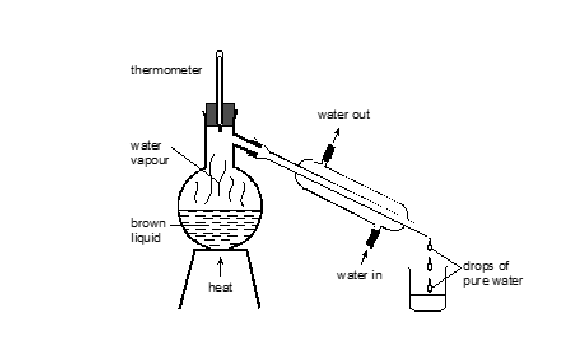
Which separation technique uses the apparatus shown in the diagram?
filtration
evaporation
distillation
chromatography


What separation technique does the picture show?
Sieving
filtering
magnetic separation
Distillation

Sawdust is not soluble in water. If, accidentally some particles of sawdust drop into a glass of water. How would you separate them from water?
Decanting
Filtering
Sieving
Distillation

You had these materials together but after performing a separation technique, you have these five groups. Which separation technique did you use?
Distillation
Decanting
Paper chromatography
Sieving

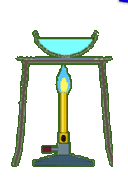


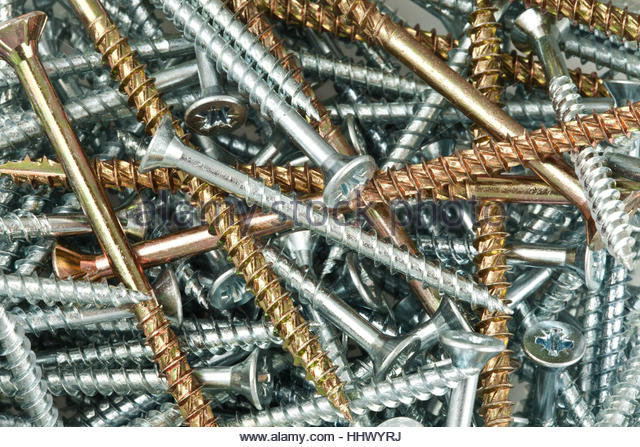
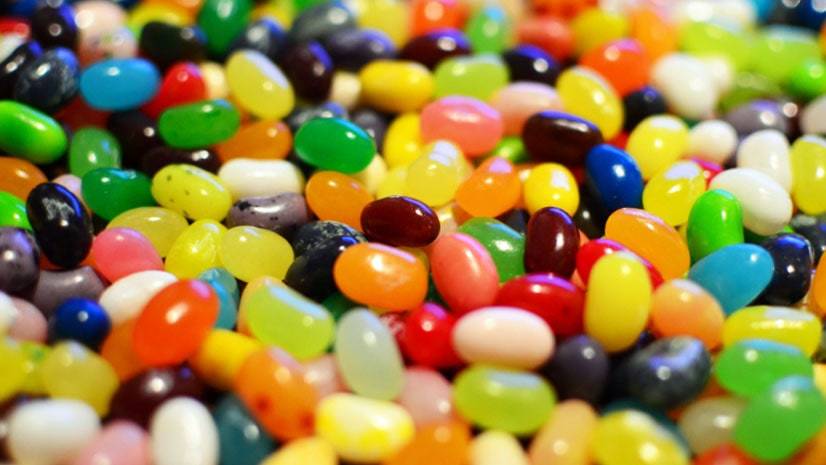
What is the purpose of Filtration?
Separating and insoluble solid from a liquid
Separation of a mixture of 2 solids
Separates heavier substances from a suspension
Which of the following is essential to perform winnowing activity?
Wind
Water
Magnet
Filter paper
A) elbow joint
B)shoulder joint
C) Knee joint
D)Hip joint
The main purpose of the muscular system is to....
Transport nutrients, materials, and gases
Move the body
Break down food for nutrients
Help with gas exchange
Which of the following statements best describe how the arm bends at the elbow?
Bicep contracts to bend arm at the elbow while the tricep relaxes.
Bicep contracts to bend arm at the elbow
Tricep contracts to bend arm at the elbow
Tricep contracts to bend arm at the elbow while the bicep relaxes.
Skeletal muscles always work in _____
pairs
groups of 3
bones
joints
Rib cage protects -
Heart
Lungs
Ears
Mouth
The framework of bones is called ___________
Ear
Joint
Skeleton
All of the above
Can the upper jaw of the skull move ?
Yes
No
Can't be difined
Don't Know
A bird has (a) Bones .

The strong muscle of Snail is called
foot
shoot
shell
bones

identify the insect which can climb, fly and have outer skeleton.
Snail
Cockroach
Earthworm
snake
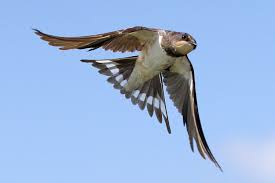
Which part of birds is modified as wings?
Hindlimbs
Shoulder
Forelimbs
Beak

Choose the adaptation which is correct for movement of fish.
Shape of the body is streamlined
Head and tail of fish are bigger than middle portion
Fins help to keep the balance of the body.
Fish moves by forming loops

The snakes's body curves into many (a) .
The bones at the elbow are joined by a
hinge joint
pivot joint
ball and socket joint
gliding joint
what is a cartilage
soft tissue present between two bones
joint that allows slight movement
framework of bones
a thick fibrous tissue

what type of joint is this
flat bone
ball and socket joint
irregular bone
gliding joint

Which part of the human skeleton protects our brain
spine
skull
limbs
backbone
Which of these is not a function of the muscles
provide support to the body
help maintain posture whether a person is sitting or standing
help us breathe, digest food and absorb shocks
protect delicate internal organs of the body
The joint where the skull meets the neck is a
gliding joint
ball and socket joint
hinge joint
Pivot joint

