wayground logo

Free Printable Worksheets

Font size

S
M
L
XL
Worksheets

Parts of flower

Total questions: 45

Worksheet time: 24mins

Name
Class
Date
1.
What part of the flower will turn into a fruit?
a)
petal
b)
ovary
c)
ovule
d)
stamen
2.
What part of the flower will turn into a seed?
a)
ovary
b)
anther
c)
ovule
d)
filament
3.
The female part of the flower is known as the ____.
a)
stamen
b)
anther
c)
filament
d)
pistil
4.
The male part of the flower is known as the _____.
a)
stamen
b)
pistil
c)
ovary
d)
petal
5.
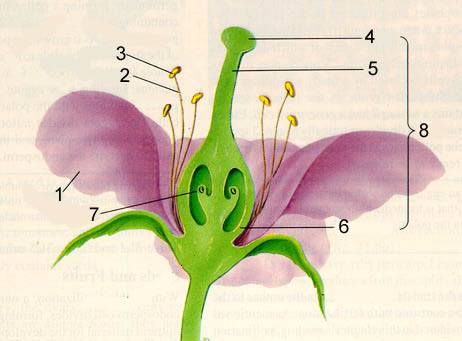
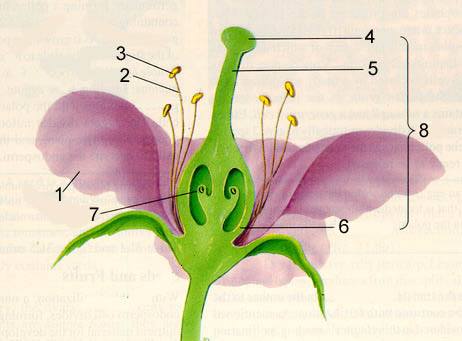
What is #1 pointing to?
a)
ovary
b)
petal
c)
stigma
d)
stamen
6.
What is #2 pointing to?
a)
anther
b)
filament
c)
ovary
d)
style
7.
What is #3 pointing to?
a)
stigma
b)
filament
c)
ovary
d)
anther
8.
What is #4 pointing to?
a)
anther
b)
style
c)
stigma
d)
ovary
9.
What is #5 pointing to?
a)
anther
b)
filament
c)
stigma
d)
style
10.
What is #6 pointing to?
a)
stigma
b)
style
c)
ovary
d)
petal
11.
What is #7 pointing to?
a)
anther
b)
ovary
c)
ovule
d)
petal
12.
What is #8 pointing to?
a)
petal
b)
stamen
c)
pistil
d)
ovary
13.
The sepal_________
a)
smells good
b)
protects and supports the flower
c)
attracts other animals
d)
produces pollen grains
14.
Which part attracts insects and mammals to the flower
a)
sepal
b)
petal
c)
ovaries
d)
style
15.
Why are flowers very colorful (and why do they produce odor?)
a)
So people buy them
b)
To make gardens look good
c)
To attract pollinators
d)
To attract sunlight
16.
What is a pollinator?
a)
Animal that moves pollen from plant to plant
b)
Animal that eats pollen
c)
A plant that makes pollen
d)
A plant that does not make pollen
17.
In which part of the flower is pollen found?
a)
Filament
b)
Anther
c)
Ovary
d)
Xylem
18.
Male reproductive parts of a plant....
a)
Petals and ovary
b)
Ovary and ovule
c)
Anther and filament
d)
Stigma and style
19.
How else can pollen be moved besides pollinators?
a)
Sunlight
b)
Wind
c)
Snow
d)
Hail
20.
Fertilization is....
a)
Egg and Sperm cells join
b)
Sperm Cells
c)
Egg Cells
d)
Pollination
21.
After fertilization the ovule will....
a)
Be carried away by a pollinator
b)
Be blown away by the wind
c)
Will grow into a new plant
d)
Develop into a fruit that contains seeds
22.
Why do fruits taste sweet?
a)
So people buy them
b)
So animals eat them and disperse the seeds inside
c)
Insects are attracted to them
d)
So they will grow better
23.
Which type of reproduction creates genetically identical offspring? 
a)
Asexual Reproduction
b)
Sexual Reproduction
24.

What is the stalk?

a)

the flat part of the leaf

b)

attaches the leaf to the plant

c)

a central vein on the blade

d)

provides support for the leaf

25.

What is the midrib?

a)

attaches the leaf to the plant

b)

a central vein on the blade from which smaller veins grow

c)

provide support for the leaf and transport or carry nutrients and water

d)

the flat part of the leaf

26.

Name the part of the leaf labeled number 1.

a)

blade

b)

midrib

c)

side veins

d)

stalk

27.

Name the part of the leaf labeled number 2. (There can be more than one answer )

a)

stalk

b)

midrib

c)

main vein

d)

blade

28.

Name the part of the leaf labeled number 3.

a)

midrib

b)

leaf blade

c)

stalk

d)

veins

29.

Name the part of the leaf labeled number 4.( there can be more than one answer)

a)

blade

b)

petiole

c)

stalk

d)

veins

30.

What is this?

a)

roots

b)

stem

c)

leaves

d)

flower

31.
What part of the plant is #4?
a)
leaf
b)
flower
c)
stem
d)
root
32.

Leaves have different _________, ___________, and ____________ which make their job easier.

a)

shapes, colors,sizes

b)

colors, sizes, width

33.

Why does a pine tree have pointy needles?

a)

to stick animals or humans with

b)

to keep it from losing too much water

c)

to make it easier for animals to digest

34.

Most plants have flat leaves to...

a)

help them catch sunlight

b)

allow raindrops to slides easily off it

c)

help spread seeds

35.

Plants having parallel venation have _________ roots.

a)

tap

b)

fibrous

36.
a)
parallel venation
b)
palmately netted venation
c)
pinnately netted venation
37.

The process of giving out extra amount of water in the plant through stomata, in the form of water vapours.

a)

Transpiration

b)

Photosynthesis

c)

Venation

d)

Pollination

38.

Parallel venation is the characteristics of ______plants

a)

Monocot

b)

Dicot

c)

Conifers

d)

Both i and ii

39.

Raw materials needed for photosynthesis are

a)

Air, water, chlorophyll

b)

Water, carbon dioxide, sunlight, chlorophyll

c)

Food, oxygen, water, chlorophyll

d)

Sunlight, water, air

40.

Veins are present in

a)

Stems

b)

Roots

c)

Leaves

d)

Seeds

41.

Which type of root is this

a)

TAP ROOT

b)

FIBROUS ROOT

c)

ROOT

d)

ALL ABOVE

42.

A medium-size plant with a hard, brown, thin stem describes a

a)

herbs

b)

shrubs

c)

trees

d)

non above

43.

Curry leaves is an example of -

a)

Simple Leaf

b)

Compound Leaf

c)

Leaf with tendrils

44.

How the stems of ginger modified

(a)  

45.

Non- flowering plants are

a)

Rose

b)

Ferns

c)

Mango

d)

Sunflower