wayground logo

Free Printable Worksheets

Font size

S
M
L
XL
Worksheets

Properities of Matter Final

Total questions: 67

Worksheet time: 40mins

Name
Class
Date
1.
Is melting butter for popcorn a chemical or physical change?
a)
chemical
b)
physical
2.
Which of the following is NOT an example of a physical change?
a)
crumpled paper
b)
pencil sharpening
c)
shrunken clothing
d)
rust
3.
A change where one or more new substances are created.
a)
Physical Change 
b)
Chemical Change 
4.
Fizzing, foaming, and burning are all examples of
a)
Chemical change
b)
Physical change
5.
When you break a cracker into pieces it is a...
a)
Chemical change
b)
Physical change
6.
Which of these is a result of a chemical change?
a)
A mixture
b)
A solution
c)
A new substance
d)
Melting or freezing
7.
Ice melting
a)
Chemical Change
b)
Physical Change
8.
Water freezing
a)
Chemical Change
b)
Physical Change
9.
Wood burned in a fireplace
a)
Chemical Change
b)
Physical Change
10.
Shredding a piece of paper
a)
Chemical Change
b)
Physical Change
11.
Boiling water
a)
Chemical Change
b)
Physical Change
12.

What form of energy is being CREATED here? There is more than one answer!

a)

Electrical

b)

Thermal

c)

Radiant (Light)

d)

Mechanical

13.

Which of the following is a sign that a physical change has occurred?

a)

Bubbles forming

b)

The object being broken into smaller pieces

c)

Heat being produced

d)

Light being produced

14.
Baking is pretty much just ___
a)
astronomy
b)
chemistry
c)
biology
d)
physics
15.
The science of different kinds of matter, and how that matter can change, is called ___
a)
physics
b)
baking
c)
chemistry
d)
biology
16.
Anything made by combining two or more different things is called ___
a)
a solvent
b)
a solution
c)
a chemical change
d)
a mixture
17.
In a chemical change,  particles that make up two or more substances are rearranged to ___
a)
form a mixture
b)
form a new substance
c)
mix into a solid
d)
mix into a solution
18.
Unlike the mixtures from our picnic, chemical changes usually ___
a)
can't be eaten
b)
can't be undone
c)
involve only two things
d)
can be seperated
19.

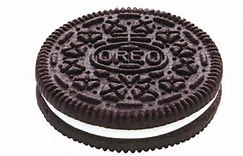
An oreo cookie has a mass of 20 grams. It gets crushed into crumbs for a recipe. What is the mass of the crumbs?

a)

15 grams

b)

25 grams

c)

20 grams

20.

If reaction starts with 20g of reactants, it will produce ---

a)

a total of 40g of product

b)

a total of 10g of product

c)

a total of 80 g of product

d)

a total of 20g of product

21.

In a reaction A + B ----> C.

Reactant A has 5g and product C has 9g.

How many grams does reactant B should have?

a)

4g

b)

5g

c)

9g

d)

14g

22.

What will have more mass when a chemical change is complete: the reactants before the chemical reaction or the product after the reaction is complete?

a)

They both will have the same mass

b)

The product always has more mass than the reactant

c)

The reactant will have more mass than the product

d)

They both will lose mass after the reaction

23.
If there are 4 H atoms on the reactant side, how many H atoms will be on the product side? 
a)
2
b)
4
c)
6
d)
You need more information to answer this question
24.

When ice melts, the water has the same _________ as the

a)

temperature

b)

state of matter

c)

shape

d)

mass

25.

15 grams of sugar are dissolved into 300 grams of water. what is the mass of the mixture?

a)

15

b)

315

c)

285

d)

300

26.

if each cube has a mass of 3 grams, what is the total mass of the cubes that spell out "cage"?

a)

12 grams

b)

20 grams

c)

3 grams

d)

9 grams

27.

250 grams of iron and sand are separated. The mass of the sand is 150 grams. What is the mass of the iron?

a)

is it impossible to determine.

b)

100 grams

c)

150 grams

d)

250 grams

28.

How are particles in a solid formed?

a)

loosely packed

b)

tightly packed together

c)

very loosely packed

29.

how are the particles in a liquid packed?

a)

tightly packed together

b)

loosely packed together

c)

able to fry around freely.

30.

How are the particles in a gas formed?

a)

able to fly around freely

b)

loosely packed

c)

tightly packed together

31.

what states of matter take the shape of their container?

a)

liquids

b)

solids

c)

liquids and gases

d)

solids and liquids

32.
An oreo cookie weighs 20 grams.  It gets crushed into crumbs for a recipe.  How much do its crumbs weigh?
a)
15 grams
b)
25 grams
c)
20 grams
33.

Sarah and Jake were each given a ball of clay that has a mass of 400 grams. Both students used all their clay to make an object. Sarah rolled hers into a ball, and Jake made a long, skinny rope. What is the mass of the clay figures now?

a)

Sarah's weighs more because it is round

b)

Jake's weighs more because it is long

c)

There is no way of knowing

d)

They figures would have equal masses.

34.

Look at the diagram of the water cycle. Which step of the water cycle is missing from the diagram?

a)

evaporation

b)

condensation

c)

precipitation

d)

radiation

35.
Salt dissolves in water like ----
a)
Pepper dissolves in water
b)
Sugar dissolves in water
c)
Rocks dissolve in water
d)
Seeds dissolve in water
36.
To dissolve in water.
a)
solubility
b)
density
c)
mixture
d)
evaporation
37.

True or False: Each part of a mixture keeps its properties when mixed.

a)

True

b)

False

38.

True or False: Mixtures can be separated by physical processes.

a)

True

b)

False

39.

In which mixture can you see all of the parts?

a)

homogeneous

b)

heterogeneous

40.

In which mixture can you not see all of the parts?

a)

homogeneous

b)

heterogeneous

41.
What is a mixture?
a)
elements chemically combined
b)
a combination of different things
c)
it is found on the Periodic Table 
d)
it is made of chemical
42.
A solution that is considered dilute would be....
a)
Dark in color
b)
Have a strong scent
c)
Have a large amount of solute
d)
Have a small amount of solute
43.
The air around was is  a mixture of gases.
a)
True
b)
False
44.

What is a mixture in which all the parts are EVENLY mixed?

a)

energy

b)

beaker

c)

solution

d)

salad

45.

Which of the following is a solution?

a)

geletin with blueberries

b)

granola

c)

juice

d)

salad

46.

Which of the following is a solution?

a)

lemonade

b)

trail mix

c)

legos

d)

iron filings and sand

47.

A salad is an example of a __________.

a)

homogenous mixture

b)

solution

c)

heterogeneous mixture

d)

homogenous solution

48.
What are the two types of Mixtures
a)
Elements and Subatomic Particles
b)
Protons and Electrons
c)
Atoms and Compounds
d)
Homogenous and Heterogeneous
49.
Mixtures are always combinations of compounds that are in different states of matter. 
a)
TRUE
b)
FALSE
50.
All mixtures are defined as "heterogeneous." 
a)
TRUE
b)
FALSE
51.
Which of these is not a mixture? 
a)
oil and water
b)
sand and soda
c)
diet soda
d)
all are mixtures
52.
What are the two types of mixtures? 
a)
element and sub-atomic
b)
atoms and compounds
c)
homogeneous and heterogeneous
d)
element
53.
Halo-halo can be classified as what type of Mixtures?
a)
element
b)
solution
c)
homogeneous
d)
heterogeneous
54.
A glass of Kool Aid/ Tang juice can be classified as
a)
element
b)
homogeneous
c)
heterogeneous
d)
suspension
55.
How many classification of mixtures there are? 
a)
one
b)
two
c)
three
d)
four
56.
What is the similarities between Homogeneous & Heterogeneous Mixtures? 
a)
both are element
b)
both are compound
c)
both are mixtures
d)
both are solvent
57.
Is coffee a Homogeneous Mixture? 
a)
YES
b)
NO
58.
Soup is a Heterogeneous Mixtures?  
a)
TRUE
b)
FALSE
59.
It is a liquid mixture in which the minor component (the solute) is uniformly distributed with the major component (the solvent).
a)
solution
b)
element
c)
sub-atomic
d)
dissolution
60.
It is a liquid mixture in which the minor component (the solute) is uniformly distributed with the major component (the solvent).
a)
solution
b)
element
c)
sub-atomic
d)
dissolution
61.
A solution consists of two parts. One part is the substance that is dissolved. What is the name of this part of a solution?
a)
solute
b)
solvent
c)
dissolution
d)
mixture
62.
The other component of a solution is the part that does the dissolving. What is the name of this component?
a)
solvent
b)
dissolution
c)
element
d)
mixture
63.
When a substance can dissolve in another substance, it is said to be..
a)
soluble
b)
insoluble
c)
miscible
d)
solution
64.
True or false? Insoluble means that two substances can dissolve in one another.
a)
TRUE
b)
FALSE
65.
The most common solvent on Earth is...
a)
gasoline
b)
water
c)
turpentine
d)
soda
66.
All liquids can be mixed to create solutions.
a)
TRUE
b)
FALSE
67.
all matter is made of what 
a)
energy 
b)
atoms 
c)
electrons 
d)
compounds