wayground logo

Free Printable Worksheets

NEW

Font size

S
M
L
XL
Worksheets

Osmosis

Total questions: 62

Worksheet time: 1hrs 2mins
Name
Class
Date
1.
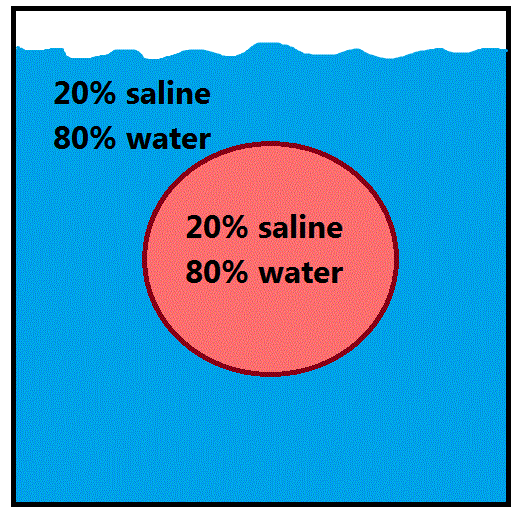
Where will the water go?
a)
Into the cell
b)
Out of the cell
c)
Equally in & out - it's isotonic
d)
There is no water
2.
Mr. Slug was salted. Where was there more solute immediately after salting?
a)
Outside of the slug
b)
Inside of the slug
c)
There was no solute anywhere
3.
What is the type of solute we mainly talked about in our examples?
a)
Salt
b)
Sugar
c)
Calcium
d)
Mercury
4.
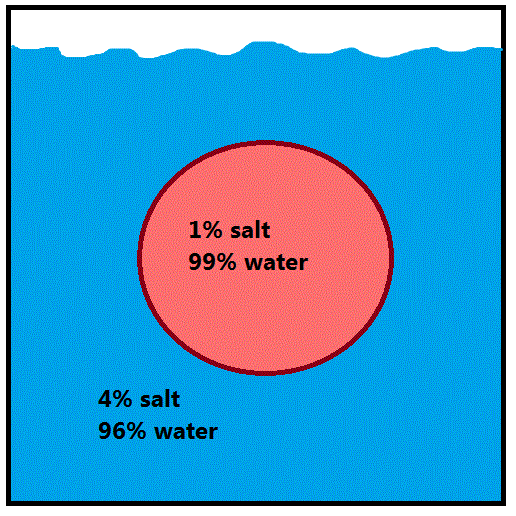
A blood cell is placed into the jar, as seen. Where will the water go?
a)
Into the cell
b)
Out of the cell
c)
Equally in & out - it's isotonic
d)
The water is a lie
5.
 If a cell containing 5% salt is placed into a glass of water with 20% salt, the water is _______ compared to the cell.
a)
hypertonic
b)
hypotonic
c)
isotonic
6.
 An animal cell placed in a hypertonic (salty) solution will
a)
Stay the same
b)
Shrink- get smaller
c)
Swell- get bigger
7.
During osmosis
a)
water moves from high to low concentration
b)
large or oddly shaped molecules move across a cell membrane
c)
water moves when energy is used
d)
proteins are built
8.
HYPO means...
a)
Low
b)
High
c)
Equal
d)
Fat
9.
ISO means...
a)
Low
b)
A lot
c)
Equal
d)
Mammal
10.
What happens if someone gives you a 90% salt saline drip?
a)
Your cells will shrivel and you'll die
b)
Your cells will swell and you'll die
c)
Nah you'll be fine.
11.
Why can't you drink salt water?
a)
It's hypertonic to your cells
b)
It's hypotonic to your cells
c)
It's isotonic to your cells
d)
It's paratonic to your cells
12.
Why can't you drink salt water?
a)
It's hypertonic to your cells
b)
It's hypotonic to your cells
c)
It's isotonic to your cells
d)
It's paratonic to your cells
13.
Osmosis is the diffusion of _____ across a selectively permeable membrane.
a)
food
b)
air
c)
water
d)
oxygen
14.
During diffusion
a)
substances (things) moves from high to low concentration
b)
water moves when energy is used
c)
large or oddly shaped molecules move across a cell membrane
d)
water moves from high to low concentration
15.
 In the given scenario what will happen?  An egg with a dissolved shell is placed in pure water for 48 hours.
a)
Water will move in and out of the cell equally, and the cell with neither shrink nor swell.
b)
The egg will gain water and swell.
c)
The egg will lose water and shrink.
16.
 An animal cell placed in a hypertonic (salty) solution will
a)
Stay the same
b)
Shrink- get smaller
c)
Swell- get bigger
17.
Ideally, your cells should be in a(n) _______ solution
a)
isotonic
b)
hypertonic
c)
hypotonic
d)
isometric
18.
The movement of water through a semi-permeable membrane is called?
a)
cell membrane
b)
respiration
c)
osmosis
d)
diffusion
19.
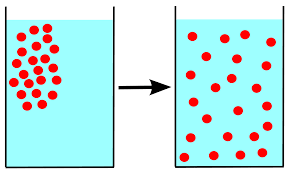
The picture  is an example of _________________.
a)
isotonic
b)
diffusion
c)
osmosis
d)
active transport
20.
When both inside and outside of a cell have the same amount of water it is said that the cell has reached a state of ___________.
a)
osmosis
b)
equilibrium
c)
diffusion
d)
hypertonic
21.
In a solution, salt is considered the _______.
a)
solvent
b)
solute
c)
solution
22.
In this given scenario, corn syrup is hypertonic to an egg with a dissolved shell. What will happen to the egg when it is place in corn syrup?
a)
It will stay the same.
b)
It will swell- get bigger.
c)
It will shrink- get smaller.
23.
In a scenario, salt is placed into a bowl of water.  What is the solvent?
a)
salt
b)
water
c)
saltwater
24.
If you looked at red blood cells under a microscope and saw the blood cells exploded, what would you say happened?
a)
The cells were placed in a hypotonic solution.
b)
the solution was isotonic.
c)
The solution was hypertonic.
25.
What does selectively-permeable mean?
a)
The cell controls what passes in and out of the cell
b)
Nothing gets through
c)
The cell lets only large substances through
26.
 If a cell containing 5% salt is placed into a glass of water with 20% salt, the water is _______ compared to the cell.
a)
hypertonic-
b)
hypotonic
c)
isotonic
27.
Both side of a selectively- permeable membrane are equal. The sides are ______.
a)
isotonic
b)
hypertonic
c)
hypotonic
28.
Mrs. Crandall placed 2 tablespoons of salt into a glass of water and then placed a selectively- permeable membrane into the glass that divided the glass into left and right halves.  The left side is _______ to the right side.
a)
isotonic
b)
hypertonic
c)
hypotonic
29.
The cell wall________.
a)
is a selectively permeable membrane
b)
is involved in protection and structure in plants
c)
is found in plants and animals
30.
If a cell is placed in a hypotonic solution, the cell will _______.
a)
stay the same
b)
swell (get bigger)
c)
shrink (get smaller)
31.

The picture below is an example of _________________.

a)

osmosis

b)

isotonic

c)

diffusion

d)

active transport

32.

Osmosis is the movement of _____ across a membrane.

a)

food

b)

energy

c)

oxygen

d)

water

33.

During osmosis

a)

water moves from high to low concentration

b)

large or oddly shaped molecules move across a cell membrane

c)

water moves when energy is used

d)

proteins are built

34.

Permeable means

a)

things can pass through

b)

the concentration levels are different

c)

it is permanent

d)

things are stuck

35.
What is the definition of  Selective Permeability?
a)
The movement of materials across the cell membrane that requires NO ENERGY from the cell.
b)
The movement of materials through (or across) the cell membrane
c)
The ability of the cell membrane to allow some things to pass through while preventing other things from passing through.
d)
The movement of molecules from an area of high concentration to a area of low concentration 
36.

_______ regulates what enters and leaves a cell.

a)

Cell Membrane

b)

Nucleus

c)

Mitochondria

d)

Cytoplasm

37.

A person would never have pure water put into their veins in a hospital because their cells would...

a)

Shrink/Dehydrate

b)

Expand

c)

Stay the same

38.

If there is 5 percent water inside a cell and 5 percent water outside a cell

a)

more water will move inside the cell

b)

more water will move outside the cell

c)

There will be no net movement of water, it moves into and out of the cell at the same time.

39.
Ideally, your cells should be in a(n) _______ solution
a)
Hypertonic
b)
Hypotonic
c)
Isotonic
d)
Cola
40.

Osmosis

a)

diffusion of water molecules through a semi-permeable mebrane from an area of low concentration to an area of high concentration

b)

the diffusion of particles from an area of high concentration to an area of low concentration

c)

diffusion of water molecules through a semi-permeable membrane from an area of high concentration to an area of low concentration

d)

the diffusion of particles from an area of low concentration to an area of high concentration

41.

Where will the water go?

a)

Into the cell

b)

Out of the cell

c)

Equally in & out - it's isotonic

d)

There is no water

42.

A blood cell is placed into the jar, as seen. Where will the water go?

a)

Into the cell

b)

Out of the cell

c)

Equally in & out - it's isotonic

d)

The water is a lie

43.

HYPO means...

a)

Low

b)

High

c)

Equal

d)

Fat

44.

ISO means...

a)

Low

b)

A lot

c)

Equal

d)

Mammal

45.

Why can't you drink salt water?

a)

It's hypertonic to your cells

b)

It's hypotonic to your cells

c)

It's isotonic to your cells

d)

It's paratonic to your cells

46.
What is diffusion?
a)
when molecules move 
b)
when molecules move from a high concentration to a low.
c)
no movement 
d)
molecules move everywhere
47.
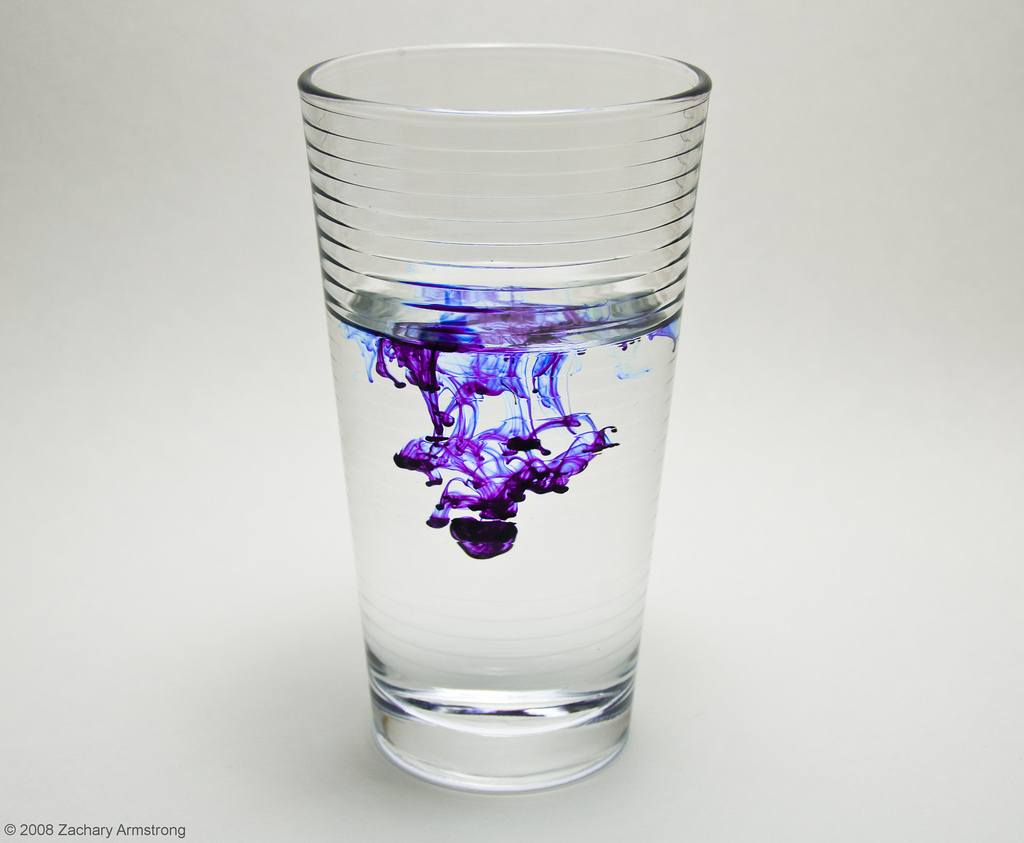
Where is there a low concentration of dye?
a)
at the bottom of cup
b)
in the color
c)
at the top of cup 
d)
no concenteraion gradient
48.
The picture below is an example of _________________.
a)
osmosis
b)
isotonic
c)
diffusion
d)
active transport
49.
Osmosis is the movement of _____ across a membrane.
a)
food
b)
energy
c)
oxygen
d)
water
50.
During osmosis
a)
water moves from high to low concentration
b)
large or oddly shaped molecules move across a cell membrane
c)
water moves when energy is used
d)
proteins are built
51.
The diffusion of water through a semi-permeable membrane is called?
a)
Osmosis
b)
Cell wall
c)
Diffusion
d)
Respiration
52.
Permeable means
a)
things can pass through
b)
the concentration levels are different
c)
it is permanent
d)
things are stuck
53.
Where is there a low concentration of perfume?
a)
in the bottle
b)
on the hand
c)
in the room
d)
in the top
54.
What is the definition of  Selective Permeability?
a)
The movement of materials across the cell membrane that requires NO ENERGY from the cell.
b)
The movement of materials through (or across) the cell membrane
c)
The ability of the cell membrane to allow some things to pass through while preventing other things from passing through.
d)
The movement of molecules from an area of high concentration to a area of low concentration 
55.
When both inside and outside of a cell have the same amount of water it is said that the cell has reached a state of
a)
Osmosis
b)
Diffusion
c)
Equilibrium
56.
A person would never have pure water put into their veins in a hospital because their cells would...
a)
Shrink/Dehydrate
b)
Expand
57.
A person should never drink salty water because their cells would
a)
shrink
b)
expand
58.
If there is 5 percent water inside a cell and 5 percent water outside a cell
a)
more water will move inside the cell
b)
more water will move outside the cell
c)
There will be no movement of water cells
59.
Passive transport requires no
a)
concentration gradients
b)
osmosis
c)
motion
d)
energy
60.
The movement of molecules against a concentration gradient
a)
simple diffusion
b)
facilitated diffusion
c)
active transport
d)
osmosis
61.
The picture is an example of...
a)
active tranport
b)
passive transport
c)
diffusion
d)
osmosis
62.
Sometimes, energy is required for ____ molecules to go in or out of the cell because they cannot fit into the membrane.
a)
big
b)
small
c)
crunchy
d)
water