wayground logo

Free Printable Worksheets

NEW

Font size

S
M
L
XL
Worksheets

Bonding / Nomenclature

Total questions: 66

Worksheet time: 40mins

Name
Class
Date
1.
What type of bond forms when electrons are transferred from one atom to another?
a)
ionic bond
b)
atomic bond
c)
covalent bond
d)
metallic bond
2.
The bond between Na & F.   Ionic or covalent?
a)
Ionic
b)
Covalent
3.
The bond between N & H.   Ionic or covalent?
a)
Ionic
b)
Covalent
4.
Which of the following gives the correct chemical formula for the compound Magnesium Phosphide?
a)
Mg2P3
b)
MgP
c)
Mg3P2
d)
MgP2
5.
Which of the following gives the correct chemical formula for the compound Calcium Nitride?
a)
Ca2N3
b)
CaN
c)
Ca3N2
d)
CaN2
6.
What is the correct chemical name for the molecular compound:  CS2
a)
Carbon Sulfide
b)
Carbon diSulfide
c)
diCarbide diSulfide
d)
Carbon (II) Sulfide
7.
Ionic bonds are between...
a)
Metal and Non-metal
b)
Non-metal and Non-metal
c)
Metal and Metal
8.
What type of compound is CaF2?
a)
covalent
b)
ionic
c)
polar
d)
metallic
9.

What kind of intermolecular force is found with H in the presence of N, O, or F?

a)

Dipole-Dipole Interaction

b)

London Forces

c)

Electrostatic Ionic Interaction

d)

Hydrogen Bonding

10.

What kind of bonding is found in W?

a)

Ionic

b)

Non-Polar Covalent

c)

Metallic

d)

Polar Covalent

11.

What is the name of V3P5?

a)

Trivanadium pentaphosphide

b)

vanadium phosphide

c)

vanadium (V) phosphide

d)

vanadium phosphate

12.

What kind of intermolecular force can result when the molecules are very large?

a)

dipole dipole interaction

b)

london forces

c)

electrostatic ionic attraction

d)

hydrogen bonding

13.

Which of the following cannot conduct electricity?

a)

Covalent Solids

b)

Metallic Solids

c)

Metallic Liquids

d)

Ionic Liquids

14.
Ionic bonds form when ions share electrons.
a)
True
b)
False
15.
Definition: a full shell of eight electrons in the outer energy level of an atom
a)
stable octet
b)
unstable octet
c)
octopus
d)
octagon
16.

When an atom loses an electron, it forms a(n)

a)

anion

b)

cation

c)

polyatomic ion

d)

neutral ion

17.

When two fluorine atoms share a pair of electrons, the bond that forms is a(n)

a)

Polar covalent bond

b)

Ionic bond

c)

Nonpolar covalent bond

d)

Double bond

18.

Double bonds involve how many electrons?

a)

2

b)

4

c)

6

d)

8

19.

Single bonds involve how many electrons?

a)

2

b)

4

c)

6

d)

8

20.

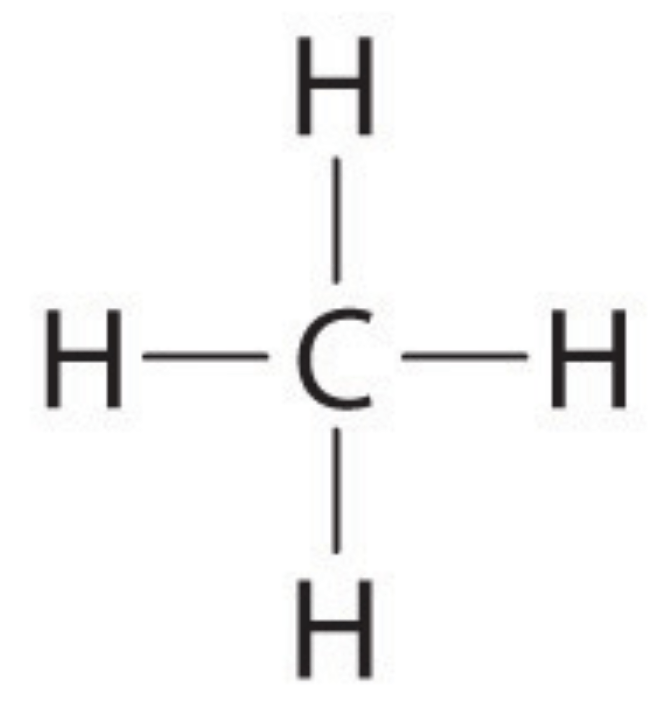
Classify the following molecule.

a)

polar

b)

nonpolar

21.

Classify the following molecule.

a)

polar

b)

nonpolar

22.

Is the following molecule polar or nonpolar?

a)

polar

b)

nonpolar

23.

Is the following molecule polar or nonpolar?

a)

polar

b)

nonpolar

24.
HCl
a)
Polar 
b)
Nonpolar 
25.
F2
a)
Polar 
b)
Nonpolar 
26.
CH3Cl
a)
Polar 
b)
Nonpolar 
27.
How many valence electrons does nitrogen have?
a)
3
b)
2
c)
5
d)
1
28.
Which of the following is the correct Lewis dot structure for the molecule fluorine (F2)?
a)
A
b)
B
c)
C
d)
D
29.
What is a diatomic element?
a)
a metal bonded with a nonmetal
b)
2 or more nonmetals bonded together
c)
2 or more metals bonded together
d)
2 atoms of the same element bonded together
30.
Most covalent compounds are do not exist in which state?
a)
solid
b)
liquid
c)
gas
31.
Which element below is not diatomic?
a)
hydrogen
b)
oxygen
c)
nitrogen
d)
sulfur
32.

Which substance contains bonds that involved the transfer of electrons from one atom to another?

a)

KBr

b)

CO2

c)

Cl2

d)

NH3

33.

As a chlorine atom becomes a negative ion, the atom

a)

loses an electron and its radius increases

b)

gains an electron and its radius decreases

c)

loses an electron and its radius decreases

d)

gains an electron and its radius increases

34.

Which compound has the least ionic character?

a)

AlCl3

b)

CCl4

c)

CaCl2

d)

KCl

35.

A solid substance was tested in the laboratory. The test results are listed below:

  • dissolves in water
  • is an electrolyte
  • melts at a high temperature

Based on these results, the solid substance could be

a)

C6H12O6

b)

CH4

c)

H2O

d)

CuBr2

36.

Based on bond type, which compound has the highest melting point?

a)

CCl4

b)

CaCl2

c)

C6H14

d)

CH3OH

37.

As a chemical bond forms between two hydrogen atoms the potential energy of the atoms

a)

decreases

b)

increases

c)

remains the same

38.

Based on electronegatvity values, which type of elements tends to have the greatest attraction for electrons in a bond?

a)

Metalliods

b)

Nonmetals

c)

Metals

d)

Noble Gases

39.
Are the atoms more stable when they are bonded together or when they are apart? 
a)
Bonded Together
b)
Apart
40.
Ionic Bonding involves...
a)
The transfer of protons
b)
The transfer of nuetrons 
c)
The transfer of electrons
d)
None Of the above
41.
What type of bond is present when electrons are freely shared between metal atoms?
a)
Metallic
b)
Ionic
c)
Covalent
d)
Hippie
42.
What type of bond is illustrated above?
a)
Metallic
b)
Ionic
c)
Covalent
d)
Wiggly
43.
Which of the following has a full valence shell?
a)
Oxygen
b)
Neon
c)
Barium
d)
Carbon
44.
How many valence electrons in this structure?
a)
6
b)
5
c)
4
d)
7
45.
If fluorine is stronger then carbon, what charge will the fluorine receive?
a)
negative
b)
slight negative
c)
positive
d)
slight positive
46.
Type of intermolecular force present in HF.
a)
dipole dipole
b)
dispersion
c)
H-bond
d)
ionic
47.
Which noble gas has the highest boiling point?
a)
Xe
b)
Kr
c)
Ar
d)
He
48.
Type of intermolecular force present in I2, Br2, and Cl2.
a)
dipole dipole
b)
H-bond
c)
dispersion
d)
metallic
49.
H2S has what kind of intermolecular force?
a)
dipole dipole
b)
dispersion
c)
H-bond
d)
ionic
50.
Intermolecular forces are the forces
a)
within molecules
b)
between molecules
51.
Which of the following has the highest boiling point?
a)
H2
b)
NH3
c)
N2
d)
O2
52.
Which of the following has the lowest boiling point?
a)
CaCl2
b)
PH3
c)
Cl2
d)
N2
53.
Intermolecular force present in HCl?
a)
dipole dipole
b)
dispersion
c)
H-bond
d)
ionic
54.

What is the name for SiCl4?

a)

silicon tetrachloride

b)

silicon quadchloride

c)

monosilicon tetrachloride

d)

silicon chloride

55.

What is the correct formula for Calcium Phosphate?

a)

Ca3(PO4)2

b)

Ca3(PO4)

c)

Ca2(PO4)

d)

Ca2(PO4)2

56.

What is the correct name for the compound with the formula NH4NO3

a)

ammonium nitrite

b)

ammonium nitrate

c)

ammonium nitride

57.

What is the name of the compound P4S10

a)

phosphorous sulfide

b)

tetraphosphide decasulfate

c)

phosphorous decasulfate

d)

tetraphosphorous decasulfide

58.

What is the name of Al2O3

a)

aluminum oxide

b)

dialuminum trioxide

c)

aluminum III oxide

59.
silicon dioxide
a)
SO2
b)
NaO2
c)
SiO2
d)
SiO
60.
What is the correct name for NO?
a)
Mononitrogen Monoxide
b)
Nitrogen Monoxide
c)
Mononitrogen Dioxide
d)
Nitrogen Oxide
61.
What is the correct chemical formula for Nitrogen Triiodide?
a)
NI3
b)
N3I3
c)
NOI
d)
NeI3
62.
If an atom gains two electrons what charge will it have?
a)
-2
b)
-1
c)
+1
d)
+2
63.
If an atom has 7 protons and 7 electrons what charge will it have?
a)
-2
b)
-1
c)
0
d)
+2
64.

Which of the following is NOT a characteristic typical of ionic compounds?

a)

High melting point

b)

Conducts electricity when dissolved in water

c)

Hard, crystalline solids

d)

Low boiling points

65.

Which of these occurs in an ionic bond?

a)

two atoms share two electrons

b)

like-charged ions attract

c)

oppositely charged ions attract

d)

two atoms share more than two electrons

66.

Why do atoms bond?

a)

to increase their atomic numbers

b)

to become more polar

c)

to attain a noble-gas electron configuration

d)

to become more paramagnetic