Wayground logo

Free Printable Worksheets

Font size

S
M
L
XL
Worksheets

Atomic Theory PRACTICE TEST

Total questions: 50

Worksheet time: 35mins

Name
Class
Date
1.

The center of the atom is the

a)

nucleus

b)

proton

c)

neutron

d)

electron

2.

The part of the atom that has a positive charge is the

a)

molecule

b)

neutron

c)

proton

d)

electron

3.

The neutron has this sort of charge.

a)

positive

b)

negative

c)

alternates, positive and then negative

d)

no charge

4.

Negatively charged particles that move around the atom's nucleus are the

a)

elements

b)

compounds

c)

electrons

d)

protons

5.

Atoms that have the same number of protons but different numbers of neutrons are called

a)

protons

b)

electrons

c)

litmus

d)

isotopes

6.

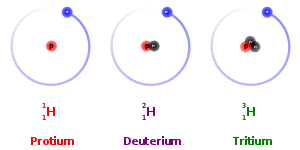
What element is pictured

a)

Hydrogen

b)

Lithium

c)

Carbon

7.

The atomic number is equal to the number of ____ in an atom.

a)

electrons

b)

protons

c)

neutrons

8.

The total number of the protons and neutrons is the

a)

charge

b)

potential

c)

mass number

d)

atomic weight

9.

The smallest particle of an element to still be that element is the

a)

nucleus

b)

electron

c)

atom

d)

neutron

10.

The word “atomos” means

a)

uncuttable

b)

small

c)

element

d)

nucleus

11.

Dalton believed the atom to be

a)

a solid sphere

b)

composed of more than one element

c)

composed of positive and negative particles

d)

composed of alpha particles

12.

Rutherford's “gold foil” experiment led him to hypothesize the

a)

atom

b)

electron

c)

nucleus

d)

neutron

13.

Who is the Greek philosopher that said that the universe is made of tiny bits of stuff called “atomos”?

a)

Rutherford

b)

Democritus

c)

Bohr

d)

Hippocrates

14.

Represented by a symbol; all are found on the periodic table

a)

Proton

b)

Electron

c)

Element

d)

Atom

15.

Developed a model of the atom where electrons orbit the nucleus in energy levels.

a)

Rutherford

b)

Democritus

c)

Dalton

d)

Bohr

16.

Smallest example of an element, which still hold the properties of that element

a)

molecule

b)

atom

c)

compound

d)

proton

17.

Who proposed the “plum pudding” model of the atom?

a)

Dalton

b)

Thomson

c)

Rutherford

d)

Bohr

18.

Which is not a subatomic particle?

a)

electron

b)

proton

c)

atom

d)

neutron

19.

An atom is

a)

more negative than positive.

b)

more positive than negative.

c)

stable in charge.

d)

either positive or negative.

20.

The isotope C-14 has how many protons?

a)

4

b)

6

c)

8

d)

10

21.

The isotope Be-10 has how many neutrons?

a)

4

b)

6

c)

8

d)

10

22.

Who used a cathode ray tube to verify the existence of charged particles in the atom?

a)

Rutherford

b)

Thomson

c)

Dalton

d)

Bohr

23.

What subatomic particles are located in the nucleus?

a)

protons & electrons

b)

neutrons & electrons

c)

protons & neutrons

d)

only protons

24.

Which element has the fewest number of protons?

a)

hydrogen

b)

lithium

c)

magnesium

25.

How many electrons are in the first energy level?

a)

2

b)

4

c)

6

d)

8

26.

How many neutrons are in an atom of Ti-46?

a)

22

b)

24

c)

44

d)

46

27.

Identify the subatomic particle

a)

proton

b)

neutron

c)

electron

28.

calculate the Atomic Number.

a)

10

b)

16

c)

8

29.

Calculate the # of neutrons.

a)

2

b)

3

c)

4

30.

Identify the subatomic particle

a)

proton

b)

neutron

c)

electron

31.
Where electrons are likely to be found as they travel around the nucleus
a)
Nucleus
b)
Electron Cloud
c)
Within a Proton
d)
Within a Neutron
32.
Calculation used to find the number of neutrons in an atom
a)
Atomic Mass - Atomic Number
b)
Atomic Number - Atomic Mass
c)
Atomic Mass - Electrons
d)
none of these
33.
Electrons are not factored into atomic mass because:
a)
They are so small their mass is negligible
b)
They're not in the nucleus
c)
They're too big
d)
They move so quickly their mass is zero
34.
What scientist is best known for his "Plum Pudding" model of the atom?
a)
J.J. Thomson
b)
Ernest Rutherford
c)
John Dalton
d)
Democritus
35.
The Gold Foil experiment was done by __________.
a)
Chadwick
b)
Bohr
c)
Rutherford
d)
Thomson
36.
The mass number of an element that has18 protons, 18 electrons, and 19 neutrons is _____.
a)
12.5
b)
13
c)
25
d)
37
37.
The atomic number of an element that has 9 protons, 9 electrons, and 10 neutrons is _____.
a)
9
b)
10
c)
19
d)
28
38.
These particles have a mass of 1 amu
a)
protons and neutrons
b)
protons and electrons
c)
neutrons and electrons
39.
What are the 3 subatomic particles that make-up the atom?
a)
protons, neutrons, and isotopes
b)
neutrons, isotopes, and electrons
c)
positives, negatives, and electrons
d)
protons, neutrons, and electrons
40.
All matter is made of what?
a)
energy 
b)
atoms 
c)
volume
d)
compounds 
41.
Most of the mass in an atom is made up of _____________________?
a)
protons and electrons
b)
protons and neutrons
c)
neutrons and electrons
d)
electrons and quarks
42.
Different isotopes have...
a)
different masses
b)
different atomic numbers
c)
different electrons
d)
different protons
43.
How many neutrons does a Calcium 48 isotope have?
a)
16
b)
20
c)
28
d)
12
44.
How many neutrons does a Flourine-14 isotope have?
a)
4
b)
5
c)
9
d)
14
45.
How many neutrons does the isotope of lithium have?
a)
8
b)
3
c)
4
d)
5
46.
An atom is electrically neutral when
a)
protons and neutrons are the same
b)
protons and electrons are the same
c)
neutrons and electrons are the same
d)
neutrons balance the protons and electrons
47.
Place the following scientists in order, from earliest to latest: 
Rutherford, Dalton, Bohr, Thomson
a)
Dalton, Rutherford, Bohr, Thomson
b)
Thomson, Dalton, Rutherford, Bohr
c)
Dalton, Thomson, Rutherford, Bohr
d)
Bohr, Dalton, Rutherford, Thomson
48.
How did each model of the atom help to develop the atomic theory? 
a)
Each model provided opinions that were added.
b)
Each model showed different properties of the same structure. 
c)
Each model showed new particles that had been discovered.
d)
Each model built upon the other to show new particles or properties of previously discovered particles. 
49.

John Dalton stated:

a)

Atoms are tiny, invisible particles.

b)

Atoms of one element are all the same.

c)

Atoms of different elements are different.

d)

Compounds form by combining atoms.

e)

All of the statements listed.

50.
A tiny but very dense, positively charged portion of the atom that holds most of the atomic mass
a)
Electron Shells
b)
Orbitals
c)
Electron Cloud
d)
Nucleus