wayground logo

Free Printable Worksheets

NEW

Font size

S
M
L
XL
Worksheets

Waves Year 10

Total questions: 53

Worksheet time: 2hrs 6mins

Name
Class
Date
1.

1. In the electromagnetic spectrum, which of the following has the longest wavelength?

a)

gamma rays

b)

microwaves

c)

radio waves

d)

X-rays

2.

3. Using the Basic Wave Equation, how is frequency of a wave related to its wavelength? A high frequency wave will have a ____________________.

a)

longer wavelength

b)

shorter wavelength

c)

faster wave speed

d)

slower wave speed

3.

4. Which electromagnetic waves are used for remote controls, for television, for burglar alarm systems and for night vision?

a)

gamma rays

b)

infrared rays

c)

microwaves

d)

radio waves

4.

5. Ultraviolet radiation is used to detect fake money and sterilize medical equipment. Which of the following is the main source of UV radiation on Earth?

a)

comet

b)

moon

c)

ozone layer

d)

sun

5.

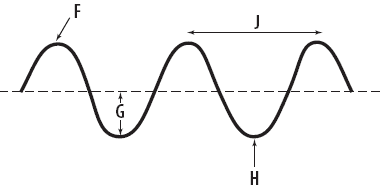
What is this called?

a)

wavelength

b)

amplitude

c)

a curvy line

6.

What is this called?

a)

wavelength

b)

amplitude

c)

a curvy line

7.

When energy increases, amplitude ________________.

a)

Increases

b)

decreases

c)

stays the same

8.

Water waves are __________ waves because the wave moves up and down.

a)

transverse

b)

inverse

c)

longitudinal

d)

flat

9.

The measurement for Frequency is...

a)

Cycle

b)

Meters

c)

Hertz

d)

Seconds

10.

The "formula" for Wavelength is.....

a)

Distance between 2 crest

b)

Wave Speed divided by Frequency

c)

The distance between crest and trough

d)

Meters divided by seconds

11.
Which property of these waves differs?
a)
Frequency
b)
Wavelength
c)
Amplitude
d)
Pitch
12.
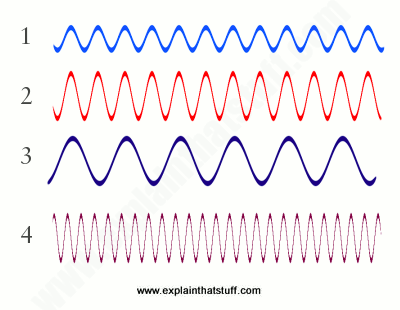
Which wave has the highest frequency?
a)
1
b)
2
c)
3
d)
4
13.
Frequency is
a)
Amount of time it takes for one wavelength
b)
How many wavelengths are completed in one second
c)
Distance between two crests or two troughs
d)
Amount of energy in a wave
14.
What do all waves transfer?
a)
Light
b)
Sound
c)
Heat
d)
Energy
15.
The number of wavelengths that pass a point each per second is:
a)
frequency
b)
period
c)
longitudinal 
d)
transverse wave 
16.
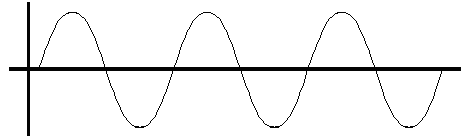
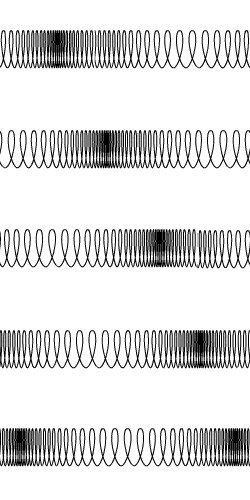
What type of wave is this?
a)
Longitudinal
b)
Transverse
17.
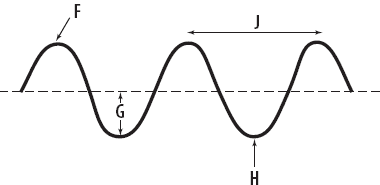
Which letter is a crest?
a)
F
b)
G
c)
H
d)
J
18.
Which letter is a trough?
a)
F
b)
G
c)
H
d)
J
19.
What type of wave is this?
a)
Longitudinal
b)
Transverse
20.
Which is the correct equation for calculating the speed of a wave?
a)
T = 1/f
b)
Speed= Wavelength x Period
c)
Speed = Wavelength/Frequency
d)
Speed= Wavelength x Frequency
21.

Electromagnetic Waves can travel through a vacuum

a)

True

b)

False

22.
The EM wave with frequency higher than infrared and lower than UV.
a)
radio
b)
visible light
c)
xray
d)
gamma
23.
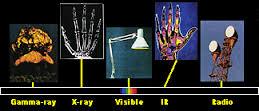
4 is 
a)
radio
b)
UV 
c)
Visible Light
d)
X-ray
24.
7 is 
a)
Radio
b)
UV
c)
Infrared
d)
Gamma
25.
EM waves  
a)
Must travel through a vacuum
b)
Can travel through a medium or a vacuum
c)
Are the same type of wave as mechanical waves
d)
Can only travel through a vacuum
26.
Visible light is 
a)
radiation
b)
light
c)
a way to transfer energy
d)
all of these
27.
Cancer can be treated with_______________waves.
a)
Penicillin
b)
Radio
c)
Infrared
d)
Gamma
28.
This type of Electromagnetic wave shows a break in bones.
a)
gamma ray
b)
x-ray
c)
brokenometer
d)
radio wave
29.

Which type of electromagnetic radiation is used extensively in communications?

a)

radio waves

b)

gamma rays

c)

infrared rays

d)

X-rays

30.

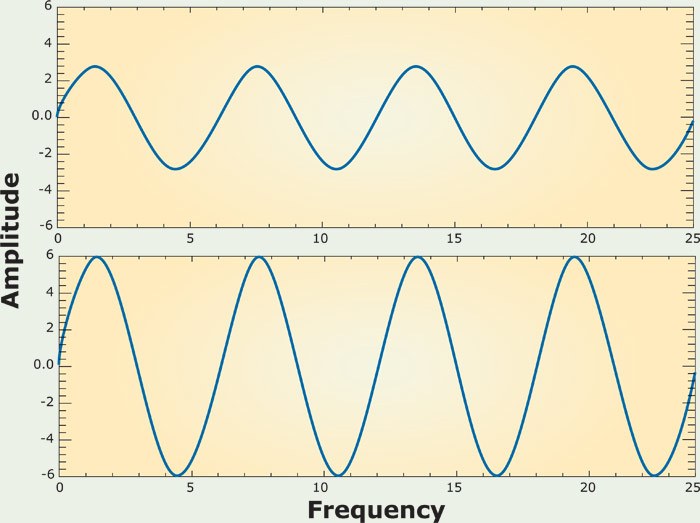
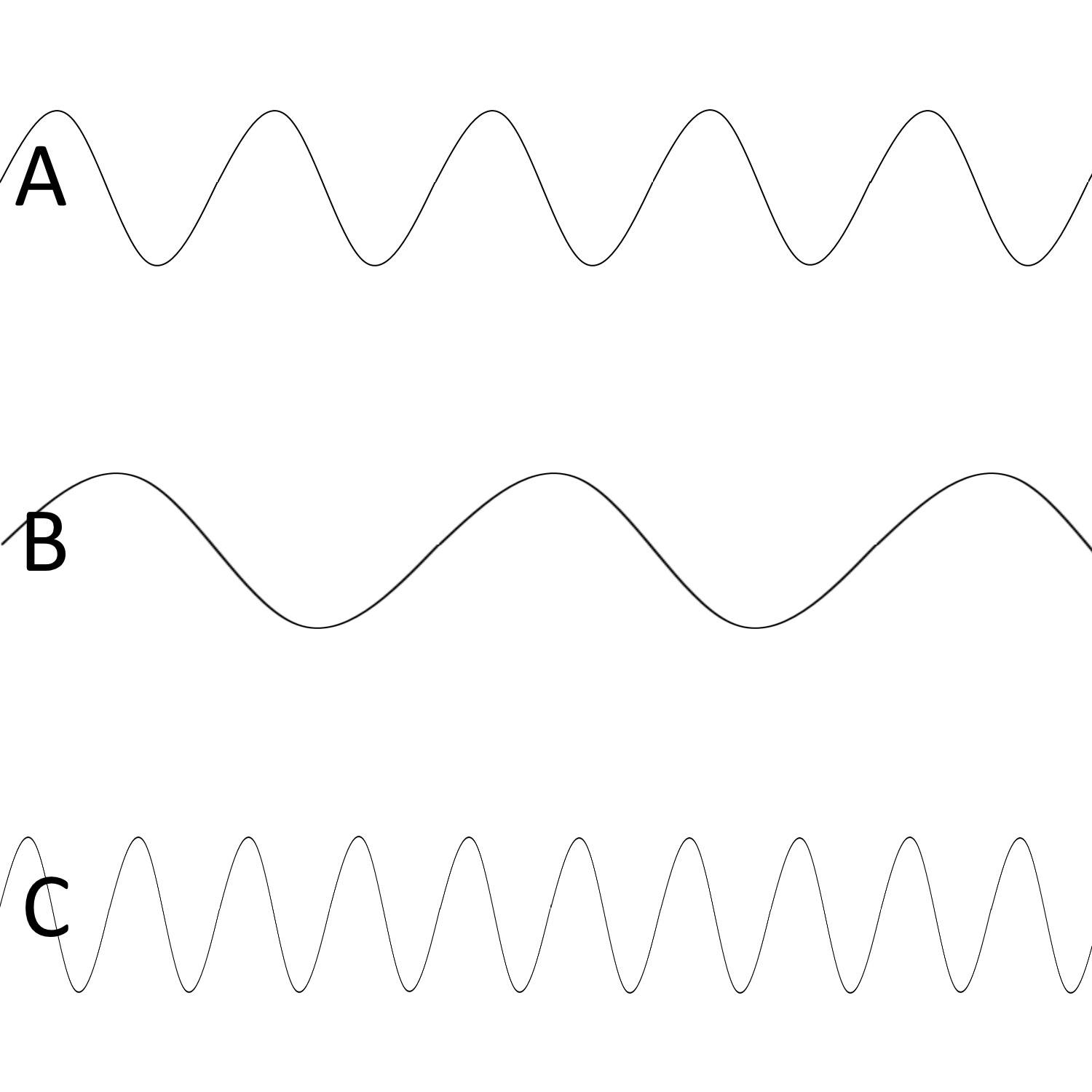
Which wave has the largest wavelength?

a)

A

b)

B

c)

C

d)

None (same wavelength)

31.

A EM wave is an example of a

a)

transverse wave

b)

longitudinal wave

c)

both

d)

none

32.
Wave with shortest wavelength
a)
UV
b)
radio waves
c)
gamma
d)
visible
33.
Which section of the spectrum is the ONLY one we can see?
a)
X-rays
b)
Visible Light
c)
Gamma Rays
d)
Ultraviolet Rays
34.
Which has the LONGEST wavelength and, therefore, the lowest frequency/energy
a)
Gamma Rays
b)
Radio Waves
c)
Visible Light
d)
Infrared rays
35.
Put the visible light colors in order from longest wavelength to shortest wavelength
a)
Violet, Indigo, Blue, Green, Orange, Yellow, Red
b)
Red, Yellow, Green, Orange, Violet, Blue, Indigo
c)
Red, Orange, Yellow, Green, Blue, Indigo, Violet
36.
Which waves are the type that can give us suntans and sunburns?
a)
Infrared radiation
b)
Ultraviolet radiation
c)
Radio waves
d)
X-rays
37.
Select the correct order of waves on the Electromagnetic Spectrum
a)
Radio, Micro, Infra, Visible, Ultra, X-ray, Gamma
b)
Gamma, X-ray, Ultra, Vis, Infra, Micro, Radio
c)
Vis, Micro, Infra, Ultra, X-ray, Gamma, Radio
d)
Micro, Radio, Vis, Infra, Ultra, X-ray, Gamma
38.

Which of the following best describes radio waves?

a)

used to identify heat signatures of people lost in the wilderness

b)

used to send communications, including video, to astronauts

c)

widely used in the cooking industry

d)

used in tanning beds

39.

Which of the following best describes infrared light?

a)

used to identify heat signatures of people lost in the wilderness

b)

used to send communications, including video, to astronauts

c)

widely used in the cooking industry

d)

used in tanning beds

40.
 A wave has frequency of 50 Hz and a wavelength of 10 m. What is the speed of the wave?
a)
500 m/s
b)
50 m/s
c)
5 m/s
d)
0.5 m/s
41.
 A wave has frequency of 5 Hz and a speed of 25 m/s. What is the wavelength of the wave?
a)
25 m
b)
125 m
c)
5 m
d)
25 m/s
42.
A wave has wavelength of 10 m and a speed of 340 m/s. What is the frequency of the wave?
a)
34 m/s
b)
3400 Hz
c)
3400 m/s
d)
34 Hz
43.

A guitar string vibrates with a frequency of 320 hz. If the wavelength of the vibration is 0.23 meters what is the speed of the wave?

a)

320.23 m/s

b)

1391.3 hz

c)

73.6 m/hz

d)

73.6 m/s

44.

The blue-throated hummingbird flaps its wings 300 times a minute. What is its frequency?

a)

5 hz

b)

300 hz

c)

18000 Hz

d)

a lot?

45.
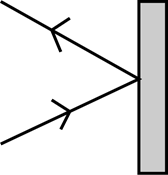
The illustration shows a light ray striking an object.
In the illustration, the light ray striking the object is-
a)
absorbed
b)
stopped
c)
reflected
d)
refracted
46.
The ray of light that strikes a reflecting surface is called ________.
a)
incident ray
b)
reflected ray
c)
normal ray
d)
none of the above
47.
The angle produced as a source of light bounces off a reflecting surface is called ______.
a)
angle of crookedness
b)
angle of reflection
c)
angle of incidence
d)
angle of bounce
48.

In the diagram, which letter represents the angle of incidence?

a)

A

b)

B

c)

C

d)

D

49.
........... – the angle between the normal and the reflected ray.
a)
Angle of incidence
b)
Angle of reflection
c)
Angle of coincidence
d)
Angle of direction
50.
The imaginary line perpendicular to a reflecting surface is called _____.
a)
crooked line
b)
parallel line
c)
angular line
d)
normal line
51.

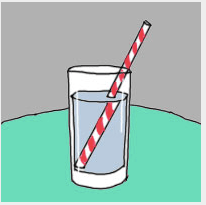
Why does the straw appear to be bent?

a)

light is reflected

b)

light is absorbed

c)

light is turned

d)

light is refracted

52.
A satellite that travels in an orbit that exactly matches the Earth's rotation is traveling in a(n)
a)
low Earth orbit (LEO).
b)
low stationary orbit (LSO).
c)
geostationary orbit (GEO).
d)
high Earth orbit (HEO).
53.
A satellite which takes 24 hours for 1 complete orbit is called a
a)
polar satellite
b)
geostationary satellite