wayground logo

Free Printable Worksheets

NEW

Font size

S
M
L
XL
Worksheets

7th Grade Exam 1

Total questions: 74

Worksheet time: 1hrs 5mins
Name
Class
Date
1.
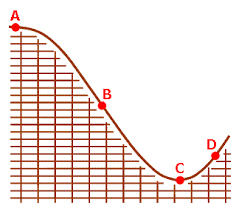
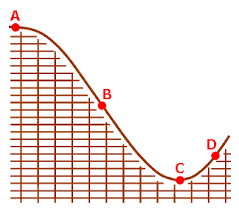
At which point(s) on the roller coaster is the gravitational potential energy at its maximum?
a)
A
b)
B
c)
C
d)
D
2.
At which point(s) on the roller coaster is the kinetic energy at its maximum?
a)
A
b)
B
c)
C
d)
D
3.
What does the Law of Conservation of Energy state?
a)
Energy cannot be created or destroyed
b)
Nothing can exchange energy
c)
Energy will increase over time.
d)
Energy will decrease over time.
4.
What is mechanical energy?
a)
It is what metal creates when heated.
b)
All potential and kinetic energy in a system.
c)
It is motion of all matter.
d)
Energy of momentum.
5.
Energy of motion is which type of energy?
a)
Potential
b)
Kinetic
c)
Sound
d)
Gravitational
6.
What type of energy is in this picture?
a)
Kinetic
b)
Potential
c)
Chemical
d)
Sound
7.
As a pendulum swings from its highest to lowest position, what happens to its kinetic and potential energy? 
a)
The PE and KE increase and decrease together
b)
The PE decreases while the KE increases 
c)
Impossible to know without knowing the mass  
8.
A change from one form of energy to another is called ___________.
a)
work
b)
power
c)
mechanical
d)
energy transformations
9.
Which energy transformation below matches?
A book falling?
a)
chemical to sound and heat
b)
kinetic to sound and heat
c)
electrical to sound and heat
10.
Which energy transformation below matches?
Water moving over a dam to move a generator?
a)
kinetic to chemical
b)
kinetic to electrical
c)
solar to electrical
11.
Which energy transformation below matches?
Animals eating food?
a)
electrical to potential
b)
chemical to kinetic
c)
potential to chemical
12.

What kind of energy does an object possess when it's resting on top of the hill?

a)

Potential Energy

b)

Chemical Energy

c)

Kinetic Energy

d)

All of the above

13.

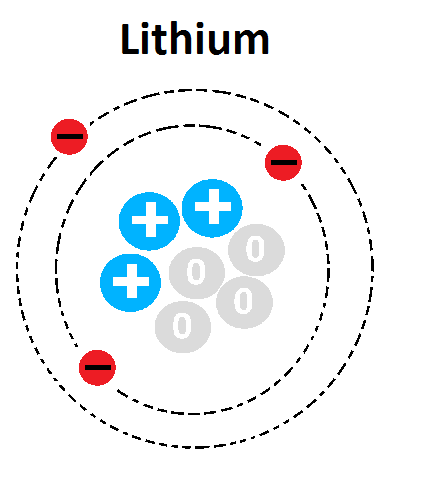
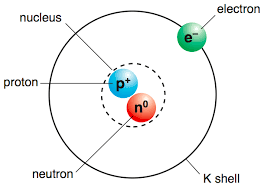
What element is represented in this Bohr Model?

a)

Carbon

b)

Hydrogen

c)

Aluminum

d)

Lithium

14.
What is the mass number of this atom?
a)
1
b)
3
c)
4
d)
7
15.
What is the name of this element?
a)
Lithium
b)
Boron
c)
Carbon
d)
Neon
16.
What is the atomic number of this atom?
a)
2
b)
4
c)
6
d)
none of the above
17.
Isotopes are elements with a different amount of
a)
protons
b)
neutrons
c)
electrons
d)
atoms
18.
an element will always have the same number of 
a)
neutrons
b)
protons
c)
isotopes
d)
atoms
19.

What is the atomic number of this element?

a)

17

b)

18

c)

35

d)

35.453

20.

How many electrons can fit on the 1st energy level (orbital) for any Bohr Model?

a)

2

b)

6

c)

8

d)

10

21.
What does the nucleus of an atom contain?
a)
Electrons and neutrons
b)
Protons and neutrons
c)
Neutrinos and positrons
d)
Electrons and megatrons
22.

What element is represented in this Bohr Model?

a)

Carbon

b)

Hydrogen

c)

Aluminum

d)

Lithium

23.
What is the name of this element?
a)
Lithium
b)
Boron
c)
Carbon
d)
Neon
24.
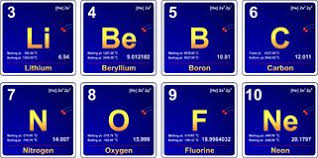
What is the name of this element?
a)
Beryllium
b)
Boron
c)
Barium
d)
Bromine
25.
How many electrons does potassium K contain? (click to see image)
a)
19
b)
39
c)
20
d)
40
26.
How many electrons does Si contain? (click to see image)
a)
14
b)
28
c)
2
d)
None of these
27.
What is the mass number of this atom?
a)
1
b)
3
c)
4
d)
7
28.
Carbon-12 has 6 protons and 6 neutrons. How many electrons will orbit the nucleus?
a)
12
b)
6
c)
3
d)
18
29.

Which subatomic particle has a positive charge?

a)

proton

b)

neutron

c)

electron

d)

midichlorian

30.

Which subatomic particle has a negative charge?

a)

proton

b)

neutron

c)

electron

d)

cybertron

31.

What is the center of an atom called?

a)

The headquarters

b)

The centrometer

c)

The hypothesis

d)

The nucleus

32.

The nucleus of an atom contains which subatomic particles?

a)

protons and electrons

b)

protons and neutrons

c)

electrons and neutrons

d)

protons, electrons, and neutrons

33.

What is the atomic mass of Neon?

a)

10

b)

20.18

c)

10.18

d)

30.18

34.

How many electrons does a neutral Hydrogen atom have?

a)

1

b)

2

c)

3

d)

0

35.

How many electrons does an atom of Krypton have?

a)

36

b)

83.80

c)

48

d)

119.80

36.

How many protons are present in phosphorus?

a)

15

b)

16

c)

31

d)

46

37.
What is the atomic number for an element with 41 neutrons and a mass number of 80?
a)
39
b)
41
c)
80
d)
121
38.
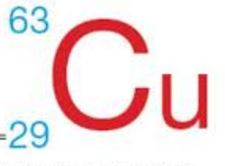
What is the atomic mass of Copper?
a)
63
b)
29
c)
34
d)
92
39.
A proton is....
a)
A negatively charged subatomic particle
b)
A positively charged subatomic particle
c)
A neutrally charged subatomic particle
d)
The only subatomic particle located in the nucleus
40.
A neutron has a charge of
a)
+2
b)
No charge
c)
-1
d)
+1
41.
What does the atomic mass tell you?
a)
Basically,the number of electrons and protons
b)
The number of neutrons
c)
Basically, the number of protons and neutrons
d)
The number of protons.
42.
An element's identity is determined by the number of
a)
electrons.
b)
protons.
c)
neutrons.
d)
valence.
43.
Elements can have the same number of protons?
a)
True
b)
False
44.
When an atom loses a valence electron, it becomes a(n) _____________ ion.
a)
positive
b)
negative
c)
neutral
d)
polyatomic
45.
How many valence electrons in this structure?
a)
6
b)
5
c)
4
d)
7
46.
Which subatomic particles contribute the most to the mass of an atom?
a)
Protons, Neutrons, Electrons
b)
Protons only
c)
Protons and Electrons
d)
Protons and Neutrons
47.
The first energy level can hold up to how many electrons?
a)
8
b)
4
c)
2
d)
5
48.

Do electrons contribute to the atomic mass of an atom?

a)

YES of course, they are there for a reason

b)

NO, they are useless to the atom

c)

No, their mass is too small to contribute to the mass

d)

YES, silly, they are the superstars of the atom

49.
The number of protons is equal to 
a)
the atomic number
b)
the number of neutrons
c)
the energy levels
d)
the periodic table groups
50.

Which point on the roller coaster's path represents the maximum potential energy?

a)
b)
c)
d)
51.

When gasoline is burned in a car engine, ________ energy is converted into _________ energy.

a)

heat, chemical

b)

chemical, potential

c)

mechanical, chemical

d)

chemical, mechanical

52.

Energy is transferred in solids by conduction, which means that

a)

heat travels in both directions.

b)

heat travels from the cooler object to the hotter object.

c)

heat travels from the hotter object to the cooler object.

d)

heat does not travel between objects of different temperatures.

53.
Energy can be created.
a)
True
b)
False
54.
Energy cannot be destroyed.
a)
True 
b)
False
55.
Imagine dropping a basketball. When would it have the most gravitational potential energy?
a)
When it is closest to the ground
b)
When it is at the highest point
c)
When it is halfway down
d)
It has the same amount of gravitational PE at all points
56.
Food has _______ potential energy that our bodies transform into kinetic energy.
a)
Elastic
b)
Nuclear 
c)
Gravitational
d)
Chemical
57.
Energy is the ability _____________.
a)
to do work
b)
to power things
c)
to move objects
d)
to turn on a light
58.
Energy in motion is called:
a)
Potential Energy
b)
Kinetic Energy
59.
Energy that is stored is called:
a)
Kinetic Energy
b)
Potential Energy
60.
When you stretch a rubber band, you are storing __________ energy. 
a)
kinetic 
b)
potential
c)
none of the above
d)
all of the above 
61.
At which point is potential energy greatest?
a)
W
b)
X
c)
Y
d)
Z
62.
What kind of energy is in a rock at the edge of a cliff?
a)
Potential
b)
Kinetic
63.
What kind of energy is in flowerpot sitting on a windowsill?
a)
Potential
b)
Kinetic
64.
When an object is not moving and is storing energy, it has __________ energy.
a)
kinetic
b)
mechanical
c)
potential
d)
still
65.
Click to look at the picture. 
The picture is an example of _____ .
a)
gravity
b)
potential energy
c)
kinetic energy
d)
friction
66.
At which point is potential energy greatest?
a)
W
b)
X
c)
Y
d)
Z
67.
The faster an object moves, the ________ kinetic energy it has. 
a)
more
b)
less
c)
none of the above
d)
all of the above 
68.
What would have the greatest kinetic energy?
a)
A car driving down a hill.
b)
A person running down a hill. 
c)
A ball rolling down a hill. 
69.

What is the atomic mass of Neon?

a)

10

b)

20.18

c)

10.18

d)

20

70.
How many protons are in Beryllium?
a)
4
b)
9
c)
5
d)
2
71.
How many neutrons are in a Gold atom?
a)
79
b)
196
c)
118
d)
275
72.

What is the atomic mass of Copper?

a)

63.546

b)

29

c)

29.546

d)

92

73.

How many electrons does a Copper atom have?

a)

63

b)

29

c)

92

d)

34

74.

What is the atomic mass of Gold?

a)

79

b)

196.97

c)

79.97

d)

275