
 Worksheets
Tissues Types Review
Total questions: 70
Worksheet time: 46mins
Which epithelial tissue has cells that are flat and all of the cells touch the basement membrane?
Simple cuboidal
simple squamous
stratified squamous
stratified columnar
A single layer of epithelial tissue is classified as
stratified
singular
simple
squamous
Which of the four major types of tissues is the most abundant and widely distributed?
Epithelial
Muscle
Connective
Nervous
What is a tissue?
A group of cells with similar shape and size
A group of tissues with similar structure and function
A group of organs with similar shape and size
A group of cells with similar structure and function
Which of the following is not an example of connective tissue?
Blood
Bone
Cartilage
Skin
What type of epithelial tissue has many layers of tightly compacted cubed-like cells that aid in protection?
Simple cuboidal
Simple columnar
stratified cuboidal
stratified squamous
involuntary, intercalated disks, one nucleus, striated, found in the heart
cardiac muscle tissue
smooth muscle tissue
skeletal muscle tissue
voluntary, multi-nucleated, striated, found attached to bone
cardiac muscle tissue
smooth muscle tissue
skeletal muscle tissue
involuntary, not striated, one nucleus, found in hollow organs
cardiac muscle tissue
smooth muscle tissue
skeletal muscle tissue
This material is found in between the cells in any connective tissue
(a)
Transitional epithelial tissue is capable of this function
(a)

___________ epithelium is tissue that changes in response to tension and is found in organs that need to stretch.
simple squamous
transitional
stratified squamous
cuboidal

________ cells appear to be layered due to irregularly placed nuclei but each cell touches the basement membrane.
transitional
pseudostratified
cuboidal
columnar
_______ cells exist on the skin and on the surface of organs, blood vessels, and body cavities
muscular
cardiac
epithelial
embryonic
Which of the following is an external function of epithelial cells.
helps with blood flow
protects the heart and lungs
protects body from drying out, injury, and bacterial invasion
none of the above
What is an internal function of epithelial cells.
protects outer layer of the body
helps with blood flow
protects, sweeps up impurities, secretes mucus, absorbs
none of the above

This type of tissue relays messages
epithelial
connective
muscular
nervous
The epidermis is composed of what type of tissue?
Stratified Squamous Epithelium
Pseudostratified Columnar Epithelium
Simple Cuboidial Epithelium
Hyaline Connective Tissue
Which type of muscle tissue lacks striations?
Skeletal Muscle Tissue
Smooth Muscle Tissue
Cardiac Muscle Tissue
Nervous Tissue
The four basic types of tissue we discussed in class are Nervous, Muscle, Skeletal, and Connective.
True
False
Which type of tissue provides support and flexibility?
Hyaline Cartilage
Adipose Connective
Squamous Epithelium
Bone Connective
Select all below that describe the functions of connective tissues in the body:
bind structures
provide support and protection
store fat
conduct nerve impulses
What is the space between connective tissue cells filled with fibers, molecules, and fluid?
tight cell junction
intercalated disks
extracurricular space
extraceullular matrix
What's the type of cartilage most common the body?
fibrocartilage
elastic
hyaline
Epithelial tissue regenerate really quickly
True
False
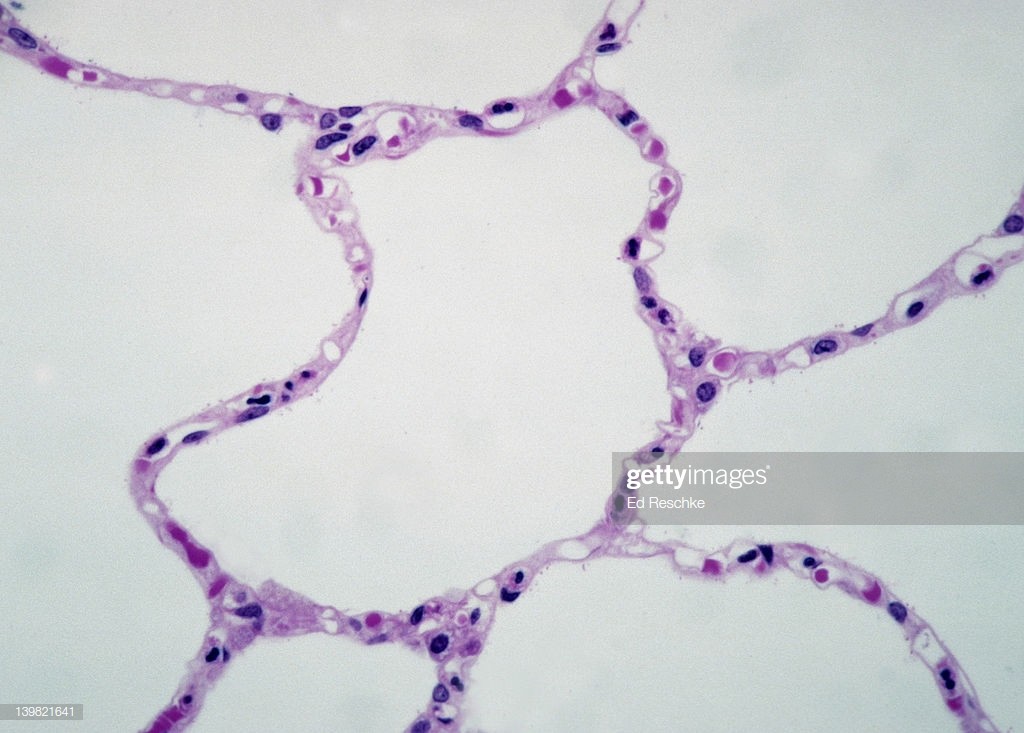
What type of epithelium lines the air sacs in this slide of lung tissue?
simple cuboidal
simple columnar
simple squamous
pseudostratified columnar
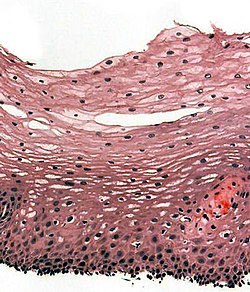
What type of epithelium is this and where might you find it?
stratified squamous ; skin
pseudostratified columnar ; trachea
simple squamous ; lung
simple cuboidal ; kidney tubules


Which types of cells found in this epithelium produce mucus?
goblet cells
goblin cells
neutrophils
eosinophils
These short hairlike projections are responsible for moving objects along the body.
villi
micro villi
cilia
cillia

What type of epithelium?
Stratified columnar.
Simple cuboidal.
Simple columnar.
Stratified cuboidal.

What type of epithelium?
Non-Ciliated pseudostratified columnar epithelium.
Ciliated pseudostratified columnar epithelium.
Simple squamous epithelium
Stratified squamous epithelium.
Epithelial tissue that can stretch and change in shape when subjected to stress would be
stratified squamous
pseudostratified columnar
simple columnar
transitional

Reticular Connective Tissue
Elastic Connective Tissue
Dense irregular connective tissue
Dense regular connective tissue
Areolar
Reticular
Dense Irregular
What is the cell type that produces the matrix in loose connective tissue? Remember the matrix is both ground substance and fibers.
Blood Cell
Macrophage
This white blood cell is a phagocyte (it eats other cells) that lives inside of areolar tissue.
This cell is large and widely distributed. It is located near blood vessels and involved with the immune response because it releases histamines and heparin
This type of connective tissue forms very strong, rope-like structures such as tendons and ligaments.
Areolar
Dense regular
Cartilage
Bone

Which connective tissue contains a gel-like matrix and has cells in small lakes called lacunae?
Bone
Cartilage
Blood
Adipose

This type of cartilage is smooth, highly resistant to wear, and is typically found at the ends of bones at joints.
Hyaline
Fibrocartilage
Elastic
Adipose
Found in between the vertebrae, this type of connective tissue contains many collagen fibers and chondrocytes.
Hyaline cartilage
Fibrocartilage
Dense regular connective tissue
Reticular connective tissue
This type of cartilage provides the framework of the external ears and parts of the larynx.
Hyaline
Elastic
Fibro-
All of the above

Name the tissue type
Skeletal muscle
Cardiac muscle
Smooth muscle
dense regular connective tissue
fibocartilage

Name this tissue type
Skeletal muscle
Cardiac muscle
Smooth muscle
dense regular connective tissue
fibrocartilage
Which type(s) of muscle tissue are under voluntary control?
Cardiac Muscle only
Smooth Muscle only
Skeletal Muscle only
Skeletal and Smooth muscle
Cardiac and Smooth muscle
What is the function of the nerve cells?
They are responsable of your defense mechanism.
They transmit signals or messages to other neurons, organs or glands.
They transmit substances to your endocrine system to produce hormones.

Dendrite - branched projections of the neuron cell body that _______________________ from other neurons
receive messages
get energy
receive nutrients
Intercalated discs are
gap junctions that let cells "talk"
desmosomes that prevent muscle from ripping
tight junctions that prevent fluids from being leaked
The part of the neuron that typically conducts nerve impulses away from the cell body is the ________.
dendrite
cell body
synaptic cleft
axon

