
 Worksheets
Chemistry review
Total questions: 50
Worksheet time: 56mins
Which describes how mixtures differ from substances?
Mixtures are homogeneous
Mixtures are liquids
Mixtures can be separated physically
Mixtures contain only one kind of atom
Which is a chemical property?
the ability to be compressed
the ability to be stretched into a thin wire
the ability to melt at low temperature
the ability to react with oxygen
You drop a sugar cube into a cup of hot tea. What causes the sugar to disappear in the tea?
It breaks into elements
It evaporates
It melts
It mixes evenly
Which observation is a sign of a chemical change?
bubbles escaping from boiling water
iron filings sticking to a magnet
lights flashing from fireworks
water turning to ice in a freezer
Zinc, a solid metal, reacts with a hydrochloric acid solution. Which will increase the reaction rate.
cutting the zinc into smaller pieces
decreasing the concentration of the acid
lowering the temperature of the zinc
pouring the acid into a larger container
If you add 5g of sugar to 150g of water what will the mass of the solution be after the sugar dissolves into the water.
5g
145g
150g
155g
Which is NOT represented in a chemical equation?
chemical formula
product
reaction rate
conservation of mass
How can you verify that a chemical reaction has occurred?
Check the temperature of the starting and ending substances
Compare the chemical properties of the starting substances and ending substances
Look for a change in state
Look for bubbling of the starting substances
Which equation shows that atoms are conserved in the reaction?
CH4 + O2 -> CO2 + H2O
CH4 + O2 -> CO2 + 2H20
CH4 + 2O2 -> CO2 + 2H2O
2CH4 + O2 -> 2CO2 + H2O
Which occurs before new bonds can form during a chemical reaction?
The atoms in the original substance are destroyed
The bonds between atoms in the original substances are broken
The atoms in the original substances are no longer moving
The bonds between atoms in the original substance get stronger
Which type of chemical reaction has only one reactant?
decomposition
double-replacement
single-replacement
synthesis
Which element is always a reactant in a combustion reaction?
carbon
hydrogen
nitrogen
oxygen

Is this an example of a physical or chemical change?
physical
chemical
When a log burns in a fire, _____.
A physical change has occurred
Mass is gained
Mass is lost
New substances are formed
When a newspaper is left in direct sunlight for a few days, the paper begins to turn yellow. The yellow color is evidence of a _____.
Physical Property
Chemical Property
Physical Change
Chemical Change
Solution A has a mass of _____ g. Solution B has a mass of 20 g. When they are mixed, the total mass is 120 g. Find the mass of Solution A.
60 g
180 g
100 g
Not enough information
The ability of a pond to freeze over in winter is a _____.
physical change
chemical change
physical property
chemical property

How does this figure show the conservation of mass?
The mass of solid A and the mass of liquid B combine to equal the mass of mixture C.
Solid A is shown to react with liquid B to form a new substance C.
Solid A and liquid B show only a color change
A chemical reaction occurs when solid A dissolves in liquid B


Annie learns that the compound sulfuric acid is called the universal chemical. The acid is used in everything from gasoline to paper. Annie uses beads in three different colors to model sulfuric acid. Based on the model, what is the chemical formula of sulfuric acid?
H2SO4
O2H4S
S4O2H
S2HO4
Kim understands that there are several signs that indicate a chemical reaction has occurred. What is the best way to be certain that a chemical reaction has occurred?
Some bubbles form.
A color change occurs.
The materials do not react.
A new substance forms.
Which of the following is not a sign of a chemical change?
unexpected color change
unexpected temperature change
precipitate was formed
the size of the substance changed


What information does a subscript number tell us?
the number of atoms per element
the number of molecules per formula

How many molecules are in the Reactant?
1
2
3
4
Which formula has 6 atoms of Carbon, 12 atoms of Hydrogen, and 6 atoms of Oxygen.


Photosynthesis
Endothermic
Exothermic
Cellular Respiration
Endothermic
Exothermic

What type of reaction involves the breaking down of a substance into simpler substances?
Single Replacement Reaction
Double Replacement Reaction
Synthesis Reaction
Decomposition Reaction
Combustion reactions will always involve
Oxygen and a solid
Liquid nitrogen and heat
Oxygen and heat/energy
CO and H2O
H2 + O → H2O
What reaction has the following general formula:
A + CD --> C + AD
Synthesis
Decomposition
Single Replacement
Double Replacement
Combustion
H2 + O → H2O

Which of the following would provide the evidence that the number of atoms present before a chemical reaction is equal to the number of atoms present after the chemical reaction?
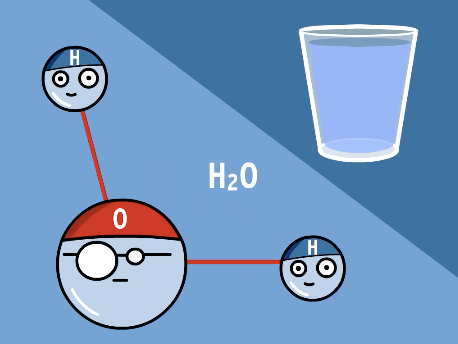
4 grams of hydrogen and 32 grams of oxygen will combine to form:
36 grams of water
28 grams of hydroxide
32 grams of oxygen
36 grams of deuterium

Why does this picture demonstrate the Law of Conservation of Mass?
the number of atoms of each element are the same on both sides
they start out separate and end up combined
the same elements are used
it doesn't demonstrate the Law of Conservation of Mass
According to the Law of Conservation of Mass, what happens to the wood and oxygen when it is burned?
The wood disappears.
It stays the same chemically.
The atoms in the wood and oxygen rearrange and form smoke and ash.
Nothing.
The Law of Conservation of Mass States
Energy cannot be created nor destroyed, it can only change form.
Mass cannot be created nor destroyed, it can only change form.
Mass can be created or destroyed, it cannot change form.
2HgO → 2Hg + O2

