wayground logo

Free Printable Worksheets

Font size

S
M
L
XL
Worksheets

Pre-AICE: Atoms, Isotopes, Bohr, Lewis, Trends PTE, E- Confi

Total questions: 92

Worksheet time: 2hrs 59mins

Name
Class
Date
1.

If Oxygen has an atomic mass of 16. What does this tell you about oxygen?

a)

the number of electron shells in an oxygen atom

b)

the number of protons and neutrons in the nucleus of an oxygen atom

c)

the number of electrons orbiting the nucleus of an oxygen atom

d)

the number of electron shells in an oxygen atom

2.

Aluminum (Al) is an element that is very malleable and is a good conductor of heat and electricity. Aluminum must be a.......

a)

metalloid

b)

non-metal

c)

Halogen

d)

metal

3.

Which element has more in common with Argon (Ar)?

a)

Chlorine (Cl) because it's electrons fill the same number of shells as Argon (Ar)

b)

Neon (Ne) because it's in the same period as Argon (Ar)

c)

Neon (Ne) because it's in the same family/group as Argon (Ar)

d)

Chlorine (Cl) because it's in the same family/group as Argon (Ar)

4.

This atom has....

a)

4 protons

b)

5 electrons

c)

6 protons

d)

6 neutrons

5.

Most of the mass of an atom is because of the total mass of the .......

a)

The electrons and protons

b)

The protons & neutrons

c)

The electrons and neutrons

d)

The electron cloud

6.

The horizontal rows on the PTE are

a)

The groups, The group # tells how many electron shells are required to house the electrons of one atom of each element.

b)

The families, The family # tells how many electron shells are required to house the electrons of one atom of each element.

c)

The period. It list elements that are similar in chemical and physical properties

d)

The period, The period # tells how many electron shells are required to house the electrons of one atom of each element.

7.

The vertical columns on the PTE are

a)

The groups. The group # tell how many electron shells are required to house the electrons of one atom of each element.

b)

The period. It list the elements that are similar in chemical and physical properties.

c)

The families/group. The family/group, list the elements that are similar in chemical and physical properties.

d)

increase in atomic #, by 1 as you go down the column

8.

In the Atom the......

a)

Electrons have a positive charge

b)

Neutrons have a neutral charge

c)

Protons have a neutral charge

d)

Neutrons have a negative charge

9.

How many electron shells does a Potassium (K) atom have?

a)

4

b)

1

c)

11

d)

141

10.

How many electrons does an atom of silver have?

a)

107.87

b)

60.87

c)

60

d)

47

11.

What is the atomic # of Sodium?

a)

22.99

b)

23

c)

11

d)

33

12.

Which group reacts explosively with water?

a)

Metals

b)

Alkali metals

c)

Transition metals

d)

Non-metals

13.

The atomic mass tells you....

a)

The average # of protons and neutrons in the nucleus of one atom of an element

b)

The total # of electrons and neutrons in the nucleus of one atom of an element

c)

The total # of electrons in the nucleus of one atom of an element

d)

The total # of neutrons in the nucleus of one atom of an element

14.

Metalloids

a)

Are on the left of the periodic table

b)

Divide the Halogens and Alkali metals on the PTE

c)

Are on the right of the PTE

d)

Divide the metals and non-metals on the PTE

15.

Brittle, dull, and poor conductors of heat and electricity is a description of?

a)

Halogens

b)

metals

c)

non-metals

d)

alkali metals

16.

The element in period 5, group 4 is?

a)

Dubnium (Db)

b)

Antimony (Sb)

c)

Tin (Sn)

d)

Zirconium (Zr)

17.

As you move from left to right on the periodic table

a)

The atomic mass increases by 1

b)

The electron shells increase by 1

c)

The atomic number increases by 1

d)

The # of neutrons increase by 1

18.

Which of these particles is the smallest?

a)

electron

b)

neutron

c)

atom

d)

proton

19.

The smallest particle of an element that retains the same chemical properties of that element is?

a)

an atom

b)

an electron

c)

a proton

d)

a neutron

20.

Good conductors of heat, malleable, and shiny describes....

a)

metals

b)

non-metals

c)

halogens

d)

metalloids

21.

A pure substance which cannot be broken down by chemical means, consisting of atoms which have identical numbers of protons in their nuclei is a(n)

a)

atom

b)

element

c)

Proton

d)

chemical substance

22.

All atoms of the periodic table are considered to be neutral because.....

a)

They all have neutrons which are neutral in charge

b)

Electrons and protons do opposite things in the atom

c)

Neutrons and electrons have the same charge

d)

The number of electrons equal the number of protons

23.

An atom that does not have an equal number of protons and neutrons is called.....

a)

A quark

b)

Not neutral

c)

An isomer

d)

An isotope

24.

The subatomic particle that identifies an atom of an element is the

a)

The electron

b)

Proton

c)

The isotope

d)

The Isomer

25.

If Oxygen has an atomic mass of 16. What does this tell you about oxygen?

a)

the number of electron shells in an oxygen atom

b)

the number of protons and neutrons in the nucleus of an oxygen atom

c)

the number of electrons orbiting the nucleus of an oxygen atom

d)

the number of electron shells in an oxygen atom

26.

___________ are the smallest unit of an element that maintains the properties of that element.

a)

Atoms

b)

Elements

c)

Compounds

d)

Mixtures

27.

Elements are broadly classified as metals, nonmetals, and _________________.

a)

compounds

b)

organic

c)

metalloids

d)

Metallica

28.
In the center of the atom is something called _____
a)
the kernel
b)
the cell
c)
the nucleus
d)
the focal point
29.
What are the names of the particles in the nucleus?
a)
protons and neutrons
b)
protons and electrons
c)
photons and neutrons
d)
nucleons and protons
30.
Near the outside of an atom, you'd find _____
a)
electrons
b)
protons
c)
neutrons
d)
photons
31.
Old pictures of the atom from science textbooks are wrong because _____
a)
they show the nucleus at the center
b)
they're not drawn to scale
c)
the nucleus is drawn too small
d)
the electrons are on the outside
32.
The protons and neutrons are inside of the nucleus, and contain almost all of _____
a)
the charge of the atom
b)
the volume of the atom
c)
the mass of the atom
d)
the kinetic energy of the atom
33.
In terms of matter, the atom is almost entirely filled with _____
a)
orbiting electrons
b)
charged protons
c)
heavy neutrons
d)
empty space
34.
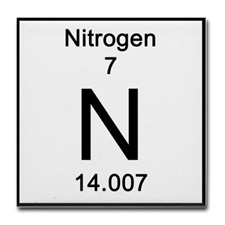
What is the number of protons that the element in this image contain?
a)
14
b)
7
c)
15
d)
18
35.
What is the atomic mass of "F"
a)
9
b)
18
c)
17
d)
19
36.
electrons have this type of charge?
a)
negative
b)
positive
c)
neutral
37.
The positive particles of an atom are 
a)
electrons 
b)
positrons 
c)
neutrons 
d)
protons 
38.
What is the mass of an atom if it has 11 protons, 12 neutrons, and 11 electrons?
a)
22
b)
11
c)
34
d)
23
39.
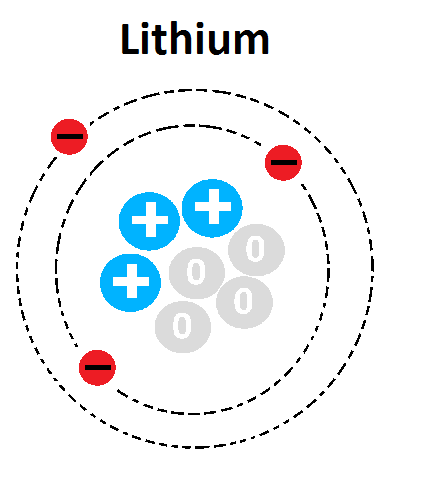
What element is represented in this Bohr Model? 
a)
Carbon
b)
Hydrogen
c)
Aluminum
d)
Lithium
40.
What is the mass number of this atom?
a)
1
b)
3
c)
4
d)
7
41.
What group does this element belong to?
a)
Group 1: Alkali metals
b)
Group 18: Noble Gases
c)
Group 2: Alkaline-Earth Metals
d)
Group 17: Halogens
42.
What's a valence electron?
a)
electrons in the second energy level
b)
electrons in the outermost energy level
c)
the atomic number
d)
electrons in the first level
43.
Identify the element in the picture
a)
Boron
b)
Carbon
c)
Nitrogen
d)
Lithium
44.
Which element is found in period 3 group 2?
a)
Sodium (Na)
b)
Magnesium (Mg)
c)
Yttrium (Y)
d)
Boron (B)
45.
Vertical (up and down) columns in the periodic table are called _________ of elements and have similar properties. 
a)
groups
b)
periods
46.
One physical characteristic of metals is...
a)
Luster (shine)
b)
Weight
c)
All are gases. 
47.
_________are not good conductors of heat or electricity.
a)
Metals
b)
Metalloids
c)
Nonmetals
48.
The horizontal (left to right) rows on the periodic table are known as
a)
periods.
b)
atoms.
c)
groups or families.
d)
valence electrons.
49.
An example of elements from period 3 that have the same number of electron shell
a)
Hydrogen and Oxygen
b)
Sodium and Potassium
c)
 Sodium and Magnesium
d)
Helium and Hydrogen
50.
What do the elements highlighted orange have in common?
a)
The same number of protons
b)
The same number of electrons
c)
The same number of neutrons
d)
The same number of electrons shells
51.
In which region would the nonmentals be found?
a)
1
b)
4
c)
3
d)
5
52.
The blue elements are called 
a)
metals
b)
nonmetals
c)
metalloids
d)
noble gases
53.
The elements along the staircase are called 
a)
metals
b)
nonmetals
c)
metalloids
d)
noble gases
54.

Isotopes are atoms of the same element with different #’s of __________ & therefore different __________.

a)

neutrons ; atomic numbers

b)

protons ; atomic numbers

c)

electrons ; mass numbers

d)

neutrons ; mass number

55.
How many neutrons does an atom of the isotope Neon-22 have?
a)
12
b)
10
c)
22
d)
20
56.
Two isotopes of carbon are carbon-12 and carbon-14.  These isotopes differ from one another by two protons.
a)
true
b)
false
57.

An element has two naturally occurring isotopes. One is 10.013 amu and is 19.9% abundant. The other is 11.01 amu and is 80.1% abundant. What is the average atomic mass? What element is it?

a)

9.012 Beryllium

b)

12.011 Carbon

c)

6.941 Lithium

d)

10.812 Boron

58.

There are two primary isotopes found in any sample of copper: copper-63 and copper-65. The isotope 65Cu composes 69.2% of the sample and 63Cu comprises the other 30.8%. Based on this data, what is the atomic mass of copper?

a)

29 amu

b)

63.546 amu

c)

64.4 amu

d)

63.6 amu

59.
Which element is pictured?
a)
neon
b)
fluorine
c)
magnesium
d)
argon
60.
This orbital diagram represents:  
a)
C
b)
B
c)
N
d)
O
61.
What is incorrect about this orbital diagram?
a)
Both arrows in the 2p box should be pointing up
b)
There is nothing incorrect with this diagram
c)
In the 2p box there should only be 1 electron in the first 2p box and one in the 2nd 2p box
d)
All the arrows should be pointing up.
62.

What atom matches this electron configuration?

1s22s22p63s23p64s23d10

a)

zinc

b)

copper

c)

nickel

d)

germanium

63.
What electron configuration matches an oxygen atom?
a)
1s22s22p63s2, 3p64s23d104p5
b)
1s22s22p4
c)
1s22s22p6
d)
1s22s22p63s23p64s23d1
64.
How many electrons can the first energy level hold?
a)
1
b)
2
c)
8
d)
0
65.
The electron configuration of an atom is 1s22s22p6.  The number of electrons in the atom is 
a)
3
b)
6
c)
8
d)
10
66.

Which electron configuration belongs to Cl-?

a)

1s2 2s2 2p6 3s2 3p5

b)

1s2 2s2 2p6 3s2 3p6

c)

1s2 2s2 2p6 3s2 3p7

d)

1s2 2s2 2p6 3s2 3p4

67.
How many electrons can the d sublevel hold?
a)
14
b)
10
c)
2
d)
6
68.

What is the short-hand electron configuration for sulfur?

a)

[Ar] 3p4

b)

[He] 3s2 3p4

c)

[Ne] 3s2 3p4

d)

[Na] 3s2 3p4

69.

What is the short hand configuration for silicon?

a)

[Ar]2s22p2

b)

[Ne]2s22p2

c)

[Ne]3s23p2

d)

[Ne]3s23p4

70.

What is the goal of the Lewis Dot Structure?

a)

To determine the electron position.

b)

To show the element's valence electrons & bonding capabilities.

c)

To find the atomic mass of an element.

d)

To search for the number of electrons in an individual atom.

71.

How many valence electrons should Lithium have in its Lewis dot model?

a)

1

b)

2

c)

3

d)

4

72.

How many valence electrons should Oxygen have in its Lewis dot model?

a)

5

b)

6

c)

7

d)

8

73.

This is a correct dot diagram for carbon (C)

a)

true

b)

false

74.

This is a correct dot diagram for neon (Ne)

a)

true

b)

false

75.

Which of these is correct?

a)
b)
76.

How many electrons should Boron have around its Lewis dot model?

a)

1

b)

2

c)

3

d)

4

77.
What's a valence electron?
a)
electrons in the second energy level
b)
electrons in the outermost energy level
c)
the atomic number
d)
electrons in the first level
78.

Are Halogens metallic?

a)

True

b)

False

79.

Which of these elements are Halogens?

a)

Fluorine

b)

Helium

c)

Zinc

d)

Bromine

80.

How many electrons do Halogens have in their outer shell?

a)

0

b)

1

c)

6

d)

7

81.

Which answer has the Chemical Symbols for the elements in Group 7 on an abbreviated periodic table or group number 17 on a standard periodic table?

a)

F, Cl, Br, I, At, Uus

b)

N, P, As, Sb, Bi, Uup

c)

Be, Mg, Ca, Sr, Ba, Ra

d)

Ab, Cd, Ef, Gh, Ij, Kz

82.
As you move down a group, atomic radius increases because - 
a)
you add more and more neutrons
b)
you add more and more protons
c)
you add more and more shells (energy levels)
d)
you add more atomic mass
83.
The atom with the largest atomic radius in Group 18 is - 
a)
Ar
b)
He
c)
Kr
d)
Rn
84.
As you move across the periodic table from left to right, the atomic radius decreases.  This is because - 
a)
the number of protons increases, so attraction to electrons increases
b)
the number of energy levels increases
c)
the number of electrons increases
d)
the atomic mass increases
85.
The atom with the largest atomic radius in Period 4 (row 4) is - 
a)
K
b)
Kr
c)
Fe
d)
Fe
86.
Francium (Fr) has the lowest ionization energy in Group 1 because - 
a)
it has the smallest number of valence electrons
b)
it has the greatest atomic mass
c)
it has the greatest number of protons, so it attracts its electrons the strongest
d)
its 1 valence electron is very far from the nucleus, so little energy is needed to remove it
87.
The element with the smallest ionization energy in Period 6 is - 
a)
Rn
b)
Cs
c)
Os
d)
Tm
88.
As you move across the periodic table atoms tend to get smaller because, ______________.
a)
the atoms have more mass.
b)
the atoms have less mass
c)
the atoms have more protons.
d)
the atoms have less electrons.
89.
The energy required to remove electrons is the definition of: 
a)
Electronegativity
b)
Atomic Number
c)
Atomic Radius
d)
Ionization
90.
Electronegativity is...
a)
the ability of an atom to attract/ accept electrons
b)
the ability of an atom to lose electrons
c)
the energy required to remove an electron from a specific atom
d)
how easy it is to make friends. 
91.
Which has the greater Electronegativity: 
N or C?
a)
C
b)
N
92.
Electronegativity __________ from left to right within a period and __________ from top to bottom within a group.
a)
decreases, increases 
b)
increases, increases
c)
increases, decreases 
d)
stays the same, increases