wayground logo

Free Printable Worksheets

Font size

S
M
L
XL
Worksheets

Chemical Reactions - Unit 3

Total questions: 90

Worksheet time: 2hrs 11mins

Name
Class
Date
1.
In a ___________change, a substance changes into a different substance.
a)
Physical
b)
Chemical
2.

Which of these is NOT a sign that a chemical change has occurred?

a)

A change in state

b)

An unexpected color change

c)

A temperature change

d)

The formation of a precipitate

3.

In a chemical reaction, bonds are broken and new bonds are formed that create new substances. The bonds that are broken are the bonds of the_______________.

a)

Reactants

b)

Products

c)

Atoms

d)

Catalysts

4.
The Law of Conservation of Mass states
a)
that matter exists in all states and reacts the same
b)
that matter can only be changed into new substances by introducing a catalyst
c)
that matter exists in the same state throughout any chemical change
d)
that matter cannot be created or destroyed and that the mass of the products must equal the mass of the reactants
5.

How many Al atoms are represented by this chemical formula? 4Al2O3

a)

2

b)

8

c)

6

d)

4

6.

How many F atoms are included in this chemical formula?

6MgF2

a)

2

b)

6

c)

8

d)

12

7.
a copper penny turning greenish after a few years.
a)
Chemical Change
b)
Physical Change
8.
Which of the following IS a physical change?
a)
Getting a haircut
b)
Rusty metal
c)
sour milk
d)
A compound
9.

___________________ are the elements and compounds that leave (are formed as the result of) a chemical reaction.

a)

Polymers

b)

Bonds

c)

Reactants

d)

Products

10.
When a scientist mixed two chemicals, an exothermic reaction takes place. Which of the following would be proof that the reaction was exothermic?
a)
a change of color
b)
a change of state
c)
a temperature decrease
d)
a temperature increase
11.
What types of reactions absorb and release heat?
a)
acidic and basic
b)
endothermic and exothermic
c)
endothermic and heat transfusion
d)
covalent and ionic
12.
In the reaction methane + oxygen turns into carbon dioxide + water, the methane and oxygen are called _______________.
a)
reactants
b)
products
c)
neutrals
d)
energizers
13.
A change in the shape of an object is an example of _________________.
a)
a chemical change
b)
energy
c)
an endothermic change
d)
a physical change
14.
What type of change occurs when a new substance is formed that has different properties from the original substances?
a)
chemical change
b)
nuclear change
c)
physical change
d)
mutation
15.
Which of the following represents a chemical change?
a)
cutting a piece of paper with scissors
b)
cooling a mixture of air and kerosene vapor to obtain liquid kerosene
c)
burning a piece of notebook paper in the presence of oxygen
d)
heating water over a flame to its boiling point
16.
Which of the following is an example of a physical change?
a)
souring milk
b)
mixing baking soda and vinegar
c)
rusting metal
d)
mixing oil and vinegar
17.
Which of the following is an example of a chemical change?
a)
rusting of a bicycle
b)
painting a house
c)
washing a dog
d)
tearing up a newspaper
18.
Which is an example of a physical change?
a)
sodium and chlorine form salt
b)
a copper ring turns white and green
c)
a log burns in a fire
d)
using sand and water to build a sand castle on a beach
19.
If you combine two substances in a beaker at room temperature and the beaker feels cold to the touch, it means that the substances:
a)
have not reacted with each other
b)
have undergone an endothermic reaction
c)
have undergone a physical change
d)
have undergone an exothermic reaction
20.
In any chemical reaction, the mass of the products is always:
a)
slightly less than the mass of the reactants
b)
much less than the mass of the reactants
c)
the same as the mass of the reactants
d)
greater than the mass of the reactants
21.
Your mother used pancake mix, eggs, and milk to make pancakes.  Which of these is the product?
a)
the pancake mix
b)
the eggs
c)
the milk
d)
the pancakes
22.
How do chemical reactions turn substances into new substances?
a)
with burning acid
b)
the molecules mix together and create new substances
c)
the atoms break apart and combine back together in new ways
d)
the ionic compounds mix in water to form solutions
23.

A chemical change is different than a physical change because in a chemical change

a)

chemicals are used

b)

molecules do not physically touch

c)

a new substance is formed and in a physical no new substance is formed

d)

the change can be seen but in a physical change it cannot

24.

How many Carbons are present on the reactant side?

a)

1

b)

2

c)

3

d)

4

25.

How many Hydrogens are on the product side of this chemical equation?

a)

1

b)

2

c)

3

d)

4

26.

How many Oxygens are on the product side of this chemical equation?

a)

1

b)

2

c)

3

d)

4

27.

Why are chemical equations always balanced? Select ALL that apply.

a)

Matter cannot be created.

b)

Matter cannot be destroyed.

c)

Matter can only be rearranged/conserved.

d)

Matter doesn't matter.

28.

What does it mean for a reaction to be endothermic? Choose 2 of the following.

a)

When two substances react, the temperature of the mixture decreases.

b)

When two substances react, the temperature of the mixture increases.

c)

There is less energy stored in the bonds holding the reactants together than is stored in the bonds holding the products together.

d)

There is more energy stored in the bonds holding the reactants together than is stored in the bonds holding the products together.

e)

The amount of energy entering and leaving is the same.

29.

What does it mean for a reaction to be exothermic? Choose 2 of the following.

a)

When two substances react, the temperature of the mixture decreases.

b)

When two substances react, the temperature of the mixture increases.

c)

More energy is released by breaking the bonds of the reactants than is needed to form the bonds of the products.

d)

Less energy is released by breaking the bonds of the reactants than is needed to form the bonds of the products.

e)

The amount of energy entering and leaving is the same.

30.

Is this chemical equation balanced? Why or why not? Choose the BEST answer.

a)

Yes, the amount of atoms for each element are equal on both the reactant and product side.

b)

No, the carbons are not the same number on both the reactant and product side.

c)

No, neither the carbons or hydrogens are the same amount on both the reactant and product side.

d)

No, none of the elements (carbon, hydrogen, or oxygen) are the same amount on both the reactant and product side.

31.

Which of the following is a common sign that a chemical change has occurred?

a)

A chemical has turned a different color, bubbled, and/or changed temperature.

b)

A chemical has changed to a different state of matter, such as a liquid to a solid.

c)

A chemical has changed size.

d)

A chemical has become a different shape.

32.
the starting materials in a chemical reaction
a)
Products
b)
Reactants
c)
Starters
d)
Enders
33.
a substance that is formed as the result of a chemical reaction
a)
Product 
b)
Reactant
c)
Starters
d)
Enders
34.
type of chemical reaction where an element reacts with a compound and takes the place of another element in that compound
a)
Double Displacement
b)
Single Displacement
c)
Synthesis
d)
Decomposition
35.
type of reaction in which two or more elements combine to form a more complex compound
a)
Double Displacement
b)
Single Displacement
c)
Synthesis
d)
Decomposition
36.
type of reaction in which a compound is broken down into its simple elements
a)
Double Displacement
b)
Single Displacement
c)
Synthesis
d)
Decomposition
37.
Which is the name of the kind of solid substance formed in this figure?  
a)
aqueous 
b)
precipitate
c)
acid
d)
synthesis 
38.

Describes the number of molecules of a compound present and is used to balance a chemical reaction.

a)

coefficient

b)

subscript

c)

superscript

d)

SI unit

39.
Which type of reaction takes place in the presence of oxygen and produces carbon dioxide and water?
a)
double replacement 
b)
decomposition 
c)
combustion 
d)
single replacement
40.

Describes the number of atoms of each element in a compound.

a)

coefficient

b)

superscript

c)

subscript

d)

SI unit

41.
What are the correct coefficients when this equation is balanced?
KClO3  --> KCl  +  O2
a)
2,2,2
b)
2,2,3
c)
1,2,3
d)
3,3,3
42.
True or False
In a chemical reaction, no new atoms are created, and no atoms are destroyed. 
a)
true
b)
false
43.
What type of reaction is illustrated below?
FeS + Hal --> H2S + FeCl
a)
synthesis
b)
decomposition
c)
single replacement
d)
double replacement
44.
Which of the following answers will balance the equation below?
__K + __Br2 --> __KBr
a)
2, 1, 1
b)
2, 3, 2
c)
2, 1, 2
d)
1, 2, 3
45.
If the reactants on the left side of a chemical equation are C₃H₈ + 5O₂, the products in a balanced equation could be
a)
4CO₂ + 3H₂O
b)
3CO₂ + 4H₂O
c)
2CO₂ + 3H₂O
d)
3CO + 4H₂O
46.
Which of the following options correctly balances the equation below?
__HNO+ __O2 --> __HNO3
a)
4, 1, 4
b)
1, 2, 1
c)
1, 2, 1
d)
2, 1, 2
47.
What type of reaction is illustrated below?
2HI --> H2  +  I2
a)
synthesis
b)
decomposition
c)
single replacement
d)
double replacement
48.

What type of reaction is illustrated below?

Zn + H2S --> ZnS + H2

a)

synthesis

b)

decomposition

c)

single replacement

d)

double replacement

49.
Ca is an example of a(n)
a)
Compound
b)
Reaction
c)
Element 
d)
Exothermic 
50.
A shorter way of writing a chemical reaction is a
a)
Chemical Equation
b)
Chemical Formula
c)
Compound
d)
Element 
51.

The chart below lists some substances and their symbols. How many of these substances are examples of elements?

a)

1

b)

2

c)

3

d)

4

52.

What makes elements and compounds different from mixtures? Elements & compounds-

a)

have a constant composition (pure substances)

b)

are made of gases

c)

Will not change when heated

d)

conduct electric current

53.

What is the relationship between molecules and atoms?

a)

Molecules are combinations of two or more atoms.

b)

Molecules are the parts that make up atoms

c)

Molecules are the gaseous parts of atoms

d)

Molecules are atoms that have a positive charge

54.

Mixtures are different than pure substances because mixtures-

a)

have lower boiling points

b)

can be separated physically

c)

are less dense than pure substances

d)

contain only one type of atom

55.
DIFFERENT kinds of atoms chemically combined to form a substance are
a)
Mixture
b)
Element
c)
Compound
d)
Substance
56.
You are eating a pizza. What type of mixture are you consuming?
a)
homogeneous
b)
heterogeneous
c)
pure substance
d)
The Periodic Table
57.
A mixture that appears to be evenly mixed throughout:
a)
an atom
b)
a compound
c)
a homogeneous mixture
d)
a heterogeneous mixture
58.
Salt is a(n)
a)
element
b)
compound
c)
mixture
59.
This contains a variety elements and compounds that ARE NOT chemically combined.
a)
Water
b)
Mixture
c)
Elements
d)
Compounds
60.
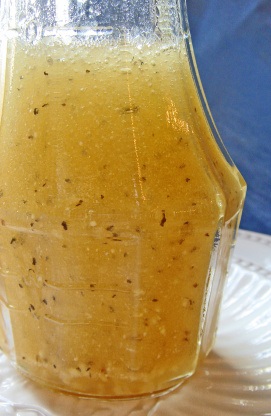
Italian Salad Dressing is a . . .
a)
heterogeneous mixture
b)
homogeneous mixture
c)
Pure Substance
d)
Compound
61.
Which of the following is an element?
a)
Sugar
b)
Salt
c)
Water
d)
Oxygen
62.
Of these mixtures, which one is a solution?
a)
A
b)
B
c)
C
d)
D
63.
A combination of particles of one or more substance that are distributed uniformly throughout another substance is a/an
a)
Mixture 
b)
Substance
c)
Solution
64.
A pure substance that cannot be broken down into other substances by chemical or physical means. 
a)
compound          
b)
atom
c)
mixture 
d)
element
65.
The building block of matter is
a)
Mixture
b)
Atom
c)
Element
d)
Substance
66.
This is made up of one or more of kind of the SAME kind of atom
a)
Element
b)
Mixture
c)
Compound
d)
Matter
67.
A pure substance...
a)
is an element or a compound
b)
is an element or a mixture
c)
is a compound or a mixture
d)
is a mixture
68.
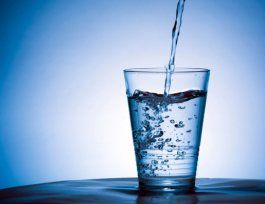
If a spoonful of sugar is mixed in a glass of water, what is the water called? 
a)
solute
b)
solution
c)
solvent
d)
element 
69.
Milk is a 
a)
solution
b)
suspension
c)
colloid
70.

A mixture made of parts that separate upon standing is what type of mixture?

a)

heterogeneous mixture

b)

solution

c)

alloy

d)

colloid

71.

Sand floating in water, but most of the sand is settled at the bottom this an example of which type of mixture?

a)

A solution

b)

A colloid

c)

A heterogeneous mixture

d)

A compound

72.
Classify the picture with the correct label.
a)
Element
b)
Compound
c)
Mixture of Elements
d)
Mixture of Compounds
73.
Classify the picture with the correct label.
a)
Element
b)
Compound
c)
Mixture of Elements & Compounds
d)
Mixture of Compounds
74.
Classify the picture with the correct label.
a)
Compounds
b)
Mixture of Elements
c)
Mixture of Compounds
d)
Mixture of Elements & Compounds
75.
Classify the picture with the correct label.
a)
Mixture of Elements
b)
Compound
c)
Mixture of Compounds
d)
Element
76.
Salt has a chemical formula of NaCl.  Salt is a...
a)
Compound
b)
Element
c)
Mixture
d)
None of the Above
77.
What cannot be broken down into other substances?
a)
Compound
b)
Mixture
c)
Solids
d)
Element
78.
How many elements are represented in the compound?
Na2CO3
a)
1
b)
2
c)
3
d)
4
79.
A combination of substances that are not chemically combined is called a(n)____________. 
a)
mixture
b)
compound
c)
physical
80.
An element is made up of only one kind of _____.
a)
isotope
b)
plastic
c)
atom
d)
metal
81.
Mixtures are separated through ___________changes.
a)
mixture
b)
compound
c)
physical
82.

Which statement identifies why oxygen is classified as a pure substance and air is classified as a mixture?

a)

Oxygen is more reactive than air.

b)

Oxygen has a higher density than air.

c)

Oxygen goes under a phase change, whereas air is always a gas.

d)

Oxygen contains only one substance, but air contains several substances.

83.

Which of the following is an example of of a container filled with a pure substance rather than with a mixture?

a)

A tire filled with air.

b)

A jar filled with salt water.

c)

A balloon filled with helium.

d)

A glass filled with chocolate milk.

84.

Which changes MUST happen for elements to become a compound?

a)

elements are heated

b)

a gas becomes a liquid

c)

elements dissolve in water

d)

chemical bonds form between atoms.

85.

Which of the following explains why saltwater is considered a mixture?

a)

It is composed of one element.

b)

It is composed of one compound.

c)

It is composed of two or more substances and has new chemical properties.

d)

It is composed of two or more substances and retains their own chemical properties.

86.

Oxygen and iron combine chemically to form rust. Rust is classified as which of the following?

a)

an atom.

b)

an element.

c)

a compound.

d)

a mixture.

87.

This image is a model of...

a)

an element

b)

a compound

c)

a homogenous mixture

d)

a heterogeneous mixture

88.

This picture is a model of...

a)

an element

b)

a compound

c)

a homogenious mixture

d)

a heterogeneous mixture.

89.

This picture is a model of a...

a)

element

b)

compound

c)

homogeneous mixture

d)

heterogeneous mixture

90.

The image below is an example of

a)

an atom

b)

a molecule

c)

a homogeneous mixture

d)

a heterogeneous mixture