
 Worksheets
TROPHIC CASCADES
Total questions: 48
Worksheet time: 48mins

Which is the keystone species for the jungle ecosystem?


According to the graph, what is causing the deer population to decrease
They got sick
The wolf population is decreasing
The wolf population increased
They ran out of food

Examine the graph below of two animal populations. Which animal must be the prey species?
A
B

Predator population lags behind prey population because......
Increase in predators leads to decrease in prey
Increase in predators leads to increase in prey
Increase in predators leads to decrease in producers
Increase in producers leads to increase in prey
in 1995 Wolves were reintroduced to Yellowstone National Park. Which answer below most accurately describes a possible trophic cascade the could result from the reintroduction of wolves?
wolves reintroduced-> deer population increased -> tree and vegetation cover decreased
wolves reintroduced-> beaver population decreased -> tree and vegetation cover increased
wolves reintroduced-> deer population decreased -> tree and vegetation cover increased -> beaver population increased
wolves reintroduced-> deer population decreased -> beaver population decreased -> songbird population increased


In an energy pyramid, how much of the energy in each level gets passed to the next level above it?
80%
90%
10%
20%

An organism that obtains energy by eating other organisms.
Consumer
Producer
Decomposer
Detritivore

The trout is a source of food for the human and the eagle. When there are more than one organism vying for the same source we call this____?


Which of the animals in this food web is an omnivore? (choose 2)
Raven
Snowshoe Hare
Bison
Grizzly Bear

If producers in this food web have 2,000kCal of energy, how much of that would end up going to the herring (secondary consumers)?
200 kCal
20 kCal
2 kCal
0.2KCal


Animals that only eat producers (also known as herbivores)
Producers
Primary Consumers
Secondary Consumers
Tertiary Consumers


What is this called?
Food Web
Food Chain
Trophic Level


Which of the following is not a biotic factor in an ecosystem?
wind
algae
dead skunk
oak tree

In this ecosystem model, what is missing?
plants
the top predator
abiotic factors
consumers

What is a keystone species?
A species that helps to hold an ecosystem together
A species that lives in or around rocks
Keys and stones have nothing to do with ecology
A keystone isn't a living thing, it's just a stone


Which ecological problem was NOT caused by elk?
Few trees were on river banks
Small mammals couldn't hide from predators due to less grass and shrub cover.
Weather patterns changed and there were more severe storms.
Rivers were muddy, making it harder for fish and amphibians to survive.
What is a tropic cascade?
an ecological process triggered by the removal or addition of a top predator that causes changes throughout the food chain.
an ecological process triggered by the removal or addition of a top predator that causes no changes throughout the food chain.
an ecological process triggered by the removal or addition of a vegetation that causes no changes throughout the food chain.
an ecological process triggered by the removal or addition of a primary consumer that causes changes throughout the food chain.
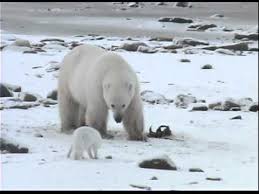
Two arctic fox are fighting with a polar bear for a sea lion carcass. One fox distracts the bear while the other eats. What type of limiting factor is the polar bear?
Predator-Prey Relationships
Competition
Herbivory Effect
Weather

A group of elephants gets stuck in mud at the edge of the river from a recent mud slide. A lion waits for an elephant to get tired before it attacks. What is the limiting factor to the elephant population?
Predator-Prey Relationships
Natural Disaster
Herbivory Effect
Competition

A duck population is breeding at exponential rates. The snakes that hunted them have been collected by fur collectors. They make boots from python snake skin. What is the limiting factor to the snakes?
Ducks
Predator-Prey
Exponential Growth
Humans

A duck population normally begin migrating south right after the last rain of the late summer season. Suddenly, they’re migrating much earlier. The climate has been changing far too often which is altering the effects of their magnetite. What's the limiting factor?
Predator-Prey Relationships
Weather
Herbivory Effect
Competition

One of the wolf populations leaves the forest. Over time, bushes, trees and moisture begin to leave as well. There is an effect on the producer populations because the herbivores are overgrazing the land. What is the limiting factor to the producer?
Competition
The wolf
Herbivory Effect
Mutualism

One of the wolf populations begins to compete with a new bear population for the same herbivores. Over time, bushes, trees and rivers improve in numbers. There is an effect on the producer populations. What is the limiting factor to the herbivore?
Predator-Prey Relationships
Herbivory Effect
Competition
Wolves and Bears

Small krill sweep the river bottom rocks for debris and muck. Next, the krill is suddenly swooped up by a small fish. The small fish then gets eaten by a salmon. A week after the bear eats the salmon, it begins to have symptoms. Over time the bear weakens from a botfly infection. What is the limiting factor to all the consumers?
Predator-Prey Relationships
Parasites
Disease
Competition

A honey-badger digs the ground tunnels in search for snakes. In one occasion, the badger finds a snake and competes with it. The badger leaves scratches and bite marks on the snake before it escapes. After twenty-four hours the snake dies. What is the limiting factor to the snake?
Predator-Prey Relationships
Competition
Disease
Predation

The wolf population gets reintroduced to the ecosystem. There is enough deer to go around, so they eat comfortably. The wolf population begins to grow out of control with so much food. The different wolf families then begin to compete for the few caves that exist. Not everyone has good shelter so some have to sleep in the forest floors. What is the limiting factor to the wolves?
Overcrowding
Competition
Weather
Shelter

The wolf goes extinct, and the deer population has no predator to worry about. They graze the land. Because there is no more food. Some of the deer begin to bite at each other, while others die of starvation. What is the limiting factor to the deep population?
Competition
Overcrowding
Predator-Prey Relationships
Herbivory Effect

A landslide covers the river’s path. Further downstream, water depletes and fish populations start to go down. In this case the landslide was which kind of limiting factor?
Weather
Natural Disaster
Climate Change
Global Warming

A random cloud forms and fills the rivers with excess water. In one lake biome, the excess rain pulls trees into rivers destroying bird shelters. What is the limiting factor to the biome?
density-dependent limiting factor
Weather
Climate
Natural Disaster
A random cloud forms and fills the rivers with excess water. In one lake biome, the excess rain pulls trees into rivers destroying bird shelters. What is the limiting factor to the biome?
density-dependent limiting factor
Weather
Climate
Natural Disaster
A random cloud forms and fills the rivers with excess water. In one lake biome, the excess rain pulls trees into rivers destroying bird shelters. What is the limiting factor to the biome?
density-dependent limiting factor
Weather
Climate
Natural Disaster

