
 Worksheets
Unit 3: Atomic Structure & PT Test Review
Total questions: 56
Worksheet time: 2hrs 41mins
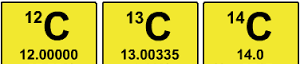
Atoms of the same element which have a different number of neutrons are called _________________.
ions
isotopes
quarks
molecules
ALL atoms of the same element have:
same number of proton
same number of nucleon
different number of neutron
different number of electron


Who was the Greek philosopher who called the smallest particle of matter as "atom"?
Democritus
Aristotle
J.J Thompson
Einstein
Who was the first person to think of an atom?
Democritus
Dalton
Rutherford
Bohr
Whose model was a small sphere with a hard shell (billiard ball)?
Democritus
Dalton
Rutherford
Bohr
Who found out atoms are mostly empty space?
Democritus
Thomson
Rutherford
Einstein
Who said that atoms move around the nucleus in certain paths and came up with the Solar System Model?
Democritus
Thomson
Rutherford
Bohr
Which of these determines the identity of an atom?
proton
neutron
valence electron
protons and neutrons
An ion is:
An atom that has gained or lost electrons
An atom that has gained or lost neutrons
An atom that has gained or lost protons
An atom that is neutrally charged
A wave with a large wavelength will have a ______ frequency and _____ energy
high, low
high, high
low, high
low, low
Which color in the visible spectrum of light has the longest wavelength?
Indigo
Red
Blue
Violet
What does energy have to do with wavelength and frequency?
The higher the frequency the less energy the wave has.
The lower the frequency the more energy the wave has.
The shorter the wavelength the more energy the wave has.
The longer the wavelength the more energy the wave has.

N or C?
Name this group: These metals are the most reactive.


I am a metal
I am in group 2
I am in period 6
I am…
Mo
Re
S
Ba
I am a nonmetal
I am in period 2
I am in group 16/6A
Ba
Si
Ba
O
Ionization energy trends is . . . .
becomes greater up and to the right of the periodic table.
becomes greater down and to the right of the periodic table.
becomes greater up and to the left of the periodic table.
becomes greater down and to the left of the periodic table.
Atomic radii trends is . . . .
generally decrease along each period of the table, from the alkali metals to the noble gases; and increase down each group.
generally increase along each period of the table, from the alkali metals to the noble gases; and increase down each group.
generally increase along each period of the table, from the alkali metals to the noble gases; and decrease down each group.
generally decrease along each period of the table, from the alkali metals to the noble gases; and decrease down each group.
Electronegativity trends is . . . .
increases on passing from left to right along a period, and decreases on descending a group.
increases on passing from left to right along a period, and increases on descending a group.
decreases on passing from left to right along a period, and decreases on descending a group.
decreases on passing from left to right along a period, and increases on descending a group.
Which element has bigger atomic radii?
Beryllium is bigger than Fluorine
Oxygen is bigger than Sulphur
Litihium is bigger than Sodium
Phosphorus is bigger than Bromine
Which element has smaller atomic radii?
Beryllium is smaller than Fluorine
Sulphur is smaller than Oxygen
Litihium is smaller than Sodium
Potassium is smaller than Bromine
Which element has higher ionization energy?
Chlorine is higher than Sodium
Phosphorus is higher than Nitrogen
Silicon is higher than Carbon
Magnesium is higher than Aluminium
Which element has lower ionization energy?
Chlorine is lower than Sodium
Phosphorus is lower than Nitrogen
Carbon is lower than Silicon
Aluminium is lower than Magnesium
Which element has higher electronegativity?
Fluorine is higher than Oxygen
Potassium is higher than Sodium
Aluminium is higher than Boron
Phosphorus is higher than Chlorine
Which element has lower electronegativity?
Fluorine is lower than Oxygen
Potassium is lower than Sodium
Boron is lower than Aluminium
Chlorine is lower than Phosphorus
The period number tells you the number of
protons
energy levels
valence electrons

