wayground logo

Free Printable Worksheets

NEW

Font size

S
M
L
XL
Worksheets

Types of Ecological Succession

Total questions: 34

Worksheet time: 1hrs 24mins

Name
Class
Date
1.

Primary succession occurs in an area that has:

a)

soil

b)

no soil

c)

some soil

d)

none of these

2.

___ are the first organisms to colonize an area and begin the process of ecological succession.

a)

foundational organisms

b)

introductory organisms

c)

primary organisms

d)

pioneer species

3.

What is an example of an area that is likely to undergo primary succession?

a)

Glaciers melt and leave exposed rock

b)

Plants die from drought and decompose

c)

Land is bulldozed and soil remains

4.

Which of the following is the correct order of ecological succession?

a)

grass - shrubs - lichens - trees

b)

lichens - shrubs - grasses - trees

c)

lichens - grasses - shrubs - trees

d)

grasses - lichens - shrubs - trees

5.

What is the main difference between primary and secondary ecological succession?

a)

Primary begins WITHOUT soil; Secondary begins WITH soil

b)

Primary is the first state and secondary is the second stage

c)

Primary builds plant community; secondary builds animal community

d)

Primary begins WITH soil; Secondary begins WITHOUT soil

6.

All of the following contribute directly to soil formation EXCEPT

a)

lichens

b)

decomposition of organisms

c)

volcanic eruptions

d)

erosion of rock by weather

7.

What is an example of a disturbance that could bring about secondary succession?

a)

Humans cut down many trees in a small region

b)

A volcanic eruption covers a village in lava.

8.

What is the term that describes a steady and stable community?

a)

peak community

b)

turf community

c)

climax community

d)

disturbed community

9.

What type of disturbance can be beneficial to ecosystems and communities?

a)

Volcanic Eruption

b)

Fire

c)

Invasive Species

d)

Flood

10.

Which is faster: Primary or Secondary Succession?

a)

Primary Succession

b)

Secondary Succession

c)

Both Take The Same Amount of Time

11.

Which of the following is NOT a pioneer species?

a)

Shrubs

b)

Lichen

c)

Mosses

d)

Fungi

12.

T or F: Succession increases biodiversity.

a)

true

b)

false

13.

The Final stage of ecological succession is...

a)

Mature Tree Growth

b)

Climax Community

c)

Pioneer Community

14.

Bare rock community must first undergo...

a)

Primary Succession

b)

Secondary Succession

c)

Climax

15.
What is ecological succession?
a)
A slow change in an environment
b)
A change that takes days in an environment
c)
No change
d)
Abiotic change
16.
What are examples of pioneer species in a primary succession?
a)
Bushes and Shrubs
b)
Oak trees
c)
Mossess and Lichens 
d)
A rose Bush
17.
A pioneer species is...
a)
a large organism
b)
the first organisms to adapt to a new environment 
c)
The best organism 
d)
Abiotic organisms 
18.
What is the most important function of pioneer species?
a)
To create rocks
b)
To create soil and add nutrients to the environment 
c)
To look nice
d)
Food for animals 
19.
A climax community is ….
a)
the beginning of a new ecological succession.
b)
the rocks in a new environment.
c)
the fire that will cause destruction.
d)
an area that reaches its greatest growing potential.
20.
What is the difference between primary and secondary succession?
a)
Primary succession already has soil.
b)
Primary has soil and secondary does not
c)
soil is present in both
d)
primary has no soil and secondary has soil
21.
A large tree forest is an example of ...
a)
a small community
b)
a abiotic community
c)
a climax community
d)
a pioneer species 
22.
Why does primary succession take longer to reach climax community?
a)
Because trees do not perform photosyntheses.
b)
Because climax community is in a forrest.
c)
Because primary succession already has soil
d)
Because primary succession does not have soil
23.
Which is the correct order in primary succession?
a)
Rocks, Lichens & Mosses, Bushes & Shrubs, Trees
b)
Lichens & Mosses, Rocks, Trees, Bushes & Shrubs 
c)
Trees, Bushes and Shrubs, Lichens & Mosses, Lichens & Mosses
d)
Rocks, Grass, Trees, Bushes & Shrubs
24.
First species to arrive in an area
a)
invasive species
b)
abiotic components
c)
pioneer species
d)
parasites
25.
First species occuring in areas of primary succession are mosses and
a)
grasses
b)
wildflowers
c)
trees
d)
lichens
26.
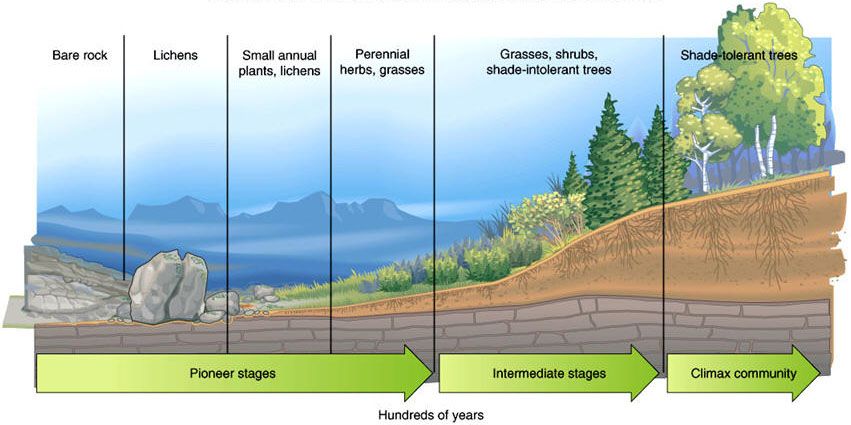
The picture shows what type of succession?
a)
primary
b)
secondary
c)
tertiary
d)
quadanary
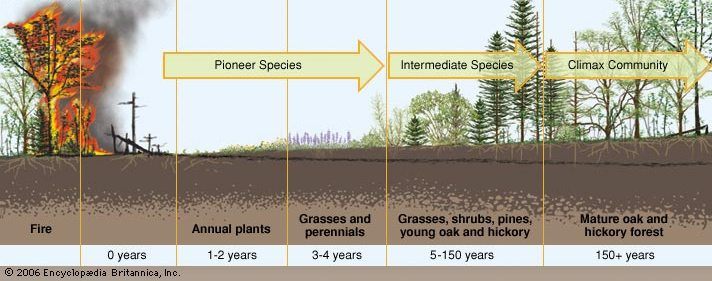
27.
The picture shows what type of succession?
a)
primary
b)
secondary
c)
tertiary
d)
quadanary
28.
After a volcanic eruption, lava covers the land. What is the order that plants grow to repopulate the area?
a)
Lichens → Shrubs → Grasses → Trees
b)
Lichens → tree → shrubs→Grasses
c)
Grasses → Lichens → Shrubs → Trees
d)
Lichens → Grasses → Shrubs → Trees
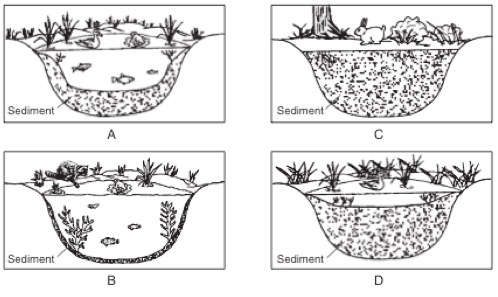
29.
What is the correct order from oldest (happened first) to youngest (happened last) in this pond succession?
a)
A, B, C, D
b)
D, C, B, A
c)
B, A, D, C
d)
C, D, A, B
30.
What is the first species you will see after a primary succession? (in picture)
a)
lichens
b)
grasses
c)
small plants
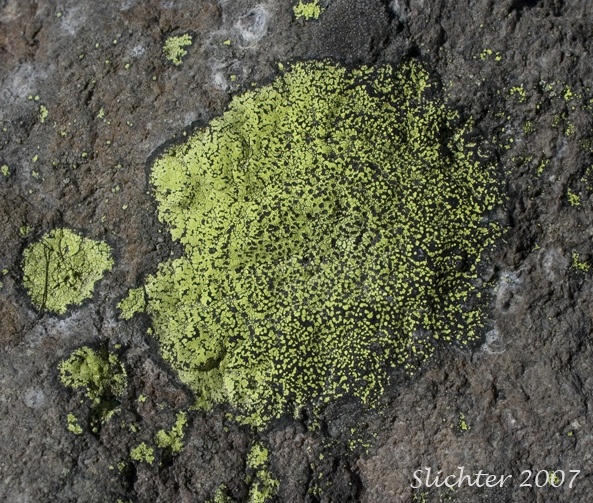
31.
This is an example of...
a)
Climax communities
b)
Secondary succession
c)
Lichen
d)
Pioneer species
32.
A pioneer species is...
a)
a large organism
b)
the first organisms to adapt to a new environment 
c)
The best organism 
d)
Abiotic organisms 
33.
What is the most important function of pioneer species?
a)
To create rocks
b)
To create soil and add nutrients to the environment 
c)
To look nice
d)
Food for animals 
34.
Succession that occurs in an area with NO SOIL
a)
ecological succession 
b)
primary succession 
c)
secondary succession
d)
pioneer speciles