
Font size
 Worksheets
space weather and space exploration
Total questions: 60
Worksheet time: 3600secs

the moon orbiting the earth is an example of:
natural satellite
artificial satellite
what was the first creature in space
a dog
a human
a hamster
monkey
What is the artifical satellite that orbits Earth
Hubble Telescope
Spirit
Opportunity
Challenger
The Hubble telescope was put in space to:
take images past the atmosphere
it is closer to the sun
too big for Earth
its not really in space
The information below is about the structure of the Sun ;
# outer layer of the Sun
# temperature is about 6 000 degree celcius
# Sunlight can be seen from the Earth
Which one is the structure of the Sun mentioned above?
Corona
Chromosphere
Photosphere
Thermosphere

The diagram shows the position of structure X on the Sun. Which one is X?
Core
Convection zone
Radiation zone
Conduction zone
Which of the following is not the effect of solar flare?
disruption of telecommunication system
disruption of natural disaster
disruption of satellite's function
disruption of grid power line
Which statement is true about the Sun?
it is a gas ball that consists of helium and nitrogen
it is the farthest star from Earth
the Sun's atmosphere consists of two layers
nuclear fusion occurs in the Sun
Which is the phenomenon as explained below?
-sudden eruption of gas in the choromosphere layer
-releases charged particles that causes formation of aurora on Earth
prominence
solar wind
solar flare
coronal mass ejection
How many years are there in a solar cycle?
10
11
12
13
It is a layer of magnetic field that surrounds the Earth to protect it from the harmful substances released by the Sun.
Which is the layer?
ozone
earth's gravity
earth's atmosphere
earth's magnetosphere
The center of the sun, the ___, produces the energy that eventually reaches us and warms the Earth.
core
radiative zone
corona
convective zone

A giant arch that explodes off of the sun’s surface is a
Sun Flare
Sun Spot
Corona
Solar Prominence

__ is a darker, cooler than other surrounding areas of the Sun.
Solar Prominence
Solar Flares
Sun Spots
Plasma
The two most abundant elements of the Sun are ___
Hydrogen and Helium
Hydrogen and Carbon
Nitrogen and Carbon
Helium and Nitrogen

The plasma clouds with charged particles and magnetic fields moving away from the Sun, and creates Auroras when interacting with Earth’s atmosphere...is known as
Solar wind
Prominence
Sun Spots
The Prominence
Solar flares, prominences, coronal holes, and coronal mass ejections are all due to disturbances in _____ on the sun.
the convective zone
the radiative zone
the core
magnetic fields
Which of the following lists some of the layers of the Sun in order from the center of the Sun outward?
radiation zone, convection zone, chromosphere
radiation zone, convection zone, core
chromosphere, photosphere, corona
corona, photosphere, chromosphere
Which is NOT a layer of the solar atmosphere?
photosphere
chromosphere
stratosphere
corona
A giant arch that explodes off of the sun’s surface is a
Sun Flare
Sun Spot
Corona
Solar Prominence
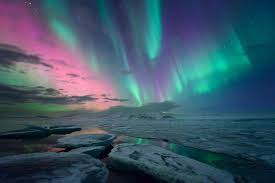
The auroras are created when particles from the ________ crash into and mix with gases in Earth's upper atmosphere.
Sun
Moon
Meteors
Clouds

How does the Sun’s energy and radiation affect Earth?
It makes planets explodes
It makes planets melts
It doesn't
It releases harmful radiation into space

Which layer of the Sun is the hottest?
Corona
Photosphere
Chromosphere
Core

It means crown. Which is the outer most part that we see only during an eclipse?
Corona
Core
Convective Zone
Chromosphere
Light and heat from the sun is called?
Electric energy
Kinetic energy
Solar energy
Mechanical energy
True or False. Solar flares send intense blasts of lava into Earth's atmosphere.
True
False
What is the effect of coronal mass ejections on satellite communications?
They strengthen the microwave signals used for satellite communications.
They cause the satellites to lose power.
They speed up the transmission of radio waves.
They damage the satellites that orbit the Earth
What is the layer that is responsible for the orange colour of the Sun that can be seen every day?
Radiation zone
Photosphere
Chromosphere
Corona
State three structures of the Sun that form the Sun’s atmosphere.
radiation zone
Photosphere,
convection zone
chromosphere
corona
State three phenomena that occur on the surface of the Sun where charged gases erupt.
Prominence
coronal mass ejection
sunspot
solar flare
Define Earth’s magnetosphere.
Particles in plasma such as electrons, protons and alpha particles that erupt from the Sun to outer space travel together at high speeds
It is
a combination of the Earth's magnetic field (as the main magnetic field) and the magnetic field in the region in space.
spouts magnetic particles at high speeds into outer space and appears like an expanding cloud. These magnetic particles from the coronal mass ejection take three days to reach Earth.
huge loop
or arched column of glowing gases over the sunspot.
What influences the shape of the magnetosphere?
solar flare
prominiences
solar wind
solar cycle
geomagnetic storm
Name one object in the Solar System that has the same shape as solar wind.
asteroid
comet
meteroid
planet
What is the definition of space weather?
biological shield to protect life on Earth from the adverse effects of solar wind
interaction between the magnetic field brought by the solar wind and Earth’s magnetic field
Phenomena that occur on the surface of
the Sun and in outer space.
outer space surrounding Earth where the magnetic field in Earth’s magnetosphere is a combination of Earth’s magnetic field (as the prime magnetic field) and the magnetic field in the region in outer space
State four examples of the effects of space weather on Earth
Formation of aurora
disturbances to telecommunication
disturbances to navigation system
disturbances to electric power lines
What is the relationship between the number of sunspots and the increase in coronal mass ejections?
When the number of sunspots decrease,
coronal mass ejections will increase.
When the number of sunspots increases,
coronal mass ejections will increase.
When the number of sunspots increases,
coronal mass ejections will decrease.
the number of sunspot does not give effect to coronal mass ejection
What is the importance of earth magnetosphere
reduces the pressure exerted by solar wind on Earth’s atmosphere
functions as a biological shield to protect life on Earth from the adverse effects of solar wind
blocks charged particles such as electrons, protons and alpha particles in the solar wind from reaching Earth
seems to appear and disappear according to a cycle that lasts 11 years
choose equipment or service used daily which can be disrupted by solar winds.
Smartphone (mobile)
Internet
TV broadcast
Global positioning system (GPS)
What would happen to the condition of Earth if there is no magnetosphere?
Formation of aurora
all living would die because exposed to UV ray
all living would die because exposed to solar wind radiation higher than safe level
people experience sunburn
What is the duration of one solar cycle?
9 years
10 years
11 years
12 yeard
The sun produces energy in its core by combining H atoms into He atoms in a process known as ___.
Nuclear fission
gravitational compression
kinetic compression
Nuclear fusion
The sun is classified as a medium sized star and many stars are much bigger and brighter. However, the student observes that other stars look very dim. Why do the other stars look much dimmer?
The sun is yellow, which is more visible than other colors
The sun is much closer to Earth than the other stars are
Other stars are made up of different gases than the sun
As light from other stars travels through space it gets reflected
Which statement is true about the Sun?
it is a gas ball that consists of helium and nitrogen
it is the farthest star from Earth
the Sun's atmosphere consists of two layers
nuclear fusion occurs in the Sun

The plasma clouds with charged particles and magnetic fields moving away from the Sun, and creates Auroras when interacting with Earth’s atmosphere...is known as
Solar wind
Prominence
Sun Spots
The Prominence

