wayground logo

Free Printable Worksheets

NEW

Font size

S
M
L
XL
Worksheets

Atoms. pH, Photo/Resp

Total questions: 65

Worksheet time: 1hrs 5mins

Name
Class
Date
1.

What is the atomic number?

a)

the number of protons in the nucleus

b)

the number of protons and neutrons in the nucleus

c)

the number of neutrons in the nucleus

d)

the number of protons in the energy levels

2.

What is the mass number?

a)

the number of protons in the nucleus

b)

the number of protons and neutrons in the nucleus

c)

the number of neutrons in the nucleus

d)

the number of protons and electrons in the atom
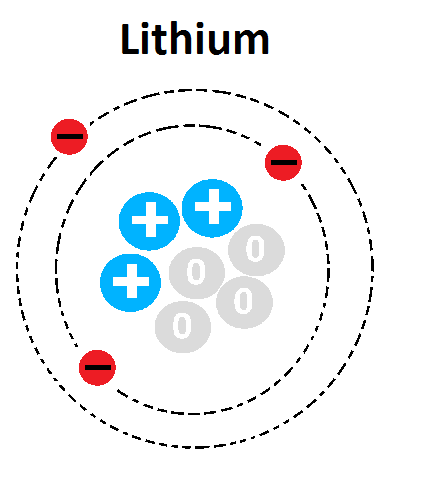
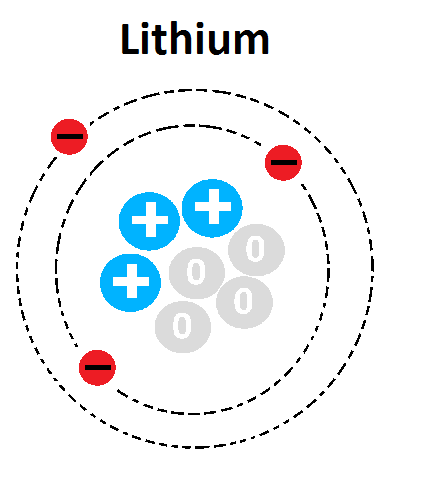
3.

What is the atomic number of this atom?

a)

1

b)

3

c)

4

d)

7

4.

What is the mass number of this atom?

a)

1

b)

3

c)

4

d)

7

5.
In order for an atom to be neutral what has to be true?
a)
The atom has more protons than neutrons
b)
The atom has more neutrons than protons
c)
The atom has the same number of protons and neutrons
d)
The atom has the same number of protons and electrons
6.
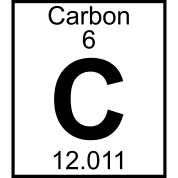
What does the C represent?
a)
atomic mass
b)
atomic number
c)
element name
d)
chemical symbol 
7.
How is the number of neutrons in the nucleus of an atom calculated?
a)
Add the number of e- and p+ together
b)
Subtract the number of e- from p+
c)
Subtract the number of p+ from the mass number
d)
Add the mass number to the number of e-
8.
What subatomic particles would you find in the nucleus of an atom?
a)
Protons only
b)
Protons and Neutrons
c)
Neutrons and Electrons
d)
Protons and Electrons 
9.
If an atom has 12 positively charged subatomic particles, which of the following must it also have to be considered a neutral atom?
a)
12 neutrons
b)
12 electrons
c)
12 protons
d)
24 protons and neutrons
10.

An atom has 10 protons, 15 neutrons and 10 electrons what is its mass number.

a)

20

b)

10

c)

35

d)

25

11.
The atomic number of an element that has 9 protons, 9 electrons, and 10 neutrons is _____.
a)
9
b)
10
c)
19
d)
28
12.
An atom has an atomic number of 15 and a mass number of 31. How many protons are there in the atom?
a)
15
b)
31
c)
16
d)
47
13.
Isotopes are atoms of the same element that have the same number of __________ but different number of __________ . Therefore, isotopes of the same element have different masses. 
a)
protons, neutrons
b)
protons, electrons
c)
neutrons, protons
d)
electrons, protons
14.

An atom has 12 protons and 13 neutrons in its nucleus. Which is the correct symbol?

a)
b)
c)
d)
15.
What is the atomic mass of the pictured isotope?
a)
2
b)
4
c)
6
d)
Hehehehe
16.
An atom becomes _________ when it gains electrons.
a)
Positive
b)
Negative
c)
Neutral
d)
Invinsible
17.
An atom becomes _______ when it loses electrons.
a)
Positive
b)
Negative
c)
Neutral
d)
Invinsible
18.

How many electrons?

a)

4

b)

7

c)

13

d)

2

19.

How many protons?

a)

4

b)

6

c)

7

d)

8

20.

How many neutrons?

a)

6

b)

7

c)

4

d)

19

21.

Protons + __________ = atomic mass

a)

electrons

b)

neutrons

c)

neither

22.

#7 - two cells that surround each porous opening; regulates gaseous exchange by opening and closing the pore.

a)

Epidermal cells

b)

Guard cells

c)

Stomata cells

d)

Xylem cells

23.

#9 - Cell tissue that makes up part of each vein that transports water throughout the plant

a)

Epidermal cells

b)

Guard cells

c)

Phloem cells

d)

Xylem cells

24.

#8 - Cell tissue that makes up part of each vein that transports glucose and nutrients throughout the plant

a)

Epidermal cells

b)

Guard cells

c)

Phloem cells

d)

Xylem cells

25.

Hair - like projections present on the root

a)

hairs

b)

root - hairs

c)

both

26.

There are little pores on the bottom of the leaf called ________

a)

stem

b)

root

c)

stomata

d)

palisade mesophyll

27.
The pH scale is a range from:
a)
1-7
b)
0-14
c)
1-5
d)
1-20
28.
A(n) ______ is a substance with a pH less than 7
a)
Acid
b)
Alkaline
c)
Base
d)
Buffer
29.
A(n) _______ is a substance with a pH greater than 7.
a)
Base
b)
Acid
c)
Buffer
d)
Water
30.
Complete the sentence.
A substance that is more basic has a _____ pH than a substance that is acidic.
a)
lower
b)
higher
c)
the same
d)
none of the above
31.

An acid

a)

is a substance that releases H+ ions when dissolved in water

b)

is a substance that does not release any ions when dissolved in water

c)

is a substance that releases OH- when dissolved in water

d)

releases an equal amount of OH- and H+ ions when dissolved in water

32.

A base is a substance

a)

That releases OH- ions when dissolved in water

b)

That releases H+ ions when dissolved in water

c)

Does not release any ions when dissolved in water

d)

None of the above

33.
A solution has a pH of 7.0.  What would happen to the pH if H ions were added?
a)
pH would go up
b)
pH would go down
c)
pH would stay the same
d)
None of these
34.
A solution has a pH of 7.0.  What would happen to the pH if OH ions were added?
a)
pH would go up
b)
pH would go down
c)
pH would stay the same
d)
None of these
35.
Cellular Respiration's goal is to
a)
make water
b)
make ATP
c)
make glucose
d)
make  oxygen
36.
In photosynthesis ...
a)
water is chloronated
b)
light energy is changed to glucose
c)
osmosis happens
d)
ATP is made
37.
What is cellular respiration?
a)
the breakdown of glucose  to release ATP
b)
the breakdown of glucose to release NADH
c)
the breakdown of glucose to release FADH
d)
the breakdown of glucose to release carbon
38.
What are the products of photosynthesis?
a)
sugar and glucose
b)
carbon dioxide 
c)
sugar and Oxygen
d)
water and energy
39.
What is the correct equation for cellular respiration?
a)
6O2 + C6H12O6 -> 6CO2 + 6H2O + Energy
b)
6O2 + C6H12O6 + Energy -> 6CO2 + 6H2O
c)
6CO2 + 6H2O -> 6O2 + C6H12O6 + Energy
d)
6CO2 + 6H2O + Energy -> 6O2 + C6H12O6
40.
What is the correct equation for cellular respiration?
a)
6O2 + C6H12O6 -> 6CO2 + 6H2O + Energy
b)
6O2 + C6H12O6 + Energy -> 6CO2 + 6H2O
c)
6CO2 + 6H2O -> 6O2 + C6H12O6 + Energy
d)
6CO2 + 6H2O + Energy -> 6O2 + C6H12O6
41.
A plant is releasing a gas. What is the mosl tlikely the gas?
a)
co2
b)
methane
c)
water vapor
d)
oxygen
42.
What is one of the reactants of cellular respiration?
a)
energy
b)
glucose
c)
carbon dioxide
d)
water
43.
All living things do which of the following?
a)
Chemosynthesis
b)
Respiration
c)
photosynthesis
d)
all of the answers
44.
In which eukaryotic organelles does photosynthesis occur?
a)
mitochondria
b)
stomata
c)
xylem
d)
chloroplast
45.
Which gas is removed from the atmosphere during photosynthesis?
a)
hydrogen
b)
oxygen
c)
nitrogen
d)
carbon dioxide
46.
In photosynthesis ...
a)
water is chloronated
b)
light energy is changed to glucose
c)
osmosis happens
d)
ATP is made
47.
What is cellular respiration?
a)
the breakdown of glucose  to release ATP
b)
the breakdown of glucose to release NADH
c)
the breakdown of glucose to release FADH
d)
the breakdown of glucose to release carbon
48.
What are the products of photosynthesis?
a)
sugar and glucose
b)
carbon dioxide 
c)
sugar and Oxygen
d)
water and energy
49.
What is the correct equation for cellular respiration?
a)
6O2 + C6H12O6 -> 6CO2 + 6H2O + Energy
b)
6O2 + C6H12O6 + Energy -> 6CO2 + 6H2O
c)
6CO2 + 6H2O -> 6O2 + C6H12O6 + Energy
d)
6CO2 + 6H2O + Energy -> 6O2 + C6H12O6
50.
The mitochondria is responsible for ...
a)
photosynthesis
b)
anaerobic respiration
c)
aerobic respiration
d)
fermentation
51.
A plant is releasing a gas. What is the mosl tlikely the gas?
a)
co2
b)
methane
c)
water vapor
d)
oxygen
52.
What is one of the reactants of cellular respiration?
a)
energy
b)
glucose
c)
carbon dioxide
d)
water
53.
All living things do which of the following?
a)
Chemosynthesis
b)
Respiration
c)
photosynthesis
d)
all of the answers
54.
In which eukaryotic organelles does photosynthesis occur?
a)
mitochondria
b)
stomata
c)
xylem
d)
chloroplast
55.
Which statement about photosynthesis is correct?
a)
Plants get the energy they need for photosynthesis from water.
b)
Plants get the energy they need for photosynthesis from soil.
c)
Plants get the energy they need for photosynthesis from sunlight.
d)
Plants do not require energy to perform photosynthesis.
56.
Which gas is removed from the atmosphere during photosynthesis?
a)
hydrogen
b)
oxygen
c)
nitrogen
d)
carbon dioxide
57.
Which of the following structure is where cellular respiration occurs in the cell?
a)
nucleus
b)
cytoplasm
c)
mitochondria
d)
vacuoles
58.
Cellular Respiration's goal is to
a)
make water
b)
make ATP
c)
make glucose
d)
make  oxygen
59.

What is made by plants during photosynthesis that can be used for energy by both plants and animals

a)

Salt

b)

Tacos

c)

Sugar (glucose)

d)

Carbon Dioxide

60.

Reactants (ingredients) needed by the plant to do photosynthesis include sunlight and

a)

Sugar and oxygen

b)

oxygen and water

c)

Autotrophs

d)

Carbon Dioxide and water

61.

What organelle in your cells releases energy from sugars (glucose), made by the plant

a)

Chloroplasts

b)

Nucleus

c)

Vacuole

d)

Mitochondria

62.

Which of the following is an example of an "organic" molecule?

a)

C6H12O6

b)

CO2

c)

H2O

d)

O2

63.

Which of the following processes uses inorganic reactants to produce an organic product?

a)

cell respiration

b)

photosynthesis

64.

I have reviewed the practice questions on notes pages 19-23 (just in case some of these show up on my quiz...)

a)

I did

b)

I will

c)

No way

d)

I will own those questions

65.

What gas do animals breath out that plants can use for photosynthesis

a)

oxygen

b)

Nitrogen

c)

Hydrogen

d)

Carbon Dioxide