wayground logo

Free Printable Worksheets

NEW

Font size

S
M
L
XL
Worksheets

Chemistry Chapter 4 Test Review

Total questions: 65

Worksheet time: 58mins

Name
Class
Date
1.
What is atomic number?
a)
Number of protons in an atoms 
b)
Number of neutrons in an atom
c)
Mass of an atom
d)
Charge on an atom
2.
Which subatomic particles are found in the nucleus of an atom?
a)
Protons and Electrons
b)
Protons and Neutrons
c)
Neutrons and Electrons
d)
Protons, Neutrons and Electrons
3.
What electrical charge does a proton have?
a)
+1
b)
0
c)
-1
d)
+2
4.

What mass does a neutron have?

a)

1 amu

b)

0 amu

c)

-1 amu

d)

+2 amu

5.
The total number of protons and neutrons in an atom is called the...
a)
Atomic number
b)
Proton number
c)
Mass number
d)
Weight number
6.

The _________ of an element equals the number of protons in an atom of that element.

a)

mass number

b)

atomic weight

c)

atomic number

d)

isotopes

7.

The mass number of an element that has 18 protons, 18 electrons, and 19 neutrons is _____.

a)

12.5

b)

13

c)

25

d)

37

8.
Which particle is negatively charged?
a)
proton
b)
atom
c)
neutron
d)
electron
9.

What is the correct number of subatomic particles of a phosphorous atom with a mass of 31?

a)

p# - 15, n# = 15, e# = 15

b)

p# - 15, n# = 16, e# = 15

c)

p# - 15, n# = 15, e# = 16

d)

p# - 16, n# = 15, e# = 15

10.

What is the mass number of a nickel atom with 28 protons, 31 neutrons, and 28 electrons?

a)

31

b)

28

c)

59

d)

87

11.
Most of the mass in an atom is made up of _____________________?
a)
protons and electrons
b)
protons and neutrons
c)
neutrons and electrons
d)
electrons and quarks
12.
In order for an atom to be neutral what has to be true?
a)
The atom has more protons than neutrons
b)
The atom has more neutrons than protons
c)
The atom has the same number of protons and neutrons
d)
The atom has the same number of protons and electrons
13.

What does the 6 represent?

a)

Atomic mass

b)

atomic number

c)

chemical symbol

d)

element name

14.
How is the number of neutrons in the nucleus of an atom calculated?
a)
Add the number of e- and p+ together
b)
Subtract the number of e- from p+
c)
Subtract the number of p+ from the mass number
d)
Add the mass number to the number of e-
15.

An atom has 10 protons, 15 neutrons and 10 electrons what is its mass number.

a)

20

b)

10

c)

35

d)

25

16.
An element with a mass number of 11 and an atomic number of 5 has how many neutrons?
a)
11
b)
5
c)
6
d)
16
17.
Subatomic particle with a charge of 0
a)
neutron
b)
proton
c)
electron
d)
quark
18.
How many electrons can the first energy level hold?
a)
1
b)
2
c)
8
d)
0
19.

How many electrons can a d sublevel hold?

a)

14

b)

10

c)

2

d)

6

20.

How many orbitals does an s sublevel have?

a)

1

b)

3

c)

5

d)

7

21.

How many orbitals does a d sublevel have?

a)

1

b)

3

c)

5

d)

7

22.

How many orbitals does an f sublevel have?

a)

1

b)

3

c)

5

d)

7

23.

What are the orbitals that make up the n=1 energy level?

a)

s

b)

s, p

c)

s, p, d

d)

s, p, d, f

24.

Electrons fill energy levels and sublevels _____ in energy first.

a)

lower

b)

higher

25.
Which of the following statements is true about the 3s and the 4s sublevels?
a)
These sublevels have the same energy
b)
These sublevels are the same distance from the nucleus
c)
These sublevels hold different amounts of electrons
d)
These sublevels have the same shape
26.

The maximum number of electrons that can fit into the 2nd energy level is

a)

2

b)

8

c)

18

d)

32

27.

For each of the following sublevels, which is lowest in energy?

a)

4s

b)

3d

c)

4p

d)

5s

28.

Of the following sublevels, which is the highest in energy?

a)

4s

b)

3d

c)

4p

d)

5s

29.
What is the shape of s orbitals?
a)
Dumbbell shaped
b)
Peanut shaped
c)
Spherical shaped
d)
Hybrid structure
30.

Region of high probability of finding an electron

a)

atomic orbital

b)

ground state

c)

Heisenberg uncertainty principle

d)

electron configuration

31.
What is the shape of a p orbital?
a)
sphere
b)
it's just too complex to thing about it
c)
dumbbell
d)
I don't know this stuff.
32.

What statement is correct for this diagram?

a)

Both arrows in the 2p box should be pointing up

b)

There should only be 1 electron in the first 2p orbital and one in the 2nd 2p orbital

c)

There is nothing incorrect with this diagram

d)

All the arrows should be pointing up.

33.

How are electrons indicated in this diagram?

a)

a single box

b)

a set of boxes

c)

An arrow

d)

There are no electrons in this atom

34.

What is this?

a)

Electron configuration

b)

Orbital Diagram

c)

Arrow diagram

d)

Aufbau diagram

35.

How are electrons indicated in this diagram?

a)

Coefficients

b)

letters

c)

superscripts

d)

There are no electrons in this atom

36.

What do the coefficients represent in this diagram?

a)

electrons

b)

Sublevels

c)

Orbitals

d)

energy levels

37.
What atom matches this electron configuration?
1s22s22p63s23p64s23d10
a)
Zinc
b)
Copper
c)
Nickel
d)
Germanium
38.
What atom matches this electron configuration?
1s22s22p63s2
a)
Neon
b)
Magnesium
c)
Aluminum
d)
Potassium
39.
What electron configuration matches an oxygen atom?
a)
1s22s22p63s2, 3p64s23d104p5
b)
1s22s22p4
c)
1s22s22p6
d)
1s22s22p63s23p64s23d1
40.
The electron configuration of an atom is 1s22s22p6.  The number of electrons in the atom is 
a)
3
b)
6
c)
8
d)
10
41.
What do you start electron configuration with?
a)
1s2
b)
1d10
c)
1f14
d)
1p6
42.
Which electron configuration belongs to Chlorine (Cl)?
a)
1s2s2p3s3p5
b)
1s2s2p3s3p6
c)
1s2s2p3s3p7
43.
Which electron configuration belongs to Copper (Cu)?
a)
1s2 2s2 2p6 3s2 3p6 4s2 3d8
b)
1s2 2s2 2p6 3s2 3p6 4s2 3d9
c)
1s2 2s2 2p6 3s2 3p6 4s2 3d10
44.
Identify the Electron Configuration for Aluminum (Al)
a)
1s2s2p3s3p1
b)
1s2s2p3s3p3
c)
1s2s2p3s4p1
45.
How many neutrons does the isotope of lithium have?
a)
8
b)
3
c)
4
d)
5
46.
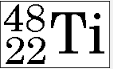
How many protons does this isotope of titanium have?
a)
48
b)
22
c)
26
d)
70
47.
In a correctly written symbol what would be located in the "A" position?
a)
number of neutrons
b)
atomic number
c)
number of electrons 
d)
mass number
48.
What quantities vary between isotopes of an element?
a)
protons, electrons, and atomic mass
b)
protons, electrons, and atomic number
c)
neutrons and electrons
d)
neutrons and atomic mass
49.
How many neutrons in C-14?
a)
6
b)
7
c)
14
d)
8
50.

Isotopes of an element have a different number of...

a)

Protons

b)

Neutrons

c)

Electrons

d)

Mass

51.

76 protons and 114 neutrons

a)

Osmium-114

b)

Osmium-76

c)

Osmium-190

d)

Osmium-190.23

52.

Nickel-59 has how many neutrons?

a)

30

b)

31

c)

32

d)

33

53.
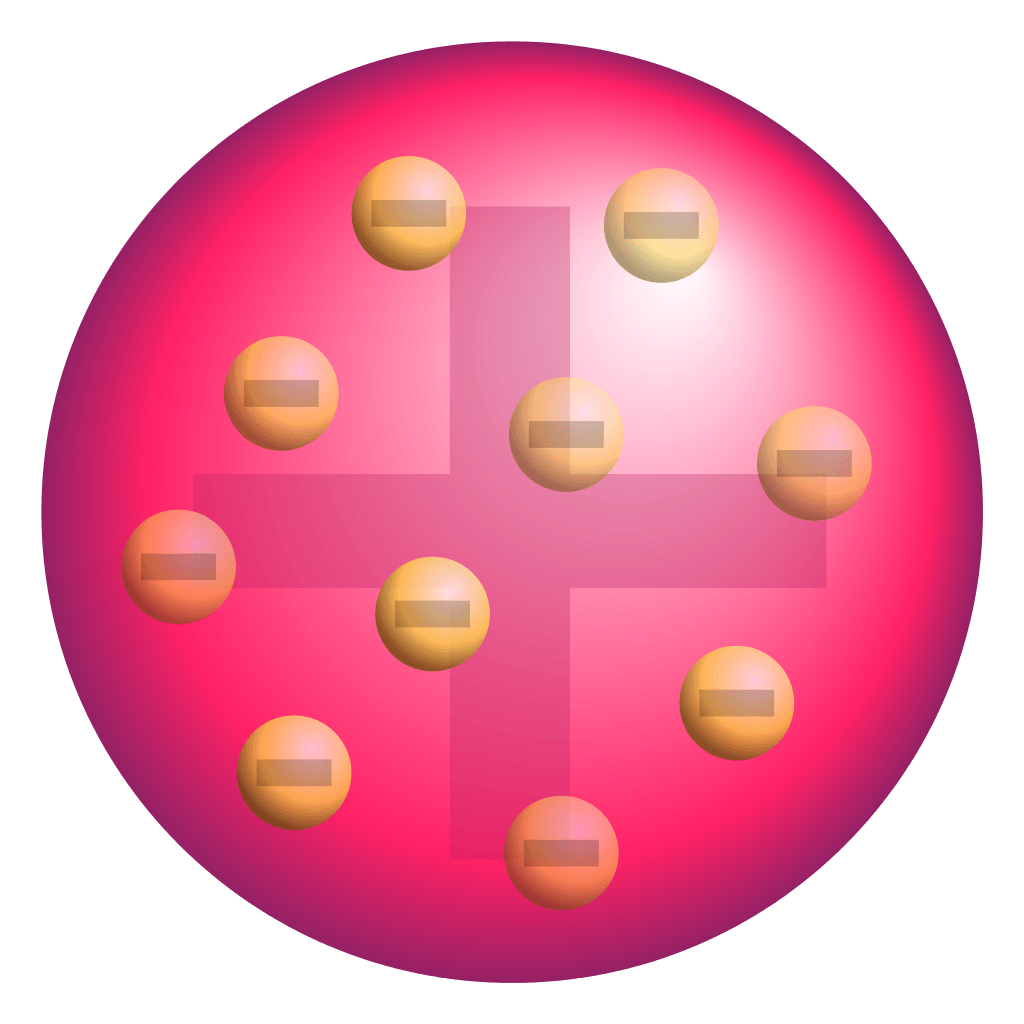
What was the name of J.J Thomsons' model of atomic structure. 
a)
Electron Cloud Model 
b)
Electron Sea Model
c)
Plum Pudding Model 
d)
Bohr Model
54.
What was James Chadwicks most notable discovery?
a)
The nucleus contains protons. 
b)
The nucleus contains neutrons.
c)
Electron are not fixed.
d)
Protons are positive.
55.
What does the Bohr model suggest?
a)
Atoms are small, hard, indivisible objects. 
b)
That protons in the nucleus are attracted to electrons in the electron clouds. 
c)
That electrons travel around the nucleus of an atom in orbits or definite paths.
56.
Who proposed that the atom consists mostly of empty space?
a)
Bohr
b)
Dalton
c)
Rutherford
d)
Chadwick
57.

Who was the first contributor to the atomic theory?

a)

John Dalton

b)

Ernest Rutherford

c)

JJ Thompson

d)

Democritus

e)

Neils Bohr

58.
Who came up with this model of an atom?
a)
J.J. Thompson
b)
Ernest Rutherford
c)
Neils Bohr
d)
James Chadwick
59.
Who's model is this?
a)
Thomson
b)
Rutherford
c)
Democritus
d)
Bohr
60.
In the Thomson Model, he discovered the existence of what particle?
a)
Electrons
b)
Protons
c)
Neutrons
d)
Quarks
61.
Rutherford’s experiment determined that the nucleus of an atom is tiny, dense and  ______ charged. 
a)
neutrally
b)
negatively
c)
positively
62.

states that, regardless of the amount, a compound is always composed of the same elements in the same proportion by mass

a)

law of definite proportions

b)

law of conservation of mass

c)

law of multiple proportions

d)

periodic table

63.
Who discovered the neutron?
a)
JJ Thompson
b)
Democritus
c)
Schrodinger
d)
Chadwick
e)
Bohr
64.
The impossibility to know simultaneously the exact position and momentum of a particle is called the:
a)
Einstein Uncertainty Principle
b)
Moseley Uncertainty Principle
c)
Heisenburg Uncertainty Principle
d)
Bohr Uncertainty Principle
65.
De Broglie discovered the wave nature of electrons, which gave rise to:
a)
wave mechanics
b)
quantum mechanics
c)
particle mechanics
d)
ocean mechanics