
 Worksheets
Matter
Total questions: 88
Worksheet time: 1hrs 7mins
Matter is anything that has:
mass
volume
mass and volume
substance
Mass is a measurement of:
the amount of particles a substance has.
the space an object occupies
Volume is a measurement of:
the amount of particles a substance has.
the space an object occupies
How would you find the mass of an object?
Measure its dimensions with a ruler, and then multiply length x width x height
Water displacement
use a balance/scale
use a timer
How would you find the volume of an irregular shaped object?
use a ruler to measure its dimensions
water displacement
use a balance/scale
use a timer
How could you determine if a golden penny is made of gold?
You wouldn't be able to figure it out.
If it looks like gold, it's gold.
You would test the properties of the gold penny and compare those to the properties of gold.
You would guess.
What is the density of a liquid if its volume is 125 mL and its mass is 50 g?
2.5 g/mL
175 g/mL
0.4 g/mL
6250 g/mL
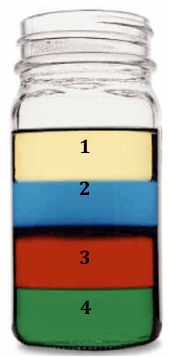
Which of the following is NOT a physical characteristic?
Viscosity
Volume
Flammability
Density
Which type of mixture is uniform throughout?
Homogeneous
Heterogeneous
Which of the following is a heterogeneous mixture?
Hershey Bar
Snickers Bar
Rust (iron oxide)
24K Gold
What is the best piece of lab equipment to measure volume?
Test tube
Beaker
Erlenmeyer flask
Graduated cylinder
What word describes anything that has volume and mass?
Solid
Plasma
Matter
Compound
What property is calculated by dividing the mass of an object by its volume?
Buoyancy
Density
Volume
Energy
What property of matter describes how much space a substance takes up?
Mass
Density
Volume
Shape
Which of the following are not signs of a chemical change?
Dissolving
Heat
Gas/bubble formation
Formation of precipitate
Change in size
Rust, pure water and carbon dioxide are all examples of what?
Compounds
Elements
Homogeneous mixtures
Plasma
Texture is a
Chemical property
Physical property
How a substance reacts with acid is a
Chemical property
Physical property
If you pour 3 unknown liquids into a graduated cylinder, which one will rise to the top?
The one with the highest density
The one with the lowest density
Whichever one was poured in last
How many states of matter are there?
1
2
3
4
Which of the following is NOT a chemical change?
Dissolving sugar in your coffee
Milk getting sour
A metal fence post rusting
Burning gasoline


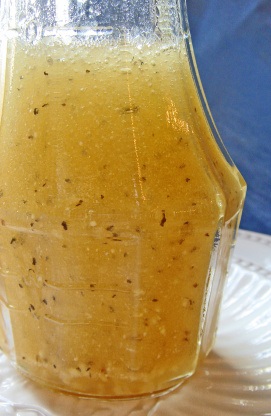


Which of the below statements about molecules and compounds is true?
Molecules are formed when two or more atoms are joined together
Compounds consist of at least two different elements
Compounds are a type of molecule but all molecules are not necessarily compounds
None of these are true
All of these are true
Which of the following images best represents the particle model of a liquid?


What is observed or measured without changing the substance?
Physical property
Chemical change
Chemical property
Physical change
Which of the following is not an example of a chemical property?
Flammability
Odor
Reactivity
Toxicity
Which of the following is a physical property of matter?
Viscosity
Density
Conductivity
All of these
Which property of matter can only be observed while the substance is changing?
Physical
Chemical
Both
Neither
Which of the following is an example of a physical change in matter?
Two substances produce heat when mixed
Smash a watermelon with a hammer
Digestion of food
Cooking a waffle
Which of the following is a sign that a chemical change has occurred?
Change in shape
Melting
Produces a gas
Dissolving

What type of mixture is shown?
Homogeneous
Heterogeneous

Classify these rock samples.
Element
Compound
Homogeneous mixture
Heterogeneous mixture


What is the definition of a physical change?
Both the appearance of a substance and its identity change
The appearance of a substance changes but its identity does not
The identity of a substance changes but its appearance does not
Neither the appearance of a substance nor its identity changes
What is the definition of a chemical change?
Neither the appearance of a substance or its identity change
The appearance of a substance changes but its identity does not
A new substance is formed and the change is irreversible
No new substance is formed
True or False: Physical changes can change the color of matter.
True
False
Select all that are the evidences of a physical change.
Mixture
Gas Released
State Change
Size Change
New Substance
Select all that are evidences of a chemical change.
Light Released
New Substance
Gas Released
Temperature Change
State Change

What are the three states of matter?
Solid
Liquid
Slime
Gas
What are the three states of matter?
Solid
Liquid
Slime
Gas
What are the three states of matter?
Solid
Liquid
Slime
Gas
What is the scientific name for what makes up air?
particles
more air
little tiny dots
more more air more more air
Which of the following is NOT a solution?
Lemonade
Salt water
Soda
Lemon Juice
Q4: Observable characteristics such as texture, color, size, and mass are known as...
combinations
states of matter
physical properties
scientific tools

Can you always see matter?
yes
no
Which state of matter has NO definite volume and NO definite shape?
Solid
Liquid
Gas

What is the smallest unit of matter in the world?
an Atom
a Molecule
a piece of dirt
an element

When two or more atoms come together, they form a what?
Another Atom
A Solid
An Element
A Molecule

What state of matter has molecules spaced apart from one another and changes its shape depending on its container?
Solid
Liquid
Gas
Water
Which picture is a solution?


Which one of these is a compound?
H2
NaCl
He
O2
What are the three states of matter?
Solid
Liquid
Slime
Gas
What are the three states of matter?
Solid
Liquid
Slime
Gas
What are the three states of matter?
Solid
Liquid
Slime
Gas

