
 Worksheets
Civil War
Total questions: 87
Worksheet time: 44mins


The name given to the United States Army.
Confederates
Americans
Military
Union
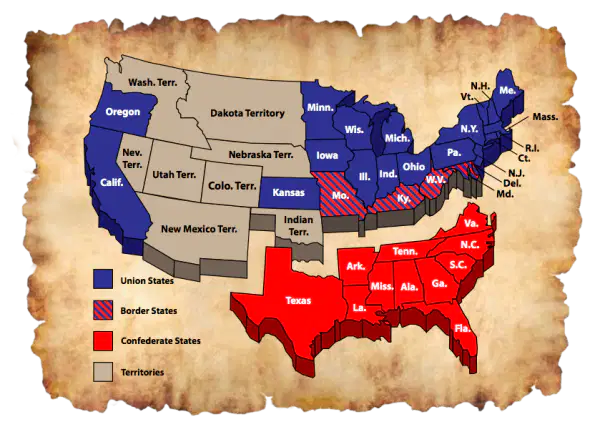
When many southern states seceded (split from America) -- what did they call their country?
Confederates States of America
Union States
America and America
South America
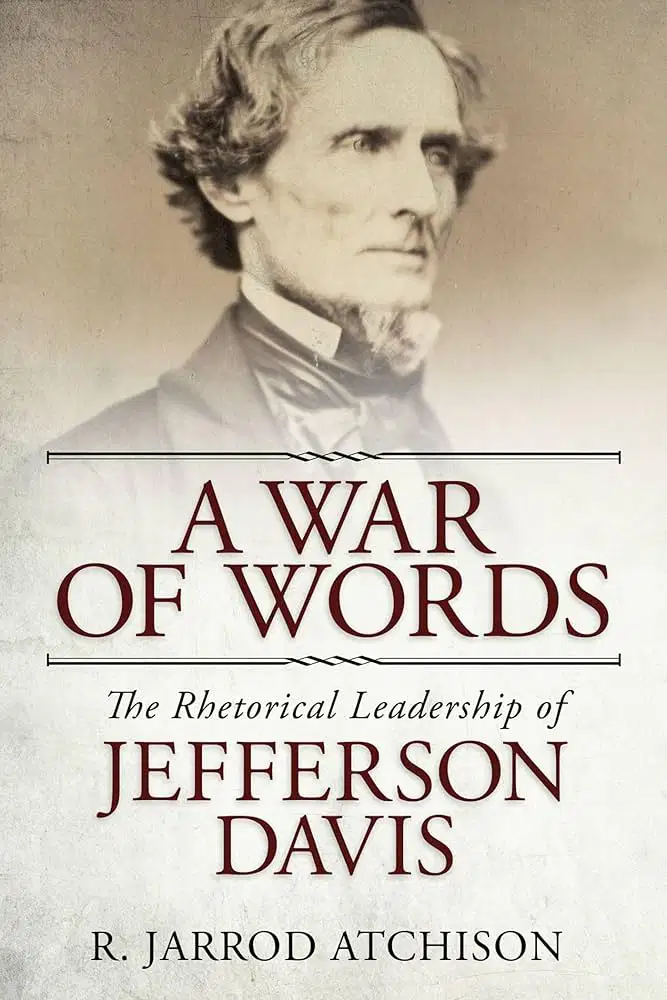
This was the president of the Confederate States.
Abraham Lincoln
Ulysses S. Grant (N. general)
Robert E. Lee (S. general)
Jefferson Davis

This was the President of the Union.
Jefferson Davis
Robert E. Lee (S. general)
Ulysses S Grant (N. general)
Abraham Lincoln

This was the main economy of the Union
Agriculture
Industry
Shipping
Trade


What did the North call this strategy to blockade the South's coastline and gain control of the Mississippi River? (hint: squeezing the S. into surrender)
Anaconda Plan
Rattlesnake Plan
Scorpion Plan
Scott's Blockade Plan


A group of ships that block other ships from sailing in and out of an area is called a ...
import
export
blockade
battle

Use the following chart to answer the question that follows.
According to the bar graph, what region had the larger share of resources in the United States?
The South
The North
The West
All regions had equal amount of resources
Use the following chart to answer the question that follows.
According to the bar graph, what region had the larger share of resources in the United States?
The South
The North
The West
All regions had equal amount of resources

What was the significance of the Battle of Bull Run?
The Union won. It proved that the South was weak.
The Union won this battle. It showed the North would win.
The Confederates won. It proved that the war would be long and difficult for the Union.
It was a tie between both sides. It showed the armies were unwilling to fight long battles.

What was the original goal of the Union at the start of the Civil War?
Ban slavery
Restore the Union
Separate from the United States
Make slavery legal everywhere
What was the original goal of the Union at the start of the Civil War?
Ban slavery
Restore the Union
Separate from the United States
Make slavery legal everywhere

Which document signed by Abraham Lincoln (in 1863) freed all slaves in the states that were rebelling against the USA?
(hint: He didn't free (or emancipate) any slaves in the states that were part of the Union.)
Kansas-Nebraska Act
Compromise of 1850
Emancipation Proclamation
The Gettysburg Address
As the Civil War began, the South had the advantage of...
superior military leadership
enormous industrial capabilities
a complex railroad network
a large population
Disadvantages of the South during the Civil War included having a small navy, fewer railroads, and ______________.
Lack of agricultural land
larger population
Inexperienced military leaders
Lack of industries
Which of the following was NOT an advantage for the Union going into the Civil War?
Excellent military leaders
larger population
more railroads
more resources

What did the Emancipation Proclamation do? (hint: look at the image -- the goal was to "hurt" the S.)
It freed all slaves in states fighting against the Union.
It freed all slaves in the United States
It put Ulysses S. Grant in charge of all Union forces.
It allowed slaves to fight in the Confederate army.
What was the impact of Sherman’s “March to the Sea”? (hint: Sherman destroyed everything in his path!!!!!)
It convinced the South that they could win the war.
It convinced President Lincoln to issue the Emancipation Proclamation.
It forced Robert E. Lee to evacuate Georgia.
It left a path of destruction from Atlanta to Savannah that crippled the Confederacy.
Sherman's army implemented the Union's total war philosophy, creating a path of destruction from Atlanta to Savannah that was 300 miles long and 60 miles wide, destroying Georgia's infrastructure: railroads, roads, cotton gins and mills, warehouses, anything that assisted in supplying Confederate troops.
Battle of Chickamauga
Atlanta Campaign
Sherman's March to the Sea
Union blockade

Term referring to the United States during the 1800’s. Also another word for the North in the Civil War.
Union
Confederacy
South
Grey

This refers to the Southern states that left the Union during the Civil War. All together there were 11 states: Texas, Arkansas, Louisiana, Tennessee, Mississippi, Alabama, Georgia, Florida, South Carolina, North Carolina and Virginia
Confederacy
Union
North
United States

Leaving a group formally. This refers to the Southern states who left the Union to form the Confederate States of America.
Secession
Conscription
Slave Code
Fugitive Slave Act

Part of the Compromise of 1850; allowed slave owners to pursue and capture escaped slaves into the North
Fugitive Slave Act
Slave Code
Conscription
Union

Someone who opposed and fought against slavery. Famous abolitionists include Frederick Douglas, Harriet Tubman, John Brown, and Harriet Beecher Stowe.
Abolitionist
Conscription
Slave Codes
Union

April 12, 1861 - Southern military fire on the fort which starts the Civil War
Fort Sumter
First Battle of Bull Run
Battle of Gettysburg
Battle of Antietam

July 1-3 1863: The bloodiest battle in U.S. history - over 50,000 killed and injured. Some say it ended any chance for the South to win the war because they lost so many men.
Battle of Gettysburg
Battle of Antietam
Battle of Shiloh
Fort Sumter


The first shots of the U.S. Civil War were fired at? (hint: start and Ft. S...)
Fort Wagoner
Fort Tejon
Fort Miller
Fort Sumter

What was one of the North's main advantages during the war?
more cotton fields
more slaves
larger population
better military leaders

What new type of metal ship was created during the Civil War? (hint: They are like IRON MAN!!!!!)
Aircraft Carriers
Battleships
Nuclear Submarines
Ironclads

Who was the first all African-American fighting unit, the movie "Glory" was based on them? (hint: Many New England states had a lot of abolitionists -- even Mass.!!!!)
The 101st Airbourne
The 545th Long Island Snipers
The 54th Massachusetts Infantry
The 45th Fighting Brigade


Jefferson Davis was
President of the Union
Vice President of the Confederacy
Union General at Chickamauga
President of the Confederacy


Why did the British refuse to help the South in the Civil War? (hint: Many say this was one of A. L. reasons for writing the EP.)
They did not think they could defeat the Union Army
They did not want to fight to support slavery
they did not have any contact with the South before the war
They did not have a strong military

What was the first act of aggression by the South that started the Civil War? (hint: South, Start and Ft. S...)
Bombardment of Fort Sumter
Battle of Bull Run
Lincoln's Inauguration
Battle of Gettysburg

What was the name of the first major battle of the Civil War?
Bull Run/Manassas Junction
Antietam/Sharpsburg
Shiloh
Gettysburg


During the 1840s, many abolitionists were against the annexation of new Western territory because they
feared the admission of new slave states
wanted to limit the power of the national government
were concerned with the legal rights of Native American Indians
supported an isolationist foreign policy

A result of Abraham Lincoln winning the 1860 presidential election was? (hint: The South didn't vote for L. -- so they ...)
7 southern states seceded from the Union to form the Confederacy
President Buchanan threatened to invade South Carolina
Senator Sumner was beaten on the Senate floor
the border states sided with the Confederacy

Harriet Beecher Stowe wrote a book to show the cruelties of slavery. What was it called?
Uncle Tom's Hotel
Uncle Tom's Cabin
Uncle Joe's Best Recipes
Uncle Bob's Journey

Who had the advantage of fighting to defend its homeland from invasion?
Union
Confederacy

Who were the Rebels?
Union soldiers
Confederate soldiers

What was the Underground Railroad?
a train that went underground
routes to freedom for slaves
a train that went across the country

Who won the war?
North
South
no one
Florida
What does compromise mean? (hint: You want pizza w pepperoni and Finbar wants just a cheese pizza -- so you get 1/2 p...)
two or more groups settle a dispute by agreeing to portions of what each group wants
to maintain an item, nation, or tradition
the location of the surrender of Robert E. Lee and the Northern Virginia Confederate Army to Ulysses S. Grant and the Union Army
The 16th President of the United States
What does preserve mean?
(hint: Hmmm -- sort of like preserving food with lots of salt -- it's still usable!!??!!!) :->
to maintain an item, nation, or idea
two or more groups settle a dispute by agreeing to a portion
of what each group wants
withdraw (leave) formally from membership of a federal union, an alliance, or a political organization
The turning point of the Civil War, where the Union army defeated the Confederate Army and stopped their northern invasion
What was the Battle of Gettysburg?
The turning point of the Civil War, where the Union army defeated the Confederate Army and stopped their northern invasion (da answer) :-}
the location of the surrender of Robert E. Lee and the Northern Virginia Confederate Army to Ulysses S. Grant and the Union Army
The bombardment of the Union military base by Confederate soldiers in Charleston, SC that started the Civil War
an escaped slave who became a huge activist, author and public speaker fighting to end slavery
Who was Fredrick Douglass?
an escaped slave who became a huge activist, author and public speaker fighting to end slavery
commander of the Confederate States Army during the American Civil War.
commanding general of the Union Army. Later becomes the 18th president of the United States
the 16th president of the United States
Who was Robert E. Lee?
commander of the Confederate States Army during the American Civil War (ya -- a free B - this is the answer)
commanding general of the Union Army. Later becomes the 18th president of the United States
an escaped slave who became a huge activist, author and public speaker fighting to end slavery
an American politician who served as the president of the Confederate States from 1861 to 1865

According to the timeline, in what year did the southern states start the Confederate States of America?
1846
1865
1861
1840

Based on the chart, what was the key advantage the Union had at the beginning of the Civil War?
Larger population
Large Farms
Twenty-five percent of the nation’s wealth
Twenty percent of the nation’s industry.

Based on the chart, what was the key advantage the Confederacy had at the beginning of the Civil War?
Larger Population.
Seventy-two percent of the nation’s railroad mileage.
Fighting on own territory.
Seventy-five percent of the nation’s wealth.

Based on the chart, who would you have predicted would win the Civil War?
The North because they had a larger percentage of population, wealth, and factories.
The South because they had a larger value of exports and bank deposits.
The North because they had large farms and were fighting on own territory.
The South because they had more railroads and iron and steel production.
Why didn't Lincoln free the slaves in the border states?
He didn't want to upset the border states and potentially have them join the Confederacy.
He didn't believe that slavery was all that bad.
He wanted to keep slavery in the border states forever.
All of the above.

According to the excerpt, what TWO things did Abraham Lincoln want the freed slaves to do? PICK TWO!
Work and abstain from violence
Continue to work as slaves on the plantations until after the war ended
Be violent against their former masters
Join the Union Army

Why would abolitionists be against the Emancipation Proclamation?
Because it freed all of the slaves.
Because it didn’t free any slaves.
Because it only freed slaves in the Confederate states and not the slaves in the border states that remained loyal to the Union.
Because it only freed slaves in the North.

Which of the following excerpts from the Gettysburg Address refers to the Declaration of Independence?
Now we are engaged in a great Civil War, testing whether that nation, or any nation so conceived and so dedicated, can long endure.
The world will little note, nor long remember what we say here, but it can never forget what they did here.
Four score and seven years ago our fathers brought forth on this continent, a new nation, conceived in Liberty, and dedicated to the proposition that all men are created equal.
We have come to dedicate a portion of that field, as a final resting place for those who here gave their lives that that nation might live.

What happened at Appomattox Court House?
Robert E. Lee and the Confederacy surrender to Grant. {surrender -- the war is over -- this is the answer: -)}
The Confederacy wins a decisive battle.
Grant and Sherman die in battle on the court house steps.
Lincoln is assassinated.
All of the following describe the results/effects of the Civil War EXCEPT
More than 600,000 soldiers died.
Billions of dollars in damage, mostly to the South.
Union states did not free their slaves.
Two thirds of the South's railway system was destroyed.
Millions of slaves are freed.


What is an abolitionist?
Someone who is against slavery
Someone who is for slavery
A confederate soldier
A Union soldier
Please complete this FA.
USA : ____ :: CSofA : ______
Conn: other names for the term
USA : Da Union :: CSofA : Da South
USA : America :: CSofA : USA
USA : Da North :: CSofA : CSofA
Please complete this FA.
Ft. Sumter : ______ :: Lexington + Concord : ______
Conn: start of term
Ft. Sumter : Civil War :: Lexington + Concord : Revolutionary War
Ft. Sumter : Revolutionary War :: Lexington + Concord : Civil War
Ft. Sumter : Battles :: Lexington + Concord : Wars
Yo AMDan!!!!! Please think about this FA and then answer it correctly. :-)
Lincoln/Grant : _______ :: Davis/Lee : ________
Conn: pres/general of country
Lincoln/Grant : USA :: Davis/Lee : Confederate States of America
Lincoln/Grant : Confederate States of America :: Davis/Lee : United States of America
Lincoln/Grant : Presidents :: Davis/Lee : Generals
Yo AMDan!!!!! Please think about this FA and then answer it correctly. :-)
$$$$ + RR : ______ :: leaders + knowledge of land : ______
Conn: adv. of "term"
$$$$ + RR : South :: leaders + knowledge of land : North
$$$$ + RR : The Union :: leaders + knowledge of land : The Confederacy
What term may be linked to this short poem?
Sing along
a song
something
with a little sting
you'll get the drift
when Lincoln gives you a lift
emancipation is the goal
setting people free
will help everyone's soul
EP
CW
CSofA
USofA
Excerpts from a poem created by an AMDan!!!! What term may be linked to this stanza?
Did you hear da noise!!
Freedom is the in the air
Big Abe is totally one of da boys!!!!
hint: emancipate means set free :-)
Civil War
Emancipation Proclamation
Revolutionary War
Hey AMDans!! Please mark the answer to this "question" as the first letter of your school. :-)
A
M
D
FREEEEEE BEEEEEE

Yo -- what does sectionalism mean? (hint: Use what you know = Nationalism means that you love YOUR country!!! :-})
love of yourself
love of just one section of your country
love of fun things -- like singing
when you section life to smaller sections -- then smaller sections -- eventually resulting in a completely new level of sections

Please turn to someone and smile. :-) If you did it -- mark the answer to this question as 1.
1
2
3
4

