
 Worksheets
Enzyme (Cofactors, Inhibitors))
Total questions: 46
Worksheet time: 32mins
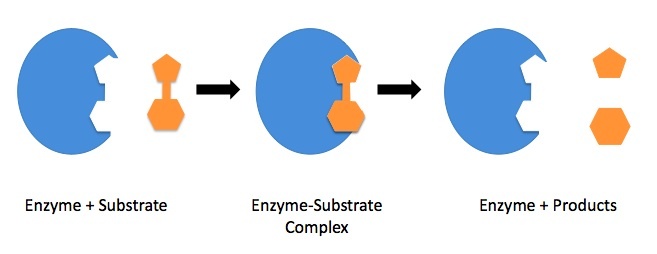
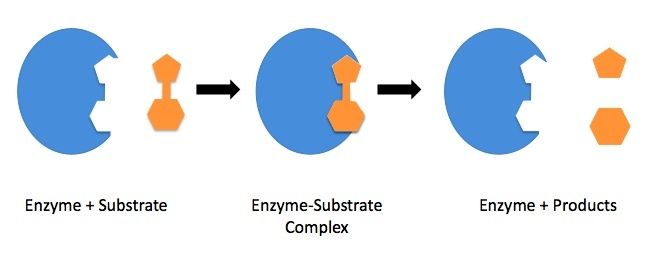
A receptor site that a molecule can bind to that changes the shape of the active site is called a(n):
Allosteric Site
Active Site
Activation site
Reactant site
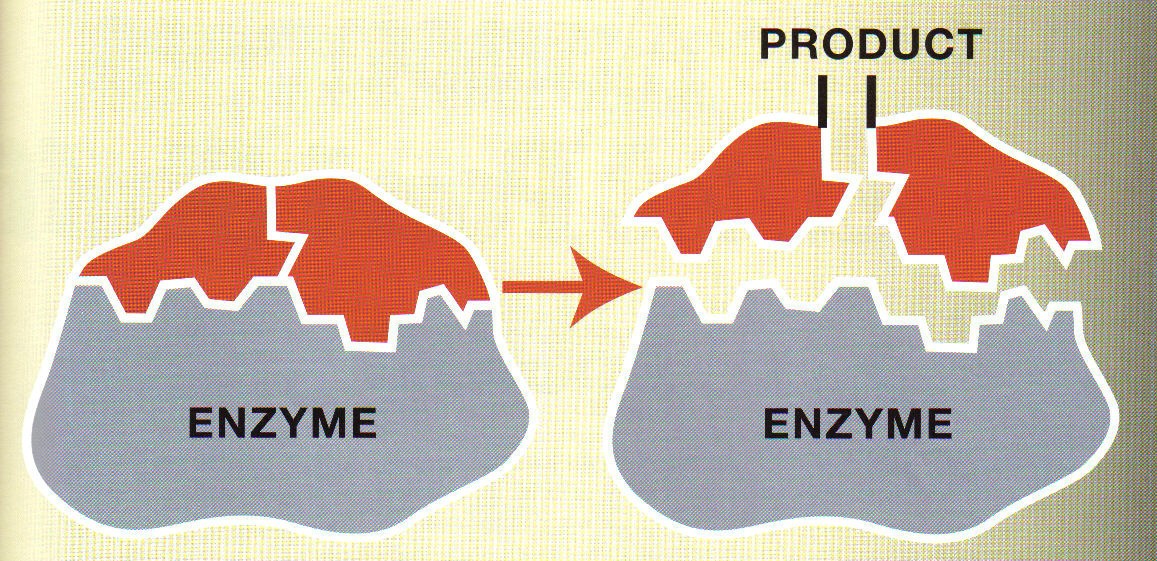
Molecules that bind to enzymes and enhance an enzyme's ability are called:
CoFactors
Competitive Inhibitors
Allosteric Inhibitors

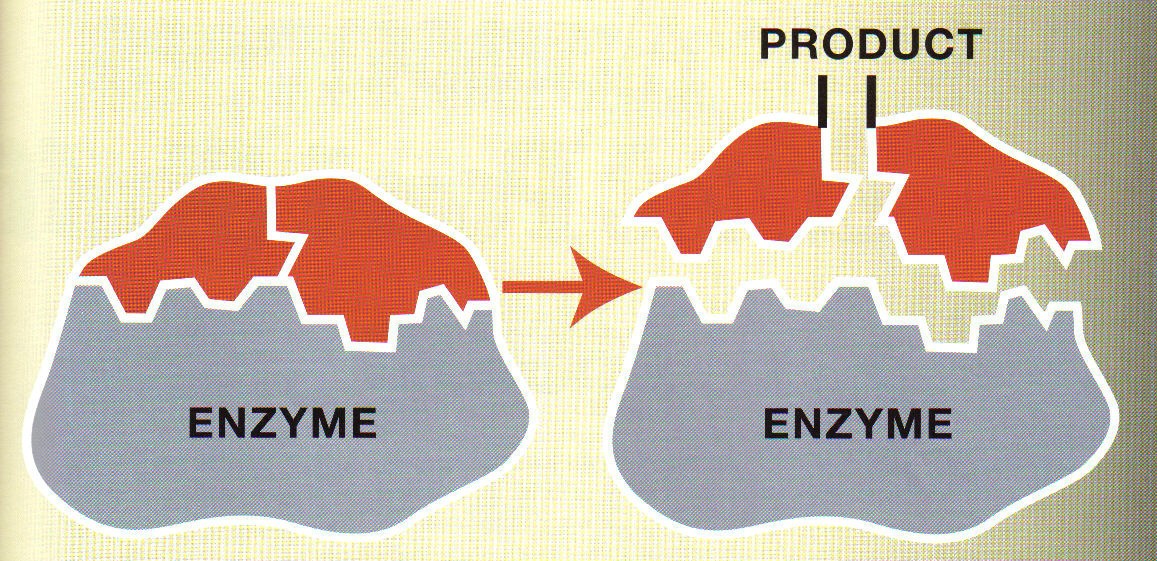
The inorganic cofactor of amylase is
Cl-
Cl2-
Zn2+
Zn2-
The enzyme carbonic anhydrase found in the blood has a prosthetic group containing
Cl-
Cl2-
Zn2+
Zn2-
Competitive inhibition can be overcome by _______________
increase the concentration of substrate
reduce the concentration of enzyme
increase the concentration of enzyme
reduce the concentration of substrate
Consider the following: “Succinate dehydrogenase catalyzes the conversion of succinate to fumarate. The reaction is inhibited by malonic acid, which resembles succinate but cannot be acted upon by succinate dehydrogenase. Increasing the ratio of succinate to malonic acid reduces the inhibitory effect of malonic acid”.
Which of the following is correct?
Succinate dehydrogenase is the enzyme, and fumarate is the substrate
Succinate dehydrogenase is the enzyme, and malonic acid is the substrate
Succinate is the substrate, and fumarate is the product
Fumarate is the substrate, and malonic acid is a non-competitive inhibitor
Only a small amount of enzyme is needed for a large amount of substrate because _______
Enzymes do not change at the end of a reaction and as such can be reused
A small amount of enzyme can provide enough energy to continue the reaction
More enzymes are formed while reaction takes place
Enzymes act till completion of a reaction or not at all
The rate of reaction of salivary amylase on starch decreases when the concentration of chloride ion is reduced. Which of the following explains the role of a chloride ion?
substrate
cofactor
active site
inhibitor

State the function of X
Binding site of substrate
Binding site of cofactor
Binding site of reactant
Binding site of inhibitor
How does enzyme lower the activation energy?
Bring substrate closer to each other
Increase the kinetic energy of substrate
Weakening the bonds inside the substrate
Bring substrate together into correct orientation
what reduces the productivity of enzymes by blocking substrates from entering active sites?
non competitive inhibitors
competitive inhibitors
coenzymes
cofactors
Which of the following are the properties of enzyme?
I Enzymes are highly specific.
II All enzymes are denatured at 60°c
III A large number of enzymes is needed to react with large number of substrate.
IV Enzymes lower the activation energy.
I only.
I and IV only.
I, II and III
I, II and IV
The protein part of an enzyme that binds to prosthetic group to form a functional enzyme is called
holoenzyme
apoenzyme
coenzyme
conjugated protein
Which of these cofactors help in making enzyme's active site become fitter with substrate?
Metal ion activators
Coenzyemes
Prosthetic groups
Only protease can catalyses the breakdown of protein. This shows that enzyme
is a biological catalyst
is highly specific in action
able to speed up chemical reaction
may catalyses reversibly
Which of these statements are true about competitive inhibitor?
Inhibitor and substrate has similar structure
The inhibitor binds to the allosteric site
The conformation of active site changed due to the inhibitor
Quantity of product formed is the same as reaction with no inhibitor
Enzymes function as catalysts because they
Increase the free energy of a chemical reaction
Lower the activation energy of a chemical reaction
Decrease the enthalpy of a chemical reaction
Supply the energy to start a chemical reaction
Cofactors for enzyme are
The protein substance
The inorganic substance
The protein and non-protein substances
The non-protein substance
Which is true of non-competitive inhibition?
It is irreversible
The inhibitor binds only to the active site of enzyme
The inhibitor binds to enzyme to lower activation energy
It can be reduced by increasing the concentration of the substrate
What happens to an enzyme when it is denatured?
The activation energy is doubled
The activation energy is lowered
The optimal temperature for enzyme action is doubled
The shape of the enzyme molecule is change
Which type of reversible enzyme inhibitor binds to both the free enzyme and the enzyme-substrate complex?
Non-competitive inhibitor
Competitive inhibitor
End product inhibitor
None of the above
In non-competitive inhibitor, the allosteric inhibitor
Binds to the active site, preventing the substrate from binding to the enzyme
Binds to the substrate, preventing it from binding to the active site
Binds to the enzyme at a site away from the active site, altering the shape of the enzyme
Changes the pH of the environment that the enzyme acts in
Malonic acid could inhibit the action of succinic dehydrogenase on succinic acid because
Malonic acid could react with succinic acid
Malonic acid could bind at the active site of succinic dehydrogenase
Succinic acid could bind at the active site of succinic dehydrogenase
Succinic acid could not bind at the active site of succinic dehydrogenase
If one continues to increase the temperature in an enzyme-catalyzed reaction, the rate of the reaction:
increases and then levels off
decreases and then levels off
increases and then decreases rapidly
decreases and then increases rapidly
Which of these are properties of enzymes?
Reusable
Needed in small quantity
Highly specific
Fibrous protein

Explain model shown above
The active site is exactly complementary to substrate
The active site is highly specific
The active site is flexible
The active site is rigid
What happen when heavy metal ions bind to enzyme?
Substrate is blocked by inhibitor from binding to the active site
Enzyme is permanently denatured
Maximum rate of reaction is still reached at the end
Active site is no longer complementary with substrate

What is structure C?
Substrate-enzyme complex
Substrate-enzyme complement
Enzyme-substrate complement
Enzyme-substrate complex

Watch the animation and identify the hypothesis involved
Lock and Key hypothesis
Induced Fit hypothesis
Enzyme-Substrate hypothesis
Which of the following would increase the rate of enzyme activity in the presence of a non-competitive inhibitor?
add more substrate
add more enzyme
add more inhibitor
reduce the temperature
Which of the following would increase the rate of enzyme activity in the presence of a competitive inhibitor?
add more substrate
add more enzyme
add more inhibitor
reduce the temperature

What kind of inhibition is being shown?
Competitive
Non-competitive

What kind of inhibition is being shown?
Competitive
Non-competitive
Non-competitive inhibitors reduce enzyme activity by
competing for the active site of the enzyme
competing for the allosteric site of the enzyme
denaturing the enzyme preventing substrate binding
changing the shape of the active site by binding to the allosteric site

In using immobilized enzymes to produce lactose free milk, the enzymes will be found in which labelled part of the diagram?
A only
A and B
B and C
B only
What happen when heavy metal ions bind to enzyme?
Substrate is blocked by inhibitor from binding to the active site
Enzyme is permanently denatured
Maximum rate of reaction is still reached at the end
Active site is no longer complementary with substrate
Malonic acid could inhibit the action of succinic dehydrogenase on succinic acid because
Malonic acid could react with succinic acid
Succinic acid could bind at the active site of succinic dehydrogenase
Succinic acid could not bind at the active site of succinic dehydrogenase
Malonic acid could bind at the active site of succinic dehydrogenase
What is the role of Michaelis-Menten equation?
To calculate the free energy
Mathematically explain the relationship of enzyme's velocity and the substrate concentration
Mathematically explain the saturation of enzyme in substrate
Affinity is a word to describe how effective is the binding between the enzyme and the substrate. What is the relationship of Km with affinity?
High Km, High affinity
High Km, Low affinity
With lower Km, the enzyme can reach Vmax faster
What is the role of Michaelis-Menten equation?
To calculate the free energy
Mathematically explain the relationship of enzyme's velocity and the substrate concentration
Mathematically explain the saturation of enzyme in substrate

