wayground logo

Free Printable Worksheets

Font size

S
M
L
XL
Worksheets

HON Marine Pop Review

Total questions: 52

Worksheet time: 2hrs 44mins

Name
Class
Date
1.

A species that plays a critical role in the health, maintenance, growth, or definition of an ecosystem.

a)

keystone

b)

invasive

c)

engineer

d)

predator

2.

Why are some sharks considered a keystone species?

a)

Because they are a top predator

b)

They scare off smaller fish that may overgraze an area of sea grass

c)

They are tertiary consumers

d)

They are cartilaginous

3.
Based on the graph shown, how can you tell sea otters are a keystone species?
a)
as the sea otter population decreases, biodiversity increases
b)
as sea otter population increases, biodiversity increases
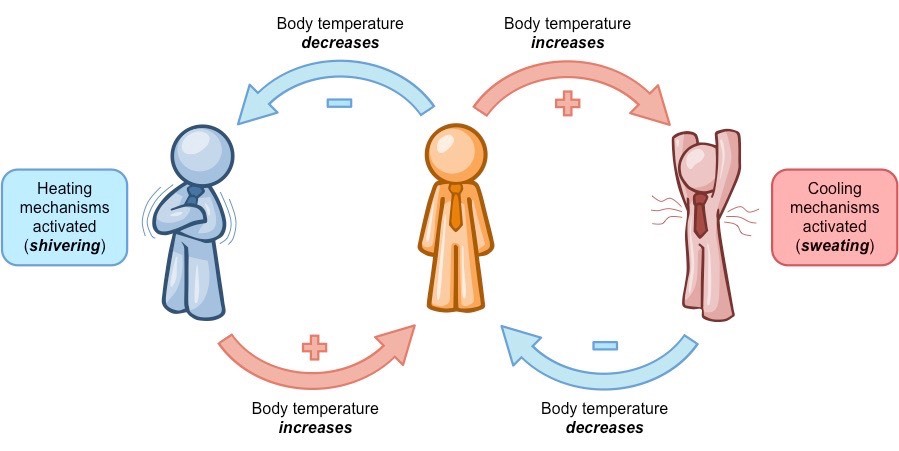
c)
changes in the sea otter population have little effect on biodiversity 
d)
the sea otter population dereases due to the presence of urchins
4.

How did the kelp forest ecosystem change after sea otters were removed?

a)

sea urchin population increased

b)

the kelp population decreased

c)

sea stars increased because there were more sea urchins to eat

d)

the phytoplankton population decreased

5.
Based on the graph shown, what is the effect of removing a keystone species from an ecosystem?
a)
biodiversity goes up
b)
biodiversity goes down
c)
biodiversity stays about the same
d)
not enough information to tell
6.

What is a tropic cascade?

a)

an ecological process triggered by the removal or addition of a top predator that causes changes throughout the food chain.

b)

an ecological process triggered by the removal or addition of a top predator that causes no changes throughout the food chain.

c)

an ecological process triggered by the removal or addition of a vegetation that causes no changes throughout the food chain.

d)

an ecological process triggered by the removal or addition of a primary consumer that causes changes throughout the food chain.

7.
Name the INDEPENDENT variable from the table below.
a)
words
b)
minutes
8.

In the table, Bubbles is the ______________.

a)

independent variable

b)

dependent variable

9.

The type of variable that responds to the experiment and is what you measure to determine if your hypothesis is true.

a)

Independent

b)

Dependent

c)

Control

d)

Constant

10.
The type of variable that you change or manipulate in an experiment.  It is what you are testing.
a)
Independent
b)
Dependent
c)
Control
11.
The parts of the experiment that must be kept the same.
a)
Constants
b)
independent
c)
Dependent
12.
The purpose of the control group is:
a)
Used for comparisons
b)
Application of the I.V.
c)
Application both the I.V. and D.V.
d)
Application of all constants.
13.
If I water the plant more often, then it will grow taller.  Name the independent variable.
a)
The height of the plant
b)
The size of the pot
c)
The amount of water
d)
The amount of light.
14.
If I water the plant more often, then it will grow taller.  Name the dependent variable.
a)
The amount of water.
b)
The amount of soil.
c)
The height of the plant.
d)
The amount of water.
15.

Thomas tests different types of liquids to see which will grow his plants the most. He has water, soda, milk, and no liquid at all. What is the control group?

a)

Water

b)

Soda

c)

Milk

d)

No liquid

16.
Darwin said that the number of offspring an organism has ___________________
a)
stays the same
b)
is more than can survive
c)
is less than needed
17.

How do you "win" at natural selection?

a)

survive

b)

go extinct

c)

survive & reproduce

18.

What word describes a trait that helps an organism survive in its environment?

a)

natural selection

b)

mutation

c)

camouflage

d)

adaptation

19.
Which organisms are most likely to survive?
a)
the best adapted
b)
the fastest
c)
the strongest
d)
the most domesticated (tamed)
20.
What type of selection is depicted in the picture? 
a)
stabilizing 
b)
directional 
c)
disruptive 
d)
the answer is not here
21.
Robins typically lay fours eggs. If more then four eggs are produced then the baby chicks are malnourished while smaller egg numbers result in no viable (able to live) baby chicks. This is an example of
a)
stabalizing
b)
disruptive
c)
direction
d)
none of the above
22.
What type of selection?
a)
Directional 
b)
Stabilizing
c)
Disruptive
23.
Which of the three graphs shows stabilizing selection?
a)
A
b)
B
c)
C
24.
Which of the three graphs shows disruptive selection?
a)
A
b)
B
c)
C
25.
What type of natural selection is this?
a)
Disruptive Selection
b)
Directional Selection
c)
Stabilizing Selection
d)
Sexy Selection
26.
What is the correct explanation for what is happening in this graph?
a)
There are a lot of average-sized beaks
b)
There are no beaks
c)
There are a lot of small beaks only
d)
There are a lot of small and large beaks, but not average-sized ones
27.
Most organisms have more offspring than will survive 
a)
True
b)
False
28.
Definition: fitness
a)
ability to survive and reproduce in a specific environment
b)
organisms with traits well suited to their environment survive and reproduce at a greater rate
c)
a growing population causes a scarcity of resources
d)
differences in the DNA sequence
29.

Long life span

a)

K-selected

b)

r-selected

30.

many years to reach reproductive maturity

a)

K-selected

b)

r-selected

31.

many reproductive events

a)

K-selected

b)

r-selected

32.

many offspring

a)

K-selected

b)

r-selected

33.

size of offspring is small

a)

K-selected

b)

r-selected

34.

substantial parental care is given

a)

K-selected

b)

r-selected

35.

population growth rate is fast

a)

K-selected

b)

r-selected

36.

population growth rate is slow

a)

K-selected

b)

r-selected

37.

population dynamic; stable, near carrying capacity

a)

K-selected

b)

r-selected

38.

short time to reach reproductive maturity

a)

K-selected

b)

r-selected

39.

little or no parental care is provided

a)

K-selected

b)

r-selected

40.

A feedback loop best fits which characteristic of life?

a)

Cells

b)

Organization

c)

Homeostasis

d)

Adaptation

41.

In this body temperature feedback loop, predict what would happen if cooling mechanisms were NOT activated?

a)

The body would not warm up.

b)

The body would not cool down.

c)

Your body would get colder and colder.

d)

Your body would release lots of heat.

42.
The two types of feedback systems that help organisms maintain homeostasis are:
a)
positive and negative 
b)
receptor and effector
c)
static and dynamic
d)
minor and major
43.
Maintaining body temperature is an example of a:
a)
negative feedback loop
b)
positive feedback loop
44.
The process of childbirth is an example of:
a)
negative feedback loop
b)
positive feedback loop
45.
When you get cut, your skin cells release hormones that signal platelets to come and stop the bleeding. Platelets then release more hormones that signal even more platelets to help stop bleeding. The hormone signals continue until the cut is closed.
a)
Positive Feedback Response
b)
Negative Feedback Loop 
46.
When glucose levels in the blood rise, your brain sends a signal to your pancreas. The pancreas releases insulin, which opens channels in cell membranes to allow glucose to enter the cell, lowering blood sugar levels. 
a)
Positive Feedback Response
b)
Negative Feedback Loop 
47.
Negative Feedback Loops:
a)
amplify processes
b)
prevent small changes from getting larger
c)
are initiated during childbirth
d)
are found only in plants
48.
A semi-enclosed area where fresh water from a river meets salty water from the sea.
a)
Watershed
b)
Groundwater
c)

Estuary

d)

Ocean

49.

According to the principle of Descent with Modification, what happens to harmful traits, in a population, over time?

a)

They become less common

b)

They become more common

c)

They increase allele frequency

d)

They decrease genetic drift

50.

True or False: An individual organism's phenotype can be changed within its lifetime in response to its environment.

a)

True

b)

False

51.

Why are some traits more common in some populations?

a)

It is random

b)

organims choose their traits

c)

common traits are ussualy adaptive and help organisms survive and reproduce

d)

organisms traits change all the time

52.

Why is competition important for natural selection?

a)

It shows which variations are more successful, allowing the organisms with those variations to survive.

b)

It causes organisms, regardless of which traits they have, to die out, reducing the population size.

c)

It causes organisms to get stronger due to having to outcompete other species.

d)

Competition is not important for natural selection.