wayground logo

Free Printable Worksheets

NEW

Font size

S
M
L
XL
Worksheets

Simple Machines

Total questions: 57

Worksheet time: 1hrs 11mins

Name
Class
Date
1.
A ramp.
a)
Lever
b)
Inclined Plane
c)
Wedge
d)
Screw
2.
Mechanical Advantage:  To drive objects apart.
a)
Pulley
b)
Inclined Plane
c)
Wedge
d)
Wheel and Axle
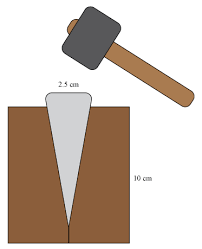
3.
What type of simple machine is shown here?
a)
Pulley
b)
Wheel and Axle
c)
Lever
d)
Wedge
4.
Mechanical Advantage:  To reduce the friction of moving something.
a)
Lever
b)
Inclined Plane
c)
Screw
d)
Wheel and Axle
5.
Something similar to a see-saw that can lift an object.
a)
Wedge
b)
Screw
c)
Lever
d)
Wheel and Axle
6.
Mechanical Advantage:  To increase or decrease the applied force.
a)
Lever
b)
Pulley
c)
Wheel and Axle
d)
Screw
7.
Mechanical Advantage:  To move objects to a greater height.
a)
Pulley
b)
Wedge
c)
Lever
d)
Inclined Plane
8.
Mechanical Advantage:  To hold things together or to lift an object.
a)
Screw
b)
Pulley
c)
Wedge
d)
Wheel and Axle
9.
Mechanical Advantage:  To change the direction of a force.
a)
Wedge
b)
Pulley
c)
Screw
d)
Wheel and Axle
10.
Something that can split an object apart.
a)
Wedge
b)
Pulley
c)
Screw
d)
Wheel and Axle
11.
Something that can hold things together or lift an object.
a)
Wheel and Axle
b)
Lever
c)
Screw
d)
Pulley
12.
Something that reduces the friction of moving something.
a)
Pulley
b)
Screw
c)
Wheel and Axle
d)
Wedge
13.
Something that uses a rope and can change the direction of a force.
a)
Wedge
b)
Lever
c)
Inclined Plane
d)
Pulley
14.
What type of simple machine is this?
a)
Wheel and Axle
b)
Pulley
c)
Wedge
d)
Screw
15.
What kind of simple machine is this?
a)
Screw
b)
Wheel and Axle
c)
Pulley
d)
Inclined Plane
16.
What type of simple machine is this?
a)
Inclined Plane
b)
Wheel and Axle
c)
Screw
d)
Pulley
17.
What type of simple machine is this?
a)
Pulley
b)
Screw
c)
Inclined Plane
d)
Lever
18.
Identify this simple machine
a)
Lever
b)
Wheel & Axle
c)
Inclined Plane
d)
Screw
19.
Two examples of a pulley...
a)
knife & axe blade
b)
lightbulb & screw
c)
flagpole hoist & window blinds
d)
catapult & teeter totter
20.
Which of the following does a simple machine do?
a)
allows the users to apply less force over a longer distance
b)
reduce the amount of force needed to do work
c)
change the direction of the applied force
d)
all of the above
21.
Which is an example of someone using a simple machine to do work?
a)
a boy runs across a football field
b)
a banker counts money
c)
a mother pushes a stroller up a ramp
d)
a girl eats a sandwich
22.
The device used to raise a flag up a flag pole is an example of a 
a)
wheel and axle 
b)
lever
c)
inclined plane 
d)
pulley 
23.
An inclined plane wrapped around a rod forms this simple machine 
a)
lever
b)
pulley
c)
screw
d)
wedge 
24.
A simple machine that consists a rigid bar that pivot about a fixed point
a)
lever
b)
pulley
c)
wheel and axle
d)
fulcrum 
25.
A seesaw is an example of a  
a)
wedge
b)
lever 
c)
inclined plane 
d)
pulley 
26.
Stairs
a)
wedge
b)
pulley
c)
inclined plane
d)
wheel and axle
27.
This device
a)
wedge
b)
lever
c)
incline plane
d)
wheel and axle
28.
The fixed point on the lever is called 
a)
load
b)
resistance
c)
bar
d)
fulcrum
29.
Name this simple machine. 
a)
Pulley
b)
Wheel and Axle
c)
Inclined Plane
d)
Lever
30.
Name this simple machine. 
a)
Wheel and Axle
b)
Lever
c)
Pulley
d)
Wedge
31.
What is effort (input) force?
a)
the force required by a machine in order to accomplish work (the force you put on the machine)
b)
the force which an effort force must overcome in order to do work on an object via a simple machine.
c)
the force the machine exerts on a object
d)
the output work times the input distance
32.
What is resistance (output) force?
a)
the force required by a machine in order to accomplish work (the force you put on the machine)
b)
the force which an effort force must overcome in order to do work on an object via a simple machine.
c)
the force the machine exerts on a object
d)
the output work times the input distance
33.
A simple machine is a device that helps to reduce the amount of _____ required to work.
a)
force
b)
energy
c)
work
34.
____ is done when a force is applied over a distance.
a)
energy
b)
work
c)
force
35.
Name this simple machine.
a)
Lever
b)
Wedge
c)
Pulley
d)
Inclined Plane
36.
Lightbulb
a)
wedge
b)
pulley
c)
incline plane
d)
screw
37.
What type of simple machines does the photo show?
a)
Lever and wedge
b)
Inclined Plane and lever
c)
Pulley and wedge
d)
Lever and screw
38.
A push or pull that can move an object is a
a)
fulcrum
b)
force
c)
machine
d)
lever
39.
Which choice is an example of a pulley?
a)
Axe
b)
Seesaw
c)
Crane 
d)
Tunnel
40.

What type of simple machine is found on the cap of a jar?

a)

Screw

b)

Pulley

c)

Lever

d)

Inclined Plane

41.

Which of these is an example of a wedge?

a)

Knife

b)

Stairs

c)

Skateboard

d)

Broom

42.
A wheelbarrow, pulley, and wedge are all examples of what?
a)
levers
b)
inclined planes
c)
wheel and axel
d)
simple machines
43.

Look at the pulley systems shown here. Which one or one(s) will provide the greatest mechanical advantage?

a)

A and B

b)

B and C

c)

C and D

d)

D and E

44.

Pulleys are never 100% efficient because of _________.

a)

friction

b)

force

c)

gravity

d)

speed

45.

The more supporting strings a pulley system has, the less efficient it is because ___________________.

a)

there is more friction

b)

its harder to lift the load

c)

there is more weight

d)

you are changing the direction of the force

46.

Select the correct verb that picture represents:

a)

Run out

b)

Heat up

c)

Change direction

47.

What is the mechanical advantage of this pulley system?

a)

4

b)

5

c)

6

d)

7

48.

What is the mechanical advantage of this pulley?

a)

2

b)

3

c)

4

d)

5

49.

What is the mechanical advantage of this pulley?

a)

4

b)

5

c)

6

d)

7

50.
In which situation will the pulley reduce the force needed to lift the load?
a)
A
b)
B
c)
C
d)
D
51.
Students pulled the same mass up an inclined plane that was 20 cm, 30 cm, and 40 cm long. Each time, they used a spring scale to measure the force needed to pull the mass up the inclined plane. What did they conclude?
a)
Less force was needed on the 20 cm plane
b)
More force was needed on the 40 cm inclined plane.
c)
The least amount of force was needed on the 40 cm inclined plane.
d)
The least amount of force was needed on the 30 cm inclined plane.
52.
An inclined plane reduces the amount of force needed to move an object by - 
a)
increasing the distance the object moves.
b)
transferring more of the force to the object
c)
reversing the direction the object is moved.
53.
Which of the following decreases when an object is moved using an inclined plane?
a)
The distance the object moves.
b)
The pull of gravity on the object.
c)
The force needed to move the object.
d)
The amount of space the object occupies.
54.
What is a disadvantage of using an inclined plane to lift a heavy object?
a)
The object must be moved a greater distance.
b)
It takes less effort to move the object.
c)
Many objects are difficult to lift straight up.
d)
Heavy object usually take up more space.
55.
How much force would be needed to lift the 150 N weight? Remember, you need to divide the original force by the number of pulleys.
a)
300 N
b)
150 N
c)
75 N
d)
25 N
56.
The table shows the force needed to lift an object with different numbers of pulleys. How much force would you need when you use 4 pulleys?
a)
100 N
b)
75 N
c)
50 N
d)
25 N
57.
A fixed pulley does not reduce the force needed to lift an object. What, then, is the advantage of using a fixed pulley?
a)
A fixed pulley reduces the force.
b)
A fixed pulley changes the direction of the force.
c)
A fixed pulley does not have any advantages.