
 Worksheets
EARTH SCIENCE - MODULAR CLASS (MID-TERM SUMMATIVE TEST)
Total questions: 40
Worksheet time: 47mins
igneous rock formed from lava that erupted onto Earth's surface
extrusive
intrusive
clastic
biogenic
igneous rock that formed when magma hardened beneath the surface of Earth
extrusive
intrusive
clastic
biogenic
Soil erosion means
The removal of the bottom soil cover by water, wind and human activities
The removal of the top soil cover by water, wind and human activities
The removal of the middle soil cover by water, wind and human activities

What is unique about the Earth?
Proximity to the sun - too much heat
Proximity to the sun - too much heat in the day and to cold in the night
Proximity to the sun - neither too much heat nor too little
all of these
Earth's surface is composed of _________ water.
99%
70%
50%
30%
Which factor allows the earth to have a comfortable temperature?
Plate tectonics
Water
Atmosphere
Energy
Nitrogen is ________ of the Earth's atmosphere?
78%
21%
1%
0%
Which layer of the atmosphere contains the ozone?
troposphere
stratosphere
mesosphere
thermosphere
is the part of Earth where life exists
Biosphere
Biota
Geosphere
Hydrosphere
All of Earth’s water, ice, and water vapor.
Biosphere
Biota
Geosphere
Hydrosphere
Which one is NOT a biome?
stratosphere
temporate forest
ocean
savanna
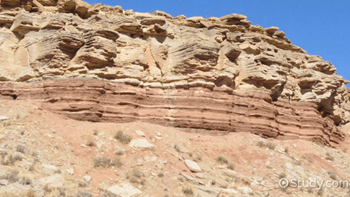
What factors can lead to the formation of a sedimentary rock?
melting and solidification
extreme heat and pressure
compaction and cementation

Describe the texture of breccia.
vesicular
clastic
crystalline
bioclastic

The rock shown has a foliated texture and contains the minerals amphibole, quartz, and feldspar arranged in coarse-grained bands. Which rock is shown?
slate
dunite
gneiss
quartzite
The recrystallization of unmelted material under high temperature and pressure results in
metamorphic rock
sedimentary rock
igneous rock
volcanic rock
There are two types of mining: surface mining and underground mining.
True
False
What spins the turbine?
Hamster
Steam
Wind
Water
What is an advantage of geothermal energy?
It produces carbon dioxide
It is expensive
It produces little to no pollution
It runs on oil
Where can geothermal energy be used best?
Near a river
Near a volcano
In a mountain
In the sea
What is it called when you generate electricity with a dam and water?
Geothermal Energy
Hydroelectric Energy
Solar Energy
What is it called when humans generate electricity by using the heat of the Earth?
Geothermal Energy
Hydroelectric Energy
Solar Energy
Which of the following is one of the disadvantages of geothermal energy?
Geothermal energy doesn't work everywhere since you need a volcano nearby.
Geothermal energy does not work if there are no rivers or moving water nearby.
Geothermal energy only works on windy days.
What is one disadvantage of hydroelectric energy?
It doesn't work everywhere since you need a volcano nearby.
It does not work if there are no rivers or moving water nearby.
It only works on windy days.
How do geothermal power stations work?
Cold water is heated up and the water power turbines under the water and turns it into electricity.
The hot water from inside the earth meets cold air and produces condensation which powers the turbines and turns it into electricity.
Cold water is pumped down and the cold water meets the hot water from inside the earth to produce steam to power turbines then creating electricity.
The following are the main components of a hydroelectric plant, EXCEPT:
dam
penstock
powerhouse
coal
What is the advantage of hydroelectric power station?
Simple in design and construction
Low operation and maintenance cost
Cheap to build
Where most freshwater is found in _________.
Groundwater
Lakes
Glaciers
Sea water

