wayground logo

Free Printable Worksheets

Font size

S
M
L
XL
Worksheets

DMS Circulatory System

Total questions: 48

Worksheet time: 26mins
Name
Class
Date
1.

What is the main organ of the circulatory system?

a)

small intestine

b)

bone

c)

lungs

d)

heart

2.
How many types of blood vessels are in our body?
a)
1
b)
2
c)
3
d)
4
3.

Veins carry oxygen poor blood back to the heart.

a)

False

b)

True

4.

Arteries carry oxygen rich blood away from the heart.

a)

True

b)

False

5.

The job of the heart is to . . .

a)

pump blood around the body.

b)

send food to the small intestines.

c)

break down food.

d)

give energy to the body.

6.
______________ are the smallest blood vessels.
a)
Arteries
b)
Veins
c)
Capillaries
7.
The circulatory system works with the ___________ system to provide our body with oxygen.
a)
respiratory
b)
digestive
c)
muscular
d)
skeletal
8.
The circulatory system works with the __________ system to obtain energy from nutrients that we eat. 
a)
respiratory 
b)
digestive
c)
skeletal
d)
nervous
9.
The heart has ___ chambers.
a)
1
b)
2
c)
3
d)
4
10.
What does Deoxygenated mean?
a)
Oxygen-rich
b)
Blood flow
c)
Oxygen-poor
d)
Water Flow
11.
Which is the correct definition of the Circulatory system?
a)
The system fights disease so the body stays healthy.
b)
The system that circulates blood and oxygen through the body, consisting of the heart,blood vessels,and blood.
c)
Breaks down food into smaller pieces and absorbs those nutrients into the body.
d)
Provides shape and structure for the body.
12.
What function does the heart do?
a)
Protects organs and produces red blood cells.
b)
Generates heat.
c)
Breaks down food into nutrients.
d)
The heart is a pump, which moves the blood. The arteries and veins are the pipes where the blood flows.
13.
What is the Circulatory System also known as?
a)
The heart
b)
Cardiovascular System
c)
Nervous System
d)
Aorta
14.
What do Red-Blood cells do?
a)
Carry oxygen from the lungs to the body cells and  transport carbon dioxide from the cells back to the lungs
b)
keeps blood flowing in one direction to the heart and prevent blood from flowing backwards
c)
Collects  blood from the capillaries and drain it into the veins
d)
Bring nutriients to the cells and carries away waste materials.
15.
What does blood do?
a)
Carries Water to cells
b)
Carries Oxygen to cells
c)
Carries Food to cells
d)
All of the above 
16.
Carbon dioxide is considered a _________________
a)
food
b)
waste
c)
energy
d)
fun party favor
17.

The contraction/emptying phase of the cardiac cycle?

a)

Systole

b)

Diastole

18.

The relaxing/filling stage of the cardiac cycle?

a)

Systole

b)

Diastole

19.

Coronary arteries...

a)

supply the heart muscle cells with a supply of blood.

b)

supply the brain cells with a supply of blood.

c)

contain deoxygenated blood.

d)

when clogged, cause a stroke.

20.

The type of blood vessel that normally carries de-oxygenated blood back to the heart from body cells?

a)

arteries

b)

capillaries

c)

veins

21.

The type of blood vessel that normally carries oxygenated blood from the heart to the body cells?

a)

arteries

b)

capillaries

c)

veins

22.

The type of blood vessel where exchange of gases, nutrients, and wastes occurs?

a)

arteries

b)

capillaries

c)

veins

23.

An abnormal widening/ballooning of a portion of an artery.

a)

aneurysm

b)

embolism

c)

thrombosis

d)

atherosclerosis

24.

The main vein(s) that brings blood to the right atrium?

a)

Aorta

b)

Pulmonary veins

c)

Superior and Inferior vena cava

d)

Jugular vein

25.

Instrument used to measure blood pressure?

a)

AED

b)

ECG

c)

Sphygmomanometer

d)

ultrasound

26.

Name part N.

a)

Right atrium

b)

left atrium

c)

right ventricle

d)

left ventricle

27.

Name part I.

a)

pericardium

b)

mediastinum

c)

septum

d)

unknownum

28.

Name part A.

a)

Pulmonary artery

b)

Pulmonary vein

c)

Superior vena cava

d)

Aorta

29.

Name part B.

a)

Pulmonary arteries

b)

Pulmonary veins

c)

Superior Vena cava

d)

Aorta

30.

Name part M.

a)

Tricuspid valve

b)

Semilunar valve

c)

Bicuspid valve

d)

Mitral valve

31.

The heart is about the size and shape of your . . .

a)

head

b)

fist

c)

hand

d)

foot

32.

The FREQUENCY of heart contractions is...

a)

heart rate

b)

blood pressure

c)

respiratory rate

d)

voluntary muscle contraction

33.
The heart has ___ chambers.
a)
1
b)
2
c)
3
d)
4
34.
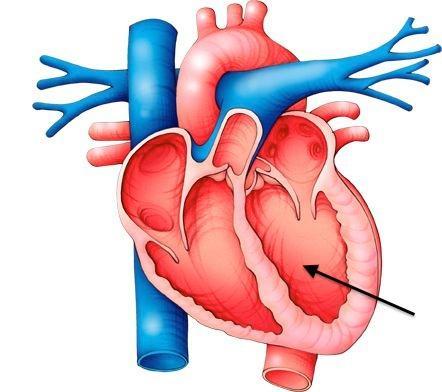
Identify
a)
Left atrium
b)
Right atrium
c)
Left ventricle
d)
Right ventricle
35.

This chamber of the heart RECEIVES oxygen rich blood back from the lungs

a)

Right Atrium

b)

Left Atrium

c)

Right Ventricle

d)

Left Ventricle

36.

This chamber of the heart pumps the blood from the heart to the lungs through the pulmonary artery

a)

Right Atrium

b)

Left Atrium

c)

Right Ventricle

d)

Left Ventricle

37.
A flap of tissue that prevents blood from flowing backward
a)
Aorta
b)
Atrium
c)
Septum
d)
Valve
38.
  Compared to arteries, veins 
a)
have a pleated endothelium.
b)
have thinner walls.
c)
have more smooth muscle in their tunica media. 
d)
hold their shape better when cut. 
39.
What is pulmonary circulation?
a)
Blood travelling to and from the lungs
b)
Blood travelling to and from the body
c)
A blood clot in the lungs
d)
The vessel that brings blood to the lungs
40.

Which is NOT a function of the circulatory system?

a)

deliver O2 and nutrients to cells

b)

remove CO2 and wastes from cells

c)

break down carbohydrates into glucose

d)

transport other materials through body
41.

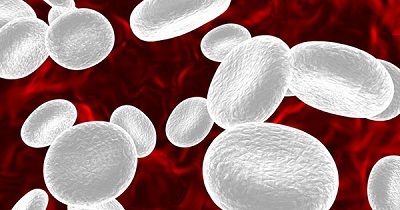
The cells in the blood that help fight germs and illnesses are the...

a)

red blood cells

b)

platelets

c)

white blood cells

d)

axons

42.
The liquid part of blood that makes up 55% of its composition?
a)
Plasma
b)
Platelets
c)
White blood cells
d)
Red blood cells
43.

What does fibrin do?

a)

Weaves a fishing net

b)

Harms the body

c)

Cleans blood cells

d)

Helps clot blood

44.

What does Hemophilia do?

a)

Slowly Kills you

b)

Gives you a fear of blood coming out of your body

c)

Makes it harder for your body to clot

d)

Infects your blood making it dirty

45.
Sickle red blood cells have a decreased ability to carry 
a)
nutrients
b)
wastes
c)
oxygen
d)
proteins
46.

When you look at the cells of individuals with sickle cell anemia, what do you expect to see?

a)

C-shaped cells

b)

S-shaped cells

c)

Disk-Shaped Cells

d)

Globular shaped cells

e)

Sick cells

47.

What is leukemia

a)

The flu

b)

A cancer of blood tissue

c)

A bone

48.

What is leukemia

a)

Cancer that starts in blood-forming tissues

b)

Blood cancer

c)

Cancer in any part of the body

d)

Skin Cancer